Spiaggia di Capriccioli: Four Coves, Turquoise Water, and the Real Costa Smeralda
Spiaggia di Capriccioli is a cluster of four small beaches tucked around a granite headland on Sardinia's Costa Smeralda. Less crowded than nearby Liscia Ruja and more accessible than the hidden coves further south, it strikes a balance between natural beauty and practicality that few beaches in this area can match.
Quick Facts
- Location
- Capriccioli, comune di Arzachena (SS), Costa Smeralda — approx. 15 km east of Arzachena, south of Porto Cervo
- Getting There
- Car or motorbike only; no regular public bus service. From Olbia, follow SS125 then SP73 and SP94 toward Cala di Volpe/Capriccioli (approx. 30 km)
- Time Needed
- Half a day minimum; a full day if you plan to explore all four coves and snorkel
- Cost
- Beach access is free. Parking can reach around €20/day in peak season. Sun lounger and equipment rentals available at additional cost
- Best for
- Families with young children, snorkellers, couples after a quieter alternative to the Costa Smeralda's busiest beaches
- Official website
- www.sardegnaturismo.it/en/explore/capriccioli
What Capriccioli Actually Is
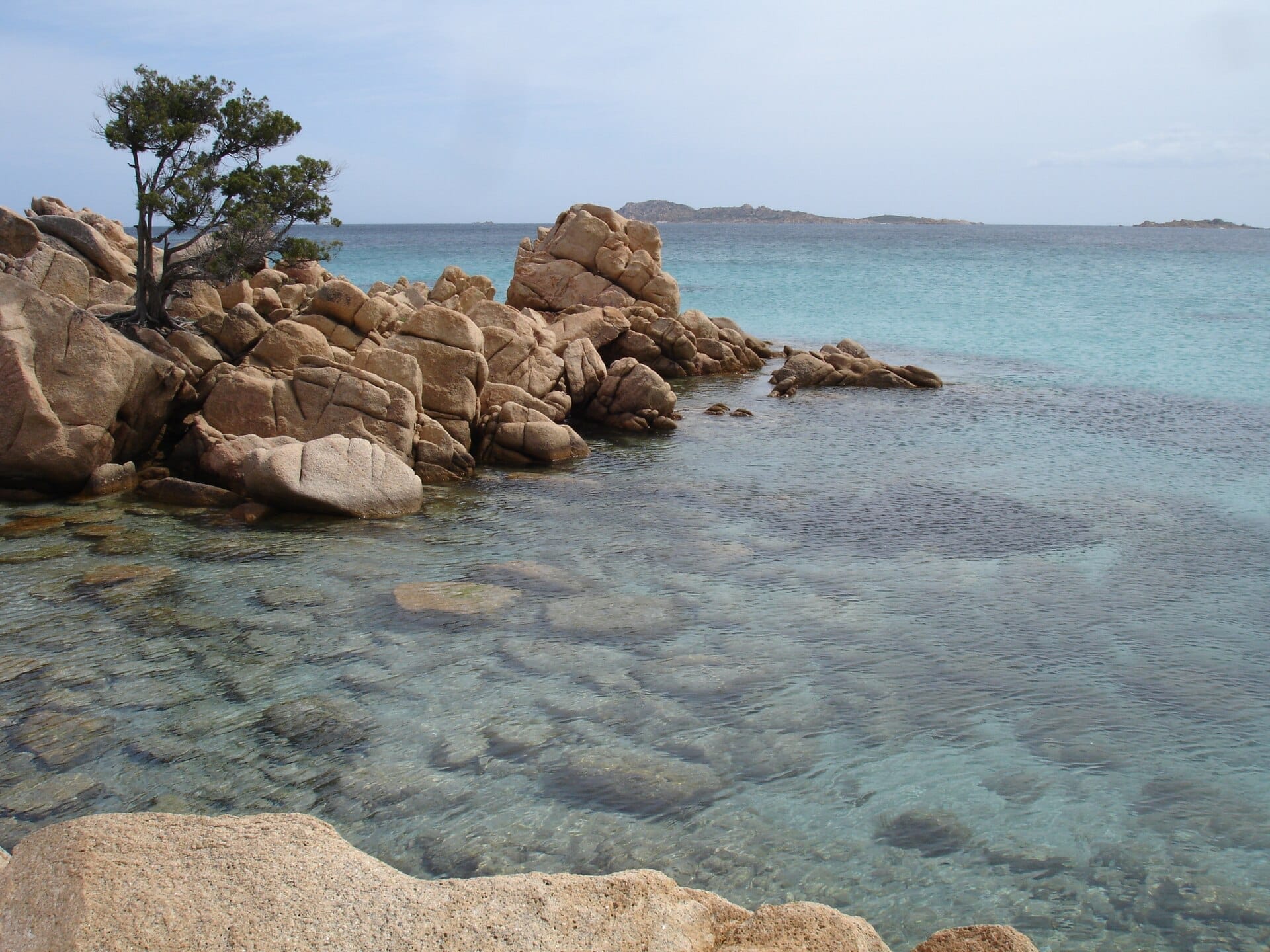
Spiaggia di Capriccioli is not a single beach but a small constellation of four coves arranged around a low granite promontory on the Costa Smeralda. The name itself comes from Gallurese, the regional dialect of northern Sardinia, and means 'young goats', a reference to a couple of rounded granite boulders that frame the main coves. The area includes two main eastern beaches, plus Spiaggia del Pirata and Spiaggia delle Tartarughe on the western side. Most visitors end up on one of the eastern coves and never discover the others.
The setting is characteristic of this stretch of Gallura coast: coarse white sand mixed with fine quartz, water that shifts from pale green in the shallows to deep cobalt further out, and a backdrop of macchia mediterranea, the low-growing scrub of rosemary, myrtle, and juniper that holds the hillsides together. There are no dramatic cliffs here, no long white arc of unbroken sand. Capriccioli is compact, human-scaled, and easy to read at a glance, which is part of its appeal.
💡 Local tip
Arrive before 9:30 am in July and August to secure parking without circling. The small parking area fills quickly and the walk from overflow spots on the roadside is longer than it looks on the map.
The Four Coves: What Each One Offers
The two main eastern beaches are what most people picture when they search for Capriccioli. They are separated by a short granite ridge that you can cross on foot in a minute, and together they form the busiest part of the bay. The northern of the two is slightly larger, with a wooden pier used for canoe, pedalò and small-boat rentals. The seabed is sandy and gently sloping, staying shallow close to shore before it deepens gradually, which makes it suitable for children and less confident swimmers.
Spiaggia delle Tartarughe, 'Turtle Beach', sits on the western side of the promontory and requires a short walk through the macchia along a rocky path. It is smaller, receives less foot traffic, and the name refers to turtles. Whether you will actually see turtles is unpredictable, but the water here is notably clear and the cove feels more private than the main beach on a busy summer afternoon.
Spiaggia del Pirata, the 'Pirate's Beach', is the most tucked-away of the four. It is reached by a short walk from the main beach area or by kayak. It rewards the effort with near-total solitude even in August, and the surrounding rock formations make for interesting underwater photography. Bring reef shoes.
Tickets & tours
Hand-picked options from our booking partner. Prices are indicative; availability and final rates are confirmed when you complete your booking.
Vineyard Guided Tour and 7 Wine Tasting in Palau
From 84 €Instant confirmationFree cancellationFull-Day Sailboat Tour in La Maddalena Archipelago from Cannigione
From 112 €Instant confirmationFree cancellationHiking excursion to the Devil's Saddle
From 35 €Instant confirmationFree cancellationExcursion to the Archaeological site of Nora
From 70 €Instant confirmationFree cancellation
How the Beach Changes Through the Day
Early morning at Capriccioli is one of the better arguments for staying nearby rather than driving in from Olbia or Porto Cervo. Before 9 am in summer, the light hits the water at a low angle and turns it a near-fluorescent green in the shallows. The air smells of warm juniper and sea salt, the sand is cool underfoot, and you may have the eastern beaches largely to yourself. This is the ideal window for swimming and snorkelling, before boat traffic picks up and the water is disturbed.
By 11 am in July and August the parking area is full and the main beaches are occupied. The atmosphere becomes lively but not unpleasant, the kind of cheerful density you find at Italian beaches rather than the shoulder-to-shoulder compression of some northern European resorts. Vendors and rental staff are present on the eastern coves. Noise carries across the small bay: children playing, music from a few speakers, the occasional motorised dinghy.
Late afternoon shifts the character again. Day-trippers begin to leave around 5 pm, the light softens and goes golden, and the western coves become peaceful. The water temperature in September is still warm, and an early evening swim in that light, with the granite boulders glowing amber behind you, is among the better experiences this coast offers.
ℹ️ Good to know
The beach has no shade trees on the main eastern coves. Bring a beach umbrella or rent one on-site. Sun intensity is high from late June through early September and UV levels can be extreme between 11 am and 3 pm.
Snorkelling and Water Quality
Capriccioli is consistently ranked among the better snorkelling spots on the Costa Smeralda, largely because the rocky flanks of the promontory provide habitat that bare sand beaches do not. Around the granite outcrops dividing the coves, you will find a range of marine life. The seagrass meadows near the rocky areas support a wider range of small species.
Water clarity is excellent by most standards, especially before midday when boat traffic is minimal and the wind has not had time to stir the surface. Visibility is often excellent in calm conditions. The canoe rental station on the eastern beach also rents snorkel equipment, and a kayak gives you access to the western coves and the sea caves at the base of the outer rocks without swimming the full distance.
For a more serious diving experience, the waters around the broader Costa Smeralda include wall dives and wrecks. The Sardinia snorkelling and diving guide covers the full range of sites and operators in the northeast of the island.
Getting There and Parking
There is no practical way to reach Spiaggia di Capriccioli without a vehicle. The beach sits roughly 15 km east of Arzachena and south of Porto Cervo, linked by secondary roads through the Costa Smeralda resort zone. From Olbia Costa Smeralda Airport (OLB), the drive takes around 30 to 45 minutes depending on traffic: take the SS125, then continue via the SP73, SP94 and SP160 toward Cala di Volpe and Capriccioli. From Porto Cervo, follow the SP59 toward Abbiadori, then the SP94 and SP160 toward the beach.
The paid parking area near the beach is small. In July and August it fills by mid-morning and the overflow spills along the roadsides. Parking costs can reach around €20 per day in peak season, though exact current tariffs should be verified locally. Motorbike parking is generally easier to find. Cycling is possible on a road bike but the final approach road is narrow with no dedicated lane.
⚠️ What to skip
Do not leave valuables in your car. Theft from parked cars at Costa Smeralda beaches has been reported consistently over the years, particularly at quieter access points. Take your documents and keep valuables in a dry bag with you on the beach.
If you are combining this with a broader trip around the northeast, the Sardinia road trip guide maps out logical circuits from Olbia that include Capriccioli alongside other coastal and inland stops.
Best Time to Visit
In short, is June and September. In June the water is already warm enough for comfortable swimming (typically 21 to 23 degrees Celsius), the vegetation is at its greenest, the parking situation is manageable, and prices for nearby accommodation have not yet hit peak levels. September brings slightly warmer sea temperatures than August in some years, far fewer crowds, and a quality of light that photographers consistently prefer.
July and August are perfectly viable if you are prepared for the realities: full parking by 10 am, busy beaches through the afternoon, and the general compression of the Costa Smeralda high season. The beach does not become unpleasant, but it does become noticeably louder and more crowded than the rest of the year. If you are visiting in these months, arrive early and consider spending the peak afternoon hours at the western coves.
May and October are shoulder months with increasingly reliable swimming conditions. For a full picture of seasonal patterns across the island, the best time to visit Sardinia guide covers weather windows, sea temperatures, and crowd levels in detail. The September in Sardinia guide is particularly relevant if you are considering a late-summer visit.
Facilities and Practical Notes
The eastern coves have basic beach facilities during the summer season: sun lounger and umbrella rentals, a small kiosk for drinks and snacks, and the kayak and canoe rental operation on the wooden pier. There is no restaurant directly on the beach, though the broader Capriccioli area has accommodation with dining. Bring your own food and water if you plan to spend a full day, especially if visiting the western coves where services do not reach.
The beach is accessible to older visitors and families with small children on the eastern side, where the approach from the parking area involves a short walk on a rough but level path and the water entry is gradual over sand. The western coves require more agility to reach and are not suitable for pushchairs or visitors with limited mobility. There are no official adapted bathing platforms, though the shallow sandy seabed on the eastern beaches is itself an advantage.
Families visiting Sardinia with children will find useful context in the guideSardinia with kids guide, which covers beaches, activities, and logistics for travelling with younger children across the island.
Who Might Be Disappointed
Capriccioli is not the place to come if you want long unbroken sand, beach clubs with full service, or a lively social scene. The coves are small and the facilities are basic by Costa Smeralda standards. Visitors expecting the sort of polished beach-club infrastructure found at Porto Cervo or other parts of the coast will find it underwhelming. Similarly, if you are chasing isolation in peak season, the main eastern beaches will not deliver it. The beach is well known and well visited from June through August.
Travelers without a car are effectively excluded unless they book accommodation within walking distance or arrange a taxi for the day. There is no regular bus connection and the road is not suitable for casual walking from the nearest settlement.
Insider Tips
- The northern of the two eastern coves gets shade from the promontory's granite shoulder in the late afternoon, making it cooler than the southern cove for late-day swimming. The southern cove holds sun longer and is better for early evening.
- Rent a kayak for at least an hour and paddle around the outer rocks to the western coves. The view back to the twin beaches from the water, with the Gallura hills behind them, gives you the full scale of the bay in a way you cannot appreciate from the shore.
- The path to Spiaggia delle Tartarughe is marked but easy to miss. Look for a faint trail through the macchia starting from the right side of the main northern beach, just past the wooden pier. It takes only a few minutes on foot.
- Parking directly at the beach is not the only option. Some visitors park further along the road toward Cala di Volpe and walk the last part of the way, avoiding the main lot entirely.
- Bring reef shoes for the western coves. The rocks between the sandy sections are sharp granite and sea urchins are present in the shallower rock pools. Flip-flops are not adequate.
Who Is Spiaggia di Capriccioli For?
- Families with young children: the shallow, sandy seabed on the eastern beaches is forgiving for new swimmers
- Snorkellers: the granite outcrops and sea grass meadows around the promontory support more marine life than open sandy beaches
- Couples in shoulder season: September and early October bring warm water, empty western coves, and soft afternoon light
- Photographers: the rounded granite boulders, multi-toned water, and macchia framing make for strong compositions at golden hour
- Visitors who want a quieter Costa Smeralda experience without venturing far from Porto Cervo
Nearby Attractions
Other things to see while in Costa Smeralda:
- Porto Cervo Marina
Porto Cervo Marina is the centrepiece of the Costa Smeralda, a 700-berth facility capable of hosting superyachts up to around 120 metres long. Even if you're not arriving by sea, the marina's waterfront promenade, designer boutiques, and rotating parade of extraordinary vessels make it one of the most compelling spectacles in the Mediterranean.
- Spiaggia del Principe
Spiaggia del Principe, locally known as Poltu di Li Cogghj, is widely considered the finest beach on the Costa Smeralda. Its shallow turquoise water, powdery white quartz sand, and granite rock formations drew the Aga Khan himself during the 1960s development of the coast. Access is free, but parking is paid in summer and the walk in is unpaved.