Spiaggia del Principe: The Aga Khan's Cove on Costa Smeralda
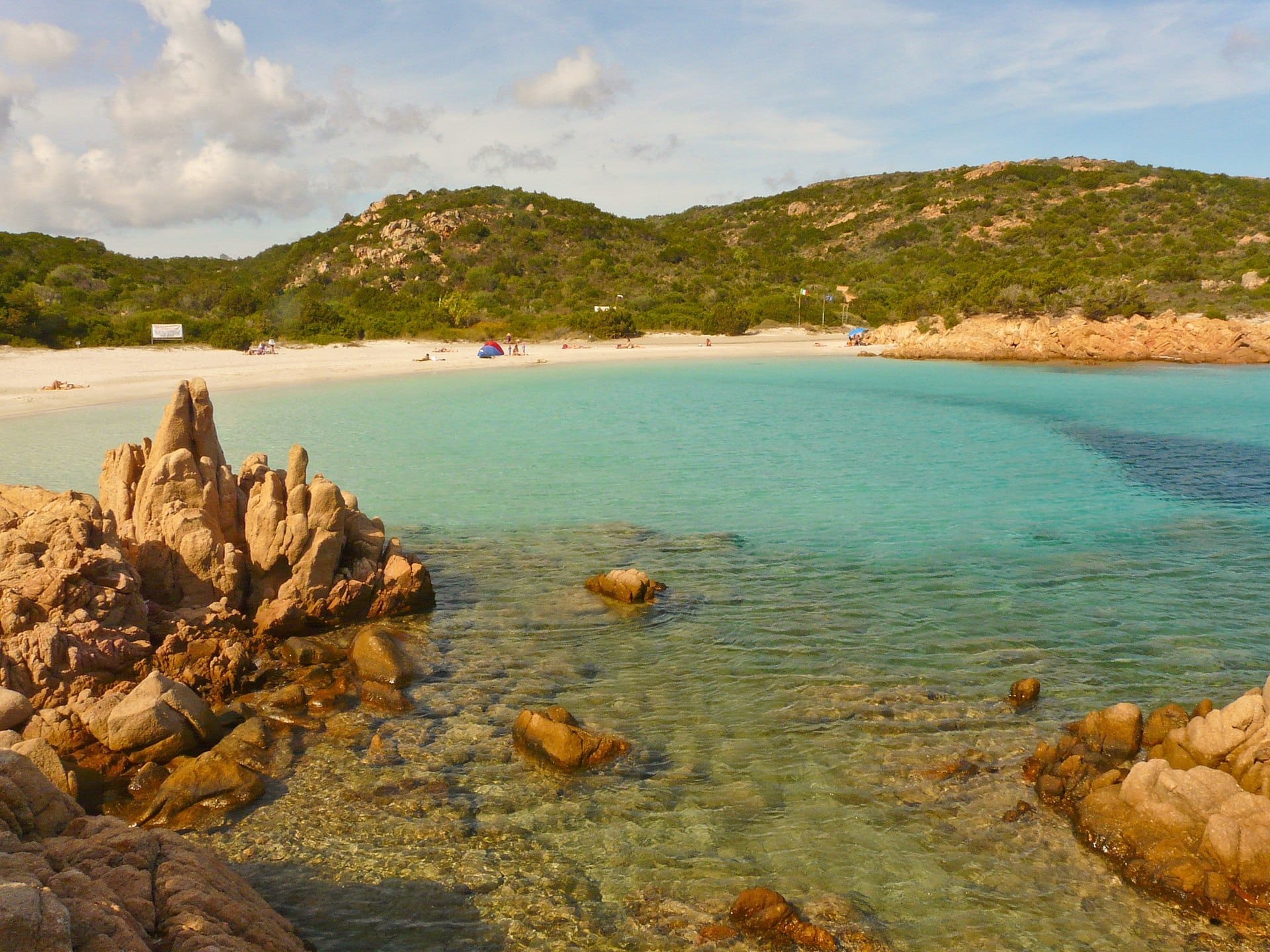
Spiaggia del Principe, locally known as Poltu di Li Cogghj, is widely considered the finest beach on the Costa Smeralda. Its shallow turquoise water, powdery white quartz sand, and granite rock formations drew the Aga Khan himself during the 1960s development of the coast. Access is free, but parking is paid in summer and the walk in is unpaved.
Quick Facts
- Location
- Località Romazzino, Comune di Arzachena (SS), Costa Smeralda, Sardinia
- Getting There
- Olbia Costa Smeralda Airport (OLB), approx. 30 km / 30–33 min by car
- Time Needed
- Half day minimum; most visitors spend 3–5 hours
- Cost
- Beach access free; paid parking applies in summer (rates vary)
- Best for
- Swimming, snorkelling, photography, couples, beach connoisseurs
- Official website
- www.portodiolbia.it/en/directory/spiaggia-del-principe
What Is Spiaggia del Principe?
Spiaggia del Principe, also called Prince's Beach, sits in the Romazzino area of the Costa Smeralda, in the Romazzino area of the Costa Smeralda, between Porto Cervo and Porto Rotondo in the Comune di Arzachena. The name translates directly from Italian as Beach of the Prince, and it refers to the Aga Khan, who reportedly singled out this particular cove as his favourite during the 1960s when he masterminded the transformation of this stretch of Sardinian coastline into one of Europe's most exclusive resort destinations.
Its older, local Gallurese name, Poltu di Li Cogghj, has been linked to a tower used to protect the coast from pirate raids. Before the yachts and luxury hotels arrived, this was a working inlet on a sparsely populated coast. That pre-tourism history gives the place a quiet depth that the manicured resorts nearby simply do not have.
The beach sits within the broader Costa Smeralda coastal zone, a region that concentrates some of the most photographed shoreline in the Mediterranean. Among the beaches here, Spiaggia del Principe consistently ranks at the top, not because of facilities or infrastructure, but because of the raw quality of its water and sand.
The Beach Itself: Sand, Water, and Rock
The sand at Spiaggia del Principe is composed largely of fine white sand, and it behaves differently from coarser Mediterranean beaches. It stays relatively cool even in the height of summer, does not compact underfoot into a hard crust, and has a faint sparkle in direct afternoon light. The beach is not enormous: the main arc of sand is relatively small, flanked on both sides by smooth pink granite boulders that slope into the sea.
The water colour shifts through a sequence of blues and greens depending on depth and angle of light. Close to shore, where the seabed is white sand, it reads as a pale turquoise. Further out, it deepens into a richer blue. The clarity is exceptional on calm days: you can watch fish moving over the sand in two metres of water without a snorkel mask.
The granite outcrops on either side of the main beach are worth exploring. The rock surface is rough-textured and warm by mid-morning, and many visitors use the lower shelves as natural diving platforms or as spots to dry off away from the sand. The surrounding macchia mediterranea, the low scrub of rosemary, cistus, and juniper that covers the Sardinian coastal landscape, comes right to the edge of the beach, giving the cove a contained, almost private feel even when it is busy.
💡 Local tip
Arrive before 9:30 AM in July and August. Parking fills quickly and the best spots on the sand go fast. The walk-in path is unpaved and a walk of about 10 minutes, so flat-soled sandals or shoes you can remove easily are more practical than flip-flops on the stony track.
Tickets & tours
Hand-picked options from our booking partner. Prices are indicative; availability and final rates are confirmed when you complete your booking.
Guided Tasting of Sardinian Food and Drink Delicacies
From 48 €Instant confirmationFree cancellationSanta Teresa di Gallura hiking tour of Valle della Luna
From 30 €Instant confirmationFree cancellationCala Goloritze, Mariolu, Gabbiani, Biriala, Grotta del Fico boat tour
From 69 €Instant confirmationFree cancellationCagliari small-group boat escape to Sella del Diavolo with swim stops
From 0 €Instant confirmationFree cancellation
How the Beach Changes Through the Day
Early morning is the clearest version of this beach. Before 9 AM in summer, the car park is quiet, the path to the shore is shaded by low coastal scrub, and the water is often completely still. The light is low and lateral, which throws the texture of the granite and the pattern of the sandy seabed into sharp relief. Photographers specifically target this window for the combination of soft light and glass-calm water.
By late morning, the beach fills steadily. July and August see the highest density, with families and groups from the surrounding resorts arriving in waves between 10 AM and noon. The water warms quickly in the shallows, the offshore breeze typically picks up from around 11 AM, and the beach takes on the animated energy of peak Mediterranean summer. Sun umbrella rentals, where available from the seasonal kiosk, go fast.
The late afternoon, from around 4 PM onward, brings a second quieter period as day-trippers leave. The light becomes golden and directional, the crowds thin noticeably, and the cove returns to something close to its morning character. The sea temperature is at its highest point of the day in this window, which makes it the most comfortable time for a longer swim. In June and September, this late-afternoon slot is particularly pleasant: the beach is rarely crowded and the water is still warm.
ℹ️ Good to know
September is arguably the best month to visit. Water temperatures remain high from the summer heat, the crowds of August have thinned substantially, and the coastal light takes on the warm, amber quality typical of early autumn in the Mediterranean.
Getting There: Practical Directions
Spiaggia non raggiungibile con Lu Pustali (the nearest stop is Capriccioli, followed by a long walk). A car is effectively essential for most visitors. From Porto Cervo, the drive is approximately 9.4 kilometres, following the SP59 and then the SP160 toward the Romazzino area. Signs for Spiaggia del Principe appear on the approach. The nearest major airport is Olbia Costa Smeralda Airport (IATA: OLB), roughly 30 kilometres away.
The paid car park sits inland from the beach. From the car park, an unpaved path leads down to the shore. The path is not paved, involves some uneven ground, and can be dusty in dry weather. It is manageable for most able-bodied visitors but presents real difficulty for wheelchair users, those with limited mobility, and anyone pushing a pram or buggy. There are no steps, but the surface is loose in places. Wear proper footwear rather than thin-soled sandals.
Renting a car is the standard approach for exploring this part of Sardinia. For context on moving around the island more broadly, the getting around Sardinia guide covers the options in detail, including car hire logistics and the absence of a motorway network on the island.
⚠️ What to skip
Parking is charged in summer and fills completely by mid-morning on peak days in July and August. Arriving after 10:30 AM on a hot Saturday in high season may mean finding the car park full and having to wait or return later.
Facilities, Services, and What to Bring
Spiaggia del Principe is not a serviced resort beach in the way that many Italian seaside destinations are. It retains a relatively natural character. In season, a food and drink kiosk operates near the beach and basic services are available. Beyond that, infrastructure is minimal. There are no lounger and umbrella concession rows stretching the full length of the sand; much of the beach remains free and unorganised.
The practical implication is that you should bring everything you need for a full day. This means sun protection (the white sand reflects strongly), plenty of water, food if you want more than kiosk snacks, and a beach umbrella if you need shade. The rocks provide natural shade in the early morning and late afternoon on the edges of the cove, but the central sand is fully exposed at midday.
Snorkelling is rewarding along the base of the granite boulders on either side of the beach. Bring your own equipment: there is no hire point on site. The seabed close to the rocks is suitable for snorkelling. The water visibility on a calm, low-wind day is good enough to make even a basic mask worthwhile.
For those wanting to combine beach time with underwater exploration beyond snorkelling, Sardinia's snorkelling and diving guide covers the best dive sites and operators in the northeast of the island.
The Costa Smeralda Context: Luxury Within Reach
The Costa Smeralda is a privately developed stretch of coastline that was conceived in the early 1960s by a consortium led by the Aga Khan IV. The intent was to create a high-end tourist destination that preserved the natural landscape while introducing luxury resort infrastructure. The planning regulations that resulted were unusually strict: buildings had to respect local vernacular architecture, heights were capped, and the coastline itself was largely left undeveloped. Spiaggia del Principe was the Aga Khan's favored cove, which explains the name that stuck.
What this means for a visitor today is that the beach exists in a curious position: it is surrounded by some of the most expensive real estate and yacht moorings in the Mediterranean, yet the beach itself is free and public. The sense of exclusivity comes from the setting, not from a ticket barrier. On any given summer morning, the cars in the car park range from battered rental hatchbacks to current-model SUVs, and everyone ends up on the same stretch of sand.
If you are combining a visit to the beach with time in the wider area, Porto Cervo marina is roughly 9 kilometres away and worth a late-afternoon walk for the yachts and the contrast in atmosphere. The Costa Smeralda area guide gives a fuller picture of what the region offers beyond the beaches.
Who This Beach Suits, and Who Should Think Twice
Spiaggia del Principe rewards visitors who want a beach experience shaped by the quality of the natural environment rather than by facilities or organised entertainment. If your ideal beach day involves a sunlounger, a beachside restaurant, and easy parking right at the shore, this beach will frustrate you on at least two of those counts.
It is not a good choice for visitors with mobility limitations, for anyone pushing a pushchair, or for travellers who need wheelchair-accessible facilities. The path from the car park is the main obstacle, and there is no alternative route. Families with young children can absolutely enjoy the beach, but the shallow-gradient water entry and calm conditions that make it so good for swimming also mean you should stay attentive near the rocks.
Visitors travelling with children who want a beach with full infrastructure nearby might find Spiaggia La Pelosa near Stintino or the beaches around Villasimius easier to manage, though neither matches the specific character of Spiaggia del Principe.
This beach is also occasionally described in superlative terms that raise expectations to an unrealistic level. It is a beautiful cove, among the best on a coastline full of strong competition. But in the peak of August, it is crowded, the path fills with people, and the parking situation can be aggravating. Managing your expectations about timing is the single most important thing you can do to ensure the visit lives up to its reputation.
Insider Tips
- The eastern end of the beach, close to the granite boulders, is shallower and better for children or tentative swimmers. The western rocks attract the snorkellers and tend to be slightly less congested on busy days.
- If the main car park is full, do not leave your car on the roadside verges: local enforcement is active in summer and fines are issued. Return early in the afternoon when departing visitors free up spaces.
- Bring a small dry bag for your phone and valuables. There are no secure storage facilities on site, and leaving items unattended while swimming carries the usual risks.
- The Romazzino Hotel sits close to this cove, and weekday visits rather than weekend ones in high season can make a noticeable difference to crowd levels. A weekday visit rather than a weekend one in high season makes a noticeable difference to the crowd levels.
- The path back to the car park in the early evening, when the sun is low, is considerably more pleasant than the midday walk down. If you plan to stay late, bring a light layer: the coastal breeze picks up after sunset.
Who Is Spiaggia del Principe For?
- Beach purists who prioritise water quality and natural scenery over resort facilities
- Couples looking for one of the most scenic coves on the Costa Smeralda
- Snorkellers wanting clear water and accessible granite rock formations
- Photographers targeting the early-morning or late-afternoon light on turquoise water
- Travellers on a Costa Smeralda visit who want to experience the coast's best free beach
Nearby Attractions
Other things to see while in Costa Smeralda:
- Porto Cervo Marina
Porto Cervo Marina is the centrepiece of the Costa Smeralda, a 700-berth facility capable of hosting superyachts up to around 120 metres long. Even if you're not arriving by sea, the marina's waterfront promenade, designer boutiques, and rotating parade of extraordinary vessels make it one of the most compelling spectacles in the Mediterranean.
- Spiaggia di Capriccioli
Spiaggia di Capriccioli is a cluster of four small beaches tucked around a granite headland on Sardinia's Costa Smeralda. Less crowded than nearby Liscia Ruja and more accessible than the hidden coves further south, it strikes a balance between natural beauty and practicality that few beaches in this area can match.