Porto Cervo Marina: Inside Sardinia's Most Famous Superyacht Port
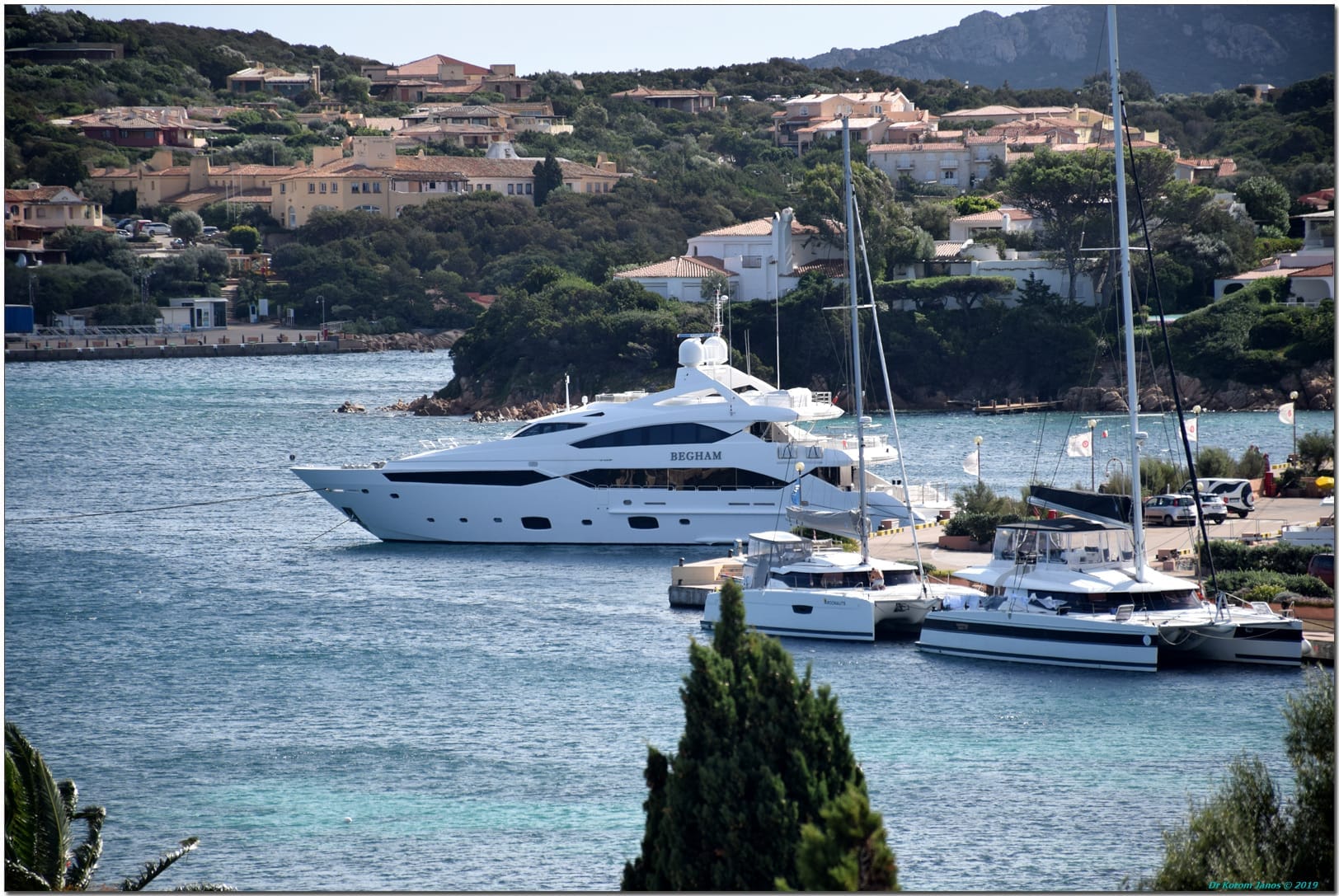
Porto Cervo Marina is the centrepiece of the Costa Smeralda, a 700-berth facility capable of hosting superyachts up to around 120 metres long. Even if you're not arriving by sea, the marina's waterfront promenade, designer boutiques, and rotating parade of extraordinary vessels make it one of the most compelling spectacles in the Mediterranean.
Quick Facts
- Location
- Casa Il Ginepro 1/A, Porto Cervo (Arzachena), Gallura, northeastern Sardinia
- Getting There
- By car from Olbia Costa Smeralda Airport (OLB), approx. 30–40 min via regional roads toward Arzachena. No direct public bus to Porto Cervo from Olbia; rental car or taxi strongly recommended.
- Time Needed
- 1.5–3 hours for a leisurely walk, coffee, and browsing. Allow a full afternoon if you plan to dine.
- Cost
- Free to walk the promenade. Berthing fees for yachts vary by size and season; contact the marina directly for quotations.
- Best for
- Yacht-watching, upscale window shopping, waterfront aperitivo, photography
- Official website
- www.igymarinas.com/marinas/marina-di-porto-cervo
What Is Porto Cervo Marina, Exactly?
Porto Cervo Marina, officially known as Marina di Porto Cervo, is not simply a harbour. It is the flagship facility of one of the most deliberately designed luxury resorts in the world. The Costa Smeralda was conceived in the early 1960s by a consortium of investors who purchased and developed a stretch of rugged northeastern Sardinian coastline into an exclusive enclave. Porto Cervo became its social and maritime heart, and the marina has been its most visible symbol ever since.
The facility comprises two distinct areas: the New Marina, which operates 24 hours a day, seven days a week with continuous VHF radio service, and the Old Port, which opens seasonally from 1 June through 30 September. Together they offer around 700 berths and can accommodate vessels up to roughly 120 metres in length. On a busy July afternoon, the dockside lineup reads like a floating catalogue of the world's most expensive naval architecture.
ℹ️ Good to know
Porto Cervo Marina is free to walk around as a visitor. You do not need to arrive by yacht to experience the spectacle. The public promenade runs along the waterfront and gives unobstructed views of the berths.
The Setting: What You Actually See When You Arrive
Approaching Porto Cervo by road, the landscape is all granite outcrops, low maquis scrub, and fleeting blue glimpses of the Tyrrhenian. Then the road drops and the marina opens below you: a sheltered inlet framed by pale stone buildings in a faintly Moorish-Mediterranean style, with masts rising above the rooflines like a steel forest. The architecture of Porto Cervo was overseen with deliberate restraint — no tower blocks, pastel colours, curved arches — designed to look as though it had always been there, which it had not.
The piazzetta at the marina's upper end is the social focal point: a small, open square surrounded by high-end boutiques (Loro Piana, Bulgari, Bottega Veneta among the regulars) and café terraces. From here, stepped paths and ramps descend to the waterfront promenade itself. The granite paving stones retain heat through the evening. At the water's edge, the scale of what is moored becomes properly apparent. A 50-metre motor yacht here is unremarkable. A 120-metre vessel with a helicopter pad on its stern is, more or less, a Tuesday.
Tickets & tours
Hand-picked options from our booking partner. Prices are indicative; availability and final rates are confirmed when you complete your booking.
Boat Tour of Porto Cervo's beaches from Porto Rotondo
From 84 €Instant confirmationFree cancellationBoat excursion and snorkeling in Porto Conte marine area in Alghero
From 90 €Instant confirmationFree cancellationBalai Bay snorkeling experience from Porto Torres
From 42 €Instant confirmationFree cancellationAsinara island e-bike rental from Porto Torres
From 48 €Instant confirmationFree cancellation
How the Marina Changes Through the Day
Morning, roughly 7:30 to 10:00, is when the marina shows its operational side. Crew members in branded polo shirts move supplies aboard on trolleys. Riggers check lines. The smell of salt, diesel, and fresh bread from the nearby bar combines into something that is unmistakably Mediterranean port. The crowds are thin. If you want photographs without other tourists in frame, this is the time to come.
By midday in high season (late June through August), the piazzetta is warm and the boutiques are open, but much of Porto Cervo's actual population has migrated to the beaches. The marina empties of day visitors somewhat between noon and 17:00 — many yachts leave on day excursions, leaving the inner harbour quieter and easier to navigate on foot.
The real spectacle begins around 18:30. Vessels return. The sun drops toward the granite hills behind the port, throwing a reddish light across the water that makes even a functional dock look extraordinary. Aperitivo service begins on the terraces. The promenade fills with an international crowd dressed for the evening. The air smells of sunscreen and expensive fragrance. If you want to understand what Porto Cervo actually is — theatrically, socially — the hour before sunset is when it performs.
💡 Local tip
For the best light and the most dramatic vessel lineup, arrive at the marina between 18:30 and 20:00 in summer. The low evening sun catches the superstructures of the larger yachts, and the promenade atmosphere is at its peak.
Historical Context: Why This Place Exists
Before the 1960s, the coastline now occupied by Porto Cervo was sparsely inhabited scrubland and small fishing inlets in the Gallura region of northern Sardinia. The Costa Smeralda project transformed it into a controlled, private resort that influenced luxury tourism across the Mediterranean. The marina was always central to that vision — the point of arrival and departure for wealthy visitors who would anchor offshore or berth directly. For more on how the wider region developed, the Costa Smeralda destination guide covers the full coastal area and its character in detail.
The marina is now managed by IGY Marinas (Island Global Yachting), an international operator with facilities across Europe and the Americas. The Smeralda Holding, which owns the broader Costa Smeralda resort infrastructure, maintains a long-term agreement with IGY for operations. This corporate structure matters to visitors in one concrete way: the facilities are maintained to a consistently high international standard. The pontoons, utilities, and shore services work reliably — unusual for a marina of this scale in a location that is only fully operational for a few months a year.
Practical Walkthrough: Getting There and Around
Porto Cervo is a frazione of the municipality of Arzachena, located in northeastern Sardinia's Gallura region. The nearest commercial airport is Olbia Costa Smeralda Airport (IATA: OLB), roughly 30 to 40 minutes by car via regional roads. There is no direct public bus connection from Olbia to Porto Cervo, and Sardinia's public transport network does not extend usefully into the Costa Smeralda. Renting a car or arranging a taxi from Olbia is the practical solution for most visitors.
Driving in Sardinia generally requires attention to narrow coastal roads and aggressive local driving habits on the SS125 and its branches. The guide to getting around Sardinia covers road, bus, and ferry options across the island. Parking near the marina piazzetta is limited and fills rapidly by mid-morning in July and August; peripheral car parks a short walk from the centre are easier.
The marina itself is compact and entirely walkable. The piazzetta sits above the waterfront; steps and ramps connect the two levels. The promenade along the berths is flat and paved. Pushchairs and wheelchairs can access the main waterfront walkway, though some of the stepped passages between levels are not accessible. Detailed step-free routing should be confirmed directly with the marina, as official documentation on disabled access is limited.
⚠️ What to skip
Parking at Porto Cervo marina is scarce in July and August. Arriving after 10:00 on a peak summer day almost guarantees a long walk from peripheral areas. Plan to arrive early or later in the afternoon.
Photography and What to Focus On
The most rewarding photographic vantage points are not at dock level but from the stepped passages above the berths, where you can look down across the masts and superstructures toward the open water. The contrast between the raw granite of the surrounding hills and the polished fibreglass and steel below is the defining visual tension of Porto Cervo — natural and artificial, ancient geology and cutting-edge marine engineering, in the same frame.
Wide-angle lenses work well for capturing the scale of the largest yachts alongside the architecture. A telephoto is useful for isolating details: a vessel's livery, a crew member at work, the reflections of rigging in still water. In high summer, the light is harsh and flat between 11:00 and 16:00. Soft golden light arrives in the last 90 minutes before sunset. Overcast September mornings produce even, diffused light with no crowds — arguably the best conditions for photography of any kind.
Seasonality and When to Visit
Porto Cervo operates on an extremely compressed season. The Old Port is officially open from 1 June until 30 September. The social peak is the six weeks from mid-July to late August, when berths are fully occupied, the piazzetta is at maximum density, and prices at every café and restaurant reach their annual high. Visiting outside this window gives you a very different experience — the New Marina remains open year-round, but much of the surrounding infrastructure closes. September in Sardinia is widely considered the best compromise: warm water, reduced crowds, and the marina still populated with late-season yachts.
The Rolex Swan Cup, one of the most prestigious sailing regattas on the Mediterranean calendar, is held at Porto Cervo and draws an exceptional concentration of classic and modern racing yachts. If your dates align with a major regatta, the atmosphere transforms entirely. Check Sardinia's festival and events calendar for confirmed dates before planning around a specific event.
For travellers who find peak-season crowds and inflated prices off-putting, be direct with yourself: Porto Cervo in July and August is expensive and crowded. A coffee at the piazzetta costs more than in Cagliari or Sassari. Aperitivo pricing at waterfront bars is notably high. The experience is theatrical rather than intimate, and if you prefer authenticity over spectacle, this may not be the right stop.
Insider Tips
- The elevated path behind the piazzetta, above the main shopping strip, offers the clearest sightlines down into the marina basin — better for photography than the promenade itself, and quieter at almost any hour.
- Cruise ship passengers arrive by tender from vessels anchored outside the harbour, typically between 09:00 and 11:00. If you want the waterfront without coach-tour and cruise-day crowds mixed in, arriving before 09:00 or after 16:00 avoids the overlap.
- The Old Port area, closer to the original inlet on the western side of the marina, retains slightly more texture than the polished New Marina. The boats here are smaller and the atmosphere marginally less formal — worth a ten-minute detour.
- If you want to eat near the marina without paying waterfront surcharges, walk five to ten minutes uphill into the residential streets behind the piazzetta. Small cafés and a grocery serve the year-round community at normal Italian prices.
- The Yacht Club Costa Smeralda, visible from the marina promenade, occasionally hosts public events and exhibitions during regatta weeks. Checking their programme before your visit occasionally reveals open-door opportunities.
Who Is Porto Cervo Marina For?
- Travellers who want to observe high-end Mediterranean yachting culture without owning a yacht
- Photographers interested in contrasting landscapes: raw Sardinian granite against glossy superyacht superstructures
- Sailing and boating enthusiasts who want to see what the upper end of Mediterranean marinas looks like in practice
- Visitors on a broader Costa Smeralda or Gallura itinerary who want a fixed social reference point for the area
- Anyone visiting during a regatta week, when the marina's purpose becomes fully legible and the atmosphere is lively
Nearby Attractions
Other things to see while in Costa Smeralda:
- Spiaggia di Capriccioli
Spiaggia di Capriccioli is a cluster of four small beaches tucked around a granite headland on Sardinia's Costa Smeralda. Less crowded than nearby Liscia Ruja and more accessible than the hidden coves further south, it strikes a balance between natural beauty and practicality that few beaches in this area can match.
- Spiaggia del Principe
Spiaggia del Principe, locally known as Poltu di Li Cogghj, is widely considered the finest beach on the Costa Smeralda. Its shallow turquoise water, powdery white quartz sand, and granite rock formations drew the Aga Khan himself during the 1960s development of the coast. Access is free, but parking is paid in summer and the walk in is unpaved.