Cala Brandinchi (Little Tahiti): Sardinia's Most Photogenic Shore
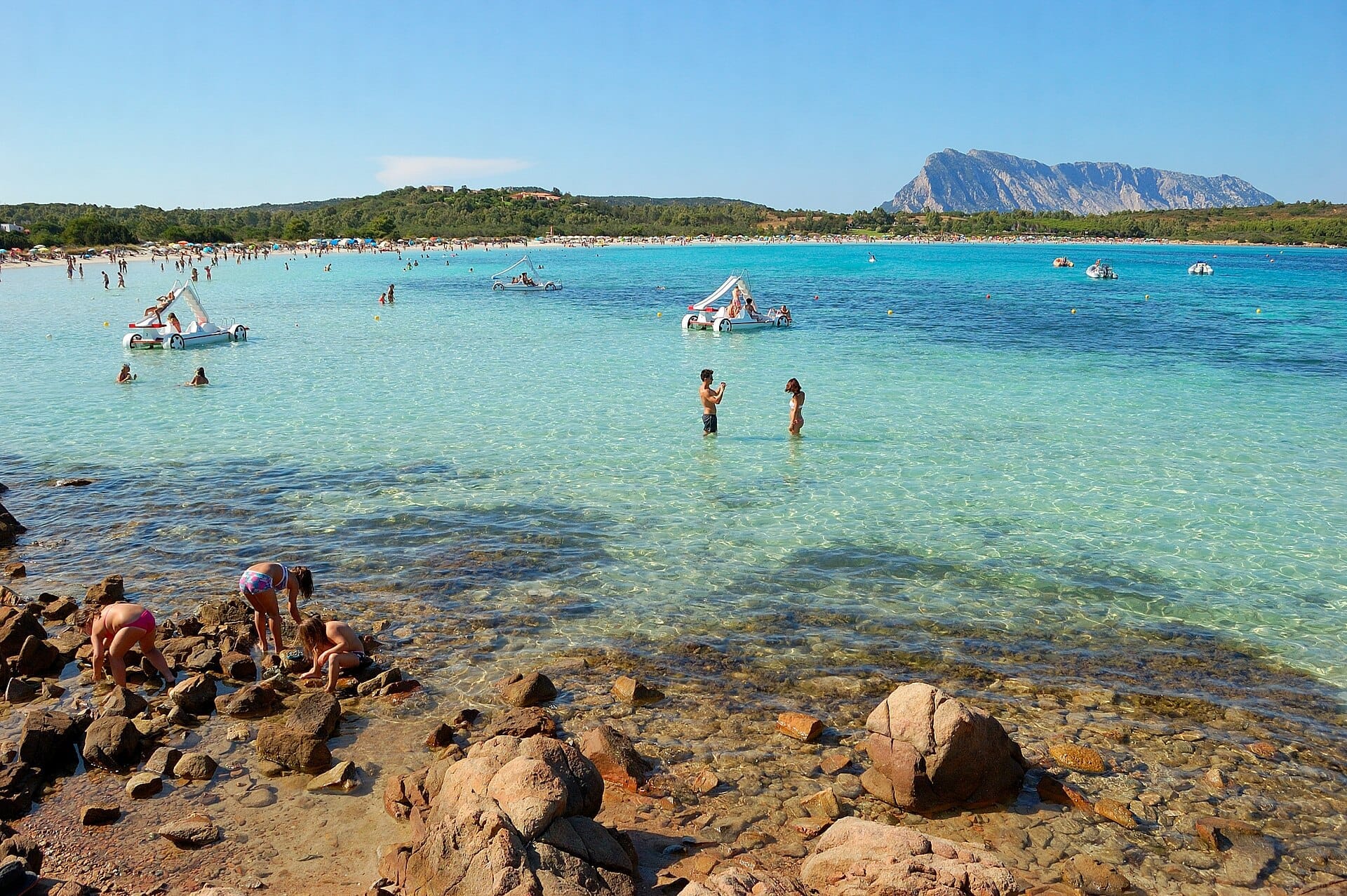
Spiaggia di Cala Brandinchi, nicknamed 'Little Tahiti', is a crescent of white quartz sand and pale turquoise shallows on Sardinia's northeast coast, set within the Tavolara-Punta Coda Cavallo Marine Protected Area near San Teodoro. The water is famously calm and shallow, the pinewood behind the beach provides natural shade, and the overall scene is as close to a tropical postcard as the Mediterranean gets — though in high summer, everyone knows it.
Quick Facts
- Location
- Capo Coda Cavallo, San Teodoro, Gallura, northeast Sardinia
- Getting There
- By car from Olbia: take SS125 south for ~20–22 km, turn left toward Capo Coda Cavallo at the Lutturai junction, then continue for about 900 m on paved road and ~1 km on a dirt track to the parking area. A seasonal Beach Bus shuttle operated by San Teodoro serves a stop at Cala Brandinchi, at the entrance to the parking area.
- Time Needed
- Half day minimum; most visitors stay 3–5 hours
- Cost
- Beach entry is subject in summer to mandatory reservation with a small environmental fee (currently reported at about €1 per person) and parking charges apply (€1.50/hr low season, €2.50/hr high season — verify locally before visiting).
- Best for
- Families with young children, snorkellers, photographers, couples seeking scenic swimming
- Official website
- www.sardegnaturismo.it/en/explore/brandinchi
What Makes Cala Brandinchi So Distinctive
Spiaggia di Cala Brandinchi earns its 'Little Tahiti' nickname through a specific combination of elements that rarely align this perfectly: ultra-fine white sand that stays cool even in direct sun, water so pale and clear that you can count individual grains of sand at chest depth, and a gently sloping seabed that keeps the swimming zone calm and shallow for a long way out. The beach sits within the Tavolara-Punta Coda Cavallo Marine Protected Area, formally established in 1997, which covers a wide stretch of northeast Sardinia's coastline and helps maintain the exceptional water clarity that photographers and snorkellers prize here.
The bay itself faces east, which shapes the entire experience. Mornings arrive with direct sun on the water and a low angle that turns the shallows almost neon-green before shifting to that recognisable Caribbean blue by mid-morning. By afternoon, the pinewood fringe along the back of the beach begins to offer natural shade, and the light becomes softer for photography. The pine scent mixes with sea salt in a way that is distinctly Sardinian, different from the sunscreen-and-frying-fish aroma of more developed resort beaches along this coast.
💡 Local tip
Arrive before 9:00 in July and August. The parking area fills fast and the beach gets noticeably crowded by 10:30. Early arrival also gives you the best morning light and calmer water before any afternoon breeze picks up.
The Beach Environment: Sand, Water, and Setting
The sand at Cala Brandinchi is fine and predominantly white-cream in tone, with a texture closer to powder than the gritty golden sand found elsewhere on the island's east coast. It compacts slightly when wet, making it easier to walk on barefoot than you might expect. The beach stretches roughly 400 metres in a gentle arc and is wide enough that, even in peak season, the back rows near the pines feel less compressed than the waterfront.
The seabed slope is exceptionally gradual, which is why the beach is so well suited to children. At 20 metres from shore the water may still only reach an adult's waist. There are no significant rocks underfoot in the main swimming area, and the bay's orientation provides natural shelter from the prevailing winds. Jellyfish do appear occasionally in late summer, as they do across Sardinia, but the sheltered position keeps the water calm even on days when nearby open beaches get choppy.
The surrounding territory is part of the Gallura region, where granite scrubland and coastal pine forests define the landscape. The road in passes through fragrant macchia — a mix of mastic, rosemary, and wild herbs — so even the approach feels different from the drive to a commercial beach resort. The pinewood backing the sand is not landscaped but wild, with gnarled trunks and needle-carpeted ground that provides natural shade and a place to leave bags away from the waterline.
Tickets & tours
Hand-picked options from our booking partner. Prices are indicative; availability and final rates are confirmed when you complete your booking.
Gulf of Orosei mini cruise from Cala Gonone
From 53 €Instant confirmationFree cancellationSpeedboat Trip to Gulf of Orosei with Aperitif from Cala Gonone
From 119 €Instant confirmationFree cancellationCala Goloritze and Cala Luna dinghy tour from Orosei
From 149 €Instant confirmationFree cancellationSnorkeling in the Gulf of Orosei from Cala Gonone
From 95 €Instant confirmationFree cancellation
How the Beach Changes Through the Day
Before 9:00, Cala Brandinchi belongs almost entirely to early risers, local swimmers, and the occasional jogger on the shoreline. The water is at its calmest in these first hours, completely flat on most summer mornings, with the rising sun backlighting the shallows from the east. This is unambiguously the best time to be here: the colours are at their most intense and the experience is closer to the 'empty paradise' image that brought you here in the first place.
By 11:00 in July and August the beach is comfortably full. Umbrellas and towels occupy most of the prime waterfront space, children wade in the shallows, and the beach service (I Giardini di Cala Brandinchi, reported open roughly 08:00–20:00 in high season) is in full operation. The social atmosphere is Italian in character: families set up for the entire day with cool boxes and folding chairs, teenagers claim the far corners, couples stake out spots near the tree line. It is enjoyable but it is not quiet.
Afternoons bring a slight drop in temperature and, often, a gentle onshore breeze that ruffles the water surface without creating waves. The light shifts to a warmer gold by 17:00, and those who stayed past the midday crush find the beach thinning out noticeably after 18:00. Sunset is not visible from Cala Brandinchi due to its east-facing orientation, but late afternoon is still pleasant and substantially less crowded than the peak hours.
⚠️ What to skip
Cala Brandinchi is one of the most photographed beaches in Sardinia. In high season (late June to early September), the 'empty beach' version you have seen online requires either an early morning visit or a trip in May, early June, or September.
The Marine Protected Area: What It Means in Practice
The Tavolara-Punta Coda Cavallo Marine Protected Area was established in 1997 and covers approximately 15,357 hectares of sea along this stretch of northeast Sardinia. For visitors to Cala Brandinchi, this status has real, noticeable effects. Boat anchoring is restricted in certain zones, keeping the underwater seagrass meadows intact. The Posidonia oceanica meadows visible beneath the surface at the edges of the bay are a direct result of this protection: these ancient marine grasslands are slow-growing, fragile, and responsible for much of the water's transparency and oxygen content. For more on exploring the underwater environment around here, the Sardinia snorkelling and diving guide covers the northeast coast in detail.
In practical terms, the protected area status means the beach has avoided the worst of commercial overdevelopment. There is no jetski hire directly on Cala Brandinchi, no amplified music from beach bars, and no speedboats cutting through the swimming zone. The contrast with some of the more developed beaches around San Teodoro is immediately apparent. What you get in exchange for the lack of amenities is a beach that still looks and functions like a natural environment.
Getting There and Practical Logistics
Cala Brandinchi is in the municipality of San Teodoro, within the Capo Coda Cavallo peninsula in northeast Sardinia. The nearest major transit hub is Olbia, served by Olbia Costa Smeralda Airport (IATA: OLB), approximately 30 kilometres to the northeast. From Olbia, take the SS125 south toward Siniscola for roughly 19 kilometres, then turn left toward Capo Coda Cavallo. After about 900 metres, turn right onto an unpaved track and continue for approximately 1 kilometre to the beach parking area. The track is passable in a standard car but can be dusty and corrugated; low-speed driving protects both your vehicle and the track surface. For general orientation around the northeast, the Olbia region guide covers the key bases.
There is no regular ARST public bus service directly to Cala Brandinchi. ARST buses serve San Teodoro town, and in season a dedicated Beach Bus shuttle runs to a stop at Cala Brandinchi; otherwise the beach requires a car, scooter, or bicycle from San Teodoro. Cycling from San Teodoro is feasible for fit visitors with appropriate bikes, as the terrain is mostly flat once you leave the main road. Taxis from San Teodoro to the beach are an option and can be pre-arranged through local accommodation. A rental car is the most practical solution and also opens up the wider coastline.
Parking is fee-paying in season (current posted rates are €1.50 per hour in low season and €2.50 per hour in high season — these are private operator rates and should be verified locally before your visit, as they may have changed). The lot can fill entirely in peak season by mid-morning. If you find it full, visitors sometimes park along the access track, though this is not ideal and can block emergency access; local authorities may operate overflow or restrict parking depending on the season.
ℹ️ Good to know
Cala Brandinchi has limited on-site services beyond its beach establishments. A kiosk/chiringuito operates in high season near the parking area and the lidos, but there is no full restaurant. Bring water, food, and sun protection. Shade on the beach itself is limited to the pine tree fringe at the back.
When to Visit: Season and Timing
In short, is that Cala Brandinchi in late July or August is a beautiful beach that requires sharing with a lot of other people who had the same idea. If the priority is the scenery and you can tolerate company, high season is still enjoyable: the water is at its warmest (sea temperatures typically reach 26–28°C by August), the days are long and reliably sunny, and the social atmosphere is lively. For context on planning across the season, the best time to visit Sardinia guide gives a full picture of what each month offers.
The shoulder months of May to mid-June and September are the sweet spot. Temperatures are warm (air temperatures typically 20–27°C, sea temperatures still comfortable from June onward), the beach is noticeably quieter, and the landscape looks its best with the scrubland still green from spring rains. September in particular is excellent: the water is still warm from summer, the light is softer and more photogenic, and the crowds have thinned considerably. The September in Sardinia guide covers this shoulder period in more detail.
Outside May to October, Cala Brandinchi is technically accessible but most beach services close, the parking kiosk is unstaffed, and the weather is unreliable. The beach itself is worth a walk in winter for the emptiness and the drama of a rougher sea, but as a swimming destination it is strictly a warm-season spot.
Photography and Snorkelling Notes
The water colour at Cala Brandinchi photographs best in the two hours after sunrise and in the late afternoon, when the angle of light maximises the contrast between the pale sand and the shifting greens and blues of the shallows. Midday sun washes out some of the tonal variation. A polarising filter, physical or digital, eliminates surface glare and reveals the underwater texture. The view from ankle depth looking back toward the pine fringe is the classic composition: low angle, foreground ripples, trees framing the sky.
For snorkelling, the most interesting areas are at the northern end of the bay where the seabed transitions from sand to rocky patches, and where Posidonia seagrass meadows begin. Sea bream, mullet, and wrasse are common. The protected area status means fish are less wary than on unprotected stretches of coast. Basic mask-and-snorkel is sufficient; there is no deep diving to be done directly from the beach, but the shallow reef edge is worth 30 minutes of exploration.
Accessibility: the path from the parking area to the beach is unpaved and uneven in places, making it difficult for wheelchair users or those with limited mobility. The beach surface itself is soft sand, which presents additional challenges. Facilities for visitors with disabilities are limited. The shallow, calm water is well suited to young children and non-swimmers once you reach the waterline.
Insider Tips
- The far northern end of the beach near the rocky outcrops is consistently less crowded than the central section, even in August. It requires a short walk from the main parking area but rewards with more space and better snorkelling.
- The access track from the main road is unpaved and can be rough after rain. Arriving in the morning when the track is drier and harder makes for a smoother drive. Low gear helps preserve your car's suspension on the corrugated sections.
- Bring more water than you think you need. The kiosk near the parking area sells drinks at high-season prices, and on very hot days the walk to and from the waterline in soft sand is more tiring than it looks on a flat beach.
- The bay faces east, so sunrise is dramatic from the shoreline. If you are staying nearby in San Teodoro, the roughly 15–20-minute drive out to Cala Brandinchi at first light before the parking area officially opens gives you an almost entirely private beach.
- Combine Cala Brandinchi with Cala Girgolu or Lu Impostu on the same visit: these neighbouring beaches to the north is smaller and accessed via a short coastal path, offers a different character, and is almost always quieter than Brandinchi's main beach.
Who Is Spiaggia di Cala Brandinchi For?
- Families with young children: the gradual seabed, calm water, and firm sand at the waterline make it one of the safest and most comfortable family beaches in northeast Sardinia
- Photographers seeking that classic Sardinian turquoise-water image, particularly in morning light during shoulder season
- Snorkellers who want a protected, clear-water environment with easy shore entry and no boat traffic in the swimming zone
- Couples visiting in May, June, or September who want a scenic beach without the full high-season crowd density
- Travellers combining a beach day with a broader road trip through Gallura and the northeast coast
Nearby Attractions
Other things to see while in Gallura:
- Basilica di San Simplicio (Olbia)
The Basilica di San Simplicio is the oldest surviving building in Olbia and one of the finest Romanesque churches in Sardinia. Built between the late 11th and mid-12th centuries on a site with origins in a Roman necropolis and a Palaeo-Christian church, it offers a rare, unhurried encounter with pre-medieval Gallura — around ten minutes' walk from the ferry port crowds.
- Capo Testa
Capo Testa is a rugged granite promontory jutting into the Strait of Bonifacio near Santa Teresa Gallura, in Sardinia's far north. The headland is free to visit and rewards exploration with wind-sculpted rock formations, secluded sea pools, and the eerily beautiful Valle della Luna. It is one of northern Sardinia's most distinctive natural landscapes.
- Coddu Vecchiu Giants' Tomb (Arzachena)
The Giants' Tomb of Coddu Vecchiu is one of Sardinia's best-preserved Nuragic funerary monuments, featuring a roughly 4-metre granite entrance stele that has stood in the Gallura countryside for roughly 4,000 years. Located about 10 km from the Gulf of Arzachena, it offers a absorbing encounter with the island's prehistoric past in under an hour.
- Costa Paradiso
Costa Paradiso is a striking stretch of northern Sardinian coastline where ancient red and orange granite cliffs drop into transparent turquoise water. Largely a seasonal holiday settlement with under 200 year-round residents, it offers raw scenery, natural rock pools, and sheltered coves without the infrastructure of larger resorts.