South Street Seaport Historic District: Manhattan's Maritime Past at the Water's Edge
The South Street Seaport Historic District preserves a remarkably intact pocket of early 19th-century Lower Manhattan along the East River. Free to explore at any hour, it layers cobblestone streets, restored counting houses, historic tall ships, and contemporary dining into one of the city's most texturally rich walking experiences.
Quick Facts
- Location
- Fulton Street at South Street, Lower Manhattan (East River waterfront)
- Getting There
- Fulton St subway station (A, C, J, Z, 2, 3, 4, 5 lines), approx. 4-minute walk; Wall St station (2, 3, 4, 5) approx. 6-minute walk
- Time Needed
- 1–3 hours for the streets and waterfront; half a day if visiting the Seaport Museum and historic ships
- Cost
- Free to walk the district; individual museums and ship tours charge separate admission — check venues directly
- Best for
- Architecture and history enthusiasts, waterfront walks, photography, combining with a Financial District itinerary
- Official website
- theseaport.nyc
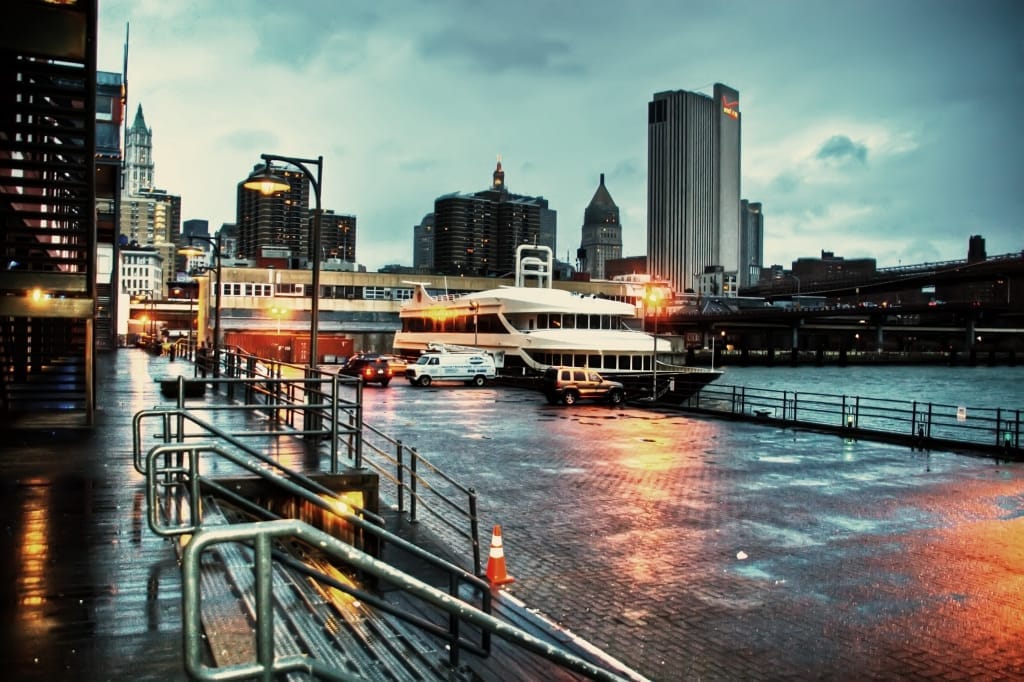
What the South Street Seaport Historic District Actually Is
The South Street Seaport Historic District is not a theme park or a managed attraction with a single ticket booth. It is a designated historic neighborhood, bounded by Dover Street to the north, Pearl Street to the west, John Street to the south, and the East River to the east,, where the street plan and building stock of early commercial Manhattan have survived largely intact. The district was listed on the National Register of Historic Places in 1972, expanded in 1977, and formally designated a New York City Landmark District on August 11, 1977, with a further extension added in 1989.
What you encounter here is a concentration of restored late 18th- to early 20th-century commercial buildings, many of them four- and five-story brick counting houses and warehouses from the 1810s through 1840s, sitting within steps of the glass towers of the Financial District. The contrast is jarring in the best possible way: one block you are in contemporary Lower Manhattan, the next you are on a cobblestone lane flanked by hand-laid brick facades and iron shutters. The South Street Seaport Museum, established in 1967 to anchor preservation of the area, operates several of those buildings as exhibit spaces and maintains a fleet of historic vessels at Piers 15 and 16.
ℹ️ Good to know
The cobblestone pedestrian streets, totaling 42,000 square feet, are publicly accessible, Plan to wear flat, grippy shoes; the stones are uneven and slippery after rain.
The Architecture: Reading the Buildings
The most rewarding thing you can do in this district is slow down and look up. The row of counting houses along Schermerhorn Row, on the block between Fulton and John Streets facing the waterfront, represents one of the finest surviving groups of early Federal-style commercial architecture in the United States. Built beginning in 1811 by developer Peter Schermerhorn, these four-story Georgian-Federal brick buildings still show their original dormer windows, pitched roofs, and stone lintels. They were constructed on landfill, as was most of this part of Manhattan, and served as mercantile offices during the era when the East River waterfront was the commercial heart of the young republic.
The blocks along Water Street and Front Street add a slightly later layer, with Greek Revival and Italianate warehouse buildings from the 1830s through 1860s. The rhythm of these facades, repetitive but never uniform, gives the district its character: varied cornice heights, bricked-up arched openings, painted commercial signage that has been uncovered on several buildings. For anyone interested in American urban architectural history, this is essential territory. It is covered in the NYC architecture guide, which places the seaport in the broader context of Manhattan's built history.
Tickets & tours
Hand-picked options from our booking partner. Prices are indicative; availability and final rates are confirmed when you complete your booking.
Statue of Liberty, Ellis Island, and Brooklyn Bridge Happy Hour Cruise
From 49 €Instant confirmationFree cancellationSpirit of New York Dinner Cruise
From 161 €Instant confirmationFree cancellationNew York City Highlights bike tour
From 70 €Instant confirmationFree cancellationNew York Statue of Liberty and Ellis Island tour by ferry
From 55 €Instant confirmation
How the Experience Changes by Time of Day
Early morning is the most atmospheric window to visit. Before 9 a.m., the cobblestone streets carry almost no foot traffic. The only sounds are pigeons and the low rumble of delivery vehicles on nearby South Street. At this hour the light falls low and raking across the brick facades, and the East River glints through the gaps between pier buildings. The smell of the river is present but faint, salt and diesel, and the silence within the district feels genuinely removed from the city a block away.
By late morning on weekends, tour groups from the Financial District and families from nearby neighborhoods begin to arrive. The piers fill with people photographing the skyline looking toward Brooklyn Bridge, and the restaurant and bar terraces start setting up. Midday on a summer weekend can feel crowded on the pier level, though the cobblestone side streets remain calmer because they are off the main pedestrian flow.
Evening brings a different mood entirely. The historic district's restaurants draw a post-work Financial District crowd on weeknights. On warm evenings, Pier 17's rooftop hosts concerts and events. The view of the illuminated Brooklyn Bridge from Piers 15 and 16 at dusk is one of the more quietly spectacular sights in Lower Manhattan, far less crowded than the bridge itself. If your primary goal is photography, late afternoon in spring or fall gives you warm directional light on the brick facades and manageable crowds.
💡 Local tip
For the best Brooklyn Bridge photographs with the historic ships in the foreground, position yourself at the northern end of Pier 15 facing northwest about 30 minutes before sunset. The framing of the tall masts against the bridge cables is difficult to replicate from anywhere else at street level.
The Historic Ships and the Seaport Museum
The South Street Seaport Museum operates the most tangible reminder of why this district exists at all: a collection of historic vessels moored at Piers 15 and 16. The fleet includes the 1885 iron-hulled square-rigger Wavertree, one of the largest sailing ships of its era still afloat, and the 1907 lightship Ambrose, which once guided vessels into New York Harbor. These are not static display pieces, they are actively conserved working vessels, and the museum runs educational programs, sailing trips, and tours aboard them. Admission to the ships and museum galleries is separate from entering the district itself; check current pricing directly with the museum at southstreetseaportmuseum.org before visiting.
The museum's land-based exhibitions occupy several of the Schermerhorn Row buildings and additional spaces on Fulton Street. Exhibits trace the commercial history of the port, the working lives of longshoremen and merchants, and the ecology of New York Harbor. The quality and depth of these galleries is often underestimated by visitors who walk through the district without stopping. If you have even a passing interest in maritime history or the development of American commerce, two hours inside the museum buildings is well spent.
Practical Walkthrough: Navigating the District
The district is compact enough to cover on foot in 90 minutes without entering any buildings. A logical route starts at the Fulton Street subway exit, walks east along Fulton Street toward the waterfront, turns south along the piers for the river views and ship sightings, then loops back through the cobblestone streets of Schermerhorn Row before returning north on Front or Water Street. This loop covers the architectural and waterfront highlights without backtracking. For a broader Wall Street and Financial District combination, allow a half day and start at Bowling Green, working northeast toward the Seaport.
Transit is straightforward. The Fulton Street station is one of the largest transfer hubs in the subway system, served by the A, C, J, Z, 2, 3, 4, and 5 lines. From Midtown, the 4 or 5 express train reaches Fulton Street in roughly 10–15 minutes. The Wall Street station (2, 3, 4, and 5 trains) offers an alternative exit closer to the southern end of the district. There is no need to take a cab or rideshare unless you are arriving from an outer borough or carrying significant luggage.
The NYC Ferry also stops at Pier 11/Wall Street, a short walk south of the district, connecting to Brooklyn, Queens, and other Manhattan points. This is worth considering if you plan to continue to DUMBO or Brooklyn Heights after exploring the Seaport.
⚠️ What to skip
The cobblestone surfaces are genuinely uneven. Wheelchairs and strollers can navigate the surrounding modern sidewalks on South Street and Fulton Street, but the interior cobblestone pedestrian streets within the historic core are difficult for those with mobility impairments. The pier-level areas at Piers 15 and 16 are on smoother decking.
Context: The Seaport's Complicated Modern History
The South Street Seaport has gone through several distinct phases since preservation efforts began in the 1960s. The founding of the museum in 1967 was a direct response to large-scale urban renewal demolition that had already erased much of the neighborhood's original building stock. The 1970s and 1980s saw the arrival of the Rouse Company's festival marketplace concept, which turned parts of the district into tourist retail. That approach aged poorly, and for years the area had a faded, underused quality.
The current iteration, anchored by the rebuilt Pier 17 pavilion (reopened in 2018 with a rooftop venue and food hall) and sustained investment in the surrounding blocks, has drawn a more local and food-focused crowd. The tension between historic preservation and commercial development has not fully resolved, and some of the blocks between the piers and the cobblestone core feel transitional. This is worth knowing in advance: the district is not uniformly polished or photogenic. The authentic historic value is concentrated on the Schermerhorn Row block and the immediate cobblestone streets. The pier area is modern and event-driven.
Visitors with limited time in Lower Manhattan should weigh the Seaport against other anchors of the area. The 9/11 Memorial and the Battery Park waterfront are both within walking distance and draw larger crowds for different reasons. The Seaport is the quieter, less managed option, and rewards visitors who are genuinely curious about architecture and maritime history rather than those seeking a conventional tourist landmark.
Weather and Seasonal Considerations
The East River waterfront is exposed. In summer, the piers receive direct sun with little shade, and heat reflecting off the decking makes midday visits uncomfortable from late June through August. Bring water, and plan outdoor time for morning or late afternoon. In winter, wind off the river adds a significant chill factor; the cobblestone streets offer slightly more shelter, but the pier level is cold and often empty on weekdays from December through February.
Spring and fall are the most comfortable seasons for an extended visit. April through early June and September through October offer mild temperatures, lower humidity, and the best photographic light. These months also align with the best overall conditions for visiting New York City. Summer weekends bring larger crowds to the pier-level dining and event spaces, which can make the cobblestone lanes feel more congested than their width comfortably allows.
Insider Tips
- The block of Schermerhorn Row is best photographed from the middle of the cobblestone street on Fulton Street facing west, where the building line frames a narrow but complete Federal-era streetscape. Do this before 9 a.m. to eliminate foot traffic from the frame.
- The museum's historic ships are visible and impressive from the public pier even without paying admission. If budget is a constraint, walk Pier 15's outer edge for a close look at the Wavertree's hull and rigging from the dock level.
- Pier 17's rooftop is accessible separately from its ticketed events on many weekday afternoons. The views of the Brooklyn Bridge and Lower Manhattan skyline from there are competitive with paid observation decks at a fraction of the cost, when the rooftop is open to the public.
- The blocks on Water Street immediately north of Fulton contain several 1830s-1840s warehouse facades that see almost no tourist foot traffic despite being within the landmarked district. These are quieter for photography and show the district's layered history without the curated presentation of the main blocks.
- If you are combining this with a Brooklyn Bridge walk, cross the bridge on foot and descend into DUMBO, then take the NYC Ferry back from Pier 1 in Brooklyn Bridge Park to Pier 11 near the Seaport. The approach to the Seaport from the water, watching the tall ships come into view, reframes the whole neighborhood.
Who Is South Street Seaport Historic District For?
- Architecture and urban history enthusiasts who want to read a building rather than just photograph it
- Photographers seeking early-morning shots of Federal-era streetscapes with no crowds
- Travelers combining a Financial District itinerary with a waterfront walk
- Families with children interested in historic tall ships and maritime history
- Budget travelers: the core experience, including the cobblestone streets, pier views, and Brooklyn Bridge sightlines, is entirely free
Nearby Attractions
Other things to see while in Lower Manhattan:
- National September 11 Memorial
The National September 11 Memorial occupies the original footprints of the Twin Towers in Lower Manhattan. The outdoor reflecting pools are free and open daily from 8:00 a.m. to 8:00 p.m. This page covers the memorial plaza; for the underground museum, see our separate museum guide.
- National September 11 Museum
The National September 11 Museum sits beneath the World Trade Center memorial plaza in Lower Manhattan. The 110,000-square-foot underground museum documents the attacks of September 11, 2001, and February 26, 1993, and is one of the most emotionally significant museum experiences in the United States. The outdoor memorial pools are free; museum admission requires a timed ticket.
- Battery Park
Perched at the southernmost tip of Manhattan, The Battery is a free waterfront park offering sweeping views of New York Harbor, access to the Statue of Liberty and Ellis Island ferries, and nearly four centuries of layered history. It works well at any hour, but rewards those who arrive early.
- Ellis Island National Museum of Immigration
Ellis Island National Museum of Immigration sits in New York Harbor on ground that shaped American history more than almost any other. Reached only by ferry, it offers a deeply affecting look at the 12 million immigrants who passed through between 1892 and 1954, housed in a landmark Beaux-Arts building that has been meticulously restored.