Shedd Aquarium: Chicago's Window Into the Ocean
Opened in 1930 on the shores of Lake Michigan, the John G. Shedd Aquarium holds 5 million gallons of water and about 32,000 animals. It sits at the heart of Museum Campus, making it an easy pairing with the Field Museum or Adler Planetarium for a full day on the lakefront.
Quick Facts
- Location
- 1200 S. DuSable Lake Shore Dr., Museum Campus, Chicago, IL 60605
- Getting There
- CTA #146 bus (Inner Drive/Michigan Express) stops at Museum Campus; Roosevelt station (Red/Green/Orange Lines) is about a 15-minute walk east
- Time Needed
- 2.5 to 4 hours for a full visit; allow extra time on weekends and school holidays
- Cost
- Dated tickets sold in USD; prices vary by date and ticket type. Check sheddaquarium.org for current rates before visiting
- Best for
- Families with young children, marine life enthusiasts, cold-weather sightseers
- Official website
- www.sheddaquarium.org
What the Shedd Actually Is
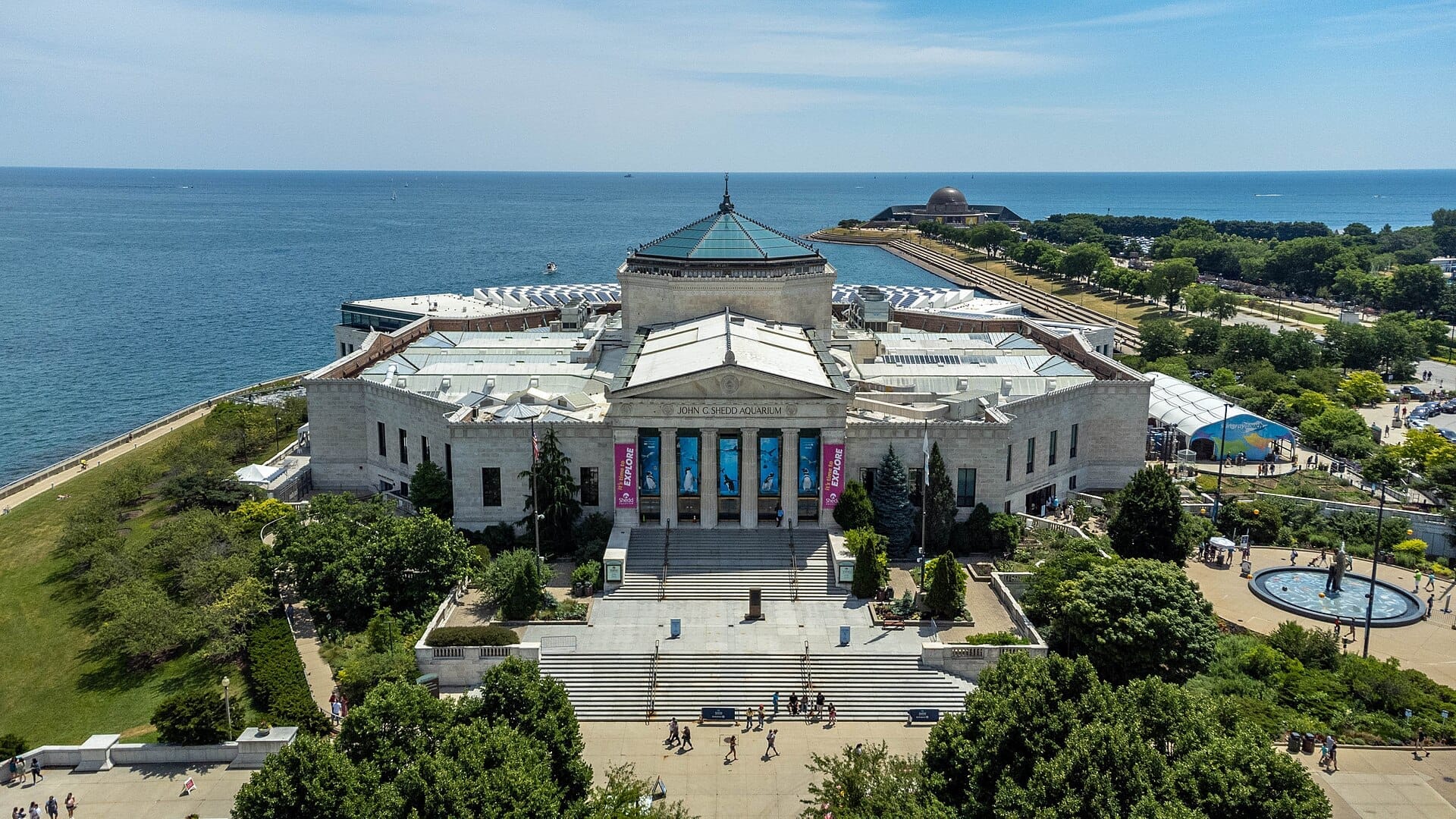
The John G. Shedd Aquarium is one of the largest aquariums in the Western Hemisphere, holding approximately 5 million US gallons of water across its tanks and habitats. It opened on May 30, 1930, funded by a bequest from John Graves Shedd, a Marshall Field's executive, and the building itself still carries the quiet grandeur of that era: a white Georgia marble exterior in a neoclassical style that fits cleanly alongside the Field Museum next door.
Inside, the scale surprises first-time visitors. The central Coral Reef exhibit is a 90,000-gallon circular tank visible from multiple gallery levels, and the Oceanarium at the back of the building stretches across an entire wing, designed to simulate the Pacific Northwest coastline with floor-to-ceiling windows facing Lake Michigan. On a clear day, the water outside those windows and the water inside the tank seem to merge into the same horizon.
ℹ️ Good to know
Hours vary by day and season. Before booking tickets, check the official hours page at sheddaquarium.org/plan-a-visit/hours-and-location. Timed, dated tickets are required and sell out on busy weekends and school breaks.
Navigating the Exhibits
The ground floor centers on the historic Coral Reef exhibit, where Caribbean reef fish, sharks, and sea turtles circle in the large circular tank. Feeding demonstrations here draw crowds, so arrive at least ten minutes early if you want a front-row position along the rail. The narration is aimed at families with school-age children, but the reef itself is genuinely absorbing for any age.
The Oceanarium is the section most visitors remember longest. It houses beluga whales and Pacific white-sided dolphins in pools built to maximize natural light and simulate open-water conditions. Bottlenose dolphin presentations take place in the main pool theater; the seating fills quickly, and the upper bleachers can make the action feel remote. Arrive early and aim for the lower section on the far side of the pool for the clearest sightlines and the lowest splash risk.
Abbott Oceanarium also has a quieter underwater viewing gallery below pool level, where you can watch the belugas pass within arm's length of the glass. This corridor tends to be calmer than the upper deck and is genuinely one of the better spots in the whole building, especially around feeding times when the animals are active close to the windows.
Deeper into the building, Wild Reef recreates a Philippine coral reef across multiple interconnected tanks, with blacktip reef sharks patrolling overhead in a tunnel exhibit. For visitors building a broader aquatic day, Adler Planetarium and the Field Museum are both within a 5-minute walk on the same Museum Campus grounds.
Tickets & tours
Hand-picked options from our booking partner. Prices are indicative; availability and final rates are confirmed when you complete your booking.
Go City | Chicago All-Inclusive Pass
From 127 €Instant confirmationFree cancellationiFLY Chicago Lincoln Park indoor skydiving experience
From 126 €Instant confirmationFree cancellationiFLY Chicago Rosemont indoor skydiving tickets
From 117 €Instant confirmationFree cancellationChicago lakefront neighbourhood bike tour
From 18 €Instant confirmationFree cancellation
How the Experience Changes by Time of Day
The aquarium typically opens to the public in the morning, and the first 45 minutes after doors open are the calmest of the day. Lighting in most of the freshwater and reef galleries is deliberately dim to mimic natural aquatic light, which means the space never feels as cavernous as it actually is. The sound environment is low and watery in the gallery corridors, punctuated by the churn of life-support systems and the occasional high-pitched click of an echolocating beluga.
By mid-morning, school groups arrive in waves and the noise level in the Oceanarium and the main Coral Reef gallery rises sharply. Weekend afternoons in summer are the most crowded period by a wide margin. If you have flexibility, a weekday morning visit in September or October offers the exhibits at their most navigable. The holiday season also draws large crowds, though the building itself is decorated and the programming shifts toward seasonal themes.
💡 Local tip
Arrive at or near opening time to see the belugas most active before the day's presentations begin. The underwater viewing gallery below the Oceanarium pools is consistently less crowded than the upper deck, even on busy days.
The Building and Its Setting
The original 1930 structure was designed by Graham, Anderson, Probst and White in a Beaux-Arts style, with a roughly octagonal plan and a copper-trimmed roofline. The Oceanarium wing was added in 1991, extending the building northward toward the lake. Standing outside on the Museum Campus lawn between the Shedd and the Field Museum, you get one of the better mid-distance views of both buildings together, with the lakefront behind them.
Museum Campus sits at the northern edge of the South Loop, connected to Grant Park by a pedestrian underpass beneath DuSable Lake Shore Drive. The Lakefront Trail runs directly along the eastern edge of the campus, making it easy to combine an aquarium visit with a walk or bike ride along the water. In summer, the campus lawns fill with picnickers between museum visits.
Practical Information for Your Visit
Timed, dated tickets are sold in advance on the Shedd website and are strongly recommended, particularly for weekends, school holidays, and summer dates. Walk-up tickets may be available at the door depending on capacity, but this is not guaranteed on high-demand days. Pricing varies by date and ticket type, so check sheddaquarium.org/plan-a-visit/tickets for current figures before budgeting.
By public transit, CTA bus route 146 (Inner Drive/Michigan Express) provides the most direct service from downtown to Museum Campus, stopping close to the main entrance. From the Red, Green, or Orange Line at Roosevelt station, it is roughly a 15-minute walk east along the lakefront path. Parking lots adjoin the campus but fill quickly on weekends; the CTA or rideshare is the more reliable approach.
For visitors planning a wider museum day, the CityPASS and Go Chicago Card both include Shedd Aquarium admission. Whether those passes make financial sense depends on which other attractions you plan to visit on the same trip.
Accessibility
The Shedd provides accessible entrances, elevator access between floors, manual wheelchairs available for loan on a first-come basis, and sensory-friendly resources including sensory bags and social narratives for visitors with sensory sensitivities. Service animal guidance and additional accessibility details are published at sheddaquarium.org/plan-a-visit/accessibility.
Photography
Most gallery lighting is low and blue-shifted, which means phone cameras without strong low-light capability will struggle in the reef and freshwater areas. The Oceanarium has the most natural light and is the best location for photographing the belugas. Avoid flash, both because it disturbs the animals and because it washes out the tank glass entirely. A camera that handles ISO 1600 or higher well will produce noticeably better results than a phone in the darker galleries.
Who Should Reconsider
The Shedd is a world-class institution, but it is not the right choice for every traveler. Admission is not cheap, and visitors who are primarily interested in Chicago's architecture, history, food, or nightlife will find other attractions better suited to those priorities. Adults traveling without children sometimes find the pacing and programming tilted heavily toward families, particularly during school group hours. If marine biology is not genuinely interesting to you, two to three hours here may feel long.
Travelers on a tight budget should weigh the cost against the free admission at Lincoln Park Zoo, which offers a different but substantial wildlife experience at no cost. Those primarily interested in Chicago's broader cultural or architectural identity may get more from the Art Institute of Chicago or a Chicago Architecture Foundation River Cruise.
Insider Tips
- Book timed-entry tickets at least a few days ahead for any Saturday, Sunday, or school holiday visit. Capacity is genuinely limited and sold-out days do occur in peak season.
- The underwater beluga viewing corridor below the Oceanarium pool level is consistently less crowded than the main deck. Even on a busy afternoon, you can often have a section of the glass almost to yourself if you visit between scheduled presentations.
- The 4D theater inside the Shedd costs extra beyond standard admission. It is a short add-on film experience and is primarily aimed at young children; most adults without kids find it skippable.
- If you are combining Shedd with the Field Museum or Adler Planetarium, start at Shedd when it opens and move to a neighboring institution by early afternoon, when Shedd's crowd levels peak.
- The café inside is convenient but pricey and usually crowded around midday. The Museum Campus lawn and nearby paths along the lake are good spots for a packed lunch, and there are food options a short walk north toward Grant Park in warmer months.
Who Is Shedd Aquarium For?
- Families with children aged 3 to 12, who will find the dolphin presentations, touch pools, and reef exhibits genuinely engaging
- Cold-weather visitors looking for a full half-day indoor attraction that requires no weather contingency
- Marine biology enthusiasts and anyone with specific interest in beluga whales, reef ecosystems, or Pacific Northwest marine life
- Travelers combining Museum Campus attractions into a single full day, particularly with the Field Museum or Adler Planetarium
- Visitors using a Chicago multi-attraction pass who want to maximize value across several major institutions
Nearby Attractions
Other things to see while in Museum Campus & South Loop:
- Adler Planetarium
Opened in 1930 as the first planetarium in the Western Hemisphere, the Adler Planetarium combines immersive sky shows, serious astronomy collections, and one of the best unobstructed views of the Chicago skyline. Perched at the tip of a peninsula on Museum Campus, it rewards both science enthusiasts and casual visitors who stumble onto its lakefront terrace.
- Buddy Guy's Legends
Opened in 1989 by the legendary guitarist himself, Buddy Guy's Legends on South Wabash Avenue is the city's most historically significant blues club. This is where raw Chicago blues plays out in real time, where the walls are covered in signed memorabilia, and where any given Tuesday night can turn into a master class in American music.
- Field Museum of Natural History
One of the largest natural history museums in the world, the Field Museum of Natural History sits at the heart of Chicago's Museum Campus with over 20 million specimens spanning ancient Egypt, dinosaur fossils, and indigenous cultures from every continent. Whether you have three hours or a full day, this guide helps you make the most of it.
- Glessner House Museum
The Glessner House Museum is a surviving residential commission by architect H.H. Richardson in Chicago, completed in 1887 and now a National Historic Landmark. Guided tours of the granite fortress on Prairie Avenue reveal one of the most thoughtfully designed domestic interiors in American architectural history.