SFMOMA: San Francisco's Modern Art Museum, Honestly Assessed
The San Francisco Museum of Modern Art (SFMOMA) anchors the Yerba Buena cultural district in SoMa with seven floors of modern and contemporary art, a landmark building, and a collection that rewards slow looking. Here is what to expect, what to budget, and how to get the most out of your visit.
Quick Facts
- Location
- 151 Third Street, SoMa, San Francisco, CA 94103
- Getting There
- Montgomery St and Powell St BART/Muni (roughly 10-min walk); Muni bus lines 14, 14R, 30, 45 stop within a short walk
- Time Needed
- 2 to 4 hours; a full day if you study the permanent collection
- Cost
- Adults $30 USD, Seniors $25, Students $23, Under 18 free; Members free
- Best for
- Contemporary art fans, architecture enthusiasts, rainy-day culture seekers
- Official website
- www.sfmoma.org
What SFMOMA Actually Is
The San Francisco Museum of Modern Art (SFMOMA) is one of the largest museums of modern and contemporary art in the United States, housed in a building that is itself worth studying before you walk through the door. Founded in 1935 as the San Francisco Museum of Art, it was the first museum on the West Coast dedicated to modern art, and its collection has grown to tens of thousands of works spanning painting, sculpture, photography, media arts, and design.
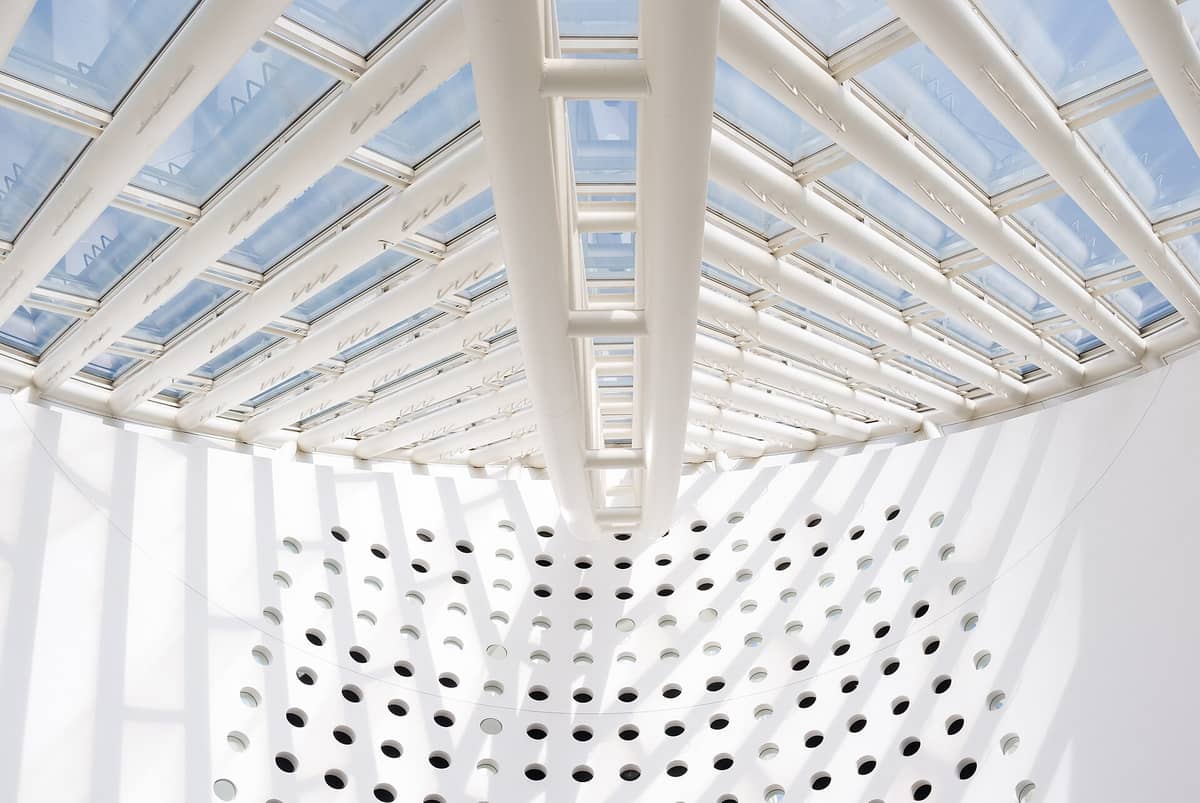
The current building at 151 Third Street opened in 1995, designed by Swiss architect Mario Botta. In 2016, a major expansion by Snohetta added a new wing wrapping around the original structure, more than doubling the gallery space to approximately 170,000 square feet of gallery space. The expansion is clad in a rippling white fiberglass skin that evokes the movement of the Bay's fog and water, a subtle architectural nod that most visitors walk past without noticing.
ℹ️ Good to know
SFMOMA is closed on Wednesdays. Thursday hours are noon to 8:00 p.m., which is the best option for avoiding weekend crowds. Monday, Tuesday, Friday, Saturday, and Sunday run 10:00 a.m. to 5:00 p.m. Confirm current hours at sfmoma.org before visiting, as special exhibition schedules can affect access.
The Building: Architecture as the First Exhibit
Approaching from Third Street, the Botta portion of the building announces itself with a cylindrical skylight tower clad in alternating bands of black and white brick. It is distinctive enough that visitors routinely photograph the exterior before they have paid admission. The Snohetta wing curves around the back and sides, its textured white surface catching light differently at different hours. In the late afternoon, when the sun angles low from the west, the facade takes on a warm ivory tone that makes it look almost organic against the glass towers of the surrounding SoMa district.
Inside, the atrium of the original Botta building remains one of the most compelling interior spaces in San Francisco: a soaring skylit rotunda that floods the central staircase with natural light. The Snohetta expansion added a separate network of galleries that flow differently, with varying ceiling heights designed to suit different scales of work. Navigating between the two architectural systems takes a few minutes of orientation, so pick up a floor map at the entrance.
The building sits in the Yerba Buena cultural district, a stretch of SoMa that also includes Yerba Buena Gardens immediately to the south and the Children's Creativity Museum nearby. If you are exploring the neighborhood on foot, the block-by-block texture changes noticeably: tech offices, hotels, and museum-adjacent cafes share the same streets.
Tickets & tours
Hand-picked options from our booking partner. Prices are indicative; availability and final rates are confirmed when you complete your booking.
Sonoma and Napa Valley wine tour from San Francisco
From 127 €Instant confirmationFree cancellationGo City | San Francisco Explorer Pass
From 76 €Instant confirmationFree cancellationMuir Woods and Sausalito guided tour with transportation
From 82 €Instant confirmationFree cancellationSan Francisco CityPASS
From 77 €Instant confirmationFree cancellation
The Collection: What You Will Actually See
The permanent collection is the reason to plan ahead rather than wander in casually. SFMOMA holds major holdings in Bay Area figurative painting, Abstract Expressionism, photography, and design. Works by Henri Matisse, Frida Kahlo, Diego Rivera, Jackson Pollock, and Bay Area artists like Richard Diebenkorn appear in the permanent galleries, though specific works rotate, so a piece you read about may not be on view.
Photography is a particular strength. The museum has one of the most significant photography collections in the country, assembled over decades, and the dedicated photography galleries on the upper floors consistently reward visitors who make it that far. The works are hung with enough breathing room that you can get close and actually read the texture and grain of a print, something larger crowds at blockbuster exhibitions rarely allow.
The fifth and sixth floors, which house the Pritzker Center for Photography and the Fisher Collection galleries, tend to be quieter than the lower floors. The Fisher Collection, gifted to the museum as a long-term loan, includes major works by Ellsworth Kelly, Gerhard Richter, and Chuck Close, among others. These galleries feel calibrated: the scale of the rooms matches the scale of the paintings.
💡 Local tip
Check the SFMOMA website for the current exhibition schedule before you go. Major temporary exhibitions often require timed-entry tickets in addition to general admission. Booking a day or two ahead prevents disappointment at the door.
How the Experience Changes by Time of Day
Weekend mornings from 10:00 a.m. onward bring a steady stream of visitors, and the lower-floor galleries near the entrance fill quickly. Families with children gravitate toward interactive spaces and the ground-floor free area, which is accessible without paid admission and includes a cafe and the museum store. If you are visiting on a Friday or Saturday with a specific exhibition in mind, arriving right at opening gives you roughly 45 minutes of relatively uncrowded viewing before tour groups begin to arrive around 11:00 a.m.
Thursday evenings are the most underused entry point. From noon until 8:00 p.m., the museum is open to a weekday audience of slower browsers and after-work visitors. By 5:30 p.m. on a Thursday, the upper photography floors and the Fisher Collection galleries can be nearly empty. The natural light that fills the Botta skylight is gone by that hour, replaced by controlled gallery lighting, which actually suits the paintings better than the bright midday glare.
Summer in San Francisco means fog, particularly in the mornings. The Snohetta wing's fog-referencing exterior looks appropriately moody under June overcast skies, but this has no practical effect inside. SFMOMA is one of the city's best wet-weather options regardless of season.
Getting There and Getting In
The museum is located at 151 Third Street, roughly a ten-minute walk from Montgomery Street and Powell Street BART/Muni stations, which are served by the Bay Area Rapid Transit network connecting central San Francisco with the East Bay and San Francisco International Airport (SFO). From Montgomery Street, walk south on Third Street and the building's distinctive striped tower comes into view within a few blocks. Muni lines also stop within a short walk; check the SFMTA trip planner for current routing.
For visitors arriving by car, the museum operates a parking garage at 147 Minna Street, open daily from 7:00 a.m. to 11:00 p.m. Street parking in SoMa is limited and metered. For a broader picture of getting around the city, the San Francisco transit guide covers all major options including BART, Muni, and ride-hailing.
Admission is $30 USD for adults, $25 for seniors 65 and older, $23 for full-time students with valid ID, and free for visitors age 18 and younger. Members enter free. Tickets can be purchased online in advance or at the door, but booking ahead is recommended during peak weekends and for special exhibitions. The ground-floor free-access area, which includes the store and cafe, is open without a ticket during museum hours.
Practical Notes and Accessibility
The museum is fully accessible by elevator, and SFMOMA publishes a Visitor's Toolkit on its website with detailed information about wayfinding, audio resources, and accommodations for visitors with specific access needs. The building's multiple entrances and elevator banks can be slightly confusing on first visit; asking staff at the information desk for floor-specific directions saves time.
Photography without flash is permitted in most permanent collection galleries; always look for posted signage in temporary exhibition spaces, where restrictions vary. The museum's cafe on the ground floor serves coffee, sandwiches, and snacks at prices consistent with a downtown SF museum setting. For a full meal, the surrounding SoMa blocks have a wide range of options.
⚠️ What to skip
SFMOMA is closed every Wednesday without exception. Arriving on a Wednesday is the single most common avoidable mistake visitors report. The closed day is consistent regardless of holidays or special events, so plan accordingly.
Who This Museum Is For, and Who Might Not Connect With It
SFMOMA rewards visitors who come prepared to slow down. If you move quickly through galleries hoping to tick off famous names, the experience may feel expensive for what you get. The collection does not compete with New York's MoMA or the Louvre in sheer volume of universally recognized icons, and that is not what it is trying to do. Instead, it offers depth in specific areas, particularly photography, Bay Area art, and contemporary works that are harder to see anywhere else. Visitors who appreciate curatorial thinking rather than just canonical highlights will find it absorbing. For first-time visitors to San Francisco building a broader cultural itinerary, the guide to San Francisco's best museums puts SFMOMA in context alongside the de Young, the Legion of Honor, and the Asian Art Museum.
Very young children can be brought to SFMOMA but will likely exhaust their patience within an hour. The museum is not primarily designed for young audiences; the Children's Creativity Museum next door is a much better fit for families with kids under ten. Visitors specifically seeking free cultural experiences should note that SFMOMA charges full admission; the free things to do in San Francisco guide covers museums with no-cost or low-cost entry alternatives.
Insider Tips
- The ground-floor free access zone includes the museum store and cafe and extends to a small portion of the entrance level and other public spaces; you can browse without buying a ticket, which is useful if you want to check the current exhibition before committing.
- The rooftop sculpture garden on the third floor is easy to miss because it requires a deliberate detour. It offers an unexpected open-air pause in the middle of a long gallery visit and provides a ground-level view of the Snohetta facade you cannot get from the street.
- Thursday evenings are the single best time to visit. After 5:00 p.m., the upper floors of the Fisher Collection and photography galleries empty out significantly, and you can spend extended time with large-format paintings without other visitors crowding your sightline.
- SFMOMA offers regular free admission days, including special program-based events and monthly Bay Area resident free days; check the website's calendar section rather than assuming, as these are not always widely advertised.
- The Botta-designed cylindrical skylight above the central staircase photographs best from the bottom of the staircase looking straight up. Mid-morning on a clear day produces the most dramatic light distribution across the rotunda walls.
Who Is San Francisco Museum of Modern Art (SFMOMA) For?
- Contemporary and modern art enthusiasts looking for serious depth in photography and Bay Area painting
- Architecture fans interested in comparing Mario Botta's 1995 postmodern design with the Snohetta 2016 expansion
- Rainy-day visitors seeking a full half-day or full-day indoor cultural experience in SoMa
- Travelers on a 3-day San Francisco itinerary who want a significant cultural anchor beyond the waterfront
- Students and researchers: the discounted student admission and strong photography collection make it particularly worthwhile
Nearby Attractions
Other things to see while in SoMa (South of Market):
- Children's Creativity Museum
Inside Yerba Buena Gardens in SoMa, the Children's Creativity Museum (CCM) is a hands-on space where kids make animation, music, and art using real creative tools. It suits ages 2 to 12 best and pairs well with the surrounding gardens and nearby cultural institutions.
- Oracle Park
Oracle Park, home of the San Francisco Giants, sits on the edge of McCovey Cove in San Francisco's South Beach district. Whether you're catching a Giants game or joining a ballpark tour, this guide covers everything you need to plan a smart visit.
- Salesforce Park
Perched five stories above Mission Street, Salesforce Park is a free, 5.4-acre rooftop park atop the Salesforce Transit Center in SoMa. With native plantings, open lawns, city views, and a surprisingly quiet atmosphere on weekday mornings, it rewards visitors who take the elevator up.
- Yerba Buena Gardens
Yerba Buena Gardens is a free, three-block public park in San Francisco's South of Market district, open daily from 6 a.m. to 10 p.m. Surrounded by world-class museums and anchored by a dramatic waterfall memorial, it's one of the most accessible and genuinely pleasant green spaces in the city center.