Oracle Park: San Francisco's Waterfront Baseball Stadium
Oracle Park, home of the San Francisco Giants, sits on the edge of McCovey Cove in San Francisco's South Beach district. Whether you're catching a Giants game or joining a ballpark tour, this guide covers everything you need to plan a smart visit.
Quick Facts
- Location
- 24 Willie Mays Plaza, South Beach, San Francisco, CA 94107
- Getting There
- Muni N-Judah / T-Third (4th & King St); Caltrain (4th & King / 22nd St)
- Time Needed
- 3–4 hours for a game; 1.5 hours for a ballpark tour
- Cost
- Game tickets: dynamic pricing in USD (check mlb.com/giants/tickets); tours: separate fee
- Best for
- Sports fans, architecture admirers, families, casual day-outers
- Official website
- www.mlb.com/giants/ballpark
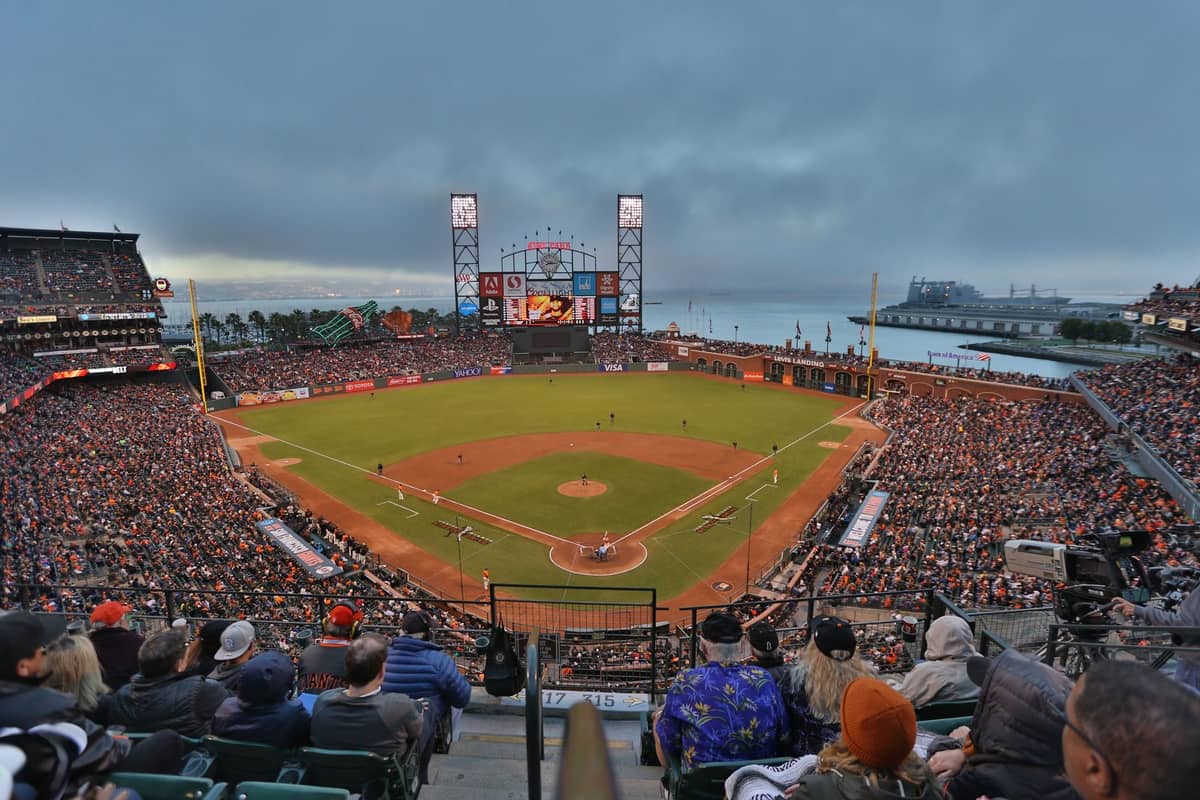
What Oracle Park Actually Is
Oracle Park is the home stadium of Major League Baseball's San Francisco Giants, located at the corner of 3rd and King Streets in the South Beach district. It opened on April 11, 2000, with a Giants vs. Los Angeles Dodgers game, and was privately financed by the Giants organization rather than public funds, which was unusual for a major league stadium at the time. Over its history, the park has carried several corporate names: Pacific Bell Park (2000–2003), SBC Park (2004–2005), AT&T Park (2006–2018), before becoming Oracle Park in 2019 under a 20-year naming rights deal with Oracle Corporation.
With a seating capacity of about 41,900, it is a medium-sized ballpark by major league standards. What sets it apart is its location directly on the San Francisco Bay. Right field ends at a brick wall that borders McCovey Cove, a small inlet of the bay where kayakers gather on game days hoping to catch home run balls hit into the water. Those splashdown home runs have become a defining ritual of the Giants experience.
ℹ️ Good to know
Oracle Park does not have fixed daily public hours. Access is tied to Giants home games, concerts, or other events. Check the Giants schedule and book tickets in advance at mlb.com/giants/tickets.
The Setting: Where the Stadium Meets the Bay
The stadium's design, by HOK Sport (now Populous), drew from the tradition of pre-war urban ballparks like Wrigley Field and Fenway Park, while placing it in a distinctly San Francisco context. The exterior is red brick and steel, and the main entrance faces Willie Mays Plaza, a wide open space named after the Giants' legendary center fielder, marked by a bronze statue of Mays in his iconic Say Hey pose.
From inside the stadium, the view from the right-field bleachers and upper deck extends across the bay toward the East Bay hills. On clear autumn days, those views are striking. In summer, thick fog frequently rolls in from the Pacific by the fifth or sixth inning, dropping temperatures fast. San Francisco's marine climate means June and July games can feel distinctly cold after sunset, even when afternoons were mild.
⚠️ What to skip
Summer evening games can get cold quickly as fog arrives. Bring a jacket or extra layer regardless of how warm it feels at first pitch. September and October, statistically the city's warmest months, offer the most comfortable evening game conditions.
The stadium's location in South Beach puts it close to the Embarcadero waterfront and within walking distance of several neighborhoods. Before or after a game, the surrounding area around 3rd and King has grown considerably since the stadium opened, with Mission Bay's biotech campus and new residential buildings filling in what was once underused industrial land.
Tickets & tours
Hand-picked options from our booking partner. Prices are indicative; availability and final rates are confirmed when you complete your booking.
Sonoma and Napa Valley wine tour from San Francisco
From 127 €Instant confirmationFree cancellationGo City | San Francisco Explorer Pass
From 76 €Instant confirmationFree cancellationMuir Woods and Sausalito guided tour with transportation
From 82 €Instant confirmationFree cancellationSan Francisco CityPASS
From 77 €Instant confirmationFree cancellation
Getting There: Transit Is the Smart Choice
Driving to Oracle Park on a game day is inconvenient. Parking lots near the stadium fill early, prices surge with demand, and postgame traffic exits slowly. The city's transit network handles this far better.
The Muni N-Judah light rail line stops at 4th and King Street, one block from the main entrance. The T-Third Street line also serves this stop. The Muni N-Judah light rail line stops at 4th and King Street, one block from the main entrance. The T-Third Street line also serves this stop. Caltrain's 4th and King station is roughly a 10-minute walk away for those coming from the Peninsula or South Bay. For anyone using BART, the closest stations are Montgomery Street or Civic Center on Market Street, each about 15 minutes on foot or a short Muni connection away. for those coming from the Peninsula or South Bay. For anyone using BART, the closest stations are Montgomery Street or Civic Center on Market Street, each about 15 minutes on foot or a short Muni connection away.
On game days, Muni runs additional trains and capacity to handle ballpark crowds. Check the San Francisco transit guide for current fares and route details, as Muni pricing is subject to change.
💡 Local tip
Arrive at least 30 minutes before first pitch to clear the gates without rushing. On sellout games, Willie Mays Plaza gets congested in the final 15 minutes before game time.
The Game Day Experience, Hour by Hour
Gates typically open 90 minutes before first pitch, and arriving early has real payoffs. The concourse at field level allows you to walk nearly the full perimeter of the stadium, which is worth doing once to understand the layout. The view from the right-field arcade, a walkway that extends along the bay side of the stadium, is one of the better vantage points in baseball for watching the game while standing. It is also where the knot-hole, a small circular cutout in the right-field wall, lets people outside the stadium catch a glimpse of the field., and arriving early has real payoffs. The concourse at field level allows you to walk nearly the full perimeter of the stadium, which is worth doing once to understand the layout. The view from the right-field arcade, a walkway that extends along the bay side of the stadium, is one of the better vantage points in baseball for watching the game while standing. It is also where the knot-hole, a small circular cutout in the right-field wall, lets people outside the stadium catch a glimpse of the field.
Food options at Oracle Park go beyond standard stadium fare. The park has worked with local SF vendors over the years, and offerings like Gilroy garlic fries have been a fixture since the early days. There are also local beer options, seafood items, and other California-inflected concessions along the main concourses. Prices are stadium-level, so expect to pay significantly more than you would outside.
On a sellout game day, particularly a rivalry game against the Dodgers or a weekend afternoon in September, the atmosphere is dense and noisy. The crowd at Oracle Park tends to be knowledgeable about baseball, and the bleacher sections in left and right field can get rowdy for bigger games. On weekday afternoon games against lower-seeded opponents, the park feels spacious, quieter, and easier to navigate, which actually makes it a better experience for first-timers who want to explore the ballpark itself.
Ballpark Tours: The Non-Game Option
The Giants offer guided ballpark tours on select days when no game is scheduled. Tours typically include access to the clubhouse, the warning track on the field, the press box, and other areas not accessible during games. This is one of the better ways to experience the stadium's architecture and history without navigating game day crowds.
Tour schedules and pricing are published separately from game tickets on the Giants website, and they are time-sensitive. Tours sell out on popular dates, particularly during the offseason when fans are looking for Giants-related activities. Check mlb.com/giants/ballpark for current availability.
If you are interested in baseball history more broadly, the San Francisco museum scene includes several institutions that cover Bay Area sports and cultural history worth pairing with a ballpark visit.
Accessibility and Practical Notes
Oracle Park publishes detailed accessibility information through its official ballpark guide, covering accessible seating locations, companion seating options, elevator access, drop-off zones, and services for guests with mobility, vision, or hearing needs. The main entrance at Willie Mays Plaza is step-free from street level. If accessibility is a priority, review the current policies at mlb.com/giants/ballpark/information/guide or contact the Giants guest services team directly before your visit.
Photography is generally permitted throughout the park during games. The best natural light for field-level shots is during day games, when the sun illuminates the playing field from over the right-field stands. Evening games can produce dramatic long-shadow shots in the first couple of innings, but the field lighting takes over as the game progresses. The best natural light for field-level shots is during day games, when the sun illuminates the playing field from over the right-field stands. Evening games can produce dramatic long-shadow shots in the first couple of innings, but the field lighting takes over as the game progresses.
Oracle Park sits at the edge of the South Beach / SoMa area, and the area around 3rd and King has changed considerably since 2000. A pregame walk along the Embarcadero or through the nearby Mission Bay area gives context for how the stadium anchored urban development in this part of the city.
Is It Worth Your Time?
For baseball fans, Oracle Park is consistently rated among the most appealing ballparks in Major League Baseball for its setting, design, and atmosphere. The bay views, the quality of the architecture, and the density of San Francisco identity baked into the place, from the Willie Mays statue to the garlic fries to McCovey Cove, make it more than just a sports venue.
For travelers who have no strong interest in baseball, a game here can still be a worthwhile afternoon or evening. The waterfront setting and the stadium's design give it genuine character. But if you are on a tight itinerary and baseball is not a priority, the ballpark tour is a better use of two hours than attending a slow game against an unfamiliar opponent.
Travelers with very limited time in San Francisco should weigh Oracle Park against the city's other draws. A game runs three or more hours, and combined with transit, that is a half-day commitment. It is worth it if sport, architecture, or local culture are your interests. It is probably not the right call if your list already includes Golden Gate Park, Alcatraz, and multiple neighborhoods and you only have three days.
If you are planning your time carefully, see the 3-day San Francisco itinerary for how to structure a visit that balances the city's major attractions.
Insider Tips
- Section 133 and 134, located in right-center field on the lower level, offer excellent views of both the game and McCovey Cove. On home run-prone matchups, you can watch kayakers scrambling outside the stadium wall in real time.
- The knot-hole on the right-field wall, along the China Basin walkway outside the stadium, is free and open to anyone passing by. You can watch a few pitches from outside without a ticket. It is a small detail that says something real about how the ballpark was designed.
- Garlic fries from the Gilroy garlic fry stands are one of those stadium foods that have earned their reputation. Order early in the game to avoid long lines during the seventh-inning stretch.
- For the most comfortable game experience, aim for September or early October games. These months are statistically the warmest and least foggy in San Francisco, and the Giants are often in playoff contention, which raises the atmosphere considerably.
- Ballpark tours sell out on popular dates. Book at least a week in advance if you are visiting during the offseason or a busy travel period.
Who Is Oracle Park For?
- Baseball fans who want to experience one of MLB's most architecturally distinctive stadiums
- Families with older children looking for a full afternoon or evening activity with food, atmosphere, and spectacle
- Architecture and urban design enthusiasts interested in how a privately financed stadium shaped surrounding neighborhood development
- Travelers who want a local San Francisco experience away from the usual tourist circuit
- Sports tourists ticking off MLB ballparks, for whom Oracle Park is widely considered a top-tier stop
Nearby Attractions
Other things to see while in SoMa (South of Market):
- Children's Creativity Museum
Inside Yerba Buena Gardens in SoMa, the Children's Creativity Museum (CCM) is a hands-on space where kids make animation, music, and art using real creative tools. It suits ages 2 to 12 best and pairs well with the surrounding gardens and nearby cultural institutions.
- Salesforce Park
Perched five stories above Mission Street, Salesforce Park is a free, 5.4-acre rooftop park atop the Salesforce Transit Center in SoMa. With native plantings, open lawns, city views, and a surprisingly quiet atmosphere on weekday mornings, it rewards visitors who take the elevator up.
- San Francisco Museum of Modern Art (SFMOMA)
The San Francisco Museum of Modern Art (SFMOMA) anchors the Yerba Buena cultural district in SoMa with seven floors of modern and contemporary art, a landmark building, and a collection that rewards slow looking. Here is what to expect, what to budget, and how to get the most out of your visit.
- Yerba Buena Gardens
Yerba Buena Gardens is a free, three-block public park in San Francisco's South of Market district, open daily from 6 a.m. to 10 p.m. Surrounded by world-class museums and anchored by a dramatic waterfall memorial, it's one of the most accessible and genuinely pleasant green spaces in the city center.