Seoul Botanic Park: Korea's First Botanical Park, Explained
Seoul Botanic Park opened in 2019 as Korea's first botanical park, bringing together a climate-controlled greenhouse, lakeside wetlands, and a sprawling open forest in the Gangseo district. It rewards slow walkers and plant enthusiasts, but also works surprisingly well as a half-day escape from central Seoul's crowds.
Quick Facts
- Location
- 161 Magokdong-ro, Gangseo-gu, Seoul 07789
- Getting There
- Magongnaru Station (Line 9 / AREX), Exit 3 — about a 5–10 minute walk
- Time Needed
- 2–4 hours depending on zones visited
- Cost
- Botanic Garden: KRW 5,000 (adults), KRW 3,000 (youth), KRW 2,000 (children), free under 6 and over 65. Open Forest, Lake, and Wetland zones: free
- Best for
- Plant lovers, families, photographers, slow-travel walkers
- Official website
- http://botanicpark.seoul.go.kr
What Seoul Botanic Park Actually Is
Seoul Botanic Park (서울식물원) opened on May 1, 2019, making it Korea's first botanical park. The concept blends a conventional botanic garden with a public urban park, so you get a ticketed greenhouse and curated display garden on one side, and a free-entry open forest, lake zone, and wetland area on the other. The result is a place where you can spend nothing and still have a full afternoon, or pay the admission fee and get access to one of the more thoughtfully designed indoor plant environments in East Asia.
The park sits in Gangseo-gu, a western district that many visitors skip entirely because it lacks the cultural density of Jongno or the commercial pull of Myeongdong. That distance from the tourist core is part of what makes Seoul Botanic Park feel genuinely calm. The crowd here on a typical weekday is mostly local families, elderly residents on morning walks, and joggers looping the lake. On weekends, particularly in spring and early autumn, the numbers rise significantly, but the park is large enough that it rarely feels overwhelmed.
💡 Local tip
Ticketing for the Botanic Garden (Display Garden and Greenhouse) closes one hour before the Botanic Garden closes. That means 17:00 in summer months (March–October) and 16:00 in winter (November–February). Don't arrive at 17:30 expecting entry.
The Greenhouse: What's Inside and Why It Matters
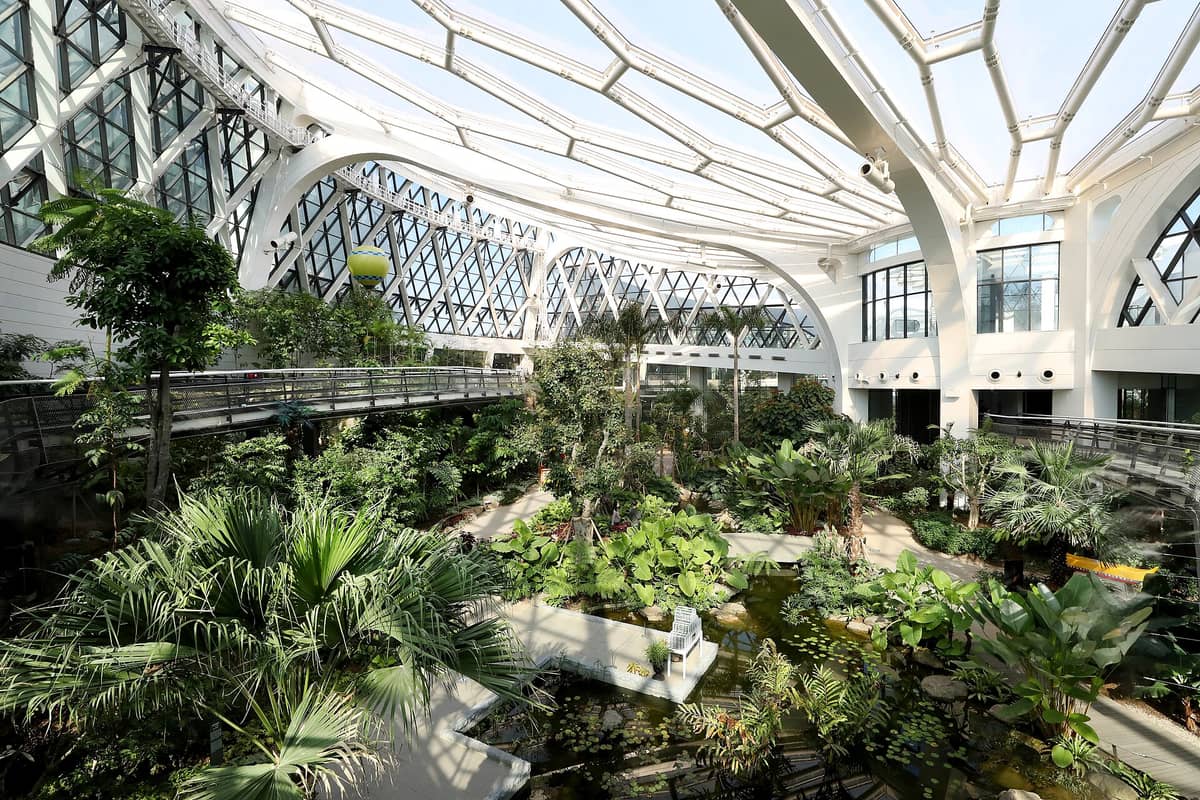
The centerpiece of the ticketed zone is the greenhouse, a large domed structure that houses plant collections organized by geographic climate zones. The interior is divided into distinct environments, each replicating the conditions of a different world region, from Mediterranean scrubland to tropical forest. The planting density is high, the labeling is detailed in both Korean and English, and the overall curation feels closer to a natural history institution than a garden center.
In winter, the greenhouse becomes the park's most compelling draw. Outside temperatures in Seoul can drop well below zero from December through February, and stepping into the warm, humid interior from a cold, grey morning is an immediately physical experience. The air smells of damp earth and greenery. The light through the glass panels shifts depending on the hour and cloud cover, giving photographers a constantly changing set of conditions. Morning visits before 11:00 offer the best light and the smallest crowds.
The Display Garden surrounding the greenhouse is included in the same admission ticket and connects to the outdoor plant beds and themed planting areas. In spring, flowering trees and bulb plantings make this zone genuinely impressive. In summer, the heat amplifies the botanical richness but also tests your endurance. Bring water and wear light clothing if visiting between June and August.
Tickets & tours
Hand-picked options from our booking partner. Prices are indicative; availability and final rates are confirmed when you complete your booking.
DMZ and Lake Majang Suspension Bridge Tour from Seoul
From 57 €Instant confirmationFree cancellationHalf Day DMZ Tour from Seoul, 3rd Tunnel, Observatory and More
From 47 €Instant confirmationFree cancellationSeoul zombie city exploration game and private tour
From 10 €Instant confirmationFree cancellationLuggage Storage in Seoul
From 7 €Instant confirmationFree cancellation
The Free Zones: Lake, Wetland, and Open Forest
You do not need to buy a ticket to spend two or three hours at Seoul Botanic Park. The Open Forest, Lake Zone, and Wetland Zone are all free and open year-round. These areas form the park's outer ring and connect naturally so that you can walk a full circuit without backtracking.
The lake at the park's center is the strongest feature of the free zone. The walking path around it is well-maintained, wide enough for strollers and wheelchairs, and lined with mature trees that provide reasonable shade in summer. In spring, cherry blossoms and other flowering species along this path draw large numbers of visitors, particularly on weekends. If you plan a spring visit for the blossoms, aim for a weekday morning to avoid the thickest crowds. For context on timing Seoul's spring bloom season, the general flowering window typically runs from late March through mid-April, though this varies by year.
The wetland zone, closer to the park's southern edge, is quieter and often overlooked by visitors who focus on the greenhouse. Boardwalk sections allow you to walk directly over the water-level vegetation, and the birdlife here is more active than in the manicured zones. This area suits those who prefer their green spaces with a slightly rawer character. If this kind of ecological walking appeals to you, the guide on hiking and nature walks in Seoul covers other options across the city.
Getting There and Getting Oriented
Seoul Botanic Park is served by Magongnaru Station on both Line 9 and the Airport Railroad (AREX). Exit 3 places you a short walk from the park entrance, which is a straightforward flat walk. If you are arriving from Incheon International Airport on the AREX, this is also a convenient stop, making the park a feasible first or last destination on an airport transit day.
From central Seoul, Line 9 runs express and local services. The express service skips several stations and significantly cuts journey time from Yeouido or Sinnonhyeon, so check the train board before boarding.
Once inside the park, navigation is handled through a combination of signage in Korean and English and a free paper map available at the main entrance. The zones are clearly delineated, and the circular layout of the lake and outer paths makes it difficult to get seriously lost. For a broader sense of how to move around Seoul by public transport, the getting around Seoul guide is a useful reference before your trip.
ℹ️ Good to know
Groups of 30 or more receive a 30% discount on Botanic Garden admission. If you are organizing a group visit, confirm this with the park directly before arrival as policies can change.
Best Time to Visit and How the Experience Changes
Spring is the park's peak season and for good reason. The outdoor planting reaches peak color, flowering trees line the lake path, and the temperatures are comfortable for extended outdoor walking. This is also when visitor numbers are highest, particularly on weekends and public holidays. If you visit during this window on a Saturday afternoon, expect crowded paths and longer queues for the greenhouse.
Autumn (September to October) offers a quieter alternative with genuinely good conditions: cooler air, reduced humidity after the summer rainy season, and changing foliage in the Open Forest. The light in October is particularly good for photography. Winter visits are worth considering specifically for the greenhouse, which becomes its own destination when the rest of the city feels grey and cold. The outdoor zones lose most of their appeal from December to February, but they remain open and some visitors use them for morning exercise regardless.
Summer visits (July to August) coincide with Seoul's rainy season (jangma), which typically runs from late June to July. Heavy rain can make the outdoor zones impractical, though the greenhouse remains fully usable. For a broader look at how Seoul's weather affects sightseeing decisions, see the best time to visit Seoul guide.
Photography, Practical Details, and Who Should Skip It
Seoul Botanic Park is one of the more photogenic green spaces in the city, particularly inside the greenhouse where the layered foliage and diffused natural light create strong compositional opportunities. A wide-angle lens or a phone with a good wide mode works well in the greenhouse interior. Outside, the lake reflections in calm morning conditions can be excellent, and the boardwalk sections over the wetland offer low-angle shots directly over the water.
Tripods are permitted in the outdoor areas but may face restrictions inside the greenhouse during busy periods. Commercial photography typically requires prior arrangement with the park administration. The park's official website (botanicpark.seoul.go.kr) has a media inquiry contact.
Who should consider skipping: visitors with a tight itinerary focused on Seoul's historic core will find the travel time to Gangseo-gu a significant commitment. The park does not deliver the cultural density of places like Gyeongbokgung Palace or Bukchon Hanok Village. If your Seoul visit is three days or fewer and you are primarily interested in history, architecture, or street food, other attractions will likely serve you better. Seoul Botanic Park rewards those who have time to slow down and are genuinely interested in plants, ecological design, or urban green space.
⚠️ What to skip
The Botanic Garden (ticketed zone including the greenhouse) is closed on Mondays. The free outdoor zones remain open. If your visit falls on a Monday, you can still use the lake, wetland, and open forest areas, but the main greenhouse will not be accessible.
Food, Rest, and Combining With Nearby Attractions
There is a cafe and some light food options within the park, primarily near the main entrance and the greenhouse building. These are adequate for a snack or coffee but not a full meal. Magok district surrounding the park has grown considerably since the park opened, with a number of cafes and restaurants within a 10-15 minute walk. The area has a newly developed character, which means modern buildings and chain restaurants rather than traditional Korean food streets.
Seoul Botanic Park pairs naturally with Hangang Park, which is accessible via Line 9 and makes for a full day of outdoor Seoul if the weather is good. The Hangang Park guide covers the riverside options in detail. If you are spending more than three days in Seoul and looking to structure your time efficiently, the five-day Seoul itinerary includes this part of the city alongside day-trip options.
Insider Tips
- The greenhouse is most atmospheric on overcast winter mornings. The muted outdoor light and warm interior create a strong contrast that works especially well for photography without harsh shadows.
- Line 9 trains serving Magongnaru may be local services rather than express; check the destination board before boarding to avoid accidentally riding past or needing to double back. Check the destination board before boarding to avoid accidentally riding past or needing to double back.
- The wetland boardwalk section on the park's southern side is consistently the least crowded part of the park, even on busy spring weekends. If you want space and quiet, start there rather than the main greenhouse entrance.
- Free entry senior visitors (65 and older) should bring ID as park staff may request verification at the ticketing counter.
- If you are arriving from or departing to Incheon International Airport on AREX, Magongnaru Station is a direct stop. The park works as a first or last stop on an airport day without adding significant travel complexity.
Who Is Seoul Botanic Park For?
- Plant and botany enthusiasts who want a curated, educational greenhouse experience
- Families with young children looking for a large, safe, mostly flat outdoor space
- Photographers seeking natural light and botanical subjects, especially in winter and spring
- Travelers on longer Seoul trips (4+ days) who want an afternoon away from the historic center
- Airport layover visitors arriving or departing via AREX who want a worthwhile stop near the line
Nearby Attractions
Other things to see while in Hongdae & Mapo:
- Haneul Park
Perched on the slopes of a former landfill in Mapo-gu, Haneul Park is one of five parks within World Cup Park and offers some of the most expansive open-sky views in Seoul. Free to enter and accessible via subway, it rewards visitors with silver grass meadows in autumn, wildflower fields in spring, and a panoramic cityscape that stretches from the Han River to the distant mountains.
- Mangwon Market
Mangwon Market (망원시장) is a working daily market in Mapo-gu where locals actually shop for groceries, banchan, and street snacks. It lacks the fame of Gwangjang or Namdaemun, which is precisely what makes it worth the short subway ride.