Scottish National Gallery: World-Class Art, Free of Charge, in the Heart of Edinburgh
The Scottish National Gallery (now branded as National) sits on The Mound between the Old and New Towns, housing Scotland's finest collection of Western art from the Renaissance to the early 20th century. Admission to the permanent collection is free, the building itself is an architectural landmark, and the whole experience takes as little or as long as you want.
Quick Facts
- Location
- The Mound, Edinburgh EH2 2EL — between Princes Street and the Royal Mile
- Getting There
- 5-minute walk from Edinburgh Waverley Station via Waverley Bridge; multiple bus stops on Princes Street
- Time Needed
- 1.5 to 3 hours for the permanent collection; longer if a special exhibition is on
- Cost
- Free (permanent collection); charges apply for some temporary exhibitions
- Best for
- Art lovers, rainy-day seekers, architecture enthusiasts, families with older children
- Official website
- www.nationalgalleries.org/visit/scottish-national-gallery
What the Scottish National Gallery Actually Is
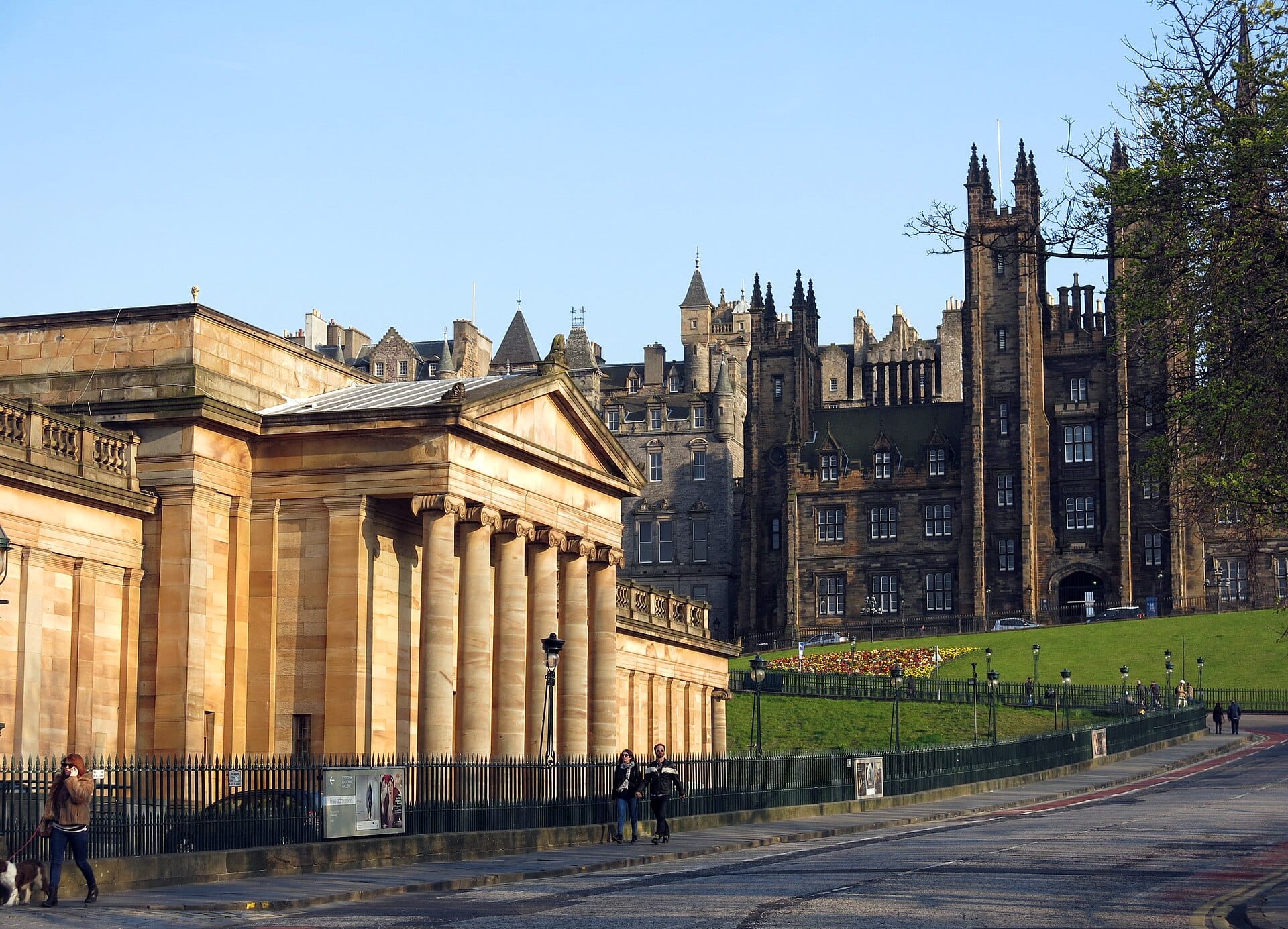
The Scottish National Gallery, officially rebranded as National, is Scotland's principal collection of fine art and one of the most significant art museums in the United Kingdom. It sits on The Mound, a raised embankment connecting Princes Street to the Old Town, and its neoclassical facade is visible from much of central Edinburgh. The building was designed by architect William Henry Playfair; the National Gallery of Scotland was founded in 1850, and the building opened to the public in 1859. That makes it one of the older public art institutions in Britain, and the collection has been growing ever since.
The permanent collection spans the Renaissance through to the early twentieth century and covers Scottish, European, and international works. Raphael, Titian, Rembrandt, Vermeer, El Greco, Velázquez, Monet, and Van Gogh are all represented alongside Scottish masters including Ramsay, Raeburn, and Wilkie. For a country of Scotland's size, the depth and range of this collection is genuinely surprising to first-time visitors.
💡 Local tip
Admission to the permanent collection is free. You do not need to book in advance for general visits. If you plan to attend a ticketed special exhibition running concurrently, check availability at nationalgalleries.org before you go.
The Building: Playfair's Neoclassical Statement
William Henry Playfair is one of Edinburgh's defining architects, and the Scottish National Gallery is among his finest works. The exterior presents a portico of Ionic columns in honey-coloured stone that contrasts with the darker volcanic rock of the Old Town immediately behind it. On a clear day, the view from the gallery steps down Princes Street Gardens toward Edinburgh Castle is one of the more quietly impressive urban vistas in the city. Princes Street Gardens border the gallery on two sides, which means you can combine a visit with a walk through the park.
The interior follows the neoclassical logic of the exterior: high ceilings, natural light from overhead glazing, and a floor plan arranged around a series of connected galleries. The scale is human rather than overwhelming. Unlike some of the larger national collections in London or Paris, the rooms here are proportioned in a way that allows you to spend time in front of individual works without the exhaustion that comes from vast hall after vast hall.
Tickets & tours
Live prices and dates from our booking partner. If you book, we may earn a commission at no extra cost to you.
Scottish National Gallery In-App Audio Guided Tour
From 9 €Instant confirmationRosslyn Chapel and Scottish Borders small-group day tour
From 43 €Instant confirmationFree cancellationJacobite Steam Train and Scottish Highlands Tour from Edinburgh
From 218 €Instant confirmationFree cancellationLoch Lomond, The Trossachs National Park and Stirling Castle from Glasgow
From 48 €Instant confirmationFree cancellation
The Collection: What You Will Actually See
The permanent collection is organized more or less chronologically and by school. Early Italian and Flemish Renaissance painting occupies the older rooms, and the quality here is high enough that the gallery regularly loans works to international exhibitions. Botticelli's 'The Virgin Adoring the Sleeping Christ Child' is one of the better-known pieces in this section.
The Dutch and Flemish rooms contain Rembrandt portraits and Vermeer's 'Christ in the House of Martha and Mary', which is one of the artist's few works in Scotland and draws dedicated visitors specifically to see it. Further along, the Spanish section includes El Greco and Velázquez. The French Impressionist holdings, smaller but well-chosen, include Monet and Gauguin. Most visitors are genuinely surprised to find this level of European work in Edinburgh.
The Scottish collection runs in parallel and is arguably the section with the most to say to visitors who want to understand the country. Henry Raeburn's portrait of Reverend Robert Walker skating on Duddingston Loch is one of the most recognizable images in Scottish art, and it is here. The Scottish rooms also function as a useful primer before exploring the wider city: faces and landscapes in the paintings map directly onto places you might visit, from Holyrood Park to the Highlands.
How the Experience Changes Through the Day
The gallery opens at 10:00 and closes at 17:00 daily. Mornings between 10:00 and 11:30 are consistently the quietest period. School groups occasionally arrive mid-morning, but they typically move through specific rooms on a guided path and clear out by early afternoon. If you want unhurried time in front of the Rembrandts or the Scottish portraits, arriving at opening is the most reliable strategy.
Midday and early afternoon bring the largest crowds, particularly during summer when tourist numbers in Edinburgh peak. The main entrance hall and the rooms closest to it feel noticeably busier between 12:00 and 14:30. The further galleries and smaller rooms remain relatively calm even at peak times, because most casual visitors do not venture beyond the headline works near the main route.
Late afternoon is the second-best window. By 15:30 the crowds thin again, the light through the overhead glazing takes on a warmer quality, and the gallery has a more contemplative atmosphere. The cafe on site is worth considering for a late-afternoon break before the 17:00 close.
ℹ️ Good to know
During August, Edinburgh sees its highest annual visitor numbers due to the Fringe and other festivals. The gallery is busier than usual throughout the month, but it remains one of the calmer indoor experiences available compared to the packed Royal Mile.
Getting There and Finding the Entrance
The gallery sits on The Mound, which connects Princes Street in the New Town to the Lawnmarket in the Old Town. The most straightforward approach from Edinburgh Waverley Station is to exit toward Waverley Bridge, cross onto Princes Street, and walk west for a few minutes until you see the gallery building on your left, above the gardens. The main entrance faces East Princes Street Gardens rather than The Mound road itself, so walk down the steps from the road level into the gardens and look for the entrance on the garden side.
Multiple bus routes and the Edinburgh Trams stop on Princes Street, which runs directly alongside the gallery; use the Princes Street stop at The Mound. If you are staying further from the centre, this is the simplest transit option.
Accessibility: the gallery states it is open and free to all visitors. For specific accessibility requirements, the National Galleries of Scotland can be contacted directly at +44 (0)131 624 6200. If you are planning to see a specific artwork, it is worth calling or checking online in advance to confirm the work is currently on display, as individual pieces do rotate or travel for loans.
Photography, Practicalities, and What to Bring
Photography of the permanent collection is generally permitted for personal, non-commercial use, but always check signage in individual rooms as restrictions can apply to specific works. Flash photography and tripods are not allowed. The natural overhead light makes for good conditions earlier in the day when direct sunlight is not creating glare through the roof glazing.
There is no strict dress code and no bag size restriction that would prevent normal travel bags from entry. Coats and large bags can be left at the cloakroom. The gallery has a cafe and a shop. The shop carries prints, art books, and Scottish design items and is worth a few minutes even if you are not a dedicated buyer. For a longer cultural day, the National Museum of Scotland is about a ten-minute walk away through the Old Town and is also free.
⚠️ What to skip
Some visitors arrive expecting to see a specific painting and find it is on loan or in storage. The permanent collection is large and not every work is on display simultaneously. If a particular piece matters to your visit, contact the gallery before travelling.
Who This Attraction Suits and Who It Does Not
The Scottish National Gallery works well for visitors with a genuine interest in art history, for anyone caught in Edinburgh's unpredictable weather needing an indoor alternative, and for travelers who want to understand Scotland's cultural identity beyond whisky and kilts. It also fits naturally into itineraries that include the wider New Town area. The Scottish National Portrait Gallery in the New Town is a close companion institution, also free, and together they can fill a full day for art-focused visitors.
Visitors who find traditional Western European painting unengaging will likely feel indifferent here. The collection does not include contemporary or installation art, and the curatorial approach is conventional. Young children may enjoy some of the larger, dramatic historical paintings but will tire of the format relatively quickly. Families with children under ten should factor in a shorter visit or pair it with the outdoor space in Princes Street Gardens immediately outside.
For visitors building a broader Edinburgh itinerary, the gallery pairs logically with a walk up Calton Hill for views, or with the Scotch Whisky Experience nearby on the Royal Mile for a different side of Scottish culture.
Insider Tips
- The Weston Link underground connection joins the Scottish National Gallery to the Royal Scottish Academy building next door. The Royal Scottish Academy hosts its own changing exhibitions, often with a separate fee, but the link between the two buildings is useful for rainy days and means you can cover both without going outside.
- The garden-level entrance is less obvious than it looks on a map. If you find yourself standing on The Mound road looking at a closed-looking side wall, walk down the stairs into Princes Street Gardens and the main entrance will be directly in front of you.
- The free audio guide app from National Galleries of Scotland is downloadable before your visit and works on your own device. It is more useful than it sounds, particularly for the Scottish collection where the historical context adds considerably to individual portraits.
- Vermeer's 'Christ in the House of Martha and Mary' is in a smaller room that many visitors walk past. Ask at the information desk for the current location if you are specifically looking for it.
- If you visit during the Edinburgh Festival in August, the gallery sometimes hosts evening events and occasional late openings. Check the National Galleries website for any extended hours during festival periods, as the standard 17:00 closing can vary when special events are scheduled.
Who Is Scottish National Gallery For?
- Art history enthusiasts wanting serious European and Scottish collections without a ticket price
- Travelers caught in wet Edinburgh weather needing a high-quality indoor alternative
- First-time Edinburgh visitors who want cultural grounding beyond the main tourist circuit
- Architecture lovers interested in Playfair's neoclassical design in context
- Anyone building a full-day New Town cultural itinerary alongside the Portrait Gallery and Royal Scottish Academy
Nearby Attractions
Other things to see while in New Town:
- Calton Hill
Rising 103 metres above central Edinburgh, Calton Hill is a free, 24-hour public park packed with monuments, volcanic geology, and some of the most complete city panoramas in Scotland. It takes under 20 minutes to reach from Princes Street on foot, and the views repay every step.
- Charlotte Square
Charlotte Square sits at the west end of George Street as the architectural crown of Edinburgh's first New Town. Designed by Robert Adam in 1791 and completed in 1820, the square is a free, publicly accessible streetscape and a key part of the city's UNESCO World Heritage Site.
- Edinburgh Christmas Market
Spread across East and West Princes Street Gardens and George Street, Edinburgh's Christmas runs from mid-November to early January each year. Entry is free, the backdrop is Edinburgh Castle, and the atmosphere shifts dramatically depending on when you arrive.
- Edinburgh Gin Distillery
Opened on 6 December 2024, the Edinburgh Gin Distillery at The Arches on East Market Street is the brand home of one of Scotland's most recognised craft gins. Set inside dramatic stone vaulted arches beneath historic railway arches near Waverley, it offers tastings, tours, and a retail experience rooted in the city's growing reputation for artisan spirits.
Planning a trip? Discover personalized activities with the Nomado app.