Plaza de Santo Domingo: A Colonial Square Frozen in Time
Three blocks northeast of the Zócalo, Plaza de Santo Domingo has been a center of public life since the colonial era. Free to enter and open around the clock, the square is anchored by a baroque church from 1736, the former Palace of the Inquisition, and a tradition of street typewriters that has persisted for generations.
Quick Facts
- Location
- República de Brasil, Centro Histórico, 06020 Mexico City
- Getting There
- Metro Allende (Line 2), about a 5-minute walk, or Metro Bellas Artes (Lines 2 & 8), then a short walk northeast
- Time Needed
- 30 to 60 minutes for the square; 2+ hours if visiting nearby museums
- Cost
- Free — open 24 hours daily
- Best for
- History enthusiasts, architecture photography, and anyone wanting an uncrowded Centro experience
What Is Plaza de Santo Domingo?
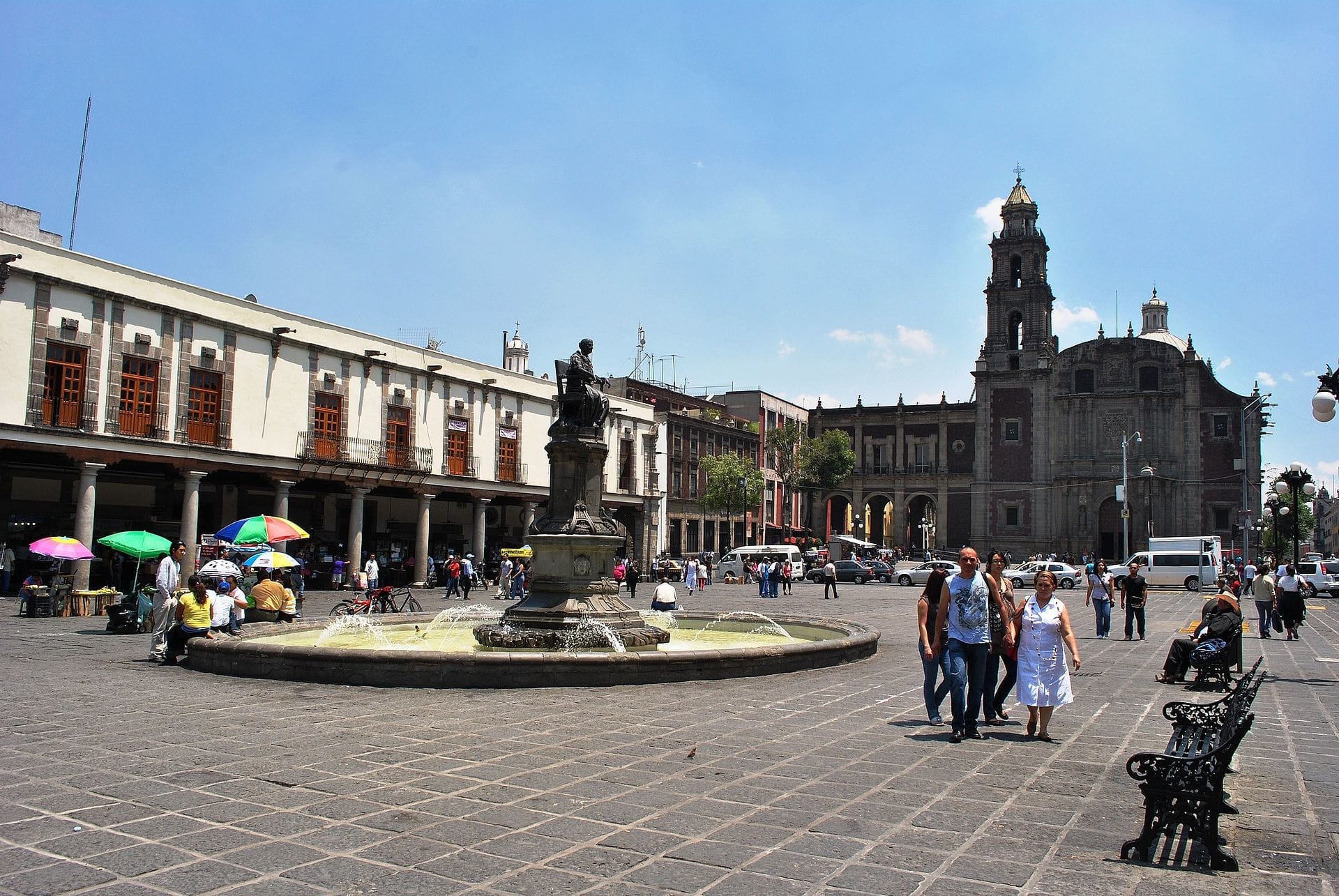
Plaza de Santo Domingo is one of the oldest public squares in Mexico City and, arguably, one of the least touristy. While the Zócalo draws crowds of visitors and political events, Santo Domingo has always belonged to the neighborhood. Located on República de Brasil, about three blocks north of the Metropolitan Cathedral, it sits at the heart of a pedestrian corridor that has changed far less than the rest of Centro Histórico.
The square is flanked by the Iglesia de Santo Domingo on its west side, the former Palacio de la Inquisición to the east, and colonial portals along the north end that have housed street scribes and printers for well over a century. For a deeper look at the neighborhood context, the guide to Centro Histórico covers the surrounding streets in detail.
💡 Local tip
Arrive on a weekday morning to see the evangelist scribes (evangelistas) at work under the portals. By early afternoon, the square fills with office workers and school groups. Weekday mornings offer the most authentic atmosphere.
The Architecture Around the Square
The Iglesia de Santo Domingo anchors the western edge of the plaza. The current structure dates from 1736, making it a relatively late example of New Spain baroque — its facade is built in the churrigueresque style, characterized by dense relief carving, layered stone ornament, and a controlled theatricality that rewards close inspection. This is the fourth church built on the site by the Dominican order, which first established a presence here in the 16th century, shortly after the Spanish conquest of Tenochtitlan.
The church's twin bell towers rise above the surrounding roofline, and the stone facade retains its warm ochre color in morning light. The interior is open to visitors during services and at other times depending on the day, though hours are not fixed. Dress modestly if you plan to enter.
Directly opposite the church, on the east side of the square, stands the former Palacio de la Inquisición. This 18th-century palace served as the headquarters of the Holy Office of the Inquisition in New Spain from 1732 until the tribunal was abolished in 1820. It now houses the Museo de la Medicina Mexicana, operated by the Universidad Nacional Autónoma de México (UNAM). The building itself is a significant example of civil baroque architecture, its interior courtyard particularly well preserved.
Tickets & tours
Live prices and dates from our booking partner. If you book, we may earn a commission at no extra cost to you.
Puebla and Cholula guided tour from Mexico City with optional lunch
From 43 €Instant confirmationFree cancellationXochimilco, Coyoacan and Frida Kahlo Museum with skip-the-line tickets
From 63 €Instant confirmationFree cancellationMexico City exploration game and tour in Chimalistac
From 10 €Instant confirmationFree cancellationCuernavaca and Taxco Guided Tour with Optional Lunch
From 40 €Instant confirmationFree cancellation
The Evangelistas: A Living Urban Tradition
Under the stone portals on the north side of the square, a cluster of small booths and fold-out tables has occupied the same spot for well over a century. These are the evangelistas, street scribes who type official letters, legal documents, immigration forms, and personal correspondence for clients who need help navigating bureaucratic language or who lack access to computers. The word comes from an era when literacy was not universal, and a scribe's ability to read and write made them essential intermediaries.
Today many evangelistas use computers and printers alongside traditional typewriters, but the function remains the same: helping people produce official documents and correspondence at low cost. The sound of keyboards and old manual typewriters clicking under the arcade, combined with the smell of carbon paper and fresh ink, gives this corner of the square a texture unlike anything else in the city center. It is functional rather than theatrical — these scribes have real clients with real needs.
Photographers are generally tolerated here, but it is worth acknowledging the scribes before pointing a camera. The booths are working businesses, not a performance for visitors.
How the Square Changes Through the Day
Early morning, before 9 a.m., is the quietest time. The church bells mark the hour, vendors arrange their carts on the surrounding streets, and the evangelistas open their booths. The light is flat and cool at this hour, useful for photographing the church facade without harsh shadows.
By mid-morning, the square picks up considerably. Workers from the surrounding government offices and UNAM's medical faculty cross through the plaza. Street food carts appear at the edges: tostadas, quesadillas, and juices are common. The smell of corn tortillas on a comal drifts across the square from around 10 a.m. onward.
Afternoons are the most active, with students, tourists, and local families sharing the benches. The square is never as congested as the Zócalo — there are no large-scale events or permanent tourist stalls — which keeps it accessible and livable. By evening, foot traffic slows but the square remains in use. The portals stay lit, and some evangelista booths operate into the early evening.
ℹ️ Good to know
The square is technically open 24 hours as a public space, but after dark the immediate surroundings require standard urban awareness. As with most of Centro Histórico at night, sticking to well-lit routes and being mindful of your belongings is sensible practice.
Historical Depth: From Dominican Friars to the Inquisition
The Plaza de Santo Domingo occupies ground with one of the longest continuous histories of any public space in Mexico City. The Dominican friars who arrived in New Spain in 1526 established their convent and church here on what had been the northern edge of the Aztec ceremonial district. The plaza in front of the church became one of the principal public spaces of colonial Mexico City, used for religious processions, public announcements, and, eventually, auto-da-fé executions carried out by the Inquisition.
The presence of the Inquisition headquarters directly on the square is not incidental. The Palacio de la Inquisición was purpose-built to dominate the space symbolically and functionally. The trials held here affected thousands of people across New Spain over nearly three centuries. Visiting the building's museum provides genuine historical context that goes well beyond the square's current peaceful appearance.
For broader historical context about the colonial core, including the Templo Mayor and the Metropolitan Cathedral, both of which are within a short walk, the neighborhood rewards slow exploration on foot.
Practical Notes for Your Visit
Getting here is straightforward. The closest Metro stations are Allende on Line 2, which deposits you about four blocks away on Avenida Juárez, and Bellas Artes on Lines 2 and 8, slightly farther but equally manageable. From either station, follow the pedestrian streets north through the historic core. Calle Madero and the surrounding streets are walkable and well-signed.
If you are already exploring the Zócalo area, Santo Domingo is a natural extension of a Centro walking route. The Calle Madero pedestrian corridor connects the two areas and passes several other notable buildings along the way.
The square itself is flat and paved, with benches throughout. There are no formal accessibility ramps noted at the street-level entries, and the surrounding cobblestone streets can be uneven in places — standard for Centro Histórico. Wheelchair users will find the plaza surface manageable, though the adjacent streets vary.
Weather affects the experience here more than at indoor sites. The dry season from November to April gives the most reliable conditions for extended outdoor time. During the rainy season (May to October), afternoon downpours are common from around 3 p.m., sometimes lasting an hour. The portals along the north side of the square provide shelter, but plan for shorter outdoor sessions in summer months.
⚠️ What to skip
Petty theft — pickpocketing in particular — is a known concern in Centro Histórico. Keep bags in front of you and avoid displaying expensive camera equipment for extended periods in crowded moments. The square itself is generally calm, but the surrounding streets get busy.
Is Santo Domingo Worth Your Time?
This is not a square that dazzles. It does not have the scale of the Zócalo or the polished presentation of Coyoacán's main plaza. What it offers instead is something harder to find in a major capital: a public space that functions primarily for the people who live and work nearby, where tourism is incidental rather than central.
If you are the kind of traveler who values observation over spectacle, Santo Domingo delivers. Combined with a visit to the Museo de la Medicina Mexicana in the former Inquisition palace, and perhaps a stop at the Museo Mural Diego Rivera a few minutes' walk southwest toward the Alameda, this area makes for a substantive morning in the historic center.
Travelers looking for Instagram-ready scenes or curated experiences will likely move on quickly. That is not a criticism of the square — it simply serves a different purpose. For those interested in how a colonial city evolves and endures, Plaza de Santo Domingo is more instructive than almost any museum.
Insider Tips
- Visit the Museo de la Medicina Mexicana inside the former Palacio de la Inquisición. The colonial courtyard alone is worth the entry, and the exhibition on pre-Hispanic and colonial medicine is more compelling than the name suggests. Verify current hours and admission directly with UNAM before visiting.
- The street food around the square is reliable and inexpensive. Look for the tostada and quesadilla carts that set up on República de Brasil from mid-morning. Locals queue here, which is usually a good indicator of quality.
- If you want to photograph the evangelistas under the portals, arrive before 11 a.m. when clients are most numerous and the light under the arcade is better. A simple nod to acknowledge the scribes before photographing them is both polite and usually appreciated.
- The north portal arcades provide natural shade throughout the day, making this one of the more comfortable outdoor spots in Centro Histórico during the hot season (March to May). Benches here fill up at lunchtime with office workers — a good time to sit and observe.
- Combine Santo Domingo with a walk north along República de Brasil toward Tlatelolco for a less-visited cross-section of the historic core that most visitors skip entirely.
Who Is Santo Domingo Square For?
- History and architecture enthusiasts interested in New Spain colonial urbanism
- Street photographers looking for authentic daily life scenes over staged tourist moments
- Travelers doing a full Centro Histórico walking day who want depth beyond the Zócalo
- Anyone curious about Mexican social history, particularly the legacy of the Inquisition
- Budget travelers, since the entire experience costs nothing
Nearby Attractions
Other things to see while in Centro Histórico:
- Alameda Central
Founded in 1592, Alameda Central is the oldest public park in the Americas and the green centerpiece of Mexico City's historic center. Flanked by the Palacio de Bellas Artes and a ring of colonial-era institutions, it offers free entry, shaded walkways, and a front-row seat to everyday city life.
- Calle Madero
Avenida Francisco I. Madero connects the Zócalo to the Torre Latinoamericana along one of the oldest streets in the Americas. Free to walk at any hour, it layers colonial architecture, street performance, and everyday city life into a single corridor that doubles as an open-air history lesson.
- Casa de los Azulejos
Casa de los Azulejos is one of the most photographed facades in Mexico City, its exterior wrapped in blue-and-white Talavera tiles from Puebla. With documented origins in the 16th century and operating as a Sanborns restaurant since 1919, it offers free entry and a rare chance to step inside a baroque palace that has survived centuries of history.
- La Ciudadela Artisan Market
The Mercado de Artesanías de La Ciudadela is one of Mexico City's largest and best-known handicraft markets, with more than 350 vendors selling handmade goods from across 22 states. Entry is free, quality ranges from tourist trinkets to serious collector pieces, and knowing how to navigate the stalls makes all the difference.
Planning a trip? Discover personalized activities with the Nomado app.