Santa Teresita (Santa Tere): Guadalajara's Everyday Neighbourhood Done Right
Santa Teresita, known locally as Santa Tere, is a residential neighbourhood in central Guadalajara where the city's daily rhythms play out without the crowds of the historic core. Its famous market, corner taquerías, and low-key streets make it one of the most rewarding places in the city to simply walk and eat.
Quick Facts
- Location
- Santa Teresita, Guadalajara, Jalisco, Mexico. Mercado Santa Tere at C. Andrés Terán 523 is a useful navigation anchor.
- Getting There
- No light-rail (Tren Ligero) station is directly adjacent; the neighbourhood is reachable by city bus (Mi Transporte network) or a short ride via Uber or DiDi from the historic centre.
- Time Needed
- 1.5 to 3 hours for a relaxed walk and market visit; longer if you linger over a full meal.
- Cost
- Free to explore as a neighbourhood. Meals at market stalls and street counters typically run well under MXN 150 per person.
- Best for
- Food lovers, travellers wanting authentic daily-life Guadalajara, and anyone who has already covered the main historic monuments.
What Santa Teresita Actually Is
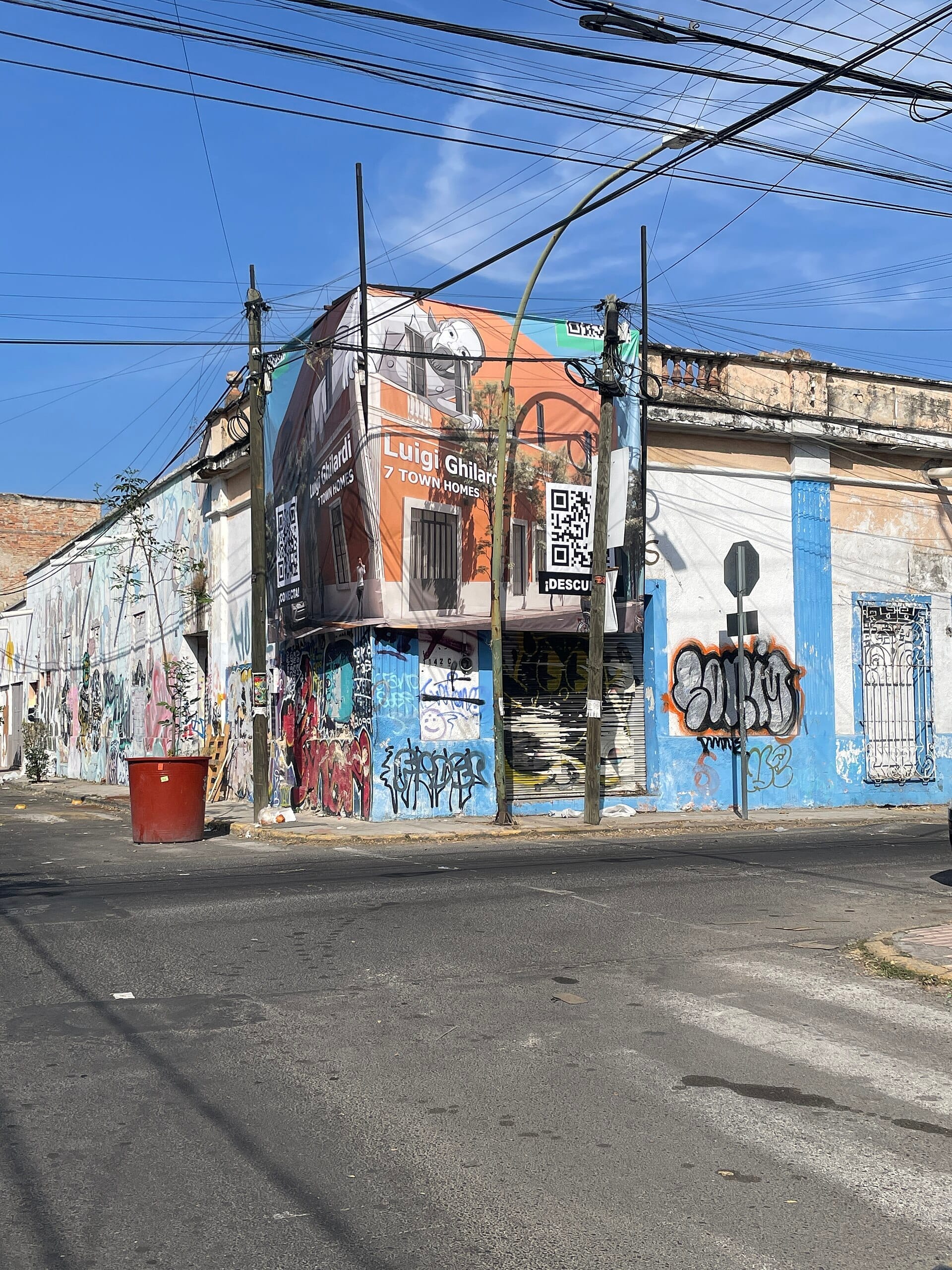
Santa Teresita, almost universally shortened to Santa Tere by tapatíos (Guadalajara residents), is a neighbourhood in the eastern stretch of the city's central area, within the broader Centro Histórico district. It is not a monument, not a theme park, and not a curated tourist zone. It is a functioning urban neighbourhood where people live, shop for groceries, eat breakfast before work, and send their kids to school.
That ordinariness is exactly the point. Guadalajara's historic centre is compact and well-documented, but it can feel like a stage set on weekends, with the plaza vendors and tour groups giving it a slightly performative quality. Santa Tere is where the city acts like itself. The streets follow a readable grid, the buildings are mostly two-storey and painted in faded ochres and greens, and the noise at 8 a.m. is the clink of market stalls opening rather than anything designed for visitors.
💡 Local tip
Use Mercado Santa Tere (C. Andrés Terán 523) as your navigation anchor if you are arriving by ride-hailing app. From there, the neighbourhood unfolds in every direction on foot.
The Market: Santa Tere's Centrepiece
Mercado Santa Tere is the neighbourhood's gravitational centre. It is a traditional covered market of the kind Guadalajara does well: a proper working market rather than a gentrified food hall. Inside, you will find stalls selling fresh produce, dried chiles, herbs sold by the bunch, butcher counters where whole chickens hang by their feet, and a cluster of fondas (small food stalls) running along one side.
The smell is the first thing you register: the sharp, green scent of fresh cilantro and epazote, overlaid with the smoke from a griddle making quesadillas nearby. The floor tiles are worn smooth. Lighting comes partly through translucent roof panels, giving the interior a warm, slightly amber quality in the morning. It is the kind of market that food journalists have written about specifically because it has not been renovated for tourists, and the stall operators are visibly cooking for their regular neighbourhood customers.
Breakfast is the peak meal here. Birria (slow-braised meat in a dried-chile broth), tortas ahogadas (bread rolls submerged in a spicy tomato sauce), and plates of enfrijoladas appear from early morning. Lines form at the most popular stalls without any fanfare. Arriving before 9 a.m. means short waits and the most energy; arriving after 11 a.m. means some items sell out. The market quiets significantly by early afternoon.
ℹ️ Good to know
Mercado Santa Tere is a working neighbourhood market, not a tourist attraction; posted hours are generally Monday to Saturday 7 a.m. to 4:30 p.m. and Sunday 7 a.m. to 2:30 p.m., with peak activity in the morning. Verify current conditions on arrival.
Tickets & tours
Hand-picked options from our booking partner. Prices are indicative; availability and final rates are confirmed when you complete your booking.
Lake Chapala and Ajijic guided tour from Guadalajara
From 68 €Instant confirmationFree cancellationGuadalajara and Tlaquepaque guided tour
From 73 €Instant confirmationFree cancellation
Walking the Neighbourhood: What to Expect Block by Block
The street texture in Santa Tere is consistent without being monotonous. Low-rise buildings painted in strong colours sit alongside older structures with peeling stucco and wrought-iron window grilles. There are corner tiendas selling bottles of Jarritos and bags of Sabritas through a small window, pharmacies where the pharmacist sits behind a glass partition surrounded by cardboard display boxes, and small churches with heavy wooden doors that are usually unlocked during the day.
On weekday mornings, the streets have a purposeful rhythm: street vendors position their carts, delivery motorcycles weave past, and school-uniformed children walk in clusters. By mid-afternoon the neighbourhood slows down in the way central Mexican cities do, a post-lunch lull that lifts again toward evening when corner restaurants put plastic chairs out onto the pavement. There is no single pedestrian promenade to follow, which is part of the appeal: the experience rewards wandering over itinerary-following.
If you want to frame the walk within a broader neighbourhood context, Santa Tere pairs naturally with a wider walking tour of central Guadalajara. The historic centre's major monuments are close enough that you can move between them and Santa Tere's market streets in a single morning on foot.
Time of Day: How the Neighbourhood Shifts
Early morning, roughly 6:30 to 9 a.m., is when Santa Tere is at its most alive and most photogenic. The light in Guadalajara at this elevation (around 1,550 metres above sea level) has a clarity that makes the painted facades look sharper than they do later in the day. Street vendors are setting up, the market is in full operation, and the neighbourhood has not yet settled into its mid-morning lull. The sounds layer well: a radio somewhere playing norteño music, the scrape of a metal cart across a cobbled section of street, someone calling out prices.
Late morning is still good but noticeably quieter in the market. The streets are warm by 11 a.m., especially from April to June when Guadalajara's pre-rainy-season temperatures can push into the low 30s Celsius. This is when carrying a bottle of water matters, since shade is limited on the residential streets away from the market. Mid-afternoon is genuinely slow; the neighbourhood is not unpleasant at this hour but there is less to engage with.
Evenings bring a different version of the neighbourhood: corner restaurants fill up, and the streets around the market see vendors selling antojitos from carts with propane burners. It is quieter than the Colonia Americana corridor at night but far from deserted.
Food and Drink Beyond the Market
Santa Tere's food scene extends well beyond the market walls. The streets surrounding Mercado Santa Tere are lined with small restaurants and lunch spots that cater almost entirely to locals. This is one of the more honest ways to eat in Guadalajara, in the sense that pricing reflects a neighbourhood clientele rather than tourist footfall. For context on what to order and how the city's food culture works, the broader Guadalajara food guide covers the regional dishes you should know before arriving.
Tortas ahogadas are the dish most associated with this kind of Guadalajara neighbourhood market experience. The birote (a local bread with a slightly hard, crackly crust that is specific to this region) is stuffed with carnitas or pork and then submerged in a sauce made from jitomate and arból chiles. The spice level can be significant; when ordering, you will typically be asked whether you want it spicy, medium, or mild. Ordering it mild still gives you a flavourful broth without the kind of heat that will derail the rest of your morning.
Practical Notes for Visiting
Santa Teresita is described in travel sources as a walkable neighbourhood, and this is accurate in the sense that distances are short and the grid layout is easy to navigate. However, pavement quality is uneven in places, with raised tiles and gaps that make the area more challenging for anyone with limited mobility or a pushchair. There are no formal accessibility arrangements within the neighbourhood itself.
Getting here from the historic centre is straightforward by Uber or DiDi (the two most common ride-hailing services operating in Guadalajara), using the market address at C. Andrés Terán 523 as your destination. City buses via the Mi Transporte network also serve the area, though route planning requires familiarity with the system. Walking from the Plaza de la Liberación area in the historic centre is feasible in around 20 to 25 minutes depending on your exact starting point.
Guadalajara's rainy season runs roughly June through September, with July and August being the wettest months. Afternoon downpours are common and can be heavy. If you are visiting during this period, going to the market in the morning and leaving before early afternoon is sensible. The dry months of November through April offer the most predictable walking conditions.
⚠️ What to skip
Like most central Guadalajara neighbourhoods, Santa Tere has petty theft risks in crowded market conditions. Keep phone and wallet secured in a front pocket or zipped bag, particularly inside the market and around street food stalls where attention is naturally focused on food.
Who Should Skip Santa Tere
Travellers on a short first-time visit to Guadalajara whose priority is the major monuments may find Santa Tere competes with limited time they should spend at places like the Hospicio Cabañas, the Guadalajara Cathedral, or the Teatro Degollado. The neighbourhood offers texture rather than sights, which is valuable but not what every visitor needs.
Anyone expecting a curated artisan market, boutique coffee shops, or the kind of neighbourhood that has been styled for Instagram will find Santa Tere underwhelming. This is not a criticism of the neighbourhood; it is a calibration of expectations. The appeal here is precisely that it has not been developed with visitors in mind, and some travellers find that kind of place uncomfortable rather than interesting.
If you have limited time overall and Santa Tere is competing with a day trip option, consider that places like Tlaquepaque or the town of Tequila offer more concentrated and varied visitor experiences per hour.
Insider Tips
- Arrive at Mercado Santa Tere between 7:30 and 8:30 a.m. on a weekday for the shortest waits at food stalls and the fullest selection of morning dishes including birria and tortas ahogadas.
- Ask for your torta ahogada 'enchilada' (spicy) only if you have tested your chile tolerance elsewhere first. The arból chile sauce used here can be genuinely intense, and there is no undoing it once the bread is soaked.
- The streets immediately around the market, particularly along Andrés Terán, have the densest concentration of eating options. Venture a few blocks in any direction and you will find quieter streets with local tiendas and the residential fabric of the neighbourhood with far fewer other visitors.
- Photography inside the market is generally tolerated but ask permission before photographing individual stall operators or their customers. A brief 'puedo tomar una foto?' (may I take a photo?) is always well received and often leads to a more natural result anyway.
- If you are visiting during the city's rainy season (June to September), note that the covered market is obviously rain-proof, but the streets around it can flood quickly in heavy afternoon downpours. Plan to be back indoors or in transit by 2 p.m. to avoid the worst of the afternoon rain.
Who Is Santa Teresita (Santa Tere) Neighbourhood For?
- Food travellers who want to eat where Guadalajara residents actually eat, not where visitors are directed
- Return visitors to Guadalajara who have already covered the main historic monuments and want a more textured experience
- Photographers and writers looking for unscripted urban scenes and the visual language of everyday Mexican city life
- Budget travellers: a full breakfast at the market typically costs well under MXN 150
- Anyone who finds heavily curated tourist neighbourhoods exhausting and prefers streets with no particular agenda
Nearby Attractions
Other things to see while in Centro Histórico:
- Calandrias (Horse-Drawn Carriage Rides)
Calandrias are Guadalajara's traditional horse-drawn carriages, operating through the colonial streets of the Centro Histórico since the early 20th century. A slow, unhurried circuit past cathedral facades, plazas, and pedestrian corridors, they offer a different pace from the city's foot traffic. This guide covers what to expect, when to go, and whether it's worth your time.
- Guadalajara Cathedral (Catedral de Guadalajara)
The Catedral Basílica de la Asunción de María Santísima anchors Guadalajara's historic center, surrounded by four plazas and centuries of layered history. Its twin neo-Gothic spires are the city's most recognized silhouette, and entry is free. Here is everything you need to know before you go.
- Instituto Cultural Cabañas (Hospicio Cabañas)
A UNESCO World Heritage Site at the heart of Guadalajara's Centro Histórico, Hospicio Cabañas houses José Clemente Orozco's most celebrated murals inside a neoclassical complex of staggering scale. This is the single most significant cultural site in western Mexico, and one of the most important in all of Latin America.
- Lienzo Charro de Jalisco
The Lienzo Charro Charros de Jalisco, on Av. R. Michel near Parque Agua Azul, is one of Mexico's most storied charro arenas. Home to one of Mexico's oldest charro associations, this is where Jalisco's equestrian traditions are kept alive through competitive charreadas, pageantry, and music.