Sanap Cliffs, Gozo: The Raw Southern Edge Most Visitors Never Find
Sanap Cliffs (officially Tas-Sanap, also known as Ta' Ċenċ Cliffs) form a dramatic 130-150 metre limestone escarpment along Gozo's southern coastline near Sannat and Xlendi. Free to access and completely undeveloped, they reward walkers with uninterrupted Mediterranean views and one of Malta's most significant seabird nesting sites.
Quick Facts
- Location
- Southern Gozo, near Sannat and Munxar (approx. 36°01′N 14°14′E)
- Getting There
- Drive from Sannat or Xlendi; 30-min walk from Xlendi Bay, 45-min coastal trail from Sannat
- Time Needed
- 1.5 to 3 hours depending on trail length
- Cost
- Free, open 24/7
- Best for
- Hikers, birdwatchers, photographers, solitude seekers
- Official website
- visitgozo.com/places/sanap-cliffs
What Are the Sanap Cliffs?
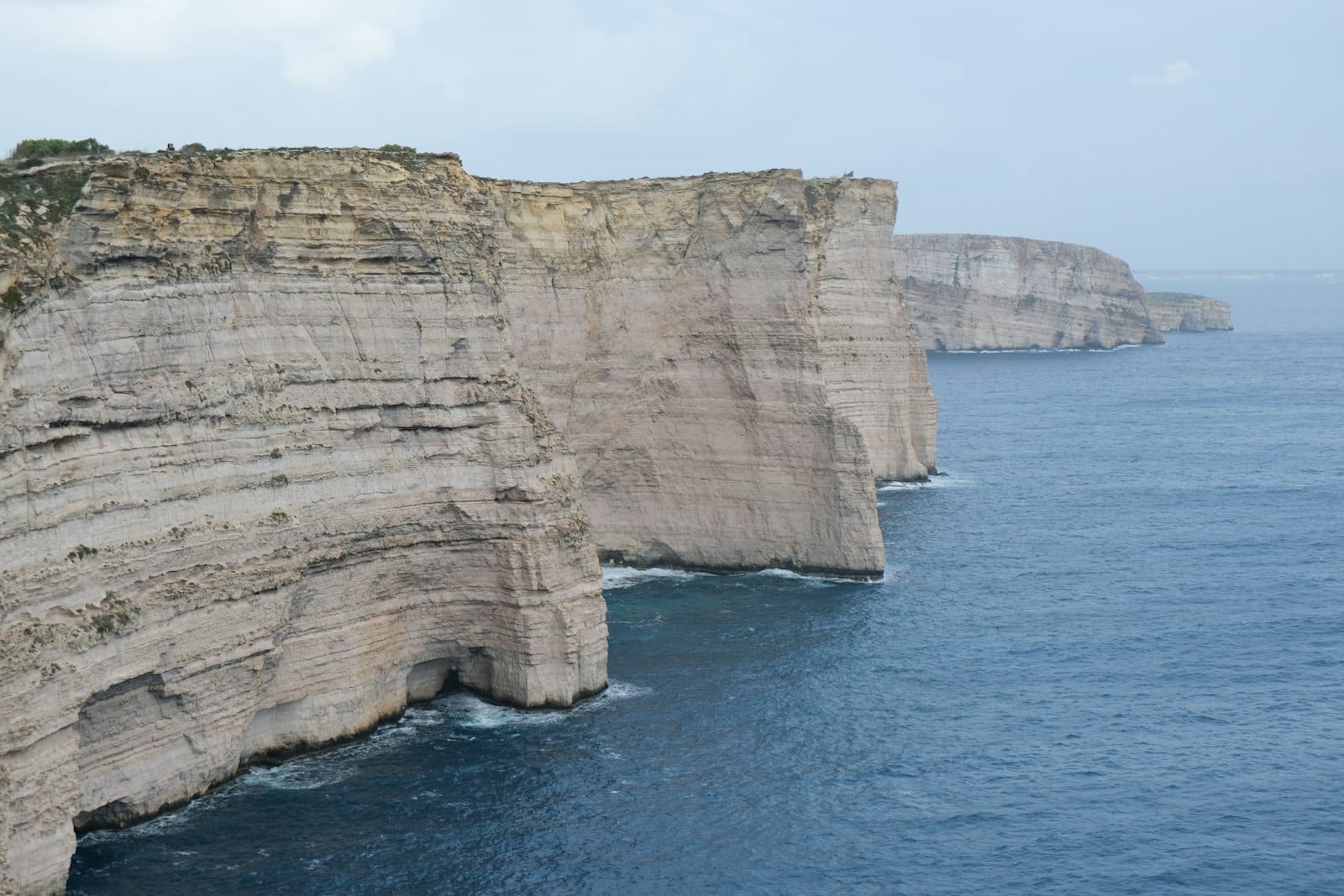
The Sanap Cliffs, known locally as Tas-Sanap and sometimes called Ta' Ċenċ Cliffs, run along a roughly 20-hectare strip of Gozo's southern coastline. The limestone escarpment climbs between 130 and 150 metres above the Mediterranean, dropping in vertical or near-vertical faces directly into deep blue water. There are no beaches below, no boat docks, no tourist infrastructure. What you get is open garrigue scrubland rolling to a cliff edge, silence except for the wind and the occasional shriek of seabirds, and a view that stretches unbroken toward the Sicilian Channel.
This is not the sort of place that appears on itineraries between the Citadella in Victoria and a winery. It takes a deliberate effort to get here, and that effort is exactly what keeps the crowds away. For travellers who want Gozo at its most unpolished, the Sanap Cliffs are worth the detour.
The Landscape: What You'll Actually See
The approach from Sannat follows a narrow country lane that gradually sheds all signs of habitation. The road terminates near a small parking area marked by a 'Private Property' sign on adjacent land. From here, a roughly 300-metre footpath leads to the main viewpoint. The ground underfoot is typical Gozitan garrigue: low, aromatic scrub of wild thyme, rosemary, and euphorbia, occasionally broken by bare limestone pavement pitted by centuries of rain.
At the cliff edge, the scale of the drop becomes apparent quickly. The limestone is pale buff in morning light, warming to amber in the afternoon. Directly below, where the rock meets the sea, the water shifts from turquoise to deep indigo depending on depth and time of day. On clear days, the faint silhouette of mainland Malta is visible to the southeast, and the southern horizon offers nothing but open Mediterranean. The visual effect is of standing at a genuine edge of things.
⚠️ What to skip
The cliff edges here are unfenced and in places unstable. Do not approach the very edge, especially after rain when limestone surfaces can be slick. Keep children and dogs under close supervision at all times.
Tickets & tours
Hand-picked options from our booking partner. Prices are indicative; availability and final rates are confirmed when you complete your booking.
City Sightseeing hop-on hop-off bus tour of Gozo
From 20 €Instant confirmationFree cancellationThe Malta Experience Audio-Visual Show and La Sacra Infermeria Tour
From 20 €Instant confirmationFree cancellationLuggage Storage in Malta
From 6 €Instant confirmationFree cancellation6-day heritage and attractions pass in Malta
From 80 €Instant confirmationFree cancellation
The Birdlife: A Seriously Important Site
The Sanap Cliffs are classified as an Important Bird Area (IBA), and the designation is not ceremonial. The cliffs host between 800 and 1,000 breeding pairs of Cory's shearwaters, making this one of the most significant colonies in the central Mediterranean. A further 150 to 300 pairs of yelkouan shearwaters nest here as well. Both species are pelagic seabirds that return to their cliff-face burrows at night during the breeding season, which runs roughly from spring through late summer.
Cory's shearwaters are large, broad-winged birds with an extraordinary ability to glide inches above wave surfaces without apparent effort. Watching them from the clifftop at dusk, as they sweep in from the open sea toward their nesting sites, is one of the genuinely uncommon wildlife experiences available in Malta. The sound they produce at close range, a drawn-out wailing call exchanged between pairs, is unsettling in the best possible way and carries across the cliffs in the evening quiet.
Birdwatchers should note that the main activity is crepuscular. Arriving an hour before sunset during late spring or summer gives the best chance of observing shearwaters in flight. Bring binoculars. A bird guide covering Mediterranean species adds context, though the shearwaters themselves are unmistakable at scale.
Time of Day: How the Experience Changes
Early morning is the quietest time by far. The light at this hour is flat and soft, which makes photography of the cliffs themselves somewhat unrewarding, but the air is cool, the scrubland smells strongly of thyme and sea salt, and you are very unlikely to encounter another person. This is the time for quiet observation rather than dramatic imagery.
Midday in summer should be approached cautiously. There is no shade anywhere along the cliff path. The limestone reflects heat, the wind can drop completely, and temperatures on the exposed southern coast of Gozo regularly exceed 35°C in July and August. Bring far more water than you think you need. A hat and sun protection are non-negotiable.
Late afternoon into dusk is the optimal window for most visitors. The low sun turns the cliff faces a warm amber-orange, the light on the sea becomes highly photogenic, and the temperature drops to something manageable. This is also when the shearwaters begin returning to their burrows. The combination of fading light, birdcall, and the scale of the cliffs makes for a visit that stays with you.
💡 Local tip
If visiting in summer, time your arrival for around 90 minutes before sunset. You get the best light for photography, the best birdwatching conditions, and a much more comfortable temperature for the walk.
Getting There: Routes and Logistics
The Sanap Cliffs are on Gozo, which means you first need to cross from Malta via the Gozo Channel ferry from Ċirkewwa. The crossing takes about 25 minutes. Once on Gozo, the cliffs are most easily reached by car or scooter. From Sannat, follow the narrow road south through the village and continue toward the cliff edge; the route is straightforward but the final section is unsigned. From Xlendi, the walk along the coastal path takes approximately 30 minutes and is a more scenic approach. The trail from Sannat to the Ta' Ċenċ section takes around 45 minutes. See our guide to getting around Malta for ferry timetables and car hire tips.
Public bus access to the immediate cliff area is not practical. Gozo's bus network serves Sannat village, but the walk from the village to the cliff edge adds considerable distance. For most visitors, renting a car or scooter on Gozo for the day is the sensible approach, as it also opens up sites like Xlendi Bay and the Gozo salt pans on the same loop.
Parking is limited to a small roadside area at the end of the access track near Munxar. There are no toilets, no cafe, no souvenir stands, and no rangers. Bring everything you need before you set out.
Photography Conditions and Practical Tips
The Sanap Cliffs photograph well in late afternoon and golden hour light, when the pale limestone catches warm tones and the sea below deepens in colour. Wide-angle lenses capture the full sweep of the escarpment, while a telephoto lens (or the zoom on a modern phone camera) brings in the detail of the cliff faces and, during breeding season, the shearwaters in flight. Polarising filters reduce glare off the water significantly.
For drone operators, note that Malta has specific civil aviation regulations governing UAV flights, and Gozo's coastal ecology zones warrant particular care. Check current rules with the Malta Civil Aviation Directorate before flying. For wider landscape photography context across Gozo, the best viewpoints guide covers the island's top elevated spots in detail.
Honest Assessment: Who Should Come, and Who Should Not
The Sanap Cliffs will disappoint anyone expecting facilities, easy access, or a polished experience. There is no signage to speak of, no safety infrastructure, and no organisation to the visit. You park, walk, observe, and leave. That is entirely the point. For travellers who find over-curated attractions exhausting, this is a relief. For families with young children, the unfenced cliff edges present real hazards and require constant supervision. This is not the ideal first stop on a family day.
Visitors with mobility limitations should know that the terrain is genuinely rough. The garrigue path is uneven, there are no paved surfaces after the road ends, and the gradients close to the cliff edge are not manageable in a wheelchair or with significant mobility restrictions. This is a site for people comfortable with basic hiking conditions.
For those doing a broader exploration of Gozo, the cliffs fit naturally into a southern loop that also takes in the Ġgantija Temples in the morning and Xlendi Bay in the early evening. If you are planning a full island day, our Gozo travel guide lays out the most efficient routes.
Insider Tips
- The coastal trail from Xlendi to the Sanap Cliffs is significantly more scenic than the road approach from Sannat, and the 30-minute walk passes limestone formations and small inlets that most visitors driving in never see. Start from Xlendi if your fitness allows.
- During late spring and summer breeding season (roughly April through August), visit at dusk specifically to hear and see the Cory's shearwaters returning to their burrows. The wailing calls are striking, and the number of birds in the air at this hour is far greater than at any other time.
- The garrigue scrub at the cliff edge is habitat for wall lizards, which are common across Gozo. Move slowly and quietly near the low vegetation and you will almost certainly see several basking in the sun during morning visits.
- If the sky is clear and you are visiting in summer, check the direction of the wind before approaching the edge. A strong southerly can be unexpectedly forceful at the lip of a 150-metre cliff and can make standing at the edge uncomfortable and potentially unsafe.
- The small parking area fills on Sunday afternoons in shoulder season when Gozitan locals walk the area. Arrive before 10am or after 4pm to guarantee a space and avoid the only period when you might share the cliffs with more than a handful of other people.
Who Is Sanap Cliffs For?
- Hikers and trail walkers who want an unspoiled coastal route with genuine elevation
- Birdwatchers targeting Cory's and yelkouan shearwaters in their nesting habitat
- Photographers seeking dramatic coastal light without crowds or constructed viewpoints
- Travellers who find heavily managed tourist attractions underwhelming and want raw landscape
- Couples or solo visitors looking for extended quiet in an open natural setting
Nearby Attractions
Other things to see while in Gozo:
- Citadella (Victoria)
Rising from a rocky promontory above Victoria, the Citadella is Gozo's most significant historical site. Inside its 17th-century bastions you'll find a cathedral with a famous trompe-l'oeil ceiling, small but thoughtful museums, and panoramic views stretching across the entire island. It rewards a half-day of exploration.
- Dwejra & Blue Hole
Dwejra on Gozo's west coast is the site of the Blue Hole, a natural limestone sinkhole that funnels divers into one of the Mediterranean's most celebrated underwater landscapes. Above water, the Inland Sea, surrounding cliffs, and the rubble of the lost Azure Window make this one of the most geologically dramatic corners of Malta.
- Ġgantija Temples
Standing on the Xagħra plateau in Gozo, the Ġgantija Temples are among the oldest freestanding structures on Earth, predating both Stonehenge and the Egyptian pyramids. This UNESCO World Heritage Site offers a rare encounter with Neolithic craftsmanship on a scale that continues to baffle archaeologists and awe visitors.
- Ramla Bay
Ramla Bay (Ir-Ramla l-Ħamra, meaning 'the red sands') is Gozo's largest and most distinctive beach, stretching 360 metres across the island's north-east coast. Its warm-toned sand, clear Blue Flag water, and surrounding dunes of endemic flora make it unlike anything on the main Malta island.