San Francisco City Hall: The Beaux-Arts Landmark Worth Stepping Inside
San Francisco City Hall is one of the most architecturally impressive government buildings in the United States, open to the public at no cost Monday through Friday. Its marble rotunda, gilded dome, and sweeping grand staircase make it a genuine architectural destination, not just a civic stop.
Quick Facts
- Location
- 1 Dr. Carlton B. Goodlett Place, San Francisco, CA 94102 (Civic Center)
- Getting There
- Civic Center / UN Plaza BART & Muni Metro station (a short walk away)
- Time Needed
- 45 minutes to 1.5 hours
- Cost
- Free admission (public government building)
- Best for
- Architecture enthusiasts, history buffs, first-time visitors, photography
- Official website
- sfgov.org/cityhall
What San Francisco City Hall Actually Is
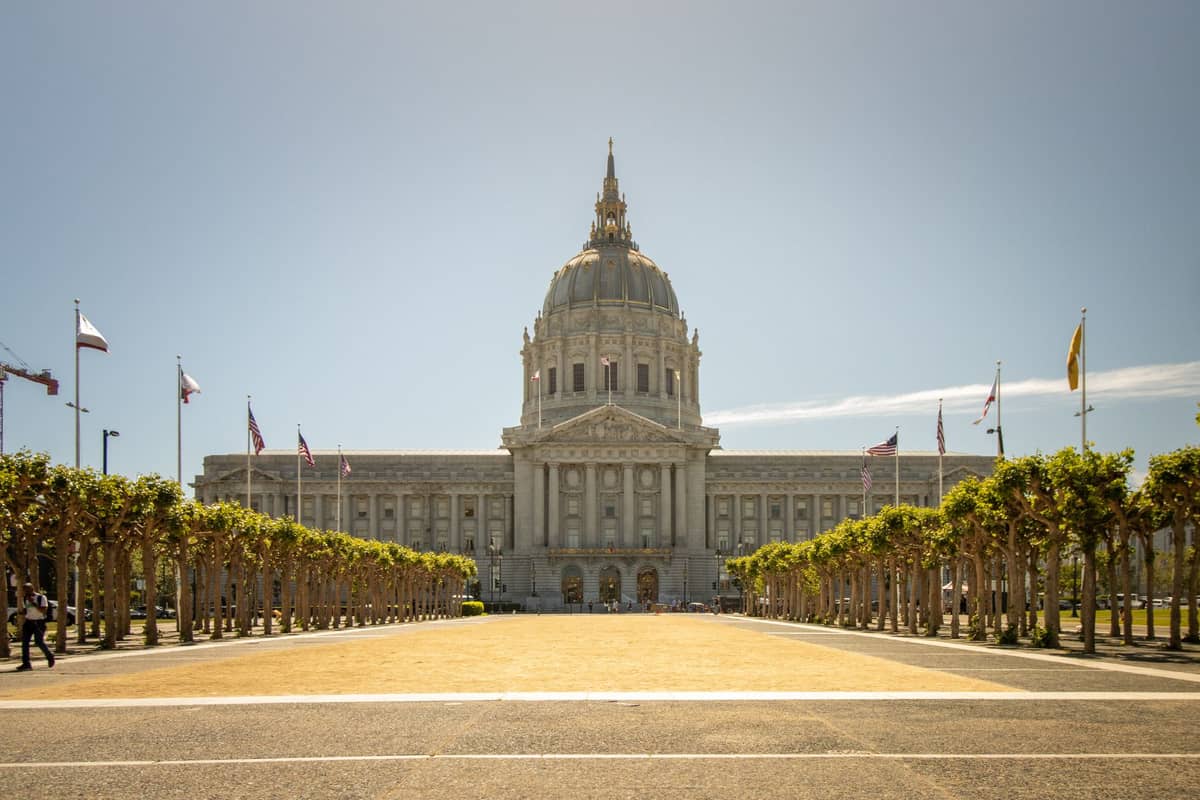
San Francisco City Hall is the seat of government for the City and County of San Francisco, and it has been since the current building opened in 1915. That year is significant: the structure was built as a deliberate statement of civic ambition, rising from the ruins of a previous city hall destroyed in the 1906 earthquake and fire. The architects Arthur Brown Jr. and John Bakewell Jr. designed it in the Beaux-Arts style, drawing direct inspiration from Baroque European civic architecture. The dome, measuring 307 feet from the ground to its lantern tip, is taller than the United States Capitol dome in Washington D.C. That is not a footnote; it is the defining fact that explains everything about the building's proportions and presence.
From the outside, on the plaza facing Polk Street, the dome dominates the skyline of the Civic Center district in a way that feels deliberately theatrical. The facade is clad in California granite, the columns are monumental, and the whole composition reads as a deliberate argument that this city, rebuilt from catastrophe, intended to matter. The Civic Center complex surrounding it, a National Register of Historic Places-listed collection of civic and cultural buildings, reinforces that ambition at the urban scale.
ℹ️ Good to know
City Hall is open to the public Monday through Friday. Official city sources currently list public hours as 8:00 a.m. to 8:00 p.m.; verify current hours at sf.gov or by calling 311 before visiting, particularly if you plan to arrive in the evening.
The Rotunda: The Reason to Go Inside
The interior of San Francisco City Hall is where most visitors stop and simply look up. The rotunda rises the full height of the dome above you, finished in pale Tennessee marble with bronze detailing on the railings and balustrades. The grand staircase that curves up from the ground floor is wide enough to feel ceremonial even when empty, and during midday the natural light filters down from the dome's interior windows, casting a soft, diffuse glow across the stone. Photographs do not capture the scale accurately. Standing at the base of the staircase and looking upward, the effect is genuinely arresting.
The rotunda is not a museum exhibit. City business happens here. On weekday mornings you may see city employees moving briskly through the corridors, wedding parties waiting in the Clerk's office alcoves (San Francisco City Hall is a popular civil ceremony venue), and occasionally official gatherings or memorial events on the main floor. This coexistence of living civic function and extraordinary architecture is part of what makes the visit worth making.
The upper galleries are accessible via elevator and the secondary stairwells, and from the third and fourth floor balconies you get a different perspective on the dome: close enough to see the painted and gilded coffers in detail, and high enough to appreciate how the rotunda is lit from above. The view down to the main floor from the third-floor balcony is one of the better interior photographs you can take in San Francisco.
Tickets & tours
Hand-picked options from our booking partner. Prices are indicative; availability and final rates are confirmed when you complete your booking.
Sonoma and Napa Valley wine tour from San Francisco
From 127 €Instant confirmationFree cancellationGo City | San Francisco Explorer Pass
From 76 €Instant confirmationFree cancellationSan Francisco CityPASS
From 77 €Instant confirmationFree cancellationThe Flyer San Francisco - “Flying Theater experience”
From 12 €Instant confirmationFree cancellation
Historical Weight: What Happened Here
City Hall was built to outlast earthquakes, and it nearly did not. The 1989 Loma Prieta earthquake caused significant structural damage that forced a multi-year closure and a seismic retrofit that cost over $270 million. The building was reopened in 1999 after the installation of base isolators beneath the foundation, a then-cutting-edge engineering solution that allows the entire structure to shift slightly during seismic events without transferring damaging forces to the building above. Interpretive materials inside the building explain the retrofit in some detail.
The building carries significant political history as well. In 1978, Mayor George Moscone and Supervisor Harvey Milk were assassinated inside City Hall by former Supervisor Dan White. The event became a flashpoint in the history of LGBTQ+ civil rights in the United States and remains part of the building's civic memory. A plaque marks the office where the shootings occurred. For visitors interested in that history, combining a City Hall visit with a stop in the Castro neighborhood and a visit to the GLBT Historical Society Museum gives meaningful context.
City Hall also hosted early civil rights milestones, including the first same-sex marriages legally performed in San Francisco in 2004. The rotunda has served as the backdrop for state funerals, public memorials, and inaugural ceremonies for every mayor since the building opened. If you are building an itinerary around San Francisco's political and social history, the first-time visitor guide outlines how to connect several of these sites across the city.
When to Visit and What to Expect at Different Times
Weekday mornings between 9:00 a.m. and 11:00 a.m. offer the quietest conditions. The rotunda echoes even with a handful of people present, and the quality of the morning light coming through the dome windows is at its best before the sun moves overhead. Midday brings a noticeable increase in foot traffic: employees from surrounding government offices use the building's corridors as cut-throughs, tour groups occasionally arrive, and wedding parties gather near the Clerk of Court offices, particularly on Fridays. If you want the grand staircase largely to yourself for photographs, mid-morning on a Tuesday or Wednesday is the closest you will get.
Late afternoon, roughly 3:00 p.m. to closing, the building quiets again. The light through the western windows takes on a warmer tone, and the marble in the rotunda shifts from bright white to something closer to ivory. It is a different experience from the morning visit, and experienced architectural photographers often prefer it.
⚠️ What to skip
The Civic Center plaza surrounding City Hall has experienced elevated levels of public disorder in recent years. The area immediately outside, particularly near UN Plaza, can feel uncomfortable at certain times of day. The interior of City Hall is a secure public building with security screening at the entrance. Once inside, the environment is calm and professionally maintained.
Getting There and Practical Logistics
The most straightforward way to reach City Hall by public transit is via the Civic Center / UN Plaza station, served by both BART and several Muni Metro lines. From there, the main entrance on Polk Street is roughly a three-minute walk. If you are arriving from Union Square or the Embarcadero, the F-Market & Wharves historic streetcar and several bus routes also run along Market Street, leaving you a short walk from the building.
Street parking in the Civic Center area is limited during business hours. The building is accessible to visitors with mobility needs; contact 311 or email City.Hall.Building.Management@sfgov.org for specific accessibility information, including elevator locations and accessible entrance points. For a broader overview of navigating the city, the guide to getting around San Francisco covers Muni, BART, and other transit options in practical detail.
Security screening is required at the entrance. You will pass through a metal detector and bags are X-rayed, similar to a courthouse. The process is generally quick. Backpacks and camera bags are permitted; tripods may require prior arrangement for commercial photography.
Architecture in Context: The Civic Center and Beyond
City Hall sits at the center of the San Francisco Civic Center Historic District, a collection of government and cultural buildings completed primarily in the early twentieth century in a coordinated Beaux-Arts and neoclassical style. The complex includes the Bill Graham Civic Auditorium, the San Francisco Public Library (both the old and new buildings), several state office buildings, and the federal courthouse. Walking the perimeter of the complex before entering City Hall gives a useful sense of the original urban planning ambition: these buildings were arranged around a formal plaza designed to convey governmental authority through architecture.
For visitors already engaged with San Francisco's architectural heritage, City Hall pairs well with other stops across the city. The San Francisco architecture guide covers a wider range of the city's notable structures, from the Transamerica Pyramid in the Financial District to the lesser-known Streamline Moderne buildings in SoMa.
Photography at City Hall
The interior of City Hall is among the most photogenic public spaces in California. The rotunda offers genuine wide-angle compositions: the curved staircases, layered balconies, and dome create converging lines that reward both smartphone photographers and anyone carrying a mirrorless or DSLR camera. For interior shots, the diffuse natural light from the dome works well without flash; however, the contrast between the bright dome interior and the darker lower floors is significant, so exposure bracketing or HDR techniques help retain detail.
The exterior is best photographed from the formal plaza on the Polk Street side in the morning, before direct sunlight hits the west-facing facade and creates harsh shadows across the columns. A wide perspective from the far end of the plaza, near Larkin Street, captures the full dome and both wings of the building in a single frame.
💡 Local tip
For a striking exterior shot that includes City Hall's reflection, look toward the glass facade of the San Francisco Public Library directly across Larkin Street. The juxtaposition of the 1915 Beaux-Arts building against the 1996 modernist library creates an interesting compositional contrast many visitors overlook.
Insider Tips
- The building is often included in free guided walking tours of City Hall and the Civic Center offered by SF City Guides and other organizations. Check the official City Hall or SF City Guides websites or call 311 to confirm current tour options and schedules before your visit, as times change seasonally.
- The fourth-floor balcony offers one of the closest views of the interior dome surface available to the public. Take the elevator rather than searching for the stairwell, and walk the full perimeter of the balcony for the best angle on the gilded coffers.
- Civil ceremonies (civil marriages) are performed at City Hall by the County Clerk's office on weekdays. If you visit on a Friday afternoon, you will almost certainly encounter multiple wedding parties using the grand staircase and rotunda for photographs. This adds genuine life to the space, but expect brief delays in the staircase area.
- The building is well heated and provides reliable shelter from San Francisco's cold marine-layer fog, which can arrive sharply in the afternoon even in summer. If your day gets cold unexpectedly, City Hall is a legitimate and worthwhile stop to warm up.
- The plaza outside City Hall along Dr. Carlton B. Goodlett Place faces east, making it a reasonable spot to watch the late-afternoon fog roll in from the west over the rooftops behind you while the sky ahead stays clear. The building's dome catches the light well in this window.
Who Is San Francisco City Hall For?
- Architecture and design enthusiasts who want to see one of the finest Beaux-Arts civic buildings in the United States
- History-focused travelers interested in San Francisco's political history, the Harvey Milk era, and the LGBTQ+ civil rights movement
- First-time visitors to San Francisco building a broad sense of the city's civic identity and urban core
- Photographers looking for dramatic interior compositions with natural light, available free and without a ticket
- Travelers on a tight budget who want a genuinely impressive cultural experience at no cost
Nearby Attractions
Combine your visit with:
- 16th Avenue Tiled Steps
The 16th Avenue Tiled Steps Project is a community-made mosaic staircase of 163 steps stretching through San Francisco's Golden Gate Heights neighborhood (a sub-area of the Inner Sunset), depicting a journey from the ocean floor to the night sky. It's free, photogenic, and connects to one of the city's best lesser-known hilltop viewpoints.
- Angel Island State Park
Angel Island State Park sits in the middle of San Francisco Bay, offering miles of hiking trails, layers of military and immigration history, and 360-degree views of the city skyline, Marin headlands, and beyond. Getting there requires a ferry, which is part of the appeal — the island feels removed from city life, even though San Francisco is visible the entire time.
- Asian Art Museum of San Francisco
One of the largest Asian art collections in the Western world, housed in a transformed Beaux-Arts landmark at Civic Center. From ancient Chinese bronzes to contemporary Southeast Asian installations, the museum rewards careful visitors who know what to look for.
- UC Berkeley Campus
The University of California, Berkeley sits on a hillside above San Francisco Bay, offering free access to striking Beaux-Arts architecture, landmark museums, and open green spaces. A short BART ride from San Francisco, it rewards curious visitors with history, intellectual energy, and some of the best campus scenery in the country.