Queensland Museum Kurilpa: What to Expect Before You Visit
Queensland Museum Kurilpa sits at the heart of Brisbane's South Bank cultural precinct, offering free entry to natural history, science, and Queensland heritage collections spread across three display floors. It is one of the few major museums in Australia where the core experience costs nothing, making it worth serious consideration for visitors of almost any age or interest.
Quick Facts
- Location
- Corner of Grey and Melbourne Streets, South Bank, South Brisbane, QLD
- Getting There
- South Bank busway stations, CityCat to South Bank terminal, or a short walk across the Kurilpa Bridge from the CBD
- Time Needed
- 2–4 hours for general collections; allow a full day if visiting SparkLab or a major ticketed exhibition
- Cost
- Free general entry; SparkLab and some special exhibitions charge separately
- Best for
- Families, history enthusiasts, rainy-day visits, curious travellers on a budget
- Official website
- www.museum.qld.gov.au/kurilpa
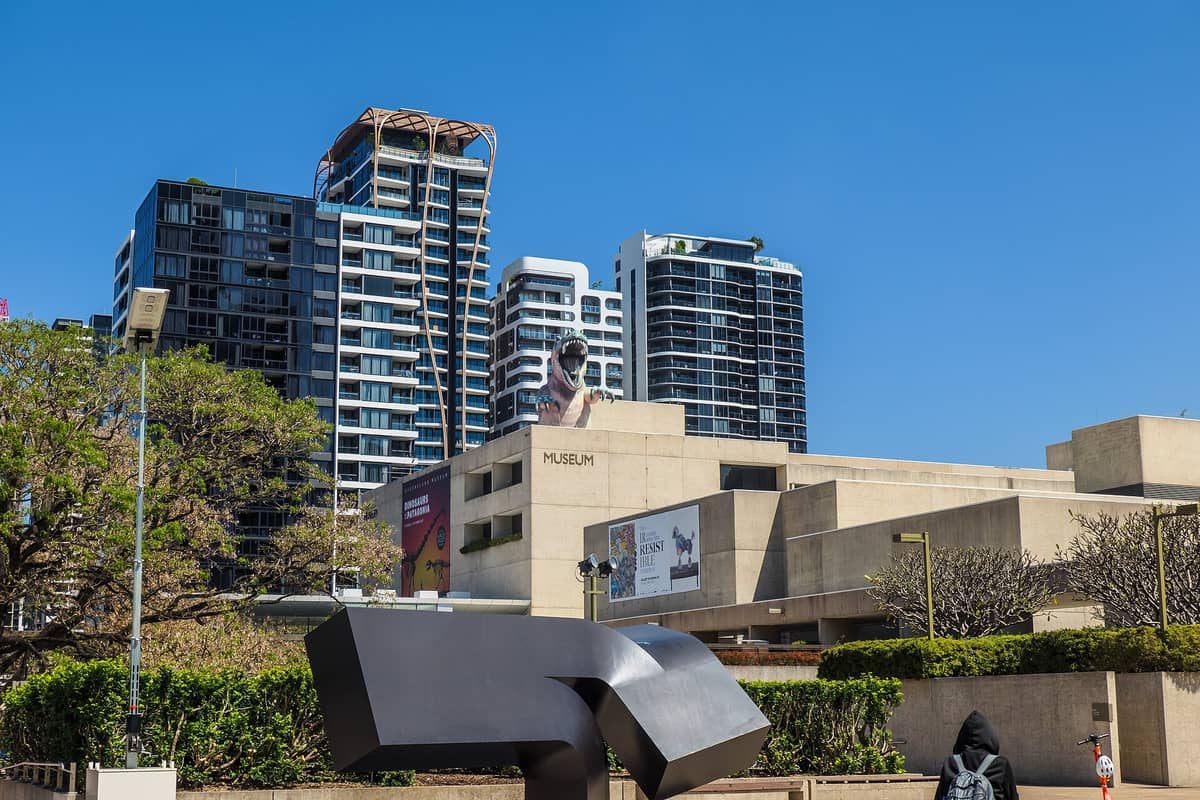
What Is Queensland Museum Kurilpa?
Queensland Museum Kurilpa is the flagship site of the Queensland Museum Network, located in the Queensland Cultural Centre on South Bank. Formally founded on 20 January 1862, it is one of Australia's oldest natural history and sciences museums, though the current South Bank building only opened in 1986. The building itself is functional rather than decorative: a blocky, multi-level structure that fits the institutional rhythm of the Cultural Centre without demanding attention on its own terms.
The museum occupies multiple display levels, plus an external geological garden that most visitors walk straight past. It sits alongside the Queensland Art Gallery and the Gallery of Modern Art (GOMA), and together these institutions form one of the southern hemisphere's more concentrated clusters of public cultural infrastructure. If you are planning a full cultural day, the proximity matters.
💡 Local tip
General entry is free. You do not need to book for the permanent collection. Only SparkLab and ticketed special exhibitions require advance planning or payment. Check the official site before your visit for what is currently showing.
The Permanent Collection: Natural History and Queensland Stories
The ground floor sets the tone quickly. A life-size blue whale skeleton hangs overhead near the main entrance, and it is larger than most people expect. Children tend to stop walking the moment they see it. Adults do too, for a moment. This is the museum's single most photographed feature, and the scale of it genuinely earns that attention.
The natural history displays cover Queensland's geology, marine life, and land fauna with reasonable depth. The fossil specimens and mineralogy sections are particularly well presented, with geological samples labelled clearly enough for non-specialists. The external geological garden, accessible from the ground floor, displays large rock specimens from across Queensland. It is easy to miss if you don't know to look for it, and it deserves ten minutes of your time.
The museum's collections relating to Queensland history and Indigenous cultures require more careful engagement. The institution is situated on the traditional lands of the Turrbal and Jagera peoples, and several displays address this context directly. These sections tend to be quieter than the natural history floors and reward slower reading.
Tickets & tours
Live prices and dates from our booking partner. If you book, we may earn a commission at no extra cost to you.
Luggage Storage in Brisbane
From 5 €Instant confirmationFree cancellationBrisbane's dark stories true crime tour
From 21 €Instant confirmationFree cancellationFull-day Mount Tamborine winery tour from Brisbane with lunch
From 140 €Instant confirmationFree cancellationNorth Stradbroke Island small groups day tour
From 79 €Instant confirmationFree cancellation
SparkLab: The Ticketed Science Centre
SparkLab is a hands-on science space within the museum that operates as a separate, ticketed attraction. It is aimed squarely at children and younger teenagers, though adults accompanying kids will find enough to engage with. The format is interactive: stations where you build, test, observe, and experiment rather than read labels. It is the loudest part of the building by a significant margin.
For families with children under 12, SparkLab is often the primary reason to visit, and it justifies the admission fee. If you are travelling without children, you can skip it without missing anything from the core museum experience. Booking ahead is advisable during school holidays, when it reaches capacity.
ℹ️ Good to know
SparkLab sessions are time-limited and entry is by allocated time slot. Check the Queensland Museum website for current pricing and availability before your visit, particularly during Queensland school holiday periods.
How the Experience Changes by Time of Day
Arriving at or shortly after the 9:30 a.m. opening gives you the best conditions for the permanent collection. The whale skeleton and ground floor displays are noticeably easier to photograph, and the fossil and geology sections feel genuinely contemplative rather than crowded. Weekday peak visitation runs from around 9:40 a.m. to 2 p.m., and the noise level rises substantially in SparkLab and on the main floor.
Afternoons from around 2 p.m. can be calmer on weekdays, once school groups cycle through. Weekend afternoons may remain busy. The museum closes at 5 p.m. daily, and the staff begin gentle crowd management from around 4:30 p.m. Arriving after 3:30 p.m. gives you enough time for a solid walk through the permanent collection but not a full visit to SparkLab. The museum closes at 5 p.m. daily, and the staff begin gentle crowd management from around 4:30 p.m. Arriving after 3:30 p.m. gives you enough time for a solid walk through the permanent collection but not a full visit to SparkLab.
The surrounding South Bank precinct changes character considerably across the day. Early morning, the paths between cultural institutions are quiet and pleasant. By midday in summer, the outdoor areas between buildings can be quite hot, with Brisbane temperatures regularly reaching 29–30°C from December through February. The museum's interior is air-conditioned throughout, making it a practical refuge during heat peaks.
Getting There and Getting Around the Precinct
The museum is straightforward to reach without a car. The South Bank busway stations are within easy walking distance, and the CityCat ferry stops at South Bank terminal on the Brisbane River. If you are coming from the CBD, the Kurilpa Bridge pedestrian crossing puts you almost directly at the Queensland Cultural Centre in around ten minutes on foot. It is a good walk with river views, and it avoids the need for any transit fare.
If you are driving, the Queensland Cultural Centre car park has accessible parking spaces and is signposted from the surrounding streets. Parking availability on weekends and during major South Bank events can be limited. On-street parking nearby is subject to time limits.
The museum shares its precinct with the State Library of Queensland, the Queensland Art Gallery, and GOMA. The South Bank Parklands, including Streets Beach, are a short walk south. This concentration means you can realistically combine two or three cultural stops in a single day without covering much ground.
Accessibility and Practical Details
The museum is one of the more accessible attractions in Brisbane. All three display floors are reached by lift, wheelchair-accessible entrances exist at ground level, and wheelchairs are available to borrow at no charge, subject to availability. The Queensland Cultural Centre car park includes accessible parking. If you have mobility considerations, this is a well-equipped option.
The museum is closed on Good Friday, Christmas Day, and Boxing Day. On Anzac Day it opens at 1:30 p.m. rather than the standard 9:30 a.m. These are the only exceptions to the daily 9:30 a.m. to 5 p.m. schedule.
There is a café and a gift shop on site. The gift shop has a reasonable children's section focused on natural history and science, and it is better than average for a museum of this type. For a broader range of dining options, the South Bank precinct has cafés and restaurants within a few minutes' walk.
Is It Overhyped? An Honest Assessment
Queensland Museum Kurilpa is a solid, well-maintained regional natural history and science museum. It is not in the same league as the Australian Museum in Sydney or the Melbourne Museum in terms of collection scale or exhibition ambition. If you have already visited those institutions, the permanent collection here will feel somewhat familiar in scope.
What it does well is free, accessible, and genuinely good for families. The whale skeleton alone is worth 20 minutes. The natural history and geology floors have real substance for anyone with an interest in Australian fauna, fossils, or earth sciences. The Queensland history sections are uneven but contain genuinely interesting material about the state's past.
Solo travellers looking for a world-class museum experience may find the Queensland Art Gallery or GOMA more rewarding, depending on their interests. The museum is most worth your time if you have children in tow, if it is raining (South Bank's outdoor spaces become much less appealing in a downpour), or if you have a specific interest in natural history, palaeontology, or Queensland heritage. For budget-conscious visitors, the free entry makes the value calculation easy.
⚠️ What to skip
Avoid Queensland school holiday periods if you have flexible timing. SparkLab in particular becomes significantly crowded, wait times increase, and the ground floor sees noticeably heavier foot traffic throughout the day.
Insider Tips
- The geological garden on the ground floor exterior is easy to overlook but displays substantial rock and mineral specimens from across Queensland. It is free, uncrowded, and takes about ten minutes to walk through properly.
- The blue whale skeleton photographs best from the second-floor mezzanine level, where you get a length-on perspective that shows the full scale. The ground-floor angle is the obvious shot, but the upper view is more striking.
- If you are visiting with children and plan to do SparkLab, book the first time slot of the day. Later slots on busy days can feel rushed as groups overlap.
- Combine the museum with the State Library of Queensland next door, which is free and has rotating exhibitions. Both institutions together make for a full morning without spending anything.
- The museum's café is adequate but not remarkable. If you want a proper coffee or a meal, walk five minutes to the South Bank dining strip along Grey Street for more options at comparable or lower prices.
Who Is Queensland Museum For?
- Families with children aged 5 to 14, especially for SparkLab
- Budget travellers who want a full morning's activity at no cost
- Visitors caught in Brisbane's summer rain with time to fill
- Anyone with an interest in Queensland natural history, palaeontology, or Indigenous heritage
- Travellers combining a full South Bank cultural precinct day
Nearby Attractions
Other things to see while in South Bank:
- Fish Lane
Fish Lane is a compact but layered laneway in South Brisbane connecting the Cultural Centre precinct with West End. It packs street art, independent cafés, bars, and restaurants into a short stretch that rewards slow exploration at almost any hour.
- Gallery of Modern Art (GOMA)
The Gallery of Modern Art (GOMA) is Australia's largest gallery dedicated to modern and contemporary art, anchoring Brisbane's South Bank cultural precinct. General entry is free, the building itself is architecturally striking, and the rotating program of exhibitions consistently draws international attention.
- Kurilpa Bridge
Kurilpa Bridge is a free pedestrian and bicycle bridge crossing the Brisbane River between Kurilpa Point in South Brisbane and Tank Street in the CBD. Opened in 2009, it is one of the world's largest structures built on tensegrity principles, and it doubles as a solar energy generator. Whether you're crossing to reach the Gallery of Modern Art or simply looking for a river walk with architectural interest, the bridge earns a place in any South Bank itinerary.
- Nepalese Peace Pagoda
Standing three storeys tall in the heart of South Bank Parklands, the Nepalese Peace Pagoda is a remarkable piece of traditional Himalayan craftsmanship built from over 80 tonnes of hand-carved timber. Free to visit and open daily, it rewards curious travelers who slow down enough to take in the detail.
Planning a trip? Discover personalized activities with the Nomado app.