Fish Lane, South Brisbane: Street Art, Coffee, and Creative Dining in a Historic Laneway
Fish Lane is a compact but layered laneway in South Brisbane connecting the Cultural Centre precinct with West End. It packs street art, independent cafés, bars, and restaurants into a short stretch that rewards slow exploration at almost any hour.
Quick Facts
- Location
- Fish Lane, South Brisbane QLD 4101 (between South Bank and West End)
- Getting There
- South Brisbane train station (2 min walk); Cultural Centre busway station (5 min walk)
- Time Needed
- 45 minutes to 2 hours depending on stops
- Cost
- Free to walk; café and bar spending is your own call
- Best for
- Street art, specialty coffee, creative dining, evening drinks
- Official website
- explorefishlane.com.au
What Is Fish Lane?
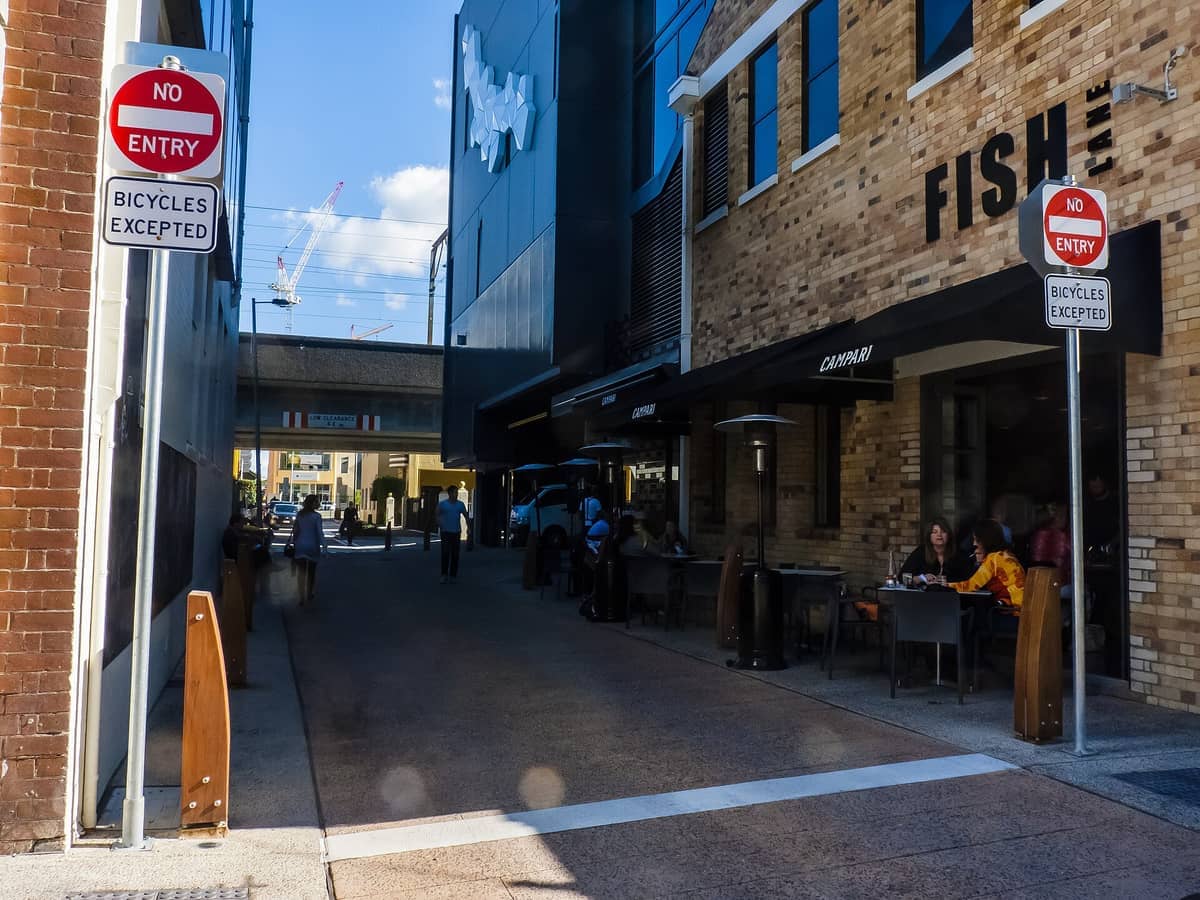
Fish Lane is a narrow public thoroughfare in South Brisbane that has quietly become one of the city's most interesting short walks. Running between the Cultural Centre precinct and West End, it is easy to miss from the main road yet well known to locals who treat it as a daily commute route, a lunch destination, and an after-work stop all in one.
Unlike the curated retail strips of other Australian cities, Fish Lane has kept a slightly rough-edged quality. The buildings are low, the signage is understated, and the street art changes often enough that returning visitors will find something new. That informality is a large part of its appeal.
💡 Local tip
Fish Lane is a public lane with no entry fee and no set hours. Individual venues open and close on their own schedules, so check ahead if you are visiting specifically for a bar or restaurant.
A Brief History of the Lane
The lane's history is older and more layered than its current café-bar identity suggests. It existed as an access track from the 1870s, given the name Soda Water Lane in 1885 after the industrial uses that occupied the area at the time. The name changed to Fish Lane in 1904, and its extension south to Manning Street was completed by 1925. The Brisbane City Council Heritage Register records this sequence in detail, placing Fish Lane within the broader industrial development of inner South Brisbane during the late nineteenth and early twentieth centuries.
The lane's current character, centred on food, drink, and street art, is relatively recent, but it sits on infrastructure that is well over a century old. That layering gives Fish Lane a textural quality that newer precincts often lack: the brickwork is aged, the proportions are pre-car, and the scale keeps everything human-sized.
For broader historical context on South Brisbane's evolution, the Brisbane heritage and history guide covers the precinct and its surrounding streets in useful detail.
Tickets & tours
Live prices and dates from our booking partner. If you book, we may earn a commission at no extra cost to you.
Luggage Storage in Brisbane
From 5 €Instant confirmationFree cancellationBrisbane's dark stories true crime tour
From 21 €Instant confirmationFree cancellationFull-day Mount Tamborine winery tour from Brisbane with lunch
From 140 €Instant confirmationFree cancellationNorth Stradbroke Island small groups day tour
From 79 €Instant confirmationFree cancellation
What You See: Street Art and Physical Character
The most immediately striking feature of Fish Lane is its walls. Murals cover significant portions of the lane's vertical surfaces, ranging from large-scale commissioned pieces to smaller paste-ups and stencil work. The quality is high by street art standards: several pieces are by artists with national or international profiles, and the curation changes periodically rather than being left to accumulate without oversight.
The physical lane is flat, narrow, and relatively short, which means the art is always close. You are rarely more than a few metres from the nearest wall. In the early morning, when the lane is quiet and the light comes in at a low angle from the east, the texture of painted brickwork is particularly clear. Photography is best before 10am or in the soft light of late afternoon, when harsh midday shadows are no longer cutting across the murals.
Accessibility is generally straightforward. The lane is a flat road and pedestrian thoroughfare, which makes it passable for most mobility needs, though the cited sources do not provide specific details on accessible routes or facilities. If this is a concern, it is worth contacting the individual venues in advance.
The Experience by Time of Day
Morning: Coffee and Quiet
In the morning, Fish Lane belongs mostly to workers and early café visitors. The lane is genuinely quiet before 8am, and you can walk its length without competing for space on the footpath. Specialty coffee is the main draw at this hour, and the cafés that operate here tend to take their craft seriously: expect single origins, careful extraction, and staff who can actually explain what they are doing. The smell of roasting or freshly ground coffee drifts out into the lane and is one of the more pleasant sensory signals that the day has started.
Midday: Lunch Crowd
By midday on weekdays, Fish Lane draws a lunch crowd from the surrounding offices and institutions. Tables fill up, and the lane takes on more noise: conversation, passing foot traffic, the clatter of kitchen service. It is manageable but noticeably busier than morning. If you want a leisurely look at the murals, a weekday lunch visit is not the ideal moment. That said, if you are visiting specifically to eat, the midday options are reliable and cover a reasonable range of cuisines.
Evening: The Lane at Its Best
Fish Lane comes into its sharpest focus in the evening. The light drops, the bar trade builds, and the lane takes on a warmer character. Fairy lights and venue lighting replace natural light, the street art becomes more atmospheric rather than documentary, and the crowd skews younger. On weekend evenings, the energy levels are higher and booking ahead at the more popular venues is sensible. This is the time of day when the lane most clearly shows what it is: a creative, independent, slightly alternative hospitality strip that happens to sit in one of Brisbane's most well-resourced precincts.
Getting There and Orientation
Fish Lane is straightforward to reach by public transport. South Brisbane train station is approximately two minutes on foot, and the Cultural Centre busway station is roughly five minutes away. Both connect to central Brisbane and the wider Translink network. For visitors already exploring South Bank, the lane is a five to ten minute walk from the main parklands, heading south and west away from the river.
The lane also works well as part of a broader South Bank day. The South Bank precinct has enough variety to fill a full day, and Fish Lane makes a natural late-afternoon or evening endpoint before heading back via train or ferry.
If you are planning a longer walk through the area, the Brisbane walking tours guide includes routes that pass through or near this part of inner South Brisbane.
ℹ️ Good to know
Fish Lane is a public thoroughfare with no set opening hours. The lane itself is accessible at any hour, but individual businesses operate to their own schedules. Check the Fish Lane official website for a current list of venues.
Food and Drink: What to Expect
The food and drink offering in Fish Lane skews independent and considered. This is not a strip of chain restaurants. The cafés take coffee seriously, the bars tend toward craft spirits and local beers, and the restaurants generally reflect the kind of careful, ingredient-led cooking that has become common in Brisbane's better inner-city venues over the last decade. Prices are consistent with what you would pay at equivalent venues in South Bank or Fortitude Valley.
Because the lane is compact and the venues are small, capacity is limited. On busy evenings, particularly Friday and Saturday, popular spots fill quickly. Walking in without a reservation at dinner is a gamble. For drinks and lighter snacks, the bar options tend to be more flexible.
If food exploration is a core part of your Brisbane visit, the what to eat in Brisbane guide sets Fish Lane in the context of the city's wider dining scene.
Who Should Skip Fish Lane
Fish Lane is not for everyone. Travellers looking for big-ticket sightseeing, heritage buildings with interior access, or the kind of attraction that justifies a half-day itinerary slot will find it underwhelming. It is a short lane. You can walk its full length in under three minutes. The value comes from slowing down, stopping for coffee or a meal, and paying attention to the walls, not from moving through quickly and ticking it off a list.
Families with very young children can certainly visit, but the evening bar atmosphere is adult-oriented, and the lane's narrow footpath can make pushchairs awkward during busier periods. Those visiting on a tight schedule during peak hours may find the limited seating at popular venues frustrating.
Photography and Practical Notes
For street art photography, the best results come before the morning café rush or in the hour before sunset, when the light is directional enough to bring out texture without creating hard contrast. The lane's narrow width means a wide-angle lens is useful for capturing full mural compositions, though individual sections of larger works photograph well with a standard lens. Tripod use is feasible in the early morning when foot traffic is low.
Wear comfortable footwear suitable for flat pavement. The lane itself requires no specialist preparation. In summer, the surrounding precinct can be hot and humid, consistent with Brisbane's December to February averages of around 29 to 30 degrees Celsius, so carrying water and planning visits for morning or evening is sensible. Winter visits, roughly June to August with mild daytime temperatures around 21 to 23 degrees, are comfortable at any hour.
Insider Tips
- Visit on a Tuesday or Wednesday morning for the quietest conditions: the street art is fully visible, the cafés are not crowded, and you will have the best light without weekend foot traffic.
- The murals change periodically, so if you have visited before, it is worth a return look. Check the Fish Lane website or social accounts before visiting if you are interested in a specific artist or piece.
- Fish Lane connects easily to West End on foot. Walking the full route from South Bank through the lane and into West End takes under 20 minutes and passes several good secondary stops along the way.
- Some of the smaller bars in the lane have no outdoor queuing space. If a venue looks full from the entrance, it almost certainly is. Have a backup option in mind rather than waiting in a narrow laneway.
- The lane is lit at night but not brightly. If you are visiting specifically to photograph murals after dark, bring a phone or camera capable of reasonable low-light performance, as the natural lighting is atmospheric rather than functional.
Who Is Fish Lane For?
- Specialty coffee drinkers who want a quieter alternative to the main South Bank strip
- Street art enthusiasts and urban photography
- Couples looking for a low-key evening drink or dinner before heading into South Bank or West End
- Visitors with only a short window who want something genuinely local rather than tourist-oriented
- Anyone combining South Bank's major cultural institutions with a more neighbourhood-scale experience
Nearby Attractions
Other things to see while in South Bank:
- Gallery of Modern Art (GOMA)
The Gallery of Modern Art (GOMA) is Australia's largest gallery dedicated to modern and contemporary art, anchoring Brisbane's South Bank cultural precinct. General entry is free, the building itself is architecturally striking, and the rotating program of exhibitions consistently draws international attention.
- Kurilpa Bridge
Kurilpa Bridge is a free pedestrian and bicycle bridge crossing the Brisbane River between Kurilpa Point in South Brisbane and Tank Street in the CBD. Opened in 2009, it is one of the world's largest structures built on tensegrity principles, and it doubles as a solar energy generator. Whether you're crossing to reach the Gallery of Modern Art or simply looking for a river walk with architectural interest, the bridge earns a place in any South Bank itinerary.
- Nepalese Peace Pagoda
Standing three storeys tall in the heart of South Bank Parklands, the Nepalese Peace Pagoda is a remarkable piece of traditional Himalayan craftsmanship built from over 80 tonnes of hand-carved timber. Free to visit and open daily, it rewards curious travelers who slow down enough to take in the detail.
- Queensland Art Gallery (QAGOMA)
Spread across two buildings 150 metres apart on South Bank, the Queensland Art Gallery and Gallery of Modern Art form one of Australia's most significant art institutions. General entry is free, programming runs daily, and the permanent collections alone justify at least half a day.
Planning a trip? Discover personalized activities with the Nomado app.