Queensland Art Gallery (QAGOMA): What to Expect at Brisbane's Premier Art Destination
Spread across two buildings 150 metres apart on South Bank, the Queensland Art Gallery and Gallery of Modern Art form one of Australia's most significant art institutions. General entry is free, programming runs daily, and the permanent collections alone justify at least half a day.
Quick Facts
- Location
- Stanley Place, South Brisbane QLD 4101 (South Bank precinct)
- Getting There
- Cultural Centre Busway station (steps away); South Brisbane train station (5-min walk); South Bank CityCat terminal (10-min walk)
- Time Needed
- 2–4 hours for both galleries; half a day if a ticketed exhibition is on
- Cost
- Free general entry; some special exhibitions require paid tickets (prices vary)
- Best for
- Art lovers, families, rainy-day visitors, architecture enthusiasts
- Official website
- www.qagoma.qld.gov.au
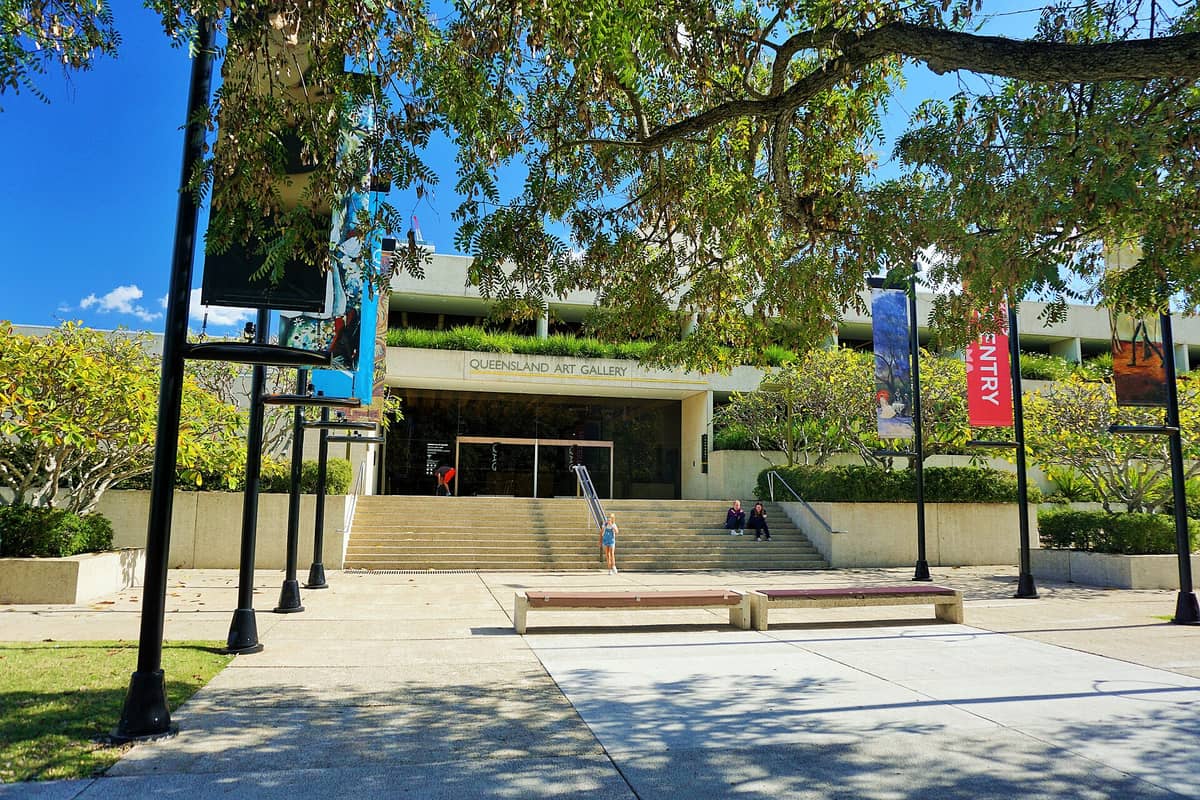
Two Galleries, One Institution
The Queensland Art Gallery (QAG) and the Gallery of Modern Art (GOMA) sit 150 metres apart on South Bank, collectively known as QAGOMA. This is not a single building with two floors but two architecturally distinct institutions that function together under a shared program and visitor experience. Understanding that difference matters before you arrive, because most visitors underestimate how much ground there is to cover.
QAG is the original building, opened on 21 June 1982, and traces its institutional roots back to the Queensland National Art Gallery founded in 1895. GOMA came later, opening in 2006 as one of the largest galleries dedicated to modern and contemporary art in the Asia-Pacific region. Both are free to enter for general collection access, which makes them genuinely exceptional value in any travel budget.
QAGOMA anchors the broader South Bank cultural precinct, which also includes the Queensland Museum, State Library of Queensland, and Queensland Performing Arts Centre. If you are planning a culture-heavy day, it is worth knowing these institutions share footpaths and can be combined without needing transport between them.
💡 Local tip
Check the QAGOMA website before visiting. Special exhibitions require separate paid tickets and sometimes sell out well in advance, particularly school holiday programs and major international touring shows.
The Queensland Art Gallery: History, Light, and the Permanent Collection
QAG's 1982 building was designed by Robin Gibson and is a recognisable piece of late-modernist Queensland architecture: broad horizontal lines, generous natural light through clerestory windows, and an interior that opens onto a watermall at ground level. The watermall is not decorative filler. It is a genuine architectural feature that connects the building to the Brisbane River and changes character completely depending on the quality of the light outside. On overcast mornings it reads as quiet and contemplative; on bright winter afternoons the reflections move across the gallery ceilings.
The permanent collection at QAG covers Australian art from the colonial period to the mid-twentieth century, with strong holdings in Queensland and Pacific art. The Australian Indigenous art section is particularly significant: the works are displayed with cultural context, not just as aesthetic objects, which distinguishes this collection from more superficial presentations elsewhere. There are also important Southeast Asian and European holdings that often receive less attention than they deserve.
Mid-week mornings between opening at 10am and around 11:30am tend to be quietest. School groups begin arriving late morning and can fill certain galleries around noon. If you prefer to look at paintings without navigating around students on excursions, the 10am opening slot is genuinely the right time.
Tickets & tours
Live prices and dates from our booking partner. If you book, we may earn a commission at no extra cost to you.
Luggage Storage in Brisbane
From 5 €Instant confirmationFree cancellationBrisbane's dark stories true crime tour
From 21 €Instant confirmationFree cancellationFull-day Mount Tamborine winery tour from Brisbane with lunch
From 140 €Instant confirmationFree cancellationNorth Stradbroke Island small groups day tour
From 79 €Instant confirmationFree cancellation
The Gallery of Modern Art: Scale, Ambition, and Contemporary Work
GOMA is the larger of the two buildings and feels markedly different from QAG. The architecture is more assertive: tall, raw concrete and glass spaces that are designed to handle installation art, large-scale video works, and the kind of ambitious exhibitions that require industrial-scale logistics. Walking in from the South Bank Parklands entrance, the scale of the main atrium is the first thing you notice.
The permanent contemporary collection includes significant works by Australian and international artists, with a particular focus on the Asia-Pacific region. GOMA's Children's Art Centre is worth calling out for families: it is purpose-built, interactive, and consistently well-programmed. It is not a supervision room while parents look at art. It is a genuine, often inventive space that children engage with seriously.
The ticketed exhibitions at GOMA are typically the ones drawing large crowds and strong critical attention. These have included major retrospectives and blockbuster international loans. If a large exhibition is running during your visit, expect queues at peak times on weekends. For the full picture of what Brisbane's South Bank cultural corridor offers, the guide to Brisbane's best museums covers GOMA alongside the Queensland Museum and other institutions.
How the Experience Changes Through the Day
Early mornings, particularly on weekdays, offer the galleries at their most unhurried. The cafes open with the galleries at 10am, and there is something genuinely pleasant about coffee in GOMA's ground-floor cafe before the space fills. The light through the northern glazing of QAG's watermall is best in the late morning on clear days, which makes that section of the building worth timing deliberately.
Weekends change the character significantly. Both buildings attract families, date couples, and visitors doing broader South Bank loops. By mid-afternoon on a Saturday, the Children's Art Centre at GOMA often has a wait and the main café areas are at capacity. This is not a complaint, exactly. Both galleries handle crowds well given their scale. But if quiet contemplation is what you are after, weekday mornings are the answer.
Late afternoon is worth considering if you plan to move on to dinner in South Bank or West End afterward. The galleries close at 5pm daily (noon opening on Anzac Day; closed Good Friday, Christmas Day, and Boxing Day), and the surrounding area transitions into evening dining mode in a way that makes a gallery visit feel like a natural first act for the evening.
ℹ️ Good to know
Opening hours: Daily 10:00am–5:00pm. Opens at noon on Anzac Day. Closed Good Friday, Christmas Day, and Boxing Day. General collection entry is free.
Practical Walkthrough: Getting There and Moving Between Buildings
Cultural Centre Busway station sits directly adjacent to both galleries and is the most convenient public transport option for most visitors. South Brisbane train station is a five-minute walk. The South Bank CityCat and ferry terminal adds around ten minutes on foot but is a pleasant riverside approach that gives you a sense of the precinct before you arrive.
If you are arriving from the CBD, the Kurilpa Bridge pedestrian crossing connects the city directly to the cultural precinct and is a worthwhile short walk in itself. From Kangaroo Point, the river ferry is a practical and scenic option.
The walk between QAG and GOMA takes about three minutes along Stanley Place, which is shaded and well-signposted. Both buildings have separate entrances, cloakrooms, and information desks. Bags larger than a small daypack may need to be checked in, and photography policies vary by exhibition, so check at the desk before you start shooting.
Accessibility is strong at both sites. Wheelchair access is available throughout, accessible parking is in the Cultural Centre car parks, and free wheelchair loans are available. Guide dogs and registered assistance animals are welcome. The galleries are air-conditioned, which makes them a genuine refuge during Brisbane's summer months when temperatures regularly reach 30°C and above.
⚠️ What to skip
Parking in the Cultural Centre car parks can fill quickly on weekends and during major exhibitions. Public transport is genuinely easier here than driving, and the Translink connections are well-serviced.
What QAGOMA Is Not
For some visitors, particularly those who prefer outdoor or active experiences, QAGOMA will not deliver what they want. The permanent collections, while substantial, are not dramatically larger than what you would find at a major interstate gallery. If your interest in art is casual and you have already visited equivalent institutions in Sydney or Melbourne, the permanent collection may feel familiar in scope, though the Queensland and Pacific holdings are regionally distinctive.
The galleries also do not offer views or outdoor spectacle. If scenic Brisbane experiences are your priority, South Bank Parklands directly next door and the Mount Coot-tha Lookout serve that purpose far better. The Queensland Art Gallery is for people who want to spend real time with art, not for those looking for a 20-minute cultural checkbox.
Photography and What to Bring
Photography is permitted in permanent collection areas of both galleries without flash, but specific exhibitions often prohibit cameras entirely. This is stated clearly at exhibition entrances. The architecture of both buildings is highly photogenic: QAG's watermall and the reflective surfaces near the river-facing windows, and GOMA's large atrium spaces, reward wide-angle compositions. Smartphone cameras perform well here given the gallery lighting.
Wear comfortable shoes. Both galleries involve more walking than they initially appear to, especially if you are moving between buildings and covering multiple floors. The climate control is efficient, so a light layer is useful in summer if you are sensitive to air conditioning after warm outdoor temperatures.
Insider Tips
- The GOMA store is genuinely good for design and art books, not just postcards. It stocks Queensland artist publications and limited-edition prints that are hard to find elsewhere.
- If you are visiting with children, check the Children's Art Centre program on the QAGOMA website before you go. Sessions are often structured around specific themes and some require booking separately.
- The watermall café inside QAG is quieter than the main GOMA café and has better natural light. It is a calmer spot for a mid-visit break, especially during peak weekend hours.
- QAGOMA's Asia Pacific Triennial of Contemporary Art (APT) is one of the most important recurring exhibitions in the region and runs roughly every three years. If your visit aligns with an APT year, it is worth extending your time significantly.
- Free guided tours of the permanent collections run regularly and are worth joining even if you usually prefer to explore independently. The guides add context to Queensland and Pacific works that the wall labels alone do not provide.
Who Is Queensland Art Gallery (QAGOMA) For?
- Art and culture travellers who want to engage with a serious permanent collection at no cost
- Families with children, particularly for GOMA's purpose-built Children's Art Centre
- Visitors on rainy days or during Brisbane's summer heat who need an extended indoor experience
- Design and architecture enthusiasts interested in two distinct examples of Queensland public building
- Travellers combining a South Bank cultural precinct loop with the Queensland Museum and State Library
Nearby Attractions
Other things to see while in South Bank:
- Fish Lane
Fish Lane is a compact but layered laneway in South Brisbane connecting the Cultural Centre precinct with West End. It packs street art, independent cafés, bars, and restaurants into a short stretch that rewards slow exploration at almost any hour.
- Gallery of Modern Art (GOMA)
The Gallery of Modern Art (GOMA) is Australia's largest gallery dedicated to modern and contemporary art, anchoring Brisbane's South Bank cultural precinct. General entry is free, the building itself is architecturally striking, and the rotating program of exhibitions consistently draws international attention.
- Kurilpa Bridge
Kurilpa Bridge is a free pedestrian and bicycle bridge crossing the Brisbane River between Kurilpa Point in South Brisbane and Tank Street in the CBD. Opened in 2009, it is one of the world's largest structures built on tensegrity principles, and it doubles as a solar energy generator. Whether you're crossing to reach the Gallery of Modern Art or simply looking for a river walk with architectural interest, the bridge earns a place in any South Bank itinerary.
- Nepalese Peace Pagoda
Standing three storeys tall in the heart of South Bank Parklands, the Nepalese Peace Pagoda is a remarkable piece of traditional Himalayan craftsmanship built from over 80 tonnes of hand-carved timber. Free to visit and open daily, it rewards curious travelers who slow down enough to take in the detail.
Planning a trip? Discover personalized activities with the Nomado app.