Qibao Ancient Town: Shanghai's Thousand-Year Water Town
Qibao Ancient Town (七宝古镇) is a preserved Jiangnan-style water town in Shanghai's Minhang District with roots stretching back to the Northern Song dynasty. Entry to the old street is free, the canals are lined with snack vendors and wooden shophouses, and the whole place is reachable in about 30–40 minutes on Metro Line 9 from central Shanghai
Quick Facts
- Location
- Fuqiang Street, Qibao Town, Minhang District, Shanghai
- Getting There
- Metro Line 9, Qibao Station (Exit 1 or 2), then 5–15 min walk
- Time Needed
- 2–3 hours for the old street; half a day if visiting indoor museums
- Cost
- Old street: free. Combo museum ticket: CNY 30. Individual small museums: CNY 5–20 (verify before visiting)
- Best for
- Jiangnan architecture, canal-side snacking, short day trips from central Shanghai
What Is Qibao Ancient Town?
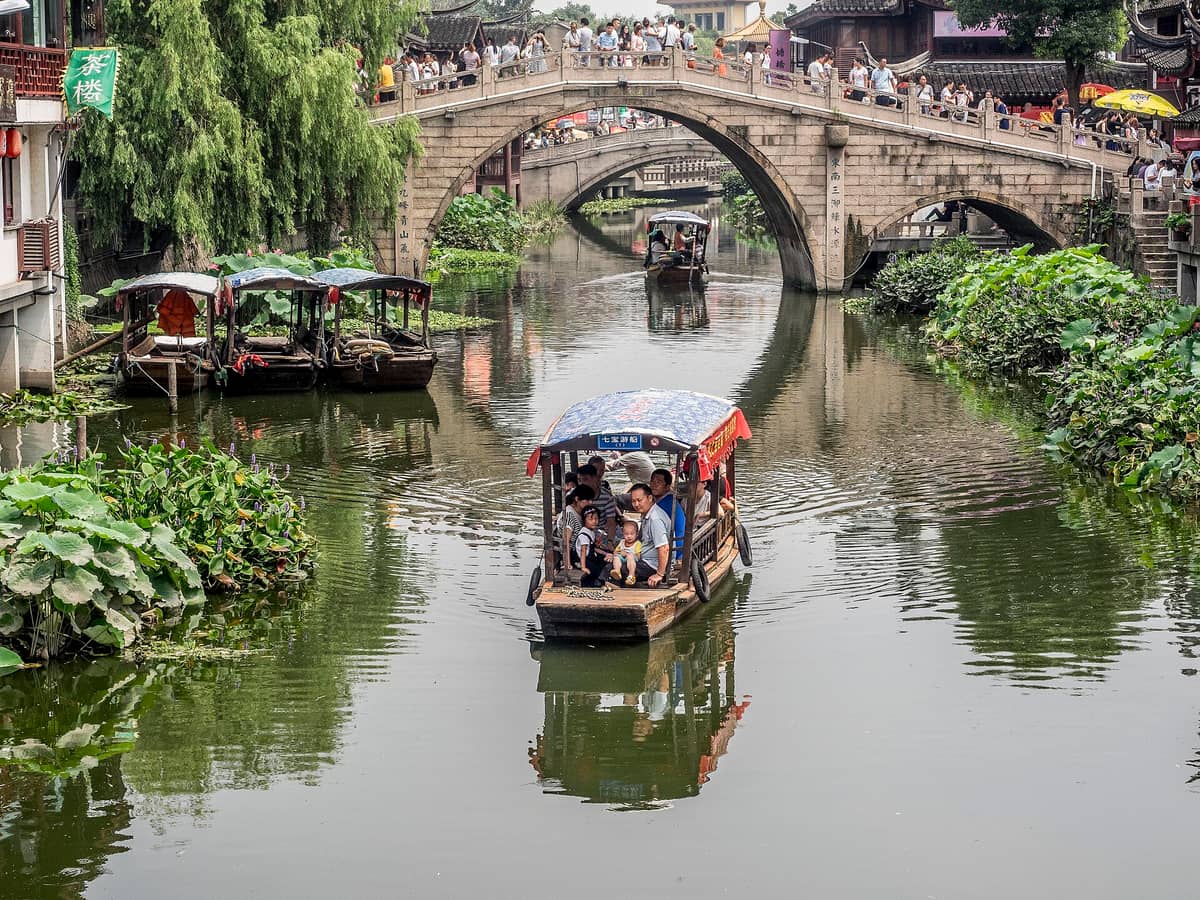
Qibao Ancient Town (七宝古镇) sits in Minhang District, roughly 18 kilometres southwest of People's Square. It is one of the few Shanghai-area water towns that remain genuinely accessible by metro, meaning you do not need to charter a day-trip bus or hire a private car. The old street itself, known locally as Qibao Old Street (七宝老街), follows both banks of a narrow canal and is flanked by two- and three-storey wooden buildings in the Jiangnan architectural tradition: whitewashed walls, dark timber frames, upturned tile eaves, and covered walkways that provide shade even in summer.
The town's origins are documented as stretching back roughly one thousand years to the Northern Song dynasty, when it grew into a small commercial hub along the waterways that connected what is now greater Shanghai to the Yangtze River delta trade network. Several temples and ancestral halls from later dynasties survive in some form today, and the street layout preserves the basic logic of a canal-market town even if many of the shopfronts now sell tourist food rather than grain or cloth.
ℹ️ Good to know
Entry to the old street and canal area is free. Individual small museums and memorial halls inside the town charge CNY 5–20 per person; a combo ticket covering multiple indoor sites is available for CNY 30. Verify prices at the ticket windows on arrival, as these can change.
How the Town Changes Through the Day
Early morning, before 09:00, is a different experience from what most visitors see. The food stalls are setting up and the smell of fresh glutinous rice and frying dough fills the alleys before the recorded music and amplified vendor calls start up. A few older local residents walk the bridges, and the canal water reflects the wooden eaves without any crowds in the way. If you want photographs with actual depth and quiet, this is the window.
By mid-morning on weekends, the main canal-side lanes fill considerably. Stalls selling Qibao's most-photographed local food, chou doufu (stinky tofu), release their sharp, fermented smell into the air around 10:00, and from that point the sensory environment becomes loud and concentrated. The stone-paved bridges over the canal become natural bottlenecks, and groups tend to stop there for photos, slowing foot traffic in both directions.
Weekday afternoons between 14:00 and 16:00 represent the best overall balance: shops and food stalls are fully open, indoor museums are running, but the lanes are noticeably less crowded than weekend mornings. The light on the canal in the afternoon is flat but workable for photography. After 17:00, some small museum venues begin to close, but the food stalls often run until 21:00 or later, and the canal area takes on a quieter, more local character as the tour groups thin out.
💡 Local tip
Visit on a weekday rather than a Saturday or Sunday if you have flexibility. Weekend crowds, particularly between 10:00 and 14:00, make the narrow lanes difficult to navigate and the bridge viewpoints nearly impossible to photograph without other visitors in the frame.
Tickets & tours
Hand-picked options from our booking partner. Prices are indicative; availability and final rates are confirmed when you complete your booking.
Shanghai city and Zhujiajiao water town private tour with lunch
From 371 €Instant confirmationFree cancellationShanghai private tour with iconic landmarks of the old and new city
From 284 €Instant confirmationFree cancellationShangai Yuyuan Garden entrance tickets
From 9 €Instant confirmationFree cancellation
The Architecture and Canal Setting
The buildings along Qibao's main canal-side lanes are built in the Jiangnan water-town style that characterises the historic towns of the Yangtze River delta region. Structurally, this means wooden post-and-beam frames, lattice windows with carved detailing, and ground-floor colonnades that keep the walking surface sheltered. The whitewash-and-dark-timber palette common to these buildings looks especially clean in winter morning light, when the plane trees along the outer streets have dropped their leaves and the overall scene is uncluttered.
For travellers who want context on how Qibao fits into Shanghai's broader architectural landscape, the Shanghai architecture guide explains the distinct layers of the city's built environment, from concession-era masonry to modern Pudong towers to preserved historic towns like this one.
The stone bridges over the canal are the structural focal points of the town. There are several of them within the old street zone, each slightly different in profile, and they function as natural gathering spots. Standing on the highest point of the central bridge at the right time of day, you can look along the canal in both directions and see covered walkways, boat moorings, and the reflections of the wooden buildings in still water. The effect is genuinely attractive, which is exactly why those bridge spots are the most crowded positions in the town on busy days.
What to Eat and How to Navigate the Food Stalls
Qibao Old Street is, for most local visitors, primarily a food excursion. The canal-side lanes are dense with stalls selling a range of Jiangnan snacks. Chou doufu is the most assertively present smell in the whole area. Tang hu lu (candied hawthorn or strawberry skewers), shen jian bao (pan-fried pork buns), and various glutinous rice preparations are also widely available. Several stalls sell local rice wine in small ceramic cups at low prices.
The quality of individual stalls varies, and there is no reliable way to identify the best ones from the outside. A practical approach is to watch where local visitors are queuing rather than where tour-group leaders direct people. Queues of three to eight people at a small stall usually indicate something worth trying. Cash in small denominations is useful here; while many vendors accept mobile payment via WeChat Pay or Alipay, having CNY 5–20 bills makes transactions faster.
The food at Qibao is consistent with the broader Shanghainese snack culture described in the Shanghai food street guide, which covers other areas of the city where street-level eating is the main draw.
Indoor Attractions and Temples
Within the old town boundary there are several small indoor attractions: a cotton textile museum, a shadow puppet museum, a rice wine workshop, a numismatic (coin) collection, and a few memorial halls connected to local historical figures. These are modest in scale and individually take 20 to 30 minutes each. The combo ticket (CNY 30) covers multiple sites and is worthwhile if you plan to visit more than two or three. Individual tickets at CNY 5–10 per site make sense if you have specific interests.
The temple within the town grounds is an active religious site, not a museum exhibit, and visitors should observe basic courtesy: speak quietly, do not photograph worshippers without permission, and be aware that access may be restricted during ceremonies. Some smaller memorial halls and the temple itself operate on shorter hours than the main street, commonly closing around 16:30, with weekly closing days that are not always clearly posted. Check at the entrance before planning your visit around these venues.
⚠️ What to skip
Several indoor venues within Qibao Ancient Town close earlier than the street-level stalls and have weekly rest days. Do not rely on opening hours from third-party apps without checking on arrival, as posted schedules sometimes differ from what is listed online.
Getting There and Practical Logistics
Qibao is served directly by Shanghai Metro Line 9. Board at any Line 9 station (including Yishan Road, which connects with Line 4, or Xujiahui, which connects with Lines 1 and 11) and travel to Qibao Station (七宝站). Exit 2 leads most directly toward the old town; the walk from the station to the entrance of the old street takes approximately 5 to 15 minutes depending on which part of the town you are heading for. The route is well-signposted with bilingual English and Chinese direction boards.
For visitors navigating the wider metro network, the getting around Shanghai guide covers fare structures, metro app options, and how to use the transit system across the city's 16 districts.
Taxis and ride-hailing apps such as Didi can drop you closer to the entrance of the old town than the metro station can, which is useful if you have mobility constraints. From central areas like People's Square, a taxi ride to Qibao takes roughly 25 to 40 minutes depending on traffic, with fares varying accordingly. The metro is more predictable in journey time. There is no direct shuttle bus from major tourist zones to Qibao.
Wear comfortable walking shoes with flat soles. The paving stones throughout the old street are uneven, and several of the bridge approaches have steps. Wheelchair access is limited in the narrow historic lanes and inside several of the small museums, which have stairs and no lifts. The metro station itself has accessible infrastructure, but the walk from the station to the old street and through it is not fully step-free.
Photography Tips and What the Images Don't Show
The canal views with bridges and traditional eaves photograph well from bridge midpoints and from ground level along the water's edge. The most publishable shots come in the first two hours after the town opens and in the hour before sunset, when the light is angled and warm. Midday light on white walls is harsh and flat. A wide lens on a phone or camera handles the narrow alleys better than a telephoto setting.
What photographs do not convey is the density of the food stalls, the amplified vendor calls, and the compressed foot traffic on busy days. The visual result looks serene; the in-person experience on a weekend afternoon does not. This is worth knowing before you arrive with specific atmospheric expectations. The town is genuinely attractive, but it functions at its best as a food-and-architecture wander rather than a contemplative cultural site.
For a full list of the city's most rewarding photography locations, including less crowded alternatives to sites like this one, see the best photo spots in Shanghai guide.
How Qibao Compares to Other Shanghai Water Towns
Qibao is the most convenient of Shanghai's historic water towns to reach by public transit, which makes it the logical first choice for visitors with limited time. However, it is smaller and more commercially developed than alternatives like Zhujiajiao, which sits about 30 kilometres further west but has a larger canal network, more intact historic lanes, and a quieter overall atmosphere. The Zhujiajiao water town page compares the two options in detail, including transit logistics for each.
Travellers planning a broader itinerary around Shanghai's surrounding historic and natural sites can use the day trips from Shanghai guide to map out how Qibao, Zhujiajiao, and other destinations fit into a multi-day visit.
If the main appeal of Qibao for you is the canal-side architecture and traditional town fabric rather than the snack stalls, it is worth considering whether Zhujiajiao or another delta town better matches your expectations. Qibao is the right choice when you want a quick, low-effort immersion in Jiangnan town aesthetics without leaving the metro network. It is not the right choice if you want solitude, extensive history, or a place that feels unchanged by tourism.
Insider Tips
- Cross to both banks of the canal. The north and south sides of Qibao Old Street have different vendor mixes and slightly different atmospheres; most visitors follow tour groups along one bank and miss the other entirely.
- The small rice wine shops inside the town let you taste before buying. A cup of local huangjiu (yellow rice wine) served warm costs a few yuan and is the drink that actually belongs here, not the bubble tea sold at multiple stalls on the main strip.
- If you want the bridge views without people in them, arrive by 08:30 on a weekday. By 09:30 even on slow days the central bridges have steady foot traffic.
- The combo ticket (CNY 30) is sold at a ticket window near the main entrance, not at individual museum doors. Buy it before you start walking if you plan to visit three or more indoor sites, as walking back to find the ticket window later wastes time.
- Qibao pairs naturally with a visit to Xintiandi or the Former French Concession on the same day, though you will need at least one line transfer to reach those areas. Do Qibao in the morning before crowds build, then head back into the city for the afternoon.
Who Is Qibao Ancient Town For?
- Travellers on a budget who want a full historic-town experience without day-trip costs
- Food-curious visitors interested in Jiangnan snack culture and street eating
- Photographers looking for canal-and-eaves compositions accessible by metro
- Families with children who want open outdoor space and hands-on food stalls rather than museum interiors
- Anyone with a half-day gap in a Shanghai itinerary who wants something beyond city-centre landmarks
Nearby Attractions
Combine your visit with:
- Chongming Island
Chongming Island sits at the mouth of the Yangtze River, a vast alluvial island that functions as Shanghai's rural counterweight. Wetland reserves, a national forest park, cycling paths through farmland, and virtually no high-rises make it a genuinely different Shanghai experience.
- ERA Acrobatics Show
Running nightly at Shanghai Circus World in Jing'an District, ERA2 – Spirit of Shanghai is the city's flagship acrobatics production. Expect gravity-defying stunts, dramatic lighting, and a 60-to-100-minute show that needs no translation. Here is everything you need to know before buying a ticket.
- Jade Buddha Temple
The Jade Buddha Temple (玉佛禅寺, Yùfó Chán Sì) is one of Shanghai's most significant active Buddhist monasteries, housing two exceptional jade Buddha statues brought from Burma in the late 19th century. Unlike many temples that have become purely ceremonial attractions, this one functions as a working monastery, with monks in residence and daily rituals that visitors can witness firsthand.
- Jinshan City Beach
Jinshan City Beach (金山城市沙滩景区) is a man-made coastal resort on Hangzhou Bay, about 60 km south of central Shanghai. It is the closest thing to a genuine beach day the city offers, with designated swimming zones, a long promenade, and seasonal facilities. This guide covers what to realistically expect, when to go, and how to get there.