Pyramid of the Moon: What to Expect at Teotihuacán's Northern Sentinel
Standing 43 meters tall at the northern end of the Avenue of the Dead, the Pyramid of the Moon is the ceremonial heart of Teotihuacán. Smaller than the Pyramid of the Sun but arguably more dramatic in context, it commands the entire axis of one of the ancient world's great planned cities. This guide covers what you will actually experience, when to visit, and how to reach it from Mexico City.
Quick Facts
- Location
- Northern end of the Avenue of the Dead, Teotihuacán, Estado de México (approx. 50 km northeast of Mexico City)
- Getting There
- Bus from Terminal Central del Norte (Mexico City) to San Juan Teotihuacán; the archaeological zone is a short connection from there. Organized tours depart from multiple points in the city.
- Time Needed
- 2–3 hours for the Pyramid of the Moon and its immediate plazas; 4–5 hours for the full Teotihuacán site
- Cost
- Teotihuacán archaeological zone charges a general admission fee (verify current rates at inah.gob.mx before visiting, as prices change)
- Best for
- History enthusiasts, photographers, travelers combining archaeology with a half-day out of Mexico City
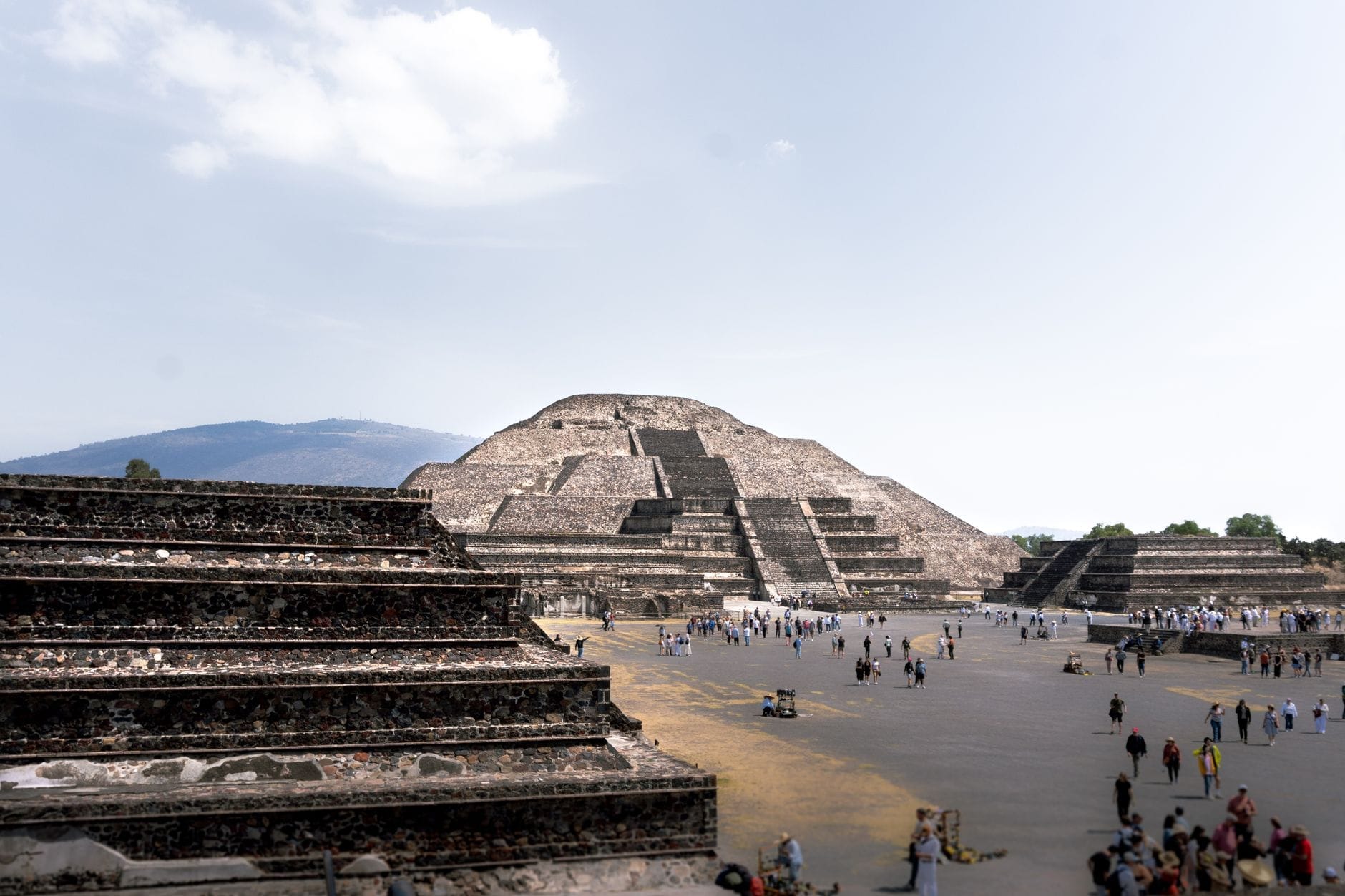
What the Pyramid of the Moon Is
The Pyramid of the Moon is the second-largest structure at Teotihuacán and sits at the precise northern terminus of the Avenue of the Dead, the great processional axis that once organized the entire city. At approximately 43 meters in height, it is shorter than the Pyramid of the Sun, but its elevated platform base places its summit at roughly the same absolute elevation, which is either an accident of engineering or an intentional piece of symbolic alignment, depending on which archaeologist you ask.
Construction is generally dated to between 100 and 250 CE, during the height of Teotihuacán's influence as one of the largest cities in the ancient world. At its peak, the city may have housed between 100,000 and 200,000 inhabitants, making it the largest urban center in pre-Columbian Mesoamerica. The pyramid was not built as a single project but expanded in at least seven sequential phases, each new shell encasing the previous structure, a construction method common across Mesoamerica.
The pyramid is closely linked to a female deity, likely connected to water, fertility, and the earth, though Teotihuacán's written record is sparse and interpretations differ. What excavations have confirmed is that the structure served as the site of ritual sacrifice and elite burial. Archaeologists uncovered sacrificial remains, offerings of obsidian, and the skeletal remains of both humans and animals arranged in deliberate patterns beneath the structure. For more context on the city as a whole, the full Teotihuacán site guide covers the broader layout and history.
ℹ️ Good to know
Climbing the Pyramid of the Moon is currently limited to its lower levels; visitors can no longer ascend all the way to the top, but you can still walk around the base and explore the Plaza of the Moon at its foot while access above the first tier is roped off for preservation. Plan your photos from the plaza level.
The View from the Plaza of the Moon
Even without climbing, the Pyramid of the Moon delivers one of the most compositionally satisfying views at Teotihuacán. Stand in the center of the Plaza of the Moon and turn south: the entire Avenue of the Dead stretches before you, flanked by smaller ceremonial platforms, with the Pyramid of the Sun rising massively on the east. It is the kind of spatial experience that photographs only partially convey. The scale and symmetry of the city's layout become immediately legible from this point in a way they do not from any other position.
The plaza itself is enclosed on three sides by smaller altar platforms, creating a sheltered ceremonial space. On quieter mornings, particularly on weekdays, you can spend twenty minutes here and absorb the geometry of the space. On busy weekend afternoons, tour groups fill the plaza and the experience shifts into something more crowded and hurried.
Tickets & tours
Live prices and dates from our booking partner. If you book, we may earn a commission at no extra cost to you.
Mexico City Historic Center, Pyramids of Teotihuacan and Drink Tasting
From 53 €Instant confirmationFree cancellationTeotihuacan pyramids hot air balloon ride
From 227 €Instant confirmationFree cancellationTeotihuacan pyramids guided excursion and hot air balloon ride
From 253 €Instant confirmationFree cancellationTeotihuacan pyramids and Basilica of Our Lady of Guadalupe guided tour
From 0 €Instant confirmation
How the Experience Changes by Time of Day
Arriving when the site opens gives you the best chance of encountering the Pyramid of the Moon in low, warm morning light that rakes across the stone platforms and emphasizes the texture of the volcanic rock. The air at Teotihuacán carries a dry, mineral quality in the early hours, and the smell of dust and dry grass defines the atmosphere before the midday heat takes hold. At this altitude (the site sits at approximately 2,300 meters above sea level), the morning air is noticeably cooler than Mexico City.
By mid-morning, tour buses begin arriving and the Avenue of the Dead fills steadily. The pyramid area becomes loud with vendor calls, tour group commentary, and the general noise of large crowds. Midday in the dry season means intense sun and limited shade anywhere near the pyramid, so if you are visiting between March and May, the heat between 11:00 and 14:00 is uncomfortable. Late afternoon offers softer light again, and the crowds thin as tours depart, but check the site's closing time carefully as access ends before sunset.
💡 Local tip
Arrive at or within the first hour of opening on a weekday. The difference in crowd density between 9:00 and 11:00 on a Tuesday versus a Saturday afternoon is significant enough to affect how long you will want to stay.
Getting There from Mexico City
Teotihuacán is roughly 50 kilometers northeast of Mexico City's historic center, and the journey typically takes between 60 and 90 minutes depending on traffic and transport method. The most common independent option is the bus from Terminal Central del Norte, Mexico City's main northern bus terminal, which is accessible via Metro Line 5 (Terminal de Autobuses del Norte station). Autobuses Teotihuacán operate departures toward San Juan Teotihuacán, from which a connection takes you to the archaeological zone entrance.
Organized day tours depart from various points in the city, including the historic center and major hotels, and typically include transport, entry, and a guide. These are a practical option if you want historical context woven into the visit rather than reading signage independently. The Teotihuacán day trip guide covers the different transport options, costs, and timing in detail.
Ride-hailing services such as Uber and Didi can cover the route but this is a longer, more expensive trip than the bus and is most practical for small groups splitting the fare or travelers with limited time for connections.
What to Bring and Practical Considerations
The Teotihuacán site offers limited shade near the Pyramid of the Moon. Bring water, more than you think you need, sunscreen, and a hat or cap. Comfortable, closed-toe shoes with grip matter on the uneven stone pathways and platforms surrounding the pyramid. The site sits at high elevation and, if you have recently arrived in Mexico City from sea level, the combination of altitude, heat, and sun exposure can cause fatigue faster than expected.
Mexico City itself sits at around 2,240 meters above sea level, and Teotihuacán is comparable. If you are still acclimatizing, read about altitude adjustment in Mexico City before planning a physically demanding day at the site.
- Water: at least 1.5 liters per person for a half-day visit in warm weather
- Sun protection: sunscreen, hat, and ideally lightweight long sleeves during the dry season
- Cash in Mexican pesos: for vendors, snacks, and small purchases inside the site
- Camera or phone fully charged: the Plaza of the Moon is one of the best photography positions at any Mesoamerican site
- Comfortable shoes: sandals work but grip matters on stone surfaces
Photography at the Pyramid of the Moon
The Plaza of the Moon, with the pyramid as backdrop, is the obvious framing target, but the less obvious composition is worth seeking: position yourself in the plaza and shoot south along the Avenue of the Dead with the Pyramid of the Sun to the right. This shot captures the full urban logic of Teotihuacán and works especially well in morning light when the sun is still relatively low in the east.
Wide-angle lenses (or equivalent smartphone settings) suit the plaza best because the pyramid is close and tall. Midday light flattens the texture of the stone and washes out the detail in the platforms; early morning or late afternoon brings shadow and dimension back into the composition. If you are visiting during the rainy season (May to October), cloud cover can actually improve photographs by diffusing the harsh high-altitude sun.
⚠️ What to skip
Drone use at Teotihuacán requires official authorization from INAH (Instituto Nacional de Antropología e Historia). Flying without prior permission is prohibited and enforcement does occur. Do not assume the site is freely open for aerial photography.
Combining the Pyramid of the Moon with the Rest of Teotihuacán
Most visitors approach the site from Gate 1 near the Pyramid of the Sun and walk north along the Avenue of the Dead to reach the Pyramid of the Moon. Reversing this itinerary, entering from Gate 3 or 4 near the northern end and starting at the Pyramid of the Moon, means you encounter the plaza while relatively fresh and before crowds build from the main entrance. The Pyramid of the Sun is the larger structure and worth the additional time, though as of current access rules, climbing restrictions apply there too; verify the current policy before visiting.
The Ciudadela complex at the southern end of the avenue, which includes the Temple of Quetzalcóatl with its carved feathered-serpent reliefs, rounds out a full site visit. Taken together, the Pyramid of the Moon, the Pyramid of the Sun, and the Ciudadela give a reasonably complete picture of Teotihuacán's spatial hierarchy. Allow four to five hours for the full experience; two to three hours if you are focused on the Moon pyramid area and the main avenue.
If Teotihuacán sits within a broader Mexico City itinerary, the 3-day Mexico City itinerary offers practical sequencing for how to fit a Teotihuacán day alongside the city's other major sites.
Who This Attraction Is Not For
Visitors who come expecting to climb all the way to the top of the Pyramid of the Moon will be disappointed. The restriction on full ascent has been in place and is enforced consistently, with access generally limited to the lower level of the structure. If the appeal of Teotihuacán for you is specifically standing on top of a pyramid, that experience is not available here at present.
Travelers with limited mobility will find the pathway surfaces at Teotihuacán uneven and the distances between structures significant. The site is large and exposed, with no internal transport. In peak dry season heat (March to May), the walk along the Avenue of the Dead between structures can be physically taxing for those not prepared for it. Families with very young children should factor in the sun, heat, and walking distance seriously before planning this as a full-day outing.
If your interest in pre-Columbian Mexico is primarily centered on the Aztec (Mexica) world rather than the earlier cultures of central Mexico, Teotihuacán predates the Aztec period by roughly a millennium. The Aztecs themselves regarded Teotihuacán as a sacred ancestral site and named it, but they did not build it. For Aztec-period archaeology in Mexico City itself, the Templo Mayor is the more relevant destination.
For a broader look at Mexico City's pre-Hispanic and colonial archaeological sites, the Mexico City pyramids guide covers multiple sites across the region and helps contextualize where Teotihuacán fits in the overall picture.
Insider Tips
- Enter through Gate 3 (northern entrance) rather than the main Gate 1 to reach the Pyramid of the Moon first, before tour groups from the main entrance work their way up the avenue. This gives you 20–30 minutes of relative quiet in the Plaza of the Moon.
- The small altar platforms surrounding the Plaza of the Moon are climbable (unlike the pyramid itself) and offer elevated angles for photographs without the crowds that concentrate at the base of the main structure.
- Vendors inside the site sell water and snacks, but prices rise the closer you get to the pyramid. Buy supplies before entering or near the entrance gates.
- Weekdays in the mid-dry season (February to April) are the clearest weather option, but the site is hot. November and December offer comfortable temperatures and smaller crowds, with an acceptable risk of occasional cloud cover.
- The on-site Museo de Teotihuacán (near the site's main entrance area) displays artifacts excavated from the pyramid and surrounding structures, including burial offerings and obsidian items. It adds significant context and is included in general site admission.
Who Is Pyramid of the Moon For?
- History and archaeology travelers who want to understand Mesoamerica before the Aztec period
- Photographers looking for wide compositional views of an ancient urban landscape
- Day-trippers from Mexico City wanting a half-day itinerary that feels meaningfully different from the city's museum circuit
- Travelers interested in Aztec-era religious history (since the Aztecs revered Teotihuacán as a sacred ancestral site, the pyramid connects both civilizations)
- Those combining a morning at Teotihuacán with an afternoon back in Mexico City, since the site is close enough to make a half-day return feasible
Nearby Attractions
Combine your visit with:
- Acuario Inbursa
Built beneath Plaza Carso in the Nuevo Polanco district, Acuario Inbursa holds 1.6 million litres of seawater and roughly 14,000 specimens across more than 230 species. It opened in 2014 and remains one of the most technically ambitious aquariums in Latin America. Here is what the visit actually involves, and whether it is worth your time.
- Arena México
Inaugurated in 1956 and holding up to roughly 16,800 spectators, Arena México is the home of CMLL and the most storied lucha libre venue in the world. Matches run on Tuesday, Friday, and Sunday evenings in Colonia Doctores, making it one of the most accessible live spectacles in Mexico City.
- Basilica of Our Lady of Guadalupe
The Basilica of Our Lady of Guadalupe is one of the most visited Catholic shrines on earth, receiving over 20 million pilgrims and visitors each year. Built around the 1531 apparition site on Tepeyac Hill, it holds the venerated tilma of Juan Diego and offers a rare encounter with living Mexican faith at its most intense.
- Cineteca Nacional
The Cineteca Nacional de México is the country's national film archive and its most important arthouse cinema complex. Rebuilt after a devastating 1982 fire and transformed in 2012 into a world-class cultural campus, it combines 10 indoor screens, a large open-air screening forum, galleries, a bookshop, and restaurants in a single destination that attracts cinephiles, students, and casual visitors alike.
Planning a trip? Discover personalized activities with the Nomado app.