Pyramid of the Sun: The Complete Visitor Guide to Teotihuacan's Greatest Monument
The Pyramid of the Sun is the centerpiece of the ancient city of Teotihuacan, standing roughly 66 meters tall about 50 kilometers northeast of Mexico City. This guide covers how to get there, when to go, current access rules (summit climbing has been prohibited since 2021), and how to make the most of your visit.
Quick Facts
- Location
- Zona Arqueológica de Teotihuacan, San Juan Teotihuacan, Estado de México — approx. 50 km northeast of central Mexico City
- Getting There
- Direct buses from Terminal de Autobuses del Norte (Mexico City); by car or ride-hail via the Teotihuacan highway, roughly 45–60 minutes from the city center
- Time Needed
- 3–5 hours for the full archaeological zone; 4–6 hours if you want to explore unhurriedly
- Cost
- Paid entry to Zona Arqueológica de Teotihuacan in MXN (set by INAH); verify current tariff at inah.gob.mx before visiting
- Best for
- History enthusiasts, architecture lovers, photographers, active travelers, and anyone doing a day trip from Mexico City
- Official website
- inah.gob.mx/zonas/teotihuacan
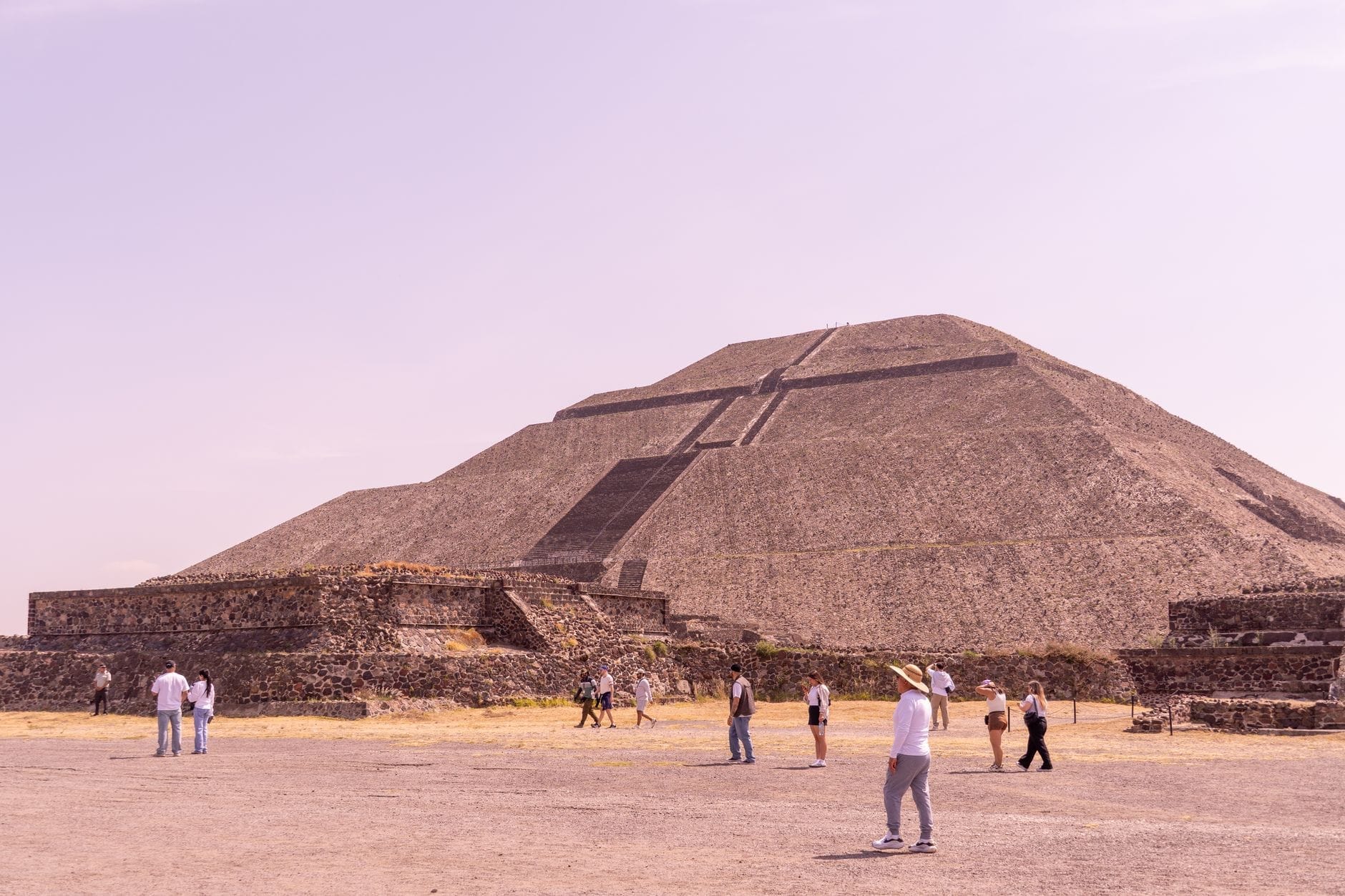
What Is the Pyramid of the Sun?
The Pyramid of the Sun is the dominant structure at Teotihuacan, an ancient Mesoamerican city whose origins date to around 100 BCE and whose population at its height likely exceeded 100,000 people. It is one of the largest pyramids ever built anywhere in the world: roughly 66 meters (216 feet) tall, with a base measuring over 225 meters (738 feet) on each side. The pyramid was constructed in two main phases, with the first major building stage completed around 200 CE, bringing it close to the scale you see today.
Teotihuacan itself is a UNESCO World Heritage Site and one of the most significant archaeological zones in the Americas. The Pyramid of the Sun sits along the site's central ceremonial axis, the Avenue of the Dead, facing the smaller but strikingly geometric Pyramid of the Moon to its northwest. Neither pyramid was built by the Aztecs, as is commonly assumed. The city's true founders remain unknown to archaeologists; the Aztecs arrived centuries after Teotihuacan's collapse and gave the site its current name, meaning 'the place where the gods were created.'
ℹ️ Good to know
Opening hours for the Zona Arqueológica de Teotihuacan are typically daily 08:00–17:00, with last entry before closing. These hours are set by INAH and can change. Confirm at inah.gob.mx/zonas/teotihuacan before your visit.
Getting There from Mexico City
The archaeological zone is located in the State of Mexico, not within Mexico City proper, about 50 kilometers northeast of the capital. The most straightforward public transit option is taking the Metro to Autobuses del Norte station (Line 5), then boarding one of the regular intercity buses operated by companies like Autobuses Teotihuacan from Terminal de Autobuses del Norte. These buses run frequently and the ride takes roughly an hour depending on traffic. Ask for 'Pirámides' when buying your ticket.
If you prefer to drive or take a ride-hail service, the route heads northeast via the Autopista México-Teotihuacan. Traffic from the city can be significant on weekend mornings, so departing before 8:00 AM gives you the best chance of arriving when the site opens. For a more structured experience with transportation and a guide included, organized day trips are widely available from Mexico City. See our full breakdown in the Teotihuacan day trip guide.
💡 Local tip
Buses drop off at Gate 1 of the archaeological zone, which puts you directly on the Avenue of the Dead with the Pyramid of the Sun visible ahead. This is generally considered the best starting point for the site.
Tickets & tours
Live prices and dates from our booking partner. If you book, we may earn a commission at no extra cost to you.
Mexico City Historic Center, Pyramids of Teotihuacan and Drink Tasting
From 53 €Instant confirmationFree cancellationTeotihuacan pyramids hot air balloon ride
From 227 €Instant confirmationFree cancellationTeotihuacan pyramids guided excursion and hot air balloon ride
From 253 €Instant confirmationFree cancellationTeotihuacan pyramids and Basilica of Our Lady of Guadalupe guided tour
From 0 €Instant confirmation
Access Rules: What Changed in 2021
Climbing the Pyramid of the Sun has been prohibited since 2021, when INAH closed the stairways permanently to protect the structure and address safety concerns. You can still walk the full perimeter at ground level and appreciate the pyramid's scale from the Avenue of the Dead. The emotional centerpiece of a visit is now the Plaza of the Moon at the northern end of the site, which frames the entire ceremonial axis without requiring any stair access.
Allow at least two hours to walk the Avenue of the Dead at a moderate pace. Teotihuacan sits at roughly 2,300 meters above sea level — slightly above Mexico City's 2,240 m — so take it slowly if you have just arrived from sea level. Wear closed-toe shoes with grip on the uneven volcanic stone.
From the Plaza of the Moon at the base of the Moon Pyramid, the view extends across the entire Teotihuacan valley: the Pyramid of the Sun rising to the southeast, the long straight line of the Avenue of the Dead below, and the surrounding mountains in every direction. On hazy dry-season days visibility is reduced, but the spatial scale of the city's layout is still immediately legible from this vantage point.
⚠️ What to skip
INAH permanently closed pyramid stairway access in 2021. Verify current site conditions on the official INAH page before visiting, but do not plan your trip around summit climbs.
Time of Day and How the Experience Changes
Early morning is markedly different from midday here. When the gates open at 08:00, the light rakes across the stone at a low angle, throwing the terraces into sharp relief and giving the pyramid a textured, almost architectural sharpness. The first hour or so tends to be quieter, with tour groups from Mexico City typically arriving between 09:30 and 10:30. By 11:00, the base of the Sun Pyramid draws steady crowds and the noise on the avenue increases substantially.
From late morning into early afternoon, the sun positions almost directly overhead, which flattens the visual drama of the pyramid but reveals the warm ochre-tan tones of the stone clearly. This is also when the exposed site becomes hot — there is almost no shade anywhere on the Avenue of the Dead or on the pyramid itself. A hat, sunscreen, and at least one liter of water per person are not optional in warm months.
Late afternoons, in the final hour before the 17:00 closing, see fewer visitors and softer golden light. If you can arrange to arrive at the site around 13:00–14:00 on a weekday and stay until closing, you will often have the upper terrace of the pyramid nearly to yourself as the day-trippers from Mexico City depart.
The Broader Archaeological Zone
The Pyramid of the Sun is the headline attraction, but spending time only there means missing much of what makes Teotihuacan remarkable. The Pyramid of the Moon at the northern end of the Avenue of the Dead is smaller in height but positioned on a platform that makes its summit roughly level with the Sun Pyramid's apex, and its plaza is less crowded. The apartment compounds of Tetitla and Atetelco, located west of the main avenue, contain the best-preserved murals on the site, including the famous 'Paradise of Tlaloc' fresco.
The Ciudadela, a large sunken ceremonial plaza near Gate 1, houses the Temple of the Feathered Serpent (Templo de Quetzalcoatl). Its facade features alternating carved heads of Quetzalcoatl and Tlaloc in extraordinary preservation and detail. Many visitors walk past this complex too quickly on their way toward the pyramids, but the stone carving here is among the finest pre-Columbian sculpture visible anywhere in Mexico.
Walking the full length of the Avenue of the Dead from the Ciudadela to the Pyramid of the Moon covers roughly 2 kilometers each way, on unpaved and uneven stone surfaces. Budget your time accordingly. There is a small on-site museum near Gate 3 that provides archaeological context for the site, worth 30 minutes if you want the historical framework to land properly.
Photography, Practical Notes, and Accessibility
The Pyramid of the Sun photographs best from ground level on the Avenue of the Dead, particularly in morning light, when the stepped terraces catch shadow well. From the Plaza of the Moon, wide-angle lenses or a smartphone panorama mode captures the spatial scale most effectively. Drone use requires advance permits from INAH and is not permitted for casual visitors.
Accessibility is seriously limited. The entire site is outdoors on uneven volcanic stone, and the pyramid stairways are closed and there is no ramp access to upper levels. Visitors with limited mobility can still experience the Avenue of the Dead, the Ciudadela, and ground-level areas around both pyramids. For visitors traveling with children, the site is engaging but physically demanding; see our Mexico City with kids guide for tips on pacing the visit.
Food vendors operate near the main gates and along portions of the avenue, selling water, snacks, and local food. Prices are higher than in Mexico City. Bringing your own water is strongly recommended, particularly from April through October when temperatures on the exposed site can reach into the low 30s Celsius by midday.
⚠️ What to skip
Teotihuacan sits in the State of Mexico, not Mexico City itself. Do not drink tap water at the site or in the surrounding town. Bring sealed bottled water from the city or purchase from reputable vendors at the gates.
Who Should Think Twice
Anyone expecting a museum-like experience with climate control, smooth paths, and interpretive signage at every turn will find Teotihuacan raw by comparison. On-site labeling is sparse in some areas. If contextual depth is your priority, pairing the visit with the Museo Nacional de Antropología in Mexico City — either before or after — dramatically improves comprehension of what you are seeing at the site.
Visitors with knee or hip problems, or those who find uneven terrain difficult, should weigh the physical demands carefully. Even the walk along the Avenue of the Dead, roughly 2 kilometers of stone paving, is tiring in direct sun. Seeing the pyramids from ground level is still impressive and fully worthwhile without summit access.
For travelers short on time in Mexico City, this trip requires most of a day once you factor in transit. If you are working with a three-day itinerary, check our 3-day Mexico City itinerary to see how Teotihuacan fits alongside the city's other priorities.
Insider Tips
- Arrive at Gate 1 when the site opens at 08:00 and walk directly to the Pyramid of the Sun before tour groups from Mexico City arrive. You will have the base and surrounding platforms to yourself for roughly 45 minutes.
- The west-facing stairway of the Pyramid of the Sun is roped off — climbing has been prohibited since 2021. Walk the full perimeter at ground level for the clearest sense of the structure's scale; the north side is usually quieter than the main approach from the Avenue of the Dead.
- The murals at the Tetitla and Atetelco apartment compounds (reachable via a short walk west of the main zone, outside the main ticketed area) are often missed entirely. They show Teotihuacan's artistic culture far more vividly than the stripped pyramid stone.
- Buy your water before entering. Vendors inside the site charge significantly more than shops in the parking area and town outside the gates.
- Late on weekday afternoons, the site empties quickly after 15:00. If you can reverse the typical day-trip schedule and arrive at midday, you may find the upper terrace nearly clear by 16:00.
Who Is Pyramid of the Sun For?
- Archaeology and history travelers who want to understand pre-Columbian Mesoamerica beyond the Aztec period
- Photographers seeking dramatic scale and morning light on ancient stone
- Active travelers comfortable with several hours of walking on uneven stone
- Day-trippers from Mexico City looking for a full itinerary away from the urban center
- Families with older children who can manage the steps and the walking distance
Nearby Attractions
Combine your visit with:
- Acuario Inbursa
Built beneath Plaza Carso in the Nuevo Polanco district, Acuario Inbursa holds 1.6 million litres of seawater and roughly 14,000 specimens across more than 230 species. It opened in 2014 and remains one of the most technically ambitious aquariums in Latin America. Here is what the visit actually involves, and whether it is worth your time.
- Arena México
Inaugurated in 1956 and holding up to roughly 16,800 spectators, Arena México is the home of CMLL and the most storied lucha libre venue in the world. Matches run on Tuesday, Friday, and Sunday evenings in Colonia Doctores, making it one of the most accessible live spectacles in Mexico City.
- Basilica of Our Lady of Guadalupe
The Basilica of Our Lady of Guadalupe is one of the most visited Catholic shrines on earth, receiving over 20 million pilgrims and visitors each year. Built around the 1531 apparition site on Tepeyac Hill, it holds the venerated tilma of Juan Diego and offers a rare encounter with living Mexican faith at its most intense.
- Cineteca Nacional
The Cineteca Nacional de México is the country's national film archive and its most important arthouse cinema complex. Rebuilt after a devastating 1982 fire and transformed in 2012 into a world-class cultural campus, it combines 10 indoor screens, a large open-air screening forum, galleries, a bookshop, and restaurants in a single destination that attracts cinephiles, students, and casual visitors alike.
Planning a trip? Discover personalized activities with the Nomado app.