Prague Botanical Garden (Troja): What to Expect Before You Visit
Spread across 52 hectares of terraced hillside in the Troja district, the Prague Botanical Garden offers everything from a tropical greenhouse to a restored vineyard and a Japanese garden. This guide covers the full visitor experience, practical access, and practical advice on when it is worth the trip.
Quick Facts
- Location
- Trojská 800/196, 171 00 Praha 7 – Troja
- Getting There
- Metro Line C to Nádraží Holešovice, then bus 112 (or other buses serving Trojská street) to Zoologická zahrada or Botanická zahrada Troja
- Time Needed
- 2–3 hours for a thorough visit; 1 hour if you focus on the greenhouse only
- Cost
- Basic 180 CZK / Reduced 120 CZK / Family 540 CZK
- Best for
- Families, plant enthusiasts, visitors wanting green space away from the tourist core
- Official website
- www.botanicka.cz/en
What the Prague Botanical Garden Actually Is
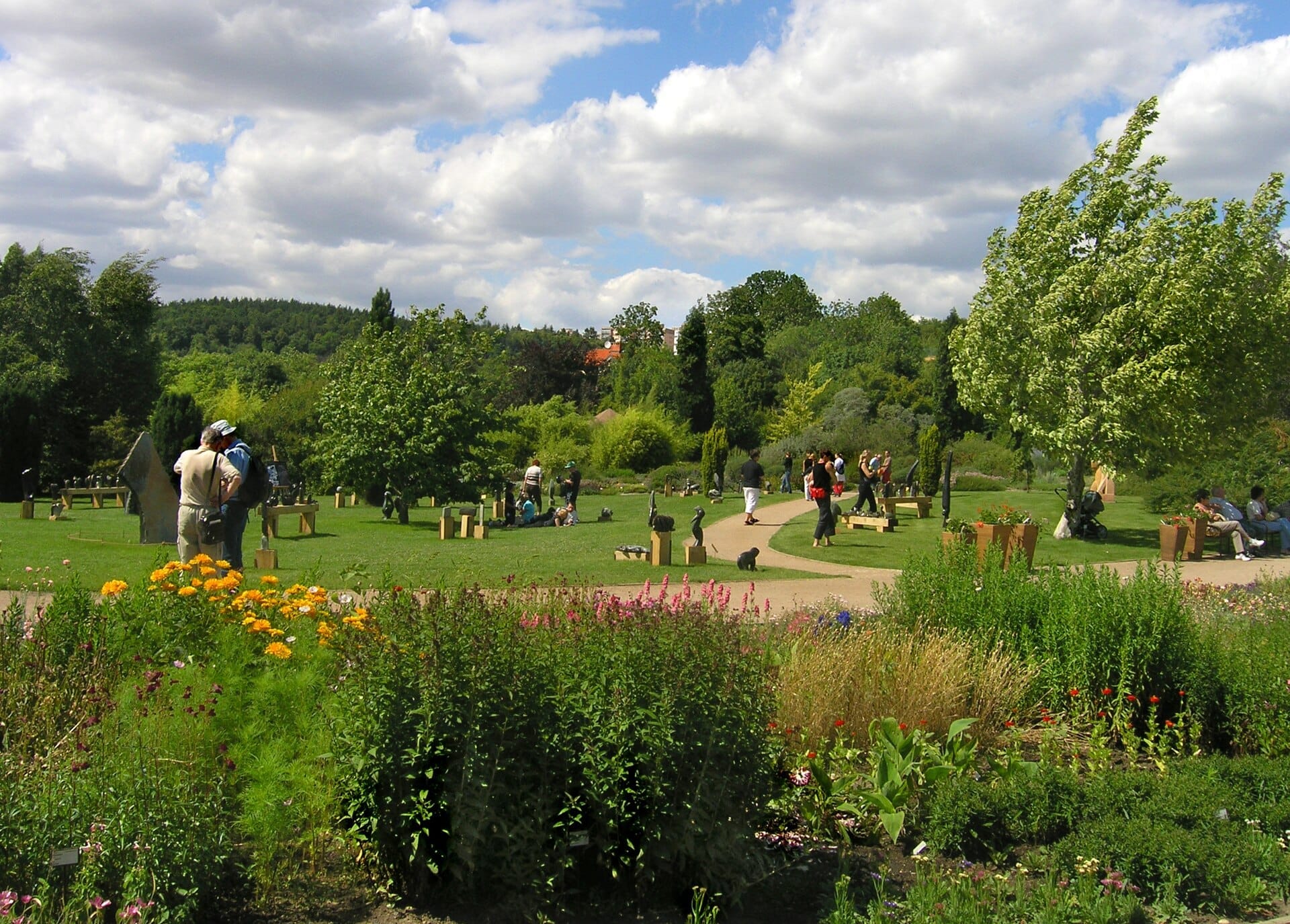
The Prague Botanical Garden, known officially in Czech as Botanická zahrada hl. m. Prahy, is the city's main municipally operated botanical garden. It sits on roughly 52 hectares of sloped terrain in the Troja district, on the right bank of the Vltava north of the city centre. Established by resolution of the Prague National Committee in 1969, it has grown into a serious botanical institution with collections spanning temperate, Mediterranean, subtropical, and tropical species.
The garden is not a manicured city park in the decorative sense. It is a working botanical collection with labeled species, themed zones, and a research function. Visitors who arrive expecting the kind of compact, immaculate display garden found in Western European capitals may find the scale and naturalistic style surprising. The terraced hillside setting, overlooking a bend in the Vltava, is the garden's strongest visual asset.
The garden sits directly adjacent to the Troja Chateau and is within easy walking distance of the Prague Zoo, making the Troja area practical for a half-day that combines more than one attraction.
💡 Local tip
The Fata Morgana greenhouse is closed on Mondays. If the greenhouse is your main reason for visiting, plan for any other day of the week.
The Fata Morgana Greenhouse: The Garden's Centrepiece
The Fata Morgana is the greenhouse complex that most visitors come specifically to see, and it earns its reputation. The structure is a long, low glass pavilion divided into three distinct climate zones: a tropical rainforest section, a subtropical dry-land section, and a section dedicated to plants of arid regions, including a substantial cactus and succulent collection. Each zone transitions gradually into the next, so you move from dense humidity and overhanging ferns to the dry warmth of desert plants within a few minutes of walking.
In the tropical section, the air is noticeably warm and damp from the moment you step through the airlock doors. The smell is earthy, faintly sweet. Overhead, banana plants, palms, and strangler figs compete for the roof glass, and smaller orchid and bromeliad displays fill the lower levels. Sound matters here too: water features run continuously, and if you visit on a quiet weekday morning, the effect is genuinely immersive.
The arid zone at the far end is the visual opposite: bright light, minimal humidity, and rows of sculptural cacti some reaching close to two metres tall. Children tend to be particularly drawn to this section. Photography works well in both zones, though the tropical section requires patience with condensation on lenses when moving from cold outdoor air in winter. The greenhouse has good internal lighting during darker months, making it one of the few Prague attractions that actually improves as a winter visit.
ℹ️ Good to know
Opening hours for the outdoor expositions are 9:00–19:00 (March–October) and 9:00–16:00 (November–February). Verify current hours on the official website before your visit, as seasonal schedules can shift.
Tickets & tours
Hand-picked options from our booking partner. Prices are indicative; availability and final rates are confirmed when you complete your booking.
Must-sees of Prague guided tour with Wallenstein Palace Gardens
From 26 €Instant confirmationFree cancellationPrague Renaissance and Baroque gardens tour with a friendly historian
From 43 €Instant confirmationSelf guided tour with interactive city game of Prague
From 5 €Instant confirmationFree cancellationPrague by night city tour
From 27 €Instant confirmationFree cancellation
The Outdoor Grounds: Terraces, Vineyard, and Themed Sections
The outdoor portion of the botanical garden is significantly larger than most visitors expect. The terrain climbs steeply up a south-facing hillside, which explains the planting: the slope captures sun and creates distinct microclimates that allow the garden to cultivate species not commonly found this far north. A restored historical vineyard occupies the upper terraces, a direct reference to the area's pre-20th-century agricultural history. The rows of vines are tended seriously, and in late summer the foliage is dense enough to provide shade on the steep paths.
A Japanese garden sits in a lower section of the grounds, designed with the understated geometry characteristic of that style: raked gravel, stepping stones, water elements, and carefully placed rocks. It is small relative to the broader garden but well-maintained and noticeably quieter than the greenhouse on busy days. Spring visits coincide with cherry blossom flowering here, which draws a significant increase in weekend visitors.
The rose collection, the water lily pond, and the sections dedicated to Czech native flora are among the other themed areas. None is individually spectacular in the way that purpose-built display gardens elsewhere can be, but together they give the grounds coherence. Paths are mostly unpaved and uneven on the hillside sections. Comfortable walking shoes are not optional here, particularly after rainfall when the slope paths become slick.
⚠️ What to skip
The hillside terrain involves significant elevation changes and uneven paths. Visitors with mobility limitations should note that not all sections are equally accessible. Wheelchairs and pushchairs can navigate the main lower terrace areas, but the upper vineyard slopes are difficult. No detailed official accessibility map was available at time of writing; check with the garden directly before planning a visit around specific needs.
How the Experience Changes by Time of Day and Season
Early mornings on weekdays are the quietest time to visit. The greenhouse in particular is largely empty before 10:30, and the outdoor paths see almost no foot traffic in the first hour after opening. Weekend afternoons, particularly in May and June when the outdoor gardens are in peak colour, bring families with children and school groups. The access paths near the entrance become congested, though the upper terrace sections remain calm.
Spring is the obvious peak season for flowering displays, with late April through May being the most reliably colourful period outdoors. Summer brings full foliage and the vineyard at its greenest, but afternoon heat on the exposed south-facing slopes can be uncomfortable. Autumn is underrated: the vine foliage turns amber and red, the crowds thin considerably after September, and the light on the hillside in the afternoon is warm and low. Winter redirects the experience almost entirely into the greenhouse, which is legitimately worth visiting in its own right in December and January.
For a broader sense of when Prague rewards outdoor sightseeing, the best time to visit Prague guide covers seasonal trade-offs across the city.
Getting There from the City Centre
The botanical garden is in Troja, a district within Prague 7. It is not walkable from the historic centre in any practical sense. The standard public transport route is to take Metro Line C to Nádraží Holešovice, then connect to bus 112 or other buses serving the Troja area. Bus routes serving Trojská street stop close to the garden entrance. The journey from the metro takes approximately 10–15 minutes by bus depending on traffic.
A ferry service operates seasonally on the Vltava between Císařský ostrov and Troja, which provides a more scenic approach. This is weather and season dependent, so verify current operation before planning your route around it. Ride-hailing apps (Bolt and Uber both operate in Prague) are a straightforward option and recommended if you are combining the botanical garden with Troja Chateau and the zoo in one trip, as the walking distances between them are short.
For a full overview of how to navigate Prague's public transport system, see the getting around Prague guide, which covers metro, tram, and bus options in detail.
Honest Assessment: Is It Worth Your Time?
The Prague Botanical Garden is a genuinely good attraction for the right visitor, and an easy skip for others. It suits people who want outdoor space, are travelling with children, have an interest in botany or horticulture, or are looking for a half-day that feels unlike the dense historic core of the city. The Fata Morgana greenhouse alone justifies the ticket price if you have any interest in tropical plants or simply want somewhere warm and green in winter.
Visitors with only two or three days in Prague and a primary interest in history and architecture should be cautious about the time commitment. The travel time from the centre is not trivial, and the garden does not deliver the kind of concentrated historical narrative that the castle district, Josefov, or the Old Town offer. It is not a compromise attraction, but it requires a deliberate choice.
If you are building a wider itinerary and weighing options across the city, the things to do in Prague overview can help you prioritise. Families specifically may also want to compare the botanical garden against the Prague with kids guide, which ranks family-suitable attractions by practical value.
Short-stay visitors focused on architecture, monuments, or nightlife will not miss much by skipping this one. The garden rewards patience and a slower pace. Those who rush through it, treating it as a checkbox between the zoo and the chateau, consistently report it as underwhelming. Those who give it two hours, sit on the upper terraces, and take the greenhouse seriously tend to leave satisfied.
Insider Tips
- Visit the Fata Morgana greenhouse first thing in the morning on a weekday. By midday, school groups can fill the main tropical corridor and the audio environment changes completely. The first 90 minutes after opening are the most peaceful.
- The upper vineyard terraces offer one of the better elevated views of the Troja bend in the Vltava without any entry fee beyond the garden ticket. Bring a drink and use the benches up there in the afternoon when the light is best.
- If you are visiting in late April or early May, the Japanese garden cherry trees are at peak bloom for a very short window, sometimes only 10 days. Check current bloom status on the garden's social media before making the trip specifically for this.
- Combine the botanical garden with Troja Chateau and the Prague Zoo into a single Troja half-day. All three are within about 10 minutes of each other on foot. Doing this saves significant transit time compared to separate trips.
- Bring a light layer even in summer. The transition between the arid greenhouse section and the outdoor garden on a cool day involves a sharper temperature drop than most visitors anticipate, and the upper hillside paths lose sun earlier than the lower terrace.
Who Is Prague Botanical Garden (Troja) For?
- Families with children who need outdoor space and something interactive beyond historic monuments
- Plant and botany enthusiasts, particularly those interested in tropical and Mediterranean species
- Visitors in winter or early spring looking for a warm, green indoor experience at the Fata Morgana greenhouse
- Travellers building a Troja area half-day combining the zoo, chateau, and gardens
- Anyone wanting a quieter, unhurried alternative to the crowded historic centre
Nearby Attractions
Other things to see while in Holešovice:
- DOX Centre for Contemporary Art
Opened in 2008 inside a converted 19th-century factory in Holešovice, DOX Centre for Contemporary Art is a major venue for international contemporary art, architecture, and design. With around 3,000 m² of exhibition space across renovated industrial halls, it stages politically engaged, visually demanding shows that rarely play it safe.
- Holešovice Market Halls (Pražská tržnice)
The Holešovice Market Halls, officially known as Pražská tržnice, The Holešovice Market Halls, officially known as Pražská tržnice, occupy a large heritage complex in Prague 7 that began life as the city's central slaughterhouse in 1895.. Today the red-brick halls host a year-round farmers market, street food vendors, pop-up events, and independent businesses, offering a slice of everyday Prague that most tourists never reach.
- Letná Beer Garden
Perched on the edge of Letná Park above the Vltava River, the Letná Beer Garden is where Prague locals actually drink in summer. No admission charge, plastic cups of cold Pilsner, and a sweeping view across the city's rooftops — it is one of the most genuinely local outdoor experiences in the Czech capital.
- Letná Park
Letná Park occupies a broad plateau above the Vltava in Prague's Holešovice district, offering panoramic views over the Old Town, a famous open-air beer garden, and kilometers of tree-lined paths. Entry is free and the park is open around the clock.