Playa del Inglés Beach: What to Expect at Gran Canaria's Biggest Resort Beach
Playa del Inglés stretches for 3 kilometres along Gran Canaria's south coast, connecting the Maspalomas dunes to San Agustín with wide golden sand, a flat promenade, and facilities suited to families, solo travellers, and the LGBTQ+ community. Access is free, the sun almost always shines, and the surrounding resort has everything you need within walking distance.
Quick Facts
- Location
- South coast of Gran Canaria, San Bartolomé de Tirajana municipality, adjacent to Maspalomas Dunes
- Getting There
- Global bus lines serve Playa del Inglés from Las Palmas (Line 1) and other south-coast resorts (including services to Maspalomas and Puerto de Mogán); bus stops are located near the Yumbo Centre and along main resort avenues.
- Time Needed
- 2–5 hours for a beach visit; a full day if you walk the full length and explore Maspalomas
- Cost
- Free entry; sun lounger rentals and food are priced in euros (EUR)
- Best for
- Beach holidays, LGBTQ+ travellers, families, accessibility-conscious visitors, winter sun escapes
- Official website
- www.grancanaria.com/turismo/en/beaches/playa-del-ingles
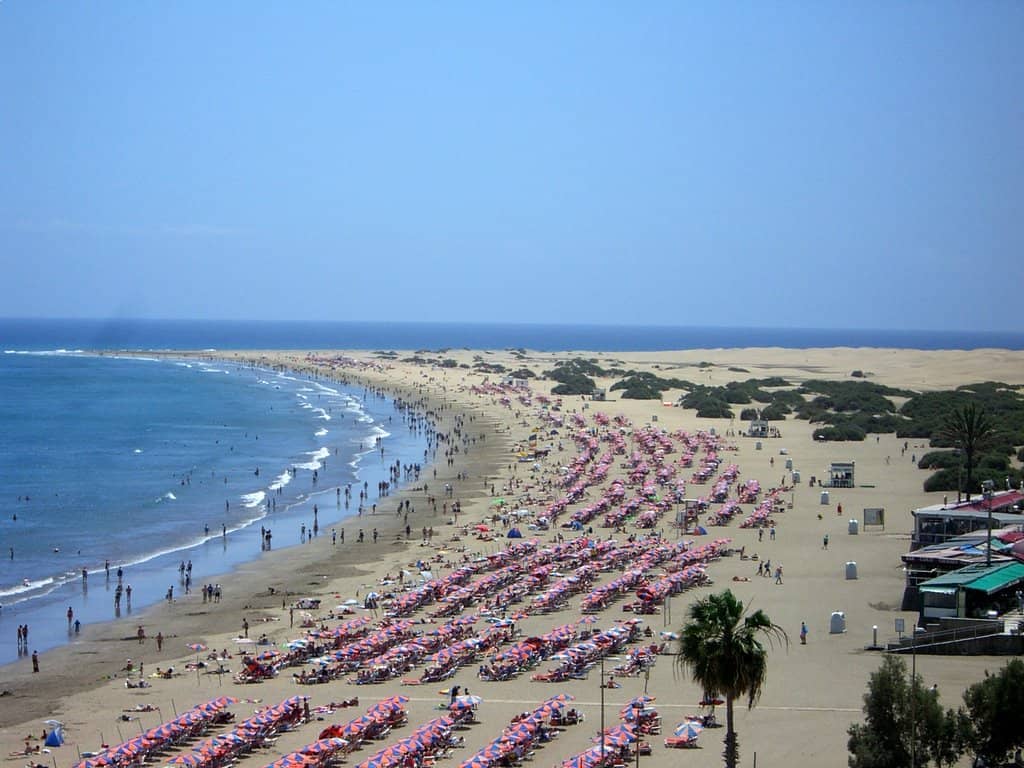
The Beach at a Glance
Playa del Inglés is the central beach of Gran Canaria's southern resort corridor, running for approximately 3 kilometres between the Maspalomas dunes to the west and the quieter enclave of San Agustín to the east. The sand is wide, pale gold, and coarse enough that it doesn't stick to everything you own. The Atlantic here is generally calm inside the natural curve of the bay, though wave energy picks up towards the Maspalomas end, where the beach meets open dune terrain.
The beach is informal but surprisingly organised. Different stretches have developed distinct characters over decades of tourism: the westernmost sections near the dunes are known for nudism and are heavily frequented by LGBTQ+ visitors; the central areas attract a mixed crowd; and the eastern sections near the promenade access points tend to draw families and those staying in the large hotel complexes behind the seafront. There are no fences or signs enforcing these divisions, but regular visitors know them instinctively.
💡 Local tip
The beach is free to access at all times as a public coastal area. Lifeguard services and beach facilities such as showers, kiosks, and sunbed rentals operate during daytime hours, with availability varying slightly by season.
How the Beach Changes Through the Day
Early morning at Playa del Inglés is genuinely pleasant. Before 9am, the sand is cool underfoot, the light is soft and low from the east, and the only sounds are the surf and the occasional jogger on the promenade above. This is the best time to walk the full length of the beach without the sun at full intensity, and the only time you can get a realistic sense of just how wide and long the beach actually is.
By late morning the beach fills steadily. Sun loungers are claimed early by resort guests, and the smell of sunscreen becomes the dominant sensory experience. The sky is typically cloudless from spring through autumn, and the sun here is stronger than northern Europeans expect, even in winter. The UVI regularly reaches high or very high levels between May and September.
Afternoons are the busiest period, and during summer school holidays the sand becomes genuinely crowded in the central sections. By contrast, the far western end near the dunes remains comparatively spacious. Sunset at Playa del Inglés is worth witnessing at least once: the sky turns copper behind the dune ridge, the light goes warm and low, and the beach empties noticeably as people head back to their hotels. If you time a late afternoon walk along the Paseo Costa Canaria promenade to finish around sunset, you will understand why this stretch of coastline has built its reputation.
The Promenade and Surrounding Resort
Running above the beach, the Paseo Costa Canaria is a long seafront promenade that links Playa del Inglés with San Agustín on the eastern side and connects with other coastal paths toward the Maspalomas lighthouse and beach at the western end. It is paved and generally suitable for wheelchairs and pushchairs, though several stretches include steps and steep ramps, so some sections may be challenging for those with limited mobility. Vendors, kiosks, and beach bars are spaced along it without becoming oppressive.
The resort behind the promenade is large, dense, and unambiguously commercial: apartments, hotels, supermarkets, and restaurants aimed squarely at northern European visitors. The Yumbo Centre, a short walk uphill from the promenade, is a key reference point for orientation and is the social hub for the area's LGBTQ+ community. If you are looking for a quieter, more local atmosphere on Gran Canaria, the beach itself is the right place to be, but the surrounding streets are not. For that, you'd need to head north to Vegueta or the city's urban coastline at Las Canteras beach.
ℹ️ Good to know
Several ramps and wooden walkways descend from the promenade to the sand at regular intervals, and some sections include board paths suitable for wheelchair users. Accessible showers and toilets are available at multiple points along the beach.
The Maspalomas Dunes Connection
The western end of Playa del Inglés merges directly with the Maspalomas dunes nature reserve, a protected landscape of shifting sand dunes that covers around 400 hectares and feels jarringly remote given how built-up the resort is. Walking from the resort end of the beach into the dunes takes about 20 minutes and the transition is gradual: the sunbeds and kiosks thin out, the vegetation disappears, and the dunes rise until the resort is hidden from view.
This boundary zone is ecologically sensitive, and footpaths within the reserve are marked. The Maspalomas lighthouse, a 55-metre white tower dating to 1890, marks the southern tip of the island at the far end of the dunes and is a logical endpoint for anyone walking the full beach length. The lighthouse area also has a small lagoon and palm grove that attracts migratory birds, offering an unexpected moment of quiet natural observation at the edge of one of Spain's largest resort areas.
Climate and When to Go
Gran Canaria's south coast has one of the most consistent climates of any beach destination accessible from Europe. The Maspalomas area sits in a microclimate that is noticeably sunnier and drier than the north of the island: cloud that builds over the interior mountains rarely reaches this far south, and rainfall events are infrequent even in winter. Daytime temperatures range from around 21°C in January to 28°C in August, with sea temperatures following a similar but lagged curve.
For beach use, May through October offers the warmest combination of air and sea temperature. November through April still sees full sun on most days and is genuinely comfortable for walking and outdoor activity, which is why the resort fills with northern European retirees and winter-sun travellers from November onwards. If your goal is avoiding the densest crowds while keeping good weather, late April to early June and September to October are the practical sweet spots. More detail on seasonal patterns is covered in our best time to visit Gran Canaria guide.
⚠️ What to skip
The sun on Gran Canaria's south coast is stronger than its latitude suggests. UV index levels reach 'high' or 'very high' from April through September. Bring high-factor sunscreen, reapply frequently, and plan to have shade available between 12pm and 3pm.
Getting There and Getting Around
Gran Canaria Airport (IATA: LPA) is on the east coast of the island, positioned roughly between Las Palmas in the north and the southern resorts. From the airport to Playa del Inglés, the Global bus network (operated by Guaguas Global) provides direct services, including Line 66, which connects the airport with the Maspalomas and Playa del Inglés area. The journey takes around 30 minutes depending on traffic and stops. A taxi from the airport to Playa del Inglés costs roughly €30–35 and takes approximately 30 minutes, though fares should be confirmed locally as they change.
Within the southern resort corridor, local bus lines connect Playa del Inglés with Maspalomas and continue west towards Puerto Rico and Puerto de Mogán. Long-distance services link the resort with Las Palmas via the coastal road, with journeys typically taking around 50–60 minutes. Bus stops are well-signed near the Yumbo Centre and along the main resort avenues. The promenade and beach access points are reachable on foot from most resort hotels in under 15 minutes. If you plan to explore the island beyond the south coast, renting a car is the most practical option.
For anyone considering a day trip from Las Palmas or combining the beach with a wider itinerary, our guide to getting around Gran Canaria covers all transport options with current route information.
Photography and Practical Notes
The best light for photography at Playa del Inglés is either early morning, when the low eastern sun creates long shadows across the sand and the dunes glow warm amber, or in the hour before sunset, when the light comes in from the west over the dunes. Midday light is harsh and flat. The promenade above the beach gives a good elevated angle for wide shots along the coastline.
Be aware that the westernmost sections of the beach are frequented by nudists and that photographing people on this stretch without consent would be inappropriate and potentially illegal under Spanish privacy law. Keep this in mind if you are walking the full beach length with a camera.
In terms of what to bring: sunscreen is essential and overpriced at beach kiosks, so buy it before you arrive. Sand shoes or flip-flops are useful because the sand gets very hot by midday. The beach has no shade structures in most sections, so a beach umbrella is worth renting if you plan to stay for a full afternoon. Freshwater showers are available at intervals along the promenade.
Insider Tips
- Walk to the Maspalomas end of the beach early in the morning before the resort wakes up. The transition from resort beach to open dune landscape is striking, and you will often have the dune edge almost to yourself before 9am.
- If you want a sunbed in the central sections during peak season, arrange it before 10am. After that, the good spots near the water are gone. The dune-end sections are far less crowded throughout the day.
- The flat promenade (Paseo Costa Canaria) is a better route for a long walk than the sand itself, especially in midday heat. It runs along the seafront between Playa del Inglés and San Agustín and links with other coastal paths toward the Maspalomas lighthouse and palm lagoon area, though reaching the lighthouse may still involve using connecting promenades or short stretches of sand.
- Bus stops for the Global network are easiest to find near the Yumbo Centre rather than trying to locate them from the promenade level. If you are catching a bus back to Las Palmas or the airport, head uphill from the beach to the main resort avenues first.
- The beach's easternmost end near San Agustín is noticeably quieter than the central resort sections and sees fewer package holiday groups. It is a reasonable option if you want calmer surroundings while still being within walking distance of the resort's facilities.
Who Is Playa del Inglés Beach For?
- Winter sun seekers from northern Europe wanting reliable beach weather between November and March
- LGBTQ+ travellers, particularly those interested in the well-established community around the Yumbo Centre and the dune area
- Families with children who need a flat, accessible promenade, calm water in the central sections, and nearby facilities
- Visitors with mobility requirements who benefit from the flat promenade, ramp access to the sand, and accessible beach services
- Travellers combining a beach day with a walk through the Maspalomas dunes nature reserve
Nearby Attractions
Other things to see while in Playa del Inglés:
- Aqualand Maspalomas
Aqualand Maspalomas is the south of Gran Canaria's largest water park, sitting 3 km inland from Maspalomas on the road toward Palmitos Park. With slides ranging from gentle lazy rivers to near-vertical drops, it draws families, groups, and thrill-seekers across the island's long sunny season. Here's what to expect, what to bring, and how to get the most out of your visit.
- Palmitos Park
Palmitos Park is a botanical and zoological park set inside a dramatic mountain ravine about 10 km from Maspalomas. It combines tropical bird collections, a dolphinarium, an aquarium, an orchid house, and a butterfly house in a single sprawling site. It is one of the south's most enduring family attractions, though the terrain demands comfortable shoes and realistic expectations.