Pellestrina Island: Venice's Forgotten Edge Between Lagoon and Sea
Pellestrina Island stretches 11 kilometers along the southern edge of the Venetian Lagoon, separating still lagoon waters from the open Adriatic. Fishing nets dry outside pastel-colored houses, the 18th-century Murazzi sea walls run the length of the seafront, and day-trippers from the main islands are rare. This is what Venice's quieter orbit looks like.
Quick Facts
- Location
- Southern Venetian Lagoon, between Lido di Venezia and Chioggia, Municipality of Venice, Italy
- Getting There
- ACTV Line 11 from Lido Santa Maria Elisabetta (bus + car ferry) to Pellestrina; separate ACTV ferries connect from Chioggia's Piazza Vigo. Bicycles accepted on the ferry.
- Time Needed
- Half day to full day; longer if cycling the full length
- Cost
- Island access is free. Transport via ACTV ticket (single approx. €9.50, 24-hour pass approx. €25 as of 2026 — verify before travel)
- Best for
- Slow travelers, cyclists, photographers, seafood lovers, anyone avoiding the main tourist circuit
- Official website
- www.visitlido.it/en/locations/pellestrina
What Pellestrina Actually Is
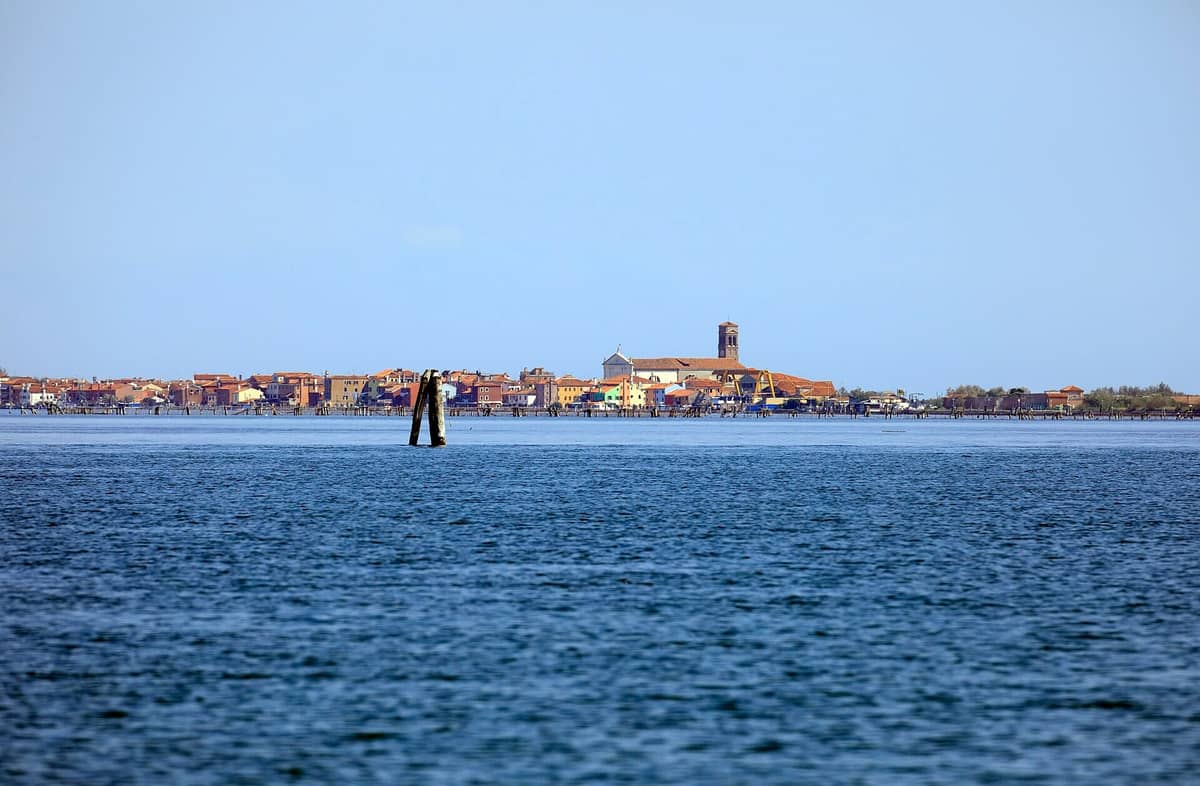
Pellestrina Island is a narrow barrier island in the southern Venetian Lagoon, running roughly 11 to 12 kilometers from north to south. At its narrowest, the strip of land measures barely 23 to 25 meters wide. At its broadest, it reaches around 1.2 kilometers. On one side is the flat, mirror-like water of the lagoon. On the other, the Adriatic Sea. The island is technically part of the Municipality of Venice, but it feels like a different world entirely.
The island contains four main settlements: San Pietro in Volta, Portosecco, Sant’Antonio di Pellestrina, and Pellestrina (the main village), with the quieter extremities of Santa Maria del Mare at the north end and Ca' Roman at the southern tip. These are fishing communities in the original sense. Colorful nets hang from low stone walls, small wooden boats sit in the canals on the lagoon side, and the pace of daily life is set by tides and weather rather than tourist schedules.
If you have already explored Lido di Venezia and want to go further south, Pellestrina is the logical next step. But unlike the Lido, it has no grand hotels, no casino, and no film festival glamour. What it has is quiet, architecture on a human scale, and one of the most impressive feats of Venetian engineering you can walk along for free.
The Murazzi: A Sea Wall Worth Understanding
The defining physical feature of Pellestrina's seaward side is the Murazzi, a monumental sea wall built from Istrian stone in the 18th century by the Republic of Venice. Construction on the Pellestrina stretch began in 1744 and was largely completed by 1782, representing one of the last great public works projects of the Serenissima before the Republic fell to Napoleon in 1797. Its purpose was critical: to protect the lagoon from the erosive force of Adriatic storms and to prevent the barrier islands from being eaten away by the sea.
The wall runs along the seaward length of Pellestrina and continues onto the neighboring Sottomarina area near Chioggia. Walking along the top of the Murazzi gives you an unusual double perspective: to one side, open sea and beach; to the other, the still lagoon and the low silhouette of Venice's skyline in the far distance on clear days. The Istrian stone itself, white and dense, is smooth underfoot near the walkable sections but rougher and more weathered toward the water's edge.
💡 Local tip
Walk the Murazzi in the late afternoon when the light comes from the west across the lagoon side. The combination of warm light on the stone wall and the still water on the other side makes for exceptional photographs with no crowds in the frame.
Tickets & tours
Hand-picked options from our booking partner. Prices are indicative; availability and final rates are confirmed when you complete your booking.
Pellestrina and the Venetian Lagoon Boat Tour from Chioggia
From 65 €Instant confirmationFree cancellationDoge's Palace skip-the-line tour
From 67 €Instant confirmationFree cancellationVenice Legends, Anecdotes and Ghost Stories Tour
From 35 €Instant confirmationFree cancellationGhosts and legends tour of Venice
From 29 €Instant confirmationFree cancellation
How the Island Changes Through the Day
Morning on Pellestrina belongs to the residents. The ACTV ferry from Lido arrives carrying local commuters, school children, and delivery vehicles. The smell of salt water and diesel from the ferry engine mixes with bread from the bakeries in the main village. Cats sit on doorsteps. The lagoon-side canal is quiet, with reflections of the painted houses almost perfectly still.
By mid-morning, any visitors who have made the trip tend to spread out quickly along the island's single road, which means the sense of crowding you might feel on the vaporetto to Murano or Burano simply does not exist here. Even in summer, the main street through Pellestrina village feels unhurried. The fish market stalls near the waterfront are worth a look before they close, typically by late morning.
Afternoons are quieter still. Some of the small trattorias and osterias open for lunch service then pull their shutters partly closed against the afternoon heat. The seafront Murazzi promenade becomes the main attraction: locals walk dogs, older residents sit on benches facing the sea, and the sound of the Adriatic against the base of the stone wall provides a constant low rhythm. If you are here in summer, the beach at the base of the Murazzi is used by locals for swimming, though it lacks facilities.
Winter visits are a different experience: the island empties of almost all visitors, the wind off the Adriatic can be sharp, and the lagoon turns a flat steel-grey. It is atmospheric in a way that suits photographers and travelers who prefer empty streets, but acqua alta events are possible, and the fewer operating services mean you should check ferry schedules carefully before going.
⚠️ What to skip
Pellestrina has very limited dining options, and several small restaurants close on weekdays or outside summer season. Do not assume you can find food at any hour. Bring provisions or confirm a restaurant is open before you rely on it for lunch.
Getting There and Navigating the Island
The practical route most visitors take starts at Lido di Venezia. From the main Lido vaporetto stop at Santa Maria Elisabetta, ACTV Line 11 runs south using a combination of bus and car ferry to cross the inlet at Alberoni before continuing onto Pellestrina. The journey time varies depending on connections, but expect around 30 to 40 minutes from Lido to the northern end of Pellestrina.
The alternative approach is from the south: ACTV ferries and vaporetti also connect Pellestrina to Chioggia, with boats departing from Piazza Vigo in Chioggia. This makes a logical loop possible: arrive via Lido, travel the length of the island, and continue to Chioggia for the return journey to Venice by bus or boat. That route requires more planning but rewards travelers with a sense of actually traversing the lagoon edge rather than simply going out and back.
The island is essentially car-free in practice for visitors, making a bicycle the ideal way to cover its length. Bicycles can be carried on the ACTV ferry. If you want to combine this with a broader exploration of the southern lagoon and its islands, the guide to Venice's lagoon islands covers the logistics of multi-island days in detail.
ℹ️ Good to know
ACTV ticket prices and timetables change seasonally. A single vaporetto ticket was approximately €9.50 and a 24-hour pass approximately €25 as of 2026, but verify current fares on the ACTV website or at ticket booths before traveling. If you plan to use vaporettos across multiple days in Venice, a multi-day pass typically covers Pellestrina routes too.
What You Actually See: A Practical Walkthrough
Arriving at San Pietro in Volta in the north, the first impression is of compressed domestic scale. Houses press close to the waterfront path. The lagoon-side fondamenta is narrow, sometimes only wide enough for two people to pass. Small fishing boats are moored directly in front of homes, connected by short wooden gangplanks. The colors of the houses, while not as intensely saturated as Burano, form a distinct local palette: ochre, terracotta, pale blue, and white, with shutters in contrasting tones.
Continuing south through Portosecco toward the main village of Pellestrina, the road widens slightly and the settlement has a modest main street with a handful of bars, a pharmacy, a church, and a few restaurants. The Church of Santi Pietro e Paolo in the main village dates back several centuries and is a simple example of Venetian lagoon religious architecture, built for a community of fishermen rather than for display.
South of the main village, the island thins and the built area gives way to more open land. The nature reserve at Ca' Roman at the southern tip is a protected area of dunes, pine trees, and shoreline that serves as nesting ground for several bird species. Access to the reserve itself may be restricted during nesting season, so check locally before planning a walk to the southern end.
Pellestrina does not have major museums or paid attractions. The experience is walking, cycling, watching the lagoon, and eating seafood. If you are looking for concentrated cultural sights, this is not the right day trip. For those, Venice's best museums offer far more density of content per hour.
Food, Seafood, and What to Expect
The best reason to eat on Pellestrina rather than back in Venice is that the seafood here is genuinely local. Fishermen from the island work the lagoon and the Adriatic, and the small family-run restaurants serve what was caught that morning. Moleche (soft-shell crabs, seasonal in spring and autumn), fresh clams, and grilled fish prepared simply are what you will find. The cooking is not elaborate. It does not need to be.
Prices at these trattorias tend to be noticeably lower than at comparable seafood restaurants in central Venice. This is not always a given in the lagoon islands: some spots on Burano, for example, have adjusted their prices upward to match tourist expectations. Pellestrina has fewer visitors and more locals eating at the same tables, which keeps things honest. For more background on Venetian eating habits and what to look for on a menu, the Venice food guide covers the regional specialties in detail.
Worth It?
Pellestrina rewards a particular kind of traveler. If your goal is to feel what the Venetian lagoon actually is beyond the tourist infrastructure, to walk somewhere that has not been curated for your visit, and to spend a few hours in a place where the main sounds are water and wind, this island delivers. The Murazzi alone is worth the trip for anyone interested in historic engineering or simply in large, beautiful stonework by the sea.
But if you are on a short trip to Venice with two or three days and a list of major sites to cover, Pellestrina will likely feel like a long journey for limited payoff. The 2-day Venice itinerary is honest about this: the island is a better fit for travelers who have already seen the core of Venice and want something slower. It is not a replacement for the Accademia, the Basilica dei Frari, or Piazza San Marco. It is what you do when you have more time or a different priority.
Visitors who struggle with uneven surfaces or longer walking distances should note that the lagoon-side paths can be narrow and worn, and the Murazzi promenade involves some uneven stone. The ACTV ferries accept vehicles, which may assist some visitors, but detailed step-free access information is not publicly confirmed and should be checked directly with ACTV before traveling.
Insider Tips
- Take the bicycle on the ferry from Lido. The island's single road runs nearly the full 11 kilometers with flat terrain, and cycling lets you cover this length comfortably without doubling back on foot.
- The best light for photographing the lagoon side of the island is in the morning, when the sun comes from the east and hits the house fronts directly. By afternoon, the lagoon side falls into shadow while the Murazzi and seaward side are well lit.
- If you plan to eat on the island, call ahead or check that a restaurant is open before committing to a visit timed around lunch. Several family-run places keep irregular hours outside peak summer season and close entirely in winter.
- The Ca' Roman nature reserve at the southern tip has restricted access during bird nesting season. If the southern end of the island is part of your plan, check locally on the day whether the reserve path is open.
- Coming from Chioggia rather than Lido means you board at Piazza Vigo and travel northward through the island. This approach is less common and means you avoid retracing the same route if you want to see Chioggia afterward — a town worth at least an hour on its own.
Who Is Pellestrina Island For?
- Cyclists wanting a flat, scenic lagoon route with minimal traffic
- Travelers on a longer Venice trip looking to escape the tourist circuit for half a day
- Food-focused visitors seeking genuinely local seafood at local prices
- Photographers interested in working-fishing-village textures, sea walls, and lagoon light
- Anyone with an interest in Venetian hydraulic engineering and the 18th-century Murazzi sea walls
Nearby Attractions
Combine your visit with:
- Burano Island
Eight to nine kilometers north of Venice, Burano Island is a compact, flat island of roughly 21 hectares where fishermen's houses are painted in saturated reds, yellows, and blues. It has a legitimate history in lace-making stretching back to the 16th century, and the 40-minute vaporetto ride across the lagoon is part of the experience.
- Chiesa del Redentore
Built in 1577 as a vow to God after a devastating plague, the Chiesa del Santissimo Redentore is Andrea Palladio's finest church in Venice. Standing on the island of Giudecca across the canal from Dorsoduro, it rewards visitors with serene interiors, important Renaissance paintings, and one of the most dramatic facades in Italian architecture.
- Chioggia
Chioggia is an ancient fishing town at the southern entrance of the Venetian Lagoon, built on a cluster of small islands linked by bridges and crossed by canals. Unlike Venice, it functions as a living, working community, and that distinction shapes everything about a visit.
- Giudecca Island
Giudecca Island sits just minutes from the heart of Venice yet feels like a different city entirely. Flat, walkable, and free to explore, it rewards visitors with Palladian architecture, waterfront promenades, and a glimpse of how Venetians actually live.