Parc-nature du Cap-Saint-Jacques: Montreal's Wilderness Escape
Parc-nature du Cap-Saint-Jacques is Montreal's largest municipal nature park, occupying a peninsula on the northwest tip of the island. With sandy lakeside beaches, a working organic farm, wetlands, and kilometres of trails, it rewards visitors who make the effort to reach it.
Quick Facts
- Location
- 20099 Boulevard Gouin Ouest, Pierrefonds, QC H9K 1C6 — northwest tip of the Island of Montreal — northwest tip of the Island of Montreal
- Getting There
- No direct metro access; best reached by car or by STM bus from Henri-Bourassa metro station (verify current routes with STM)
- Time Needed
- 2–5 hours depending on activities; a full day for families using the beach
- Cost
- Park access free; beach admission and facilities may have separate seasonal fees. Le Lièvre trail has paid access June–September
- Best for
- Families, swimmers, hikers, cyclists, and anyone needing a full day outdoors without leaving the city
- Official website
- montreal.ca/en/places/grand-parc-de-louest-cap-saint-jacques
What Parc-nature du Cap-Saint-Jacques Actually Is
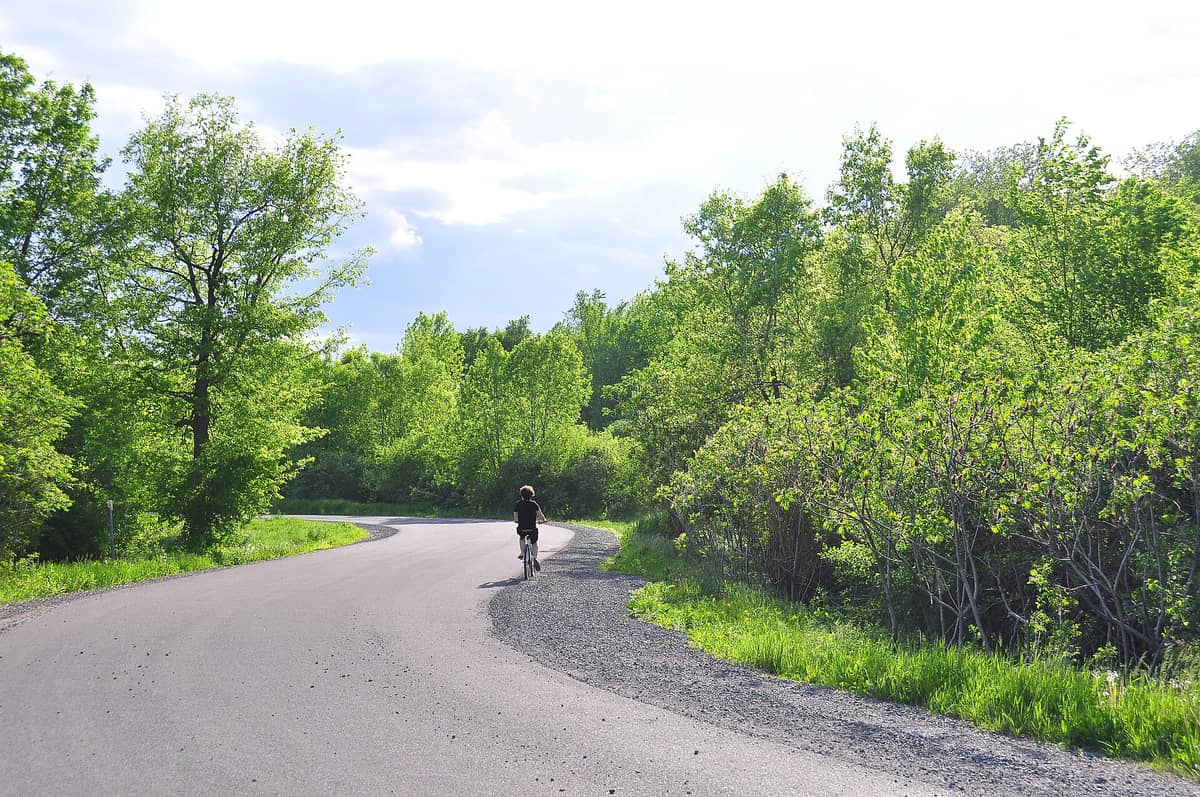
Parc-nature du Cap-Saint-Jacques is Montreal's largest nature park, covering a broad peninsula in the city's far northwest, where Lac des Deux Montagnes meets the Ottawa River. Despite being within city limits, the park feels genuinely remote. The treeline is dense enough to muffle road noise, the shoreline is undeveloped, and on a weekday morning you can walk a trail for twenty minutes without passing another person.
The park is part of the Grand parc de l'Ouest, a larger ecological corridor the City of Montreal has been assembling along the island's western edge. Cap-Saint-Jacques functions as its centrepiece: a place where wetlands, forest, agricultural land, and a public beach coexist in a way that feels unusual for a city of 1.7 million people. That combination is what separates it from smaller, more manicured green spaces elsewhere in Montreal.
ℹ️ Good to know
Park hours: daily 7:00 a.m. to 10:00 p.m. Individual facilities (beach, farm, trail) have their own seasonal schedules. Arrive early on summer weekends — the beach parking area fills faster than most visitors expect.
The Landscape: What You'll See and Hear
The park's interior is largely deciduous and mixed forest, with maple, ash, and oak dominating on higher ground and willows thickening near the water. In early morning, the dominant sound is birdsong, with a few species audible from the trail that you are unlikely to encounter in denser parts of the city: wood thrushes in summer, Canada geese during migration, and the occasional great blue heron standing motionless along the marshy shoreline.
The terrain is relatively flat by Montreal standards, which makes the trails accessible but not particularly dramatic. The reward is not vertical views but horizontal ones: long sightlines across the lake to the Laurentian foothills in the distance, especially clear in autumn when the air loses its summer haze. The shoreline offers a qualitatively different experience from anything you get at the Old Port or Jean-Doré Beach on Île Notre-Dame. The water here is calm, the horizon is wide, and the opposite shore is undeveloped.
Autumn is the single best season to visit for scenery. From mid-September to mid-October, the maple canopy turns and the light in the late afternoon is extraordinary. If you are visiting Montreal for fall foliage, Cap-Saint-Jacques is worth the trip even more than the more-photographed spots in the centre of the island. For a broader seasonal breakdown of when to visit Montreal, see the best time to visit Montreal guide.
Tickets & tours
Hand-picked options from our booking partner. Prices are indicative; availability and final rates are confirmed when you complete your booking.
Montreal evening cruise on the St. Lawrence River
From 54 €Instant confirmationFree cancellation3-hour e-bike guided tour in Montreal
From 68 €Instant confirmationFree cancellationWalking tour of Old Montreal
From 20 €Instant confirmationFree cancellationMontreal helicopter tour
From 156 €Instant confirmationFree cancellation
The Beach: Montreal's Quietest Sandy Swim Spot
The park contains sandy beaches on Lac des Deux Montagnes that are supervised and open to swimmers during summer. Beach admission may be charged separately from park access; check the City of Montreal’s current beach information for applicable rates before visiting.
The beach environment is noticeably calmer than other Montreal swimming spots. The lake water is typically warm by July and the sandy bottom slopes gradually, which makes it suitable for younger children. Facilities include change rooms and washrooms near the beach area. On peak summer weekends, the beach does get crowded, particularly in the early afternoon. Arriving before 10:00 a.m. or after 4:00 p.m. gives you a meaningfully quieter experience and easier parking.
💡 Local tip
Water quality at municipal beaches fluctuates with rainfall and temperature. Check the City of Montreal's beach quality report before making a long trip specifically for swimming — notices are updated regularly during the season.
Trails, Cycling, and the Le Lièvre Route
The park has a network of trails suitable for walking, some of which are also open to cyclists and cross-country skiers in winter. The Le Lièvre walking trail has a separate paid access fee from June through September. Trail surfaces vary: some sections are compacted gravel, others are natural earth paths that become muddy after rain. Sturdy footwear is more useful here than at more urban parks.
The distances are moderate rather than challenging. Most visitors cover the main loop in one to two hours at a relaxed pace. The trails pass through varying habitats including forest, wetland edges, and open meadow, which makes the route more interesting than its difficulty level might suggest. Interpretive signs along some paths provide ecological context in French and English.
Cap-Saint-Jacques connects to the broader cycling infrastructure on the Island of Montreal, making it reachable for experienced cyclists willing to navigate Boulevard Gouin Ouest. For more on cycling routes across the city, the Montreal cycling guide covers the island's main paths and logistics.
The Organic Farm: A Working Agricultural Site
One feature that genuinely distinguishes Cap-Saint-Jacques from other Montreal nature parks is the presence of an ecological farm on the property. The farm and general store are part of the site, but the stable is no longer accessible to the public; check the official listings for current visitor access and seasonal activities.
For families with younger children, the farm adds a layer of interest that trails alone cannot provide. Seasonal programming varies, so checking the park's official listings before visiting is worthwhile, particularly if farm activities are a main draw. The farm element also gives the park a strong identity for school groups and educational visits, which means weekday mornings in spring can bring organized groups through the area.
Getting There: The Honest Assessment
Cap-Saint-Jacques sits at 20099 Boulevard Gouin Ouest, approximately 30 kilometres from downtown Montreal by road. That distance is the park's main practical challenge. Driving is the most straightforward option: travel time from central Montreal is roughly 35 to 50 minutes depending on traffic, and there is parking on site, though it fills on summer weekends.
Public transit access is possible but requires planning. STM bus routes serve the northwest part of the island, with connections from Henri-Bourassa metro station, but journey times are significantly longer than driving and schedules should be confirmed with the STM directly before your visit, as service patterns change seasonally. This park is not casually walkable from any metro station — factor that into your planning.
⚠️ What to skip
Cap-Saint-Jacques is not a spontaneous stop on a standard tourist itinerary. Reaching it requires deliberate planning, especially without a car. If your time in Montreal is limited to two or three days in the centre, other nature options may be more practical.
Visitors deciding how to allocate time between Montreal's outdoor spaces should weigh Cap-Saint-Jacques against more central options. Mount Royal Park and the Lachine Canal are both more accessible by transit and offer different but equally worthwhile outdoor experiences.
Winter at Cap-Saint-Jacques
The park operates year-round, and winter is genuinely worth considering. The trails convert to cross-country ski and snowshoe routes when snow conditions allow, and the frozen lakescape is stark and photogenic in a way that summer visitors never see. The forest canopy that feels lush in July becomes skeletal and geometric against snow, giving the park a completely different character.
Winter temperatures in Montreal regularly drop below −10°C, and wind off the lake at Cap-Saint-Jacques amplifies the chill. Layer properly and bring waterproof boots. For broader context on what outdoor Montreal looks like in the cold months, the guide to Montreal in winter covers conditions and alternatives.
Accessibility
The welcome centre at 20099 Boulevard Gouin Ouest is wheelchair accessible, stroller-friendly, and has accessible toilets. Reserved accessible parking is available. The wider park trails are noted as accessible with assistance, which means some paths may be navigable with a wheelchair but are not fully paved or smooth throughout. Anyone with significant mobility limitations should contact the park directly before visiting to understand which areas are genuinely accessible on a given day, particularly after rain.
Insider Tips
- Arrive at or before 7:00 a.m. on summer weekday mornings if you want the park largely to yourself. The difference between 7:00 a.m. and 10:00 a.m. on a July Tuesday is significant — birdsong and mist in the early hours, families and noise by mid-morning.
- The western shoreline section of the trail offers the clearest views across Lac des Deux Montagnes toward the Laurentians. Save this stretch for late afternoon when the light comes in low and the colours are at their best.
- Pack more water than you think you need. Shade is abundant on the trails, but refill points inside the park are limited. In summer heat, this matters more than it might on a shorter urban walk.
- The Le Lièvre trail has a paid access fee from June through September. If your budget is tight, the broader park trail network remains accessible without this specific charge — check the City of Montreal's page for current details before heading out.
- If you are combining the beach with trails, do the trails first in the morning when temperatures are lower, then move to the beach in the early afternoon. Reversing this order means hiking in peak heat.
Who Is Parc-nature du Cap-Saint-Jacques For?
- Families with children who want a full beach day without leaving Montreal
- Hikers and cyclists looking for natural terrain that goes beyond manicured urban paths
- Visitors staying in Montreal for a week or more who have already covered the central attractions
- Cross-country skiers and snowshoers seeking accessible winter trails near the city
- Anyone interested in urban ecology, wetlands, or agricultural education
Nearby Attractions
Combine your visit with:
- Eastern Townships
The Eastern Townships (Cantons-de-l'Est) stretch across the rolling hills south of Montreal, reaching the U.S. border. With lavender fields, gorge walks, vineyards, and covered bridges, this is one of the most rewarding escapes from the city, especially in autumn when the hills turn amber and rust.
- Îles-de-Boucherville National Park
Parc national des Îles-de-Boucherville is a five-island nature reserve in the St. Lawrence River, reachable from Montreal in under an hour. Cyclists, kayakers, birdwatchers, and families find quiet trails, shoreline views, and genuine wilderness just minutes from the city's eastern suburbs.
- Maison Saint-Gabriel
Maison Saint-Gabriel is one of the oldest intact structures on the Island of Montreal. Originally a working farm connected to Marguerite Bourgeoys and the Filles du roi, it is now a museum and National Historic Site where guided tours walk visitors through three centuries of Quebec's colonial and religious history.
- Marché Maisonneuve
Marché Maisonneuve is one of Montreal's official public markets and one of its least crowded. Free to enter, open seven days a week, and genuinely rooted in its neighborhood, it rewards travelers who venture beyond the tourist circuit.