Palazzo Doria Pamphilj: Inside Rome's Greatest Private Palace
Palazzo Doria Pamphilj is a working aristocratic palace on Via del Corso that has been in the same family since 1647. Its gallery holds Velázquez, Caravaggio, and Titian alongside original gilded halls that most visitors to Rome never discover.
Quick Facts
- Location
- Via del Corso 305, Centro Storico, Rome
- Getting There
- Bus along Via del Corso; Barberini metro station (10-15 min walk)
- Time Needed
- 1.5 to 2.5 hours
- Cost
- Paid entry; verify current prices on the official website
- Best for
- Art lovers, history enthusiasts, visitors seeking a quieter alternative to state museums
- Official website
- www.doriapamphilj.it
What Palazzo Doria Pamphilj Actually Is
Palazzo Doria Pamphilj is not a converted museum. It is a palace where the Doria Pamphilj family still lives, and the gallery that occupies its state rooms is still their personal collection. That distinction matters the moment you walk through the entrance on Via del Corso: the rooms feel inhabited rather than curated, and the art hangs the way it did in the 17th and 18th centuries, stacked frame-to-frame in the old Italian manner rather than spaced out for modern viewing comfort.
The palace's origins date to the mid-15th century, when Cardinal Niccolò d’Acciapaccio built on this site. It was substantially rebuilt between 1505 and 1507, and the Pamphilj family acquired it in 1647 after Giovanni Battista Pamphilj became Pope Innocent X. The Doria Pamphilj branch replaced the direct Pamphilj line in 1760, uniting two of Italy's most powerful aristocratic houses. The result is a property that has grown across centuries to become almost certainly the largest privately owned palace in Rome, occupying an entire city block between Via del Corso and Via della Gatta.
💡 Local tip
Admission includes an audio guide narrated by a member of the family, a living member of the family. It is unusually personal and worth using: he describes individual paintings from the perspective of someone who grew up with them on the walls.
The Architecture: Four Facades, Three Centuries
The palace presents different faces depending on which street you approach from. The principal facade on Via del Corso was with 18th-century work including by Gabriele Valvassori. It is considered one of the finest Baroque facades in Rome: a long, rhythmic composition with a central portal flanked by double pilasters, topped by a balustrade with decorative urns. The stone is a warm travertine that picks up honey tones in afternoon light, and the proportions are generous without becoming overpowering.
Antonio Del Grande was responsible for the earlier 17th-century work on other parts of the building, giving the palace a layered architectural history that specialists find particularly instructive. For most visitors, the effect is simply that of an enormous, coherent aristocratic complex that has absorbed centuries of work without losing its sense of belonging to one household.
If you are working through Rome's architectural heritage, the palazzo sits naturally alongside a visit to the Pantheon, roughly five minutes' walk to the southwest, and the broader network of Renaissance and Baroque palaces across the Centro Storico.
Tickets & tours
Live prices and dates from our booking partner. If you book, we may earn a commission at no extra cost to you.
Doria Pamphilj Gallery guided tour
From 76 €Instant confirmationFree cancellationGuided tour of Doria Pamphilj Palace's secret private rooms
From 45 €Instant confirmationFree cancellationThe Doria Pamphilj Gallery reserved entrance ticket
From 27 €Instant confirmationFree cancellationPalazzo Venezia reserved entrance with the Museum of the Risorgimento
From 33 €Instant confirmationFree cancellation
The Gallery: What You Will See
The collection was largely assembled by Cardinal Pietro Aldobrandini and subsequently passed through inheritance to the Pamphilj. It spans painting, sculpture, and decorative arts from the 15th through 18th centuries, with particular strengths in 16th and 17th-century Italian and Flemish work.
The single most important work in the collection is Velázquez's portrait of Pope Innocent X, painted during the Spanish master's visit to Rome in 1649-1650. The painting is kept in a small room dedicated to the Pope and is displayed without glass, at close range. The psychological intensity Velázquez achieved is visible in a way that reproductions do not capture: the Pope's expression reads simultaneously as suspicious, tired, and politically shrewd. Francis Bacon spent much of his career making distorted versions of this image. Seeing the original explains why.
Caravaggio is represented by two works: the Rest on the Flight into Egypt and the Penitent Magdalene, both early pieces from around 1595-1597. They show his naturalism before the extreme chiaroscuro of his later period, and the soft light in the gallery rooms suits them well. Titian, Raphael, Brueghel the Elder, and Hans Memling also appear in the collection, covering a range that would challenge any single visit to absorb completely.
The gallery is arranged in four long halls known as the Aldobrandini Rooms, hung floor-to-ceiling with paintings in the historic manner. There is no label-by-label explanation at eye level; the audio guide is the primary interpretive tool. This approach will frustrate visitors who prefer dense wall text and delight those who want to engage with the collection on their own terms.
ℹ️ Good to know
The state apartments, including the Yellow Salon, the Green Room, and the private chapel, are decorated with original furniture, mirrors, and tapestries from the 17th and 18th centuries. These rooms are as interesting as the paintings for anyone drawn to the material culture of Roman aristocracy.
How the Experience Changes Through the Day
Palazzo Doria Pamphilj draws a fraction of the crowds that fill the Vatican Museums or the Borghese Gallery, and this makes it one of the more reliably calm museum experiences in central Rome. Morning visits, particularly on weekdays, often feel almost private in the deeper gallery rooms. The natural light that filters through the high windows shifts gradually across the morning, changing how the heavily varnished Old Master paintings read.
By midday, tourist groups from nearby sites sometimes pass through, but the palace is large enough that congestion rarely becomes a problem. Afternoons tend to quiet again. The absence of timed entry slots (verify this remains the case before your visit) means you can linger at the Velázquez without anyone waiting impatiently behind you, a luxury that is genuinely rare in Rome's most popular art spaces.
Visitors who find the Borghese Gallery's timed slot system stressful often prefer Palazzo Doria Pamphilj for that reason, though the collections are different in character. The Galleria Borghese excels in sculpture and Bernini; Doria Pamphilj's strength is in panel painting and the intact decorative atmosphere of a working palace.
Practical Walkthrough
The entrance is on Via del Corso at number 305. The palazzo is straightforward to find: Via del Corso is one of Rome's main north-south arteries, and the Baroque facade is distinctive even among the city's large buildings. There is no significant queue management infrastructure, which means arriving without a reservation is generally possible, though checking the official site for current booking requirements before your visit is advisable.
The gallery circuit follows a roughly linear path through the state rooms and is accessible from the main entrance. The flooring is original and uneven in places, and some rooms involve small steps without ramps. Visitors with mobility requirements should contact the palace directly for current accessibility details. The audio guide equipment is standard museum-issue and distributed near the ticket desk.
Photography without flash is generally permitted in the gallery spaces, making this a good setting for available-light shooting. The rich gold frames and warm interior lighting produce distinctive images. The portrait of Innocent X is popular with photographers but sits in a relatively small room, so visiting that space early in your circuit before others settle in pays off.
⚠️ What to skip
Ticket prices and opening hours are not confirmed in publicly available third-party sources at time of writing. Verify both on the official website or by contacting the gallery directly before making travel plans around this visit.
Honest Assessment: Who This Is For and Who Might Skip It
Palazzo Doria Pamphilj rewards visitors who are genuinely interested in painting and the culture of 17th and 18th-century Roman aristocracy. If your primary interest is ancient history, the imperial forums, or monumental architecture, this palace sits somewhat outside your main orbit and may not be worth the detour.
The collection is also dense and presented with relatively little interpretive support beyond the audio guide. Visitors traveling with children who are not specifically interested in Old Master painting are likely to find the experience long. Conversely, for anyone who has already covered the Colosseum, the Vatican, and the major state museums and wants to understand a different layer of Rome's history, this is exactly the kind of place that fills in the picture.
For a fuller picture of Rome's museum landscape, including what to prioritize given limited time, the guide to the best museums in Rome places Doria Pamphilj in useful context alongside the Capitoline, the Borghese, and the national collections.
If you are working a route through the Centro Storico and want to combine this visit with nearby sites, Piazza Navona is about ten minutes on foot to the west, and the Campo de' Fiori is a similar distance to the southwest.
Insider Tips
- The audio guide narrated by Jonathan Pamphilj, a living member of the family is included in admission and is genuinely informative. Using it is not optional if you want to understand what you are looking at: wall labels are sparse by design.
- Go directly to the Velázquez portrait of Innocent X when you first enter, before any groups arrive and settle in that small room. You will have more space and time with the painting if you prioritize it early in your visit.
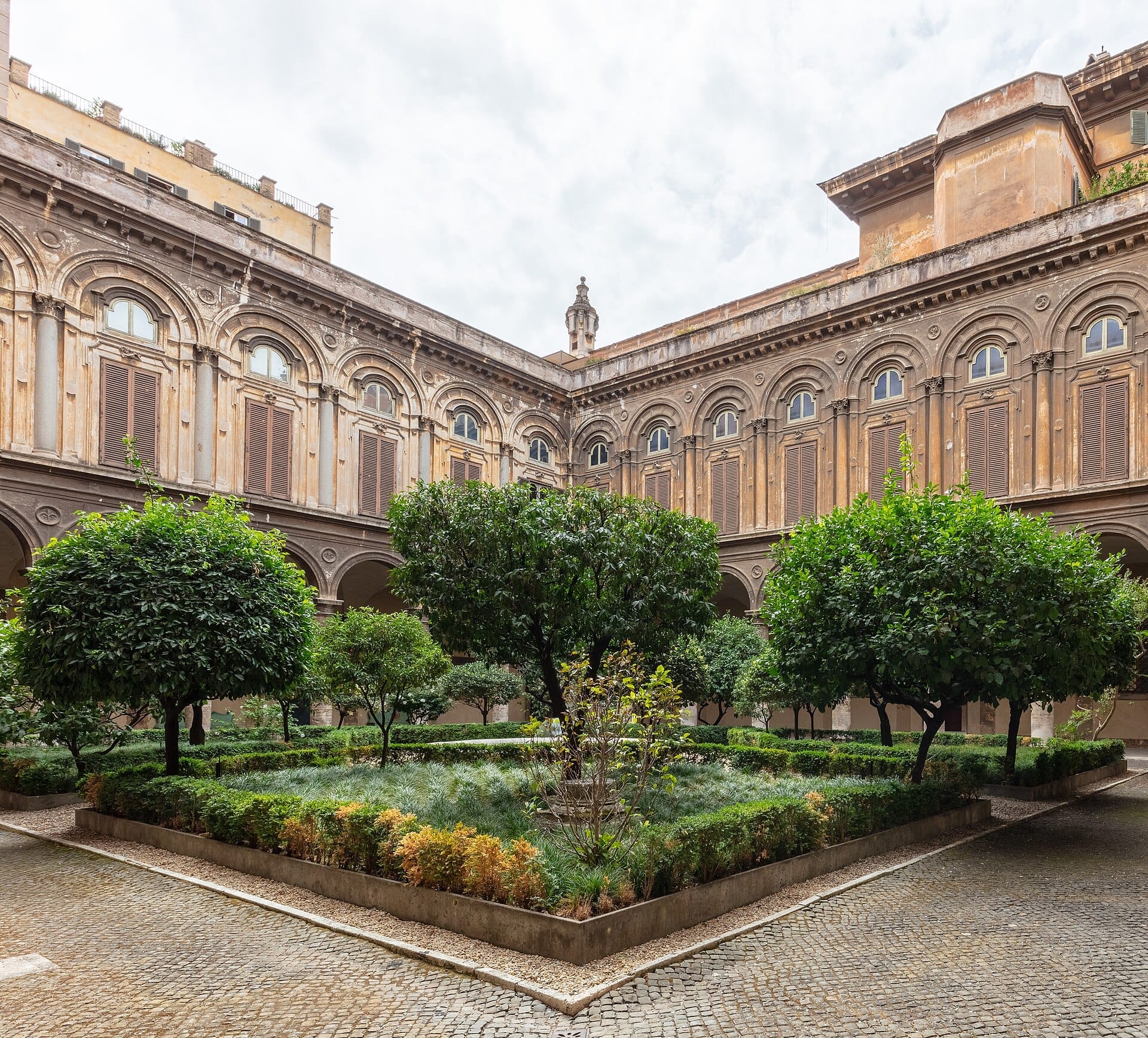
- The courtyard of the palazzo is worth pausing in even if you are not entering the gallery. Its proportions give a clearer sense of the building's true scale than the street facade does.
- The decorative arts in the state apartments, particularly the 18th-century furniture and the ceiling mirrors in the Green Room, are often overlooked by visitors moving quickly toward the paintings. Allow time for them.
- Via del Corso itself is a busy commercial street with no particular character around this stretch. The quality of the palazzo's interior is in striking contrast to the chaos outside, which can add to the sense of discovery.
Who Is Palazzo Doria Pamphilj For?
- Art historians and serious painting enthusiasts, particularly those with interest in 17th-century Italian and Flemish work
- Travelers who have covered the main state museums and want to experience a collection that still feels privately held
- Anyone specifically drawn to Velázquez, Caravaggio, or the culture of Baroque Rome
- Visitors who prefer calm, uncrowded museum experiences over the ticketed frenzy of Rome's most popular galleries
- Architecture and interior design enthusiasts interested in how Roman aristocratic palaces were actually furnished and lived in
Nearby Attractions
Other things to see while in Centro Storico:
- Ara Pacis
Commissioned in 13 BC to celebrate Augustus's campaigns in Gaul and Spain, the Ara Pacis Augustae is one of the best-preserved monuments of ancient Rome. Today it sits inside a striking modern pavilion on the Tiber's east bank, offering an unusually intimate encounter with imperial-era marble carving at near eye level.
- Campo de' Fiori
Campo de' Fiori is one of Rome's most recognizable piazzas, running a daily produce and flower market Monday through Saturday before reinventing itself as a lively social square after dark. Its paving stones have witnessed public executions, papal power, and centuries of commerce.
- Capitoline Hill
Capitoline Hill sits at the symbolic center of Rome, where Michelangelo's perfectly proportioned piazza crowns a site inhabited since the Bronze Age. Today it holds the world's oldest public museums, Rome's city hall, and some of the most striking views over the Roman Forum in the city.
- Capitoline Museums
Perched atop Capitoline Hill overlooking the Roman Forum, the Musei Capitolini hold some of antiquity's greatest sculptures and paintings across three interconnected palaces. Founded in 1471, they predate the Louvre by more than three centuries and reward visitors with both iconic works and panoramic views that few Rome attractions can match.
Planning a trip? Discover personalized activities with the Nomado app.