Pagasarri Mountain: Bilbao's Backyard Hike with Panoramic Summit Views
Pagasarri Mountain rises to 673 metres on the southern edge of Bilbao, reachable on foot directly from the city in around 90 minutes. Free to access year-round, the forested trails and wide-open summit make it the most popular natural escape for residents and visitors alike.
Quick Facts
- Location
- South of Bilbao, Bizkaia, Basque Country — start from Plaza Zabalburu or the Rekalde district
- Getting There
- Cercanías (RENFE) or local bus to Zabalburu area, then walk to the trailhead near the Iberdrola building
- Time Needed
- 3–4 hours for a comfortable round trip from the city trailhead; 2–2.5 hours from the mid-route parking area
- Cost
- Free — no ticket or entry fee required
- Best for
- Hikers, city escapers, families with older children, photographers seeking elevated views over Bilbao
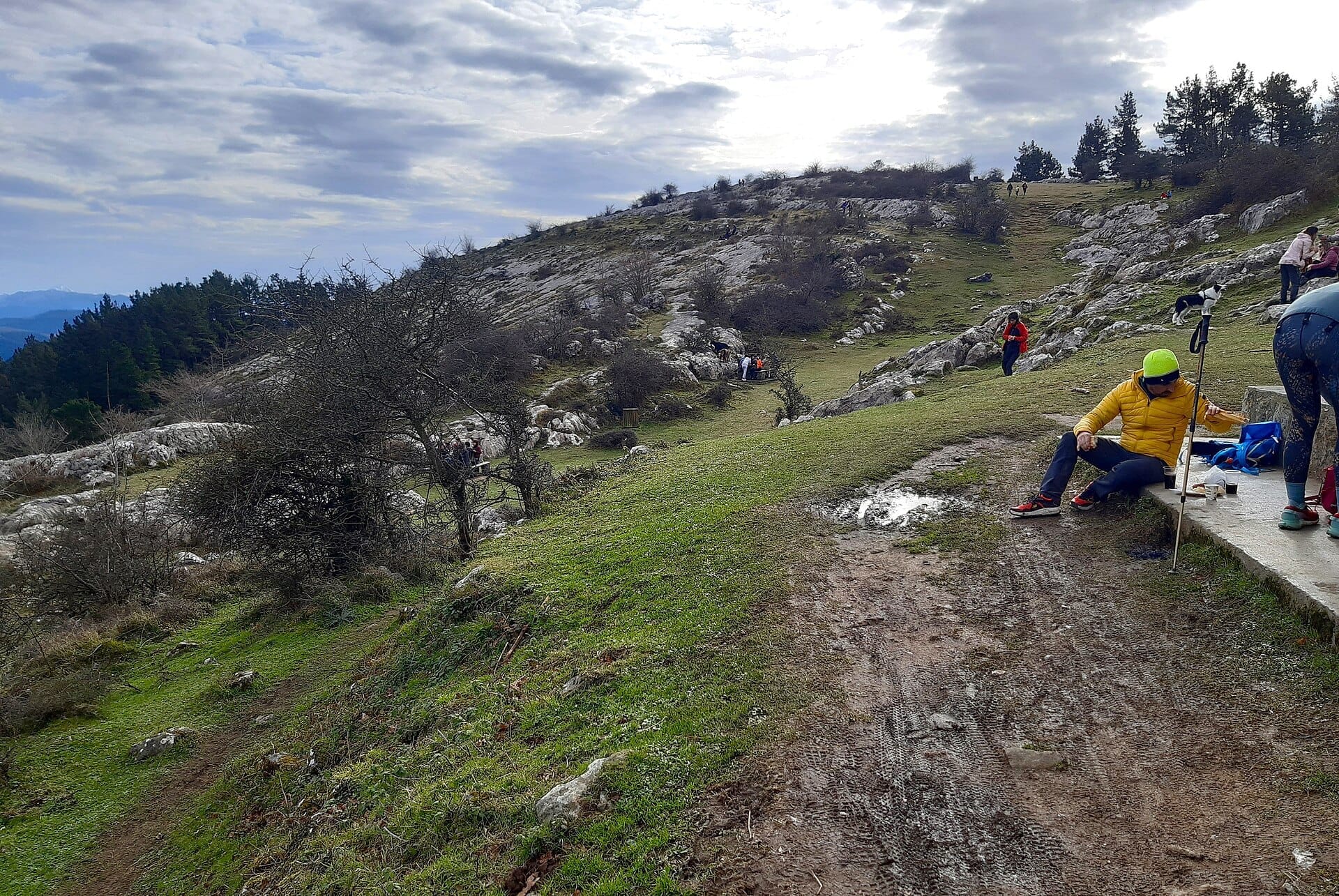
What Pagasarri Mountain Actually Is
Pagasarri Mountain is a 673-metre summit that rises directly from the southern edge of Bilbao, forming the most prominent peak in the green belt that encircles the city. It sits within the Ganekogorta massif, part of the Basque Mountains, and marks the boundary between Bilbao and the neighbouring municipalities of Arrigorriaga and Alonsotegi. The name comes from Basque and translates roughly as 'thick forest of beech,' which tells you a great deal about what the approach hike feels like: shaded, quiet, and green for most of the ascent.
Unlike nearly every other attraction on a Bilbao itinerary, Pagasarri costs nothing, requires no booking, and operates on no schedule. You walk out of the city, follow well-marked trails through mixed forest, and arrive at a broad, grassy summit with one of the best elevated views of the Bilbao metropolitan area available anywhere. It is the mountain that Bilbao residents have been climbing on Sunday mornings for generations.
ℹ️ Good to know
Pagasarri is a freely accessible natural area with no gates, fees, or formal operating hours. Trails are open year-round, though conditions vary significantly between seasons. Check weather before setting out, especially in autumn and winter.
The Ascent: What to Expect on the Trail
The most direct route starts from the Rekalde neighbourhood, close to Plaza Zabalburu. From the Zabalburu area (served by Cercanías trains and local buses), you follow Camino de Pagasarri past the Iberdrola building, where the urban environment gives way to a clear dirt track within minutes. The transition is abrupt in the best possible way: one moment you are on a city pavement, and within ten minutes you are under tree cover, the traffic noise replaced by birdsong and the crunch of gravel underfoot.
The standard ascent takes around 90 minutes at a moderate pace. The trail gains elevation steadily but without any technically demanding sections. The path underfoot is a mixture of compacted earth, tree roots, and loose rock on the steeper stretches near the summit ridge. Sturdy trainers or light hiking boots are sufficient for dry conditions; after rain, the lower forested sections become muddy and slippery, and boots with grip become a practical necessity rather than a preference.
Roughly halfway along the route from Bilbao, there is a parking area where drivers can leave a vehicle and shorten the hike to around 45 to 60 minutes one way. This makes the summit accessible to visitors who prefer a shorter outing or who are hiking with younger children. From the parking area upward, the forest gradually opens, the tree canopy thins, and the trail crosses sections of open moorland before reaching the summit plateau.
⚠️ What to skip
Bilbao's Atlantic climate means Pagasarri can be cloud-covered, windy, and wet even on days that start clear in the city. Bring a waterproof layer regardless of the morning forecast, and carry water — there are no facilities on the trail itself.
Tickets & tours
Live prices and dates from our booking partner. If you book, we may earn a commission at no extra cost to you.
San Juan de Gaztelugatxe guided tour from Bilbao
From 65 €Instant confirmationFree cancellationSan Sebastian, Hondarribia, Hendaye, and Getaria from Bilbao
From 54 €Instant confirmationFree cancellationGaztelugatxe and Mundaka small group guided tour from Bilbao
From 50 €Instant confirmationFree cancellationBilbao walking tour
From 16 €Instant confirmationFree cancellation
The Summit: Views, Atmosphere, and What You Actually See
The summit plateau of Pagasarri is wide and open, and the views on a clear day are genuinely worth the climb. To the north, Bilbao spreads across its valley floor in a panorama that makes the city's geography immediately legible: the Nervión estuary cutting through the urban fabric, the hills of the Artxanda ridge across the valley, and on the clearest days, the distant shimmer of the Bay of Biscay. To the south and east, the landscape shifts to undulating green hills with few visible settlements, giving a sense of how the Basque Mountains extend far beyond the city boundary.
There is a small stone shelter and a cross near the summit, typical of the mountain summits across the Basque Country. The atmosphere on weekends is sociable: local families eating a bocadillo, older hikers who have clearly been doing this walk for decades, and younger visitors stopping for photographs. On weekday mornings, the summit can be almost entirely empty, which changes the experience considerably. The wind at the top tends to be cooler and stronger than conditions lower down, even in summer.
For comparison, the Artxanda funicular on the north side of Bilbao provides a quick cable-car ride to a different hilltop viewpoint. Pagasarri requires considerably more effort, but the summit panorama is wider and the sense of having earned the view is a meaningful part of the experience.
When to Go: Time of Day and Season
Early morning on a weekday is the most atmospheric time to hike Pagasarri. The forest is quiet, the light is soft through the beech canopy, and there is a genuine stillness that disappears on weekend afternoons when the trail fills with groups. Mist is common in the lower sections early in the morning, particularly in spring and autumn, which adds to the sense of being genuinely inside a forest rather than simply walking uphill.
Season matters considerably here. Late spring and early summer bring the forest into full leaf, with the beech canopy at its densest and the wildflowers visible in the clearings near the summit. Autumn turns the same beeches to amber and rust, and the fallen leaves make the paths smell rich and earthy. Winter ascents are possible but require preparation: the upper sections can carry frost or light snow, and low cloud can reduce summit visibility to near zero. Bilbao's wet climate means that even in the drier months of June through September, a clear morning can give way to an overcast afternoon quickly.
If you are planning outdoor activities in the region more broadly, the best time to visit Bilbao guide covers seasonal weather patterns in detail.
💡 Local tip
Start early on summer weekends. By 10:00 the trailhead car park fills up, and the trail between there and the summit gets noticeably crowded by late morning. A 7:30 or 8:00 start from the city gives you the mountain largely to yourself.
Getting There from Bilbao
The trailhead is reachable by RENFE Cercanías or local bus to the Zabalburu area. From there, the walk to the start of the Camino de Pagasarri takes around 10 to 15 minutes on foot through the Rekalde neighbourhood. The route from Zabalburu is well signposted and familiar to most locals, but a quick check on a mapping app before setting out is sensible if this is your first time.
Drivers can follow the road south from Bilbao toward the mountain and reach the mid-route parking area, which significantly reduces the total hiking time. This option works well for visitors with limited time or those travelling with children who are not ready for the full 90-minute ascent from the city. The parking area itself is modest in size and fills quickly on weekend mornings, so an early start is advisable by car as well.
Pagasarri also connects to longer trail networks linking neighbouring municipalities. For context on getting around the wider region, the getting around Bilbao guide covers metro, bus, and other transport options in practical detail.
Practical Details and What to Bring
There are no facilities on the trail itself: no cafes, no water points, no toilet blocks above the parking area. Bring enough water for the round trip and carry any food you want for the summit. The trailhead area in Rekalde has basic shops and bars where you can stock up before starting.
Clothing should account for the weather difference between city and summit. Bilbao's oceanic climate means conditions can change within an hour, and the summit sits high enough that the temperature is noticeably lower than in the streets below, even on warm days. A light waterproof jacket takes up almost no space in a bag and will matter if a shower comes through during the descent.
- Footwear: light hiking boots or sturdy trail trainers with grip
- Water: at least 1 litre per person for the round trip
- Waterproof layer: mandatory in cooler months, strongly advisable year-round
- Snacks or lunch: nothing is available on the trail itself
- Sun protection: the upper section above the treeline has no shade
- Trekking poles: optional but useful on the steeper descent
Accessibility: the trails involve sustained elevation gain on uneven terrain and are not suitable for wheelchairs or pushchairs. The mountain is suitable for children who are comfortable walking uphill for an extended period. The mid-route parking area provides an option for those who cannot manage the full ascent from the city, reducing the walking distance to a more manageable portion of the route.
How Pagasarri Fits Into Bilbao's Natural and Cultural Identity
Pagasarri is not a destination that appeared on tourism radars recently. It has been the city's most accessible mountain for as long as Bilbao has existed in its modern form, and that relationship between a dense industrial port city and the forested hills rising immediately above it is genuinely characteristic of the Basque Country. The green belt that surrounds Bilbao, of which Pagasarri forms the most prominent peak, was a deliberate urban planning priority that preserved the hills from development as the city grew through the 20th century.
The contrast between the compact urban core and the immediately accessible natural landscape is one of the more underappreciated aspects of what Bilbao offers. If you are putting together a broader itinerary, the full things to do in Bilbao guide covers how to balance city-centre attractions with outdoor options like Pagasarri. For those interested in the city's architectural and cultural transformation, a visit to the Guggenheim Museum Bilbao in Abandoibarra provides a sharp counterpoint to an afternoon on the mountain.
Who should skip Pagasarri: visitors with very limited mobility, anyone who dislikes sustained uphill walking, or those with only a day in Bilbao focused entirely on the city's museums and architecture. The hike requires a meaningful time investment that eats into a short city break. It rewards those who want at least one experience that takes them entirely out of the urban environment and into the hills that define Bilbao's southern horizon.
Insider Tips
- The trail from Zabalburu passes through the working residential neighbourhood of Rekalde. Stop at one of the neighbourhood bars for a coffee before starting — it is a more authentic pre-hike ritual than anything you will find near the tourist centre.
- Photography of the city is best from the summit in the late afternoon when the light comes from the west and catches the Nervión estuary and the Abandoibarra skyline directly. Morning light works better for the southern, rural panorama.
- The Basque name Pagasarri means 'thick forest of beech' — and the beech trees are at their most spectacular in mid-October, when the canopy turns deep amber. The autumn colours draw noticeably larger weekend crowds than summer, so a weekday visit in late October is a strong choice.
- There are alternative ascent routes from Basauri and Arrigorriaga that are less frequented than the main Bilbao route. If you can arrange a one-way transport connection, descending via one of these routes into a different municipality and returning by public transport adds variety to the experience.
- The summit area can be fully cloud-covered even when the city below is in sunshine. If you arrive at the top and visibility is low, wait 20 minutes before descending — conditions at this elevation can clear quickly.
Who Is Pagasarri Mountain For?
- Hikers who want a proper outdoor morning without leaving the city area
- Visitors staying two or more days in Bilbao who want a physical counterbalance to museum-heavy days
- Families with children aged 8 and above who can manage a sustained uphill walk
- Photographers looking for elevated panoramic views of Bilbao and its valley setting
- Travellers interested in Basque landscape and how the natural environment directly borders the city
Nearby Attractions
Combine your visit with:
- Bakio Beach
Stretching nearly a kilometre along the Bizkaia coast, Bakio Beach is the largest and most complete sandy beach within easy reach of Bilbao. With reliable surf, a long promenade, full facilities, and Blue Flag certification, it draws everyone from families to serious wave riders.
- Bermeo
Perched on the rugged Biscay coast about 35 kilometres northeast of Bilbao, Bermeo is one of the Basque Country's oldest and most significant fishing towns. With a harbour still piled with nets, a medieval old quarter dating to 1236, and a front-row seat to one of northern Spain's most dramatic coastlines, it rewards travellers who venture beyond the city.
- Castillo de Butrón
Rising from dense Biscayan woodland just over 20 km from Bilbao, Castillo de Butrón is one of the most visually striking pieces of architecture in the Basque Country. Originally a medieval tower-house, it was radically rebuilt in neo-Gothic style in 1878 and today stands as a classified Historic Monument. Interior access is currently not available to the general public, but the exterior alone makes the short drive worthwhile.
- San Juan de Gaztelugatxe
A 10th-century hermitage perched on a jagged sea islet connected to the mainland by a cobbled stone bridge and 241 steps. San Juan de Gaztelugatxe sits roughly 45 minutes by car from Bilbao and delivers one of the most visually striking landscapes on the entire Atlantic coast of Spain. Free to enter, but requiring advance reservation in peak season.
Planning a trip? Discover personalized activities with the Nomado app.