Institute for the Study of Ancient Cultures Museum (ISAC): Chicago's Extraordinary Window into the Ancient World
The Institute for the Study of Ancient Cultures Museum (ISAC) on the University of Chicago campus in Hyde Park houses one of North America's most significant collections of ancient Near Eastern and North African artifacts. With more than 350,000 objects spanning Egypt, Mesopotamia, Persia, and beyond, this is a serious museum for curious travelers who want depth over spectacle.
Quick Facts
- Location
- 1155 E 58th St, Hyde Park, Chicago, IL 60637 (University of Chicago campus)
- Getting There
- Metra Electric Line to 59th St (Hyde Park), or CTA Bus 6 (Jackson Park Express) to 57th/Stony Island
- Time Needed
- 2–3 hours for a thorough visit; 90 minutes minimum to cover the main galleries
- Cost
- Verify current admission at isac.uchicago.edu — admission is currently free but suggested donations may apply
- Best for
- History enthusiasts, archaeology lovers, university culture, quiet indoor exploration
- Official website
- isac.uchicago.edu
What the ISAC Museum Actually Is
The Institute for the Study of Ancient Cultures Museum, known for most of its history as the Oriental Institute, is not a generalist history museum with a bit of everything. It is one of the most focused and authoritative collections of ancient West Asian and North African antiquities in the Western Hemisphere. Founded in 1919 by Egyptologist James Henry Breasted with funding from John D. Rockefeller Jr., the institute was built around the idea that fieldwork and scholarship should feed directly into public display. Nearly every object in the museum was excavated by ISAC's own archaeologists, which means the provenance documentation for these pieces is unusually rigorous by the standards of the field.
The collection contains more than 350,000 artifacts in total, with around 5,000 on display at any given time. Civilizations covered include ancient Egypt, Mesopotamia (modern Iraq), Persia (Iran), Anatolia (Turkey), Syria, and Nubia. These are not reconstructions or casts — you are standing in front of original objects that are four, five, and six thousand years old. That physical proximity to antiquity is what separates this museum from a textbook.
The museum formally changed its name from the Oriental Institute to the Institute for the Study of Ancient Cultures, West Asia and North Africa (ISAC) after an institutional review concluded that the term 'Oriental' no longer accurately reflected the geographic focus or the scholarly values of the department. The name change went into effect in 2022. Locally, many Chicagoans still use the old name, and you may see both referenced in older guidebooks or online reviews.
The Galleries: What You Will Actually See
The Egyptian gallery is typically the first to stop visitors in their tracks. Dominating the room is a massive granite statue of the pharaoh Tutankhamun, standing over 17 feet tall and dating to approximately 1332–1323 BCE. The scale is genuinely arresting in a way that photographs do not prepare you for. Surrounding it are mummies, funerary objects, carved reliefs, and everyday household items that together paint a picture of Egyptian life across millennia rather than just royalty and death rituals.
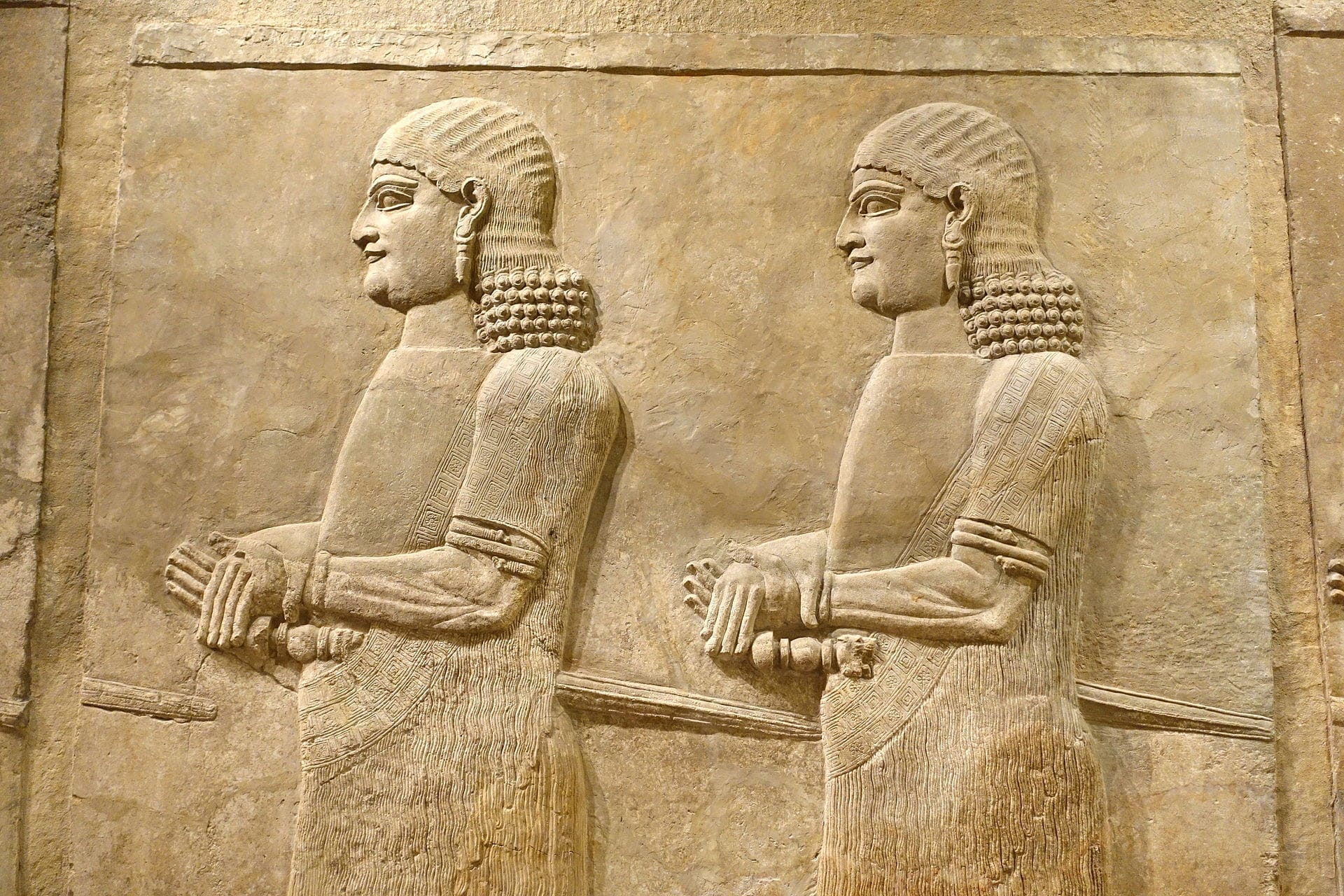
The Mesopotamian gallery covers the civilizations of Sumer, Akkad, Babylon, and Assyria. Highlights include a human-headed winged bull (lamassu) from the palace of Sargon II at Khorsabad, dating to around 721–705 BCE. These colossal threshold guardians were designed to be seen at an angle as you walked through a doorway, and even in a museum setting, approaching one gives a physical sense of their intended intimidation. Cuneiform tablets, cylinder seals, and everyday objects fill the surrounding cases.
Smaller but equally rewarding galleries cover ancient Persia, the ancient Levant, Nubia, and the ancient site of Megiddo in present-day Israel. The Megiddo gallery in particular reflects the depth of ISAC's own archaeological work, as the university conducted major excavations at the site — the biblical Armageddon — between 1925 and 1939. The artifacts and site documentation on display are primary evidence, not copies.
💡 Local tip
The museum's scale is manageable. Unlike vast encyclopedic museums where collections fatigue sets in after two hours, ISAC's focused scope means you can see the major galleries without rushing. That said, reading the case labels takes time — plan at least 2 hours if you want more than a surface pass.
Tickets & tours
Hand-picked options from our booking partner. Prices are indicative; availability and final rates are confirmed when you complete your booking.
Go City | Chicago All-Inclusive Pass
From 127 €Instant confirmationFree cancellationArt Institute of Chicago tickets and self-guided audio tour
From 49 €Instant confirmationArt Institute of Chicago Guided Tour with Skip-the-Line Tickets
From 63 €Instant confirmationFree cancellationThe Art Institute of Chicago: private skip-the-line tour
From 124 €Instant confirmationFree cancellation
How the Experience Changes by Time of Day
Weekday mornings, particularly Tuesday through Thursday, are the quietest periods. The galleries can be almost empty before noon, which means you can stand alone in front of a 3,000-year-old carved relief without the ambient noise of group tours. The light in the galleries is controlled for conservation, giving the rooms a calm, slightly dimmed quality that actually suits the material — it feels less like a spectacle and more like looking at something serious.
Friday evenings until 8:00 PM are the extended hours and draw a noticeably different crowd: university students, local couples, and neighborhood residents who treat the late opening as a cultural evening out. The atmosphere picks up slightly. If you want the experience without crowds but like a bit of ambient life in a museum, Friday late afternoon around 5:00 or 6:00 PM hits a good balance.
Weekends attract school groups and family visitors, particularly Saturday mornings. If you are traveling without children and want unobstructed viewing of the major pieces, arrive at opening time (10:00 AM) on a Saturday or aim for a weekday. The Sunday afternoon crowd is lighter than Saturday but still busier than any weekday.
Getting There: Navigating Hyde Park
Hyde Park sits on Chicago's South Side, roughly 7 miles south of the Loop. It is not the easiest neighborhood to reach on public transit compared to downtown attractions, which is partly why ISAC remains under-visited relative to its quality. The most reliable option is the Metra Electric Line from Millennium Station (in the Loop) to the 59th Street (Hyde Park) stop, a journey of about 20 minutes. From the station, the museum is a short walk west into the university campus. For a broader picture of Hyde Park's offerings before you go, the Hyde Park neighborhood guide covers the area in detail.
CTA bus routes also connect Hyde Park to the rest of the city. The No. 6 Jackson Park Express runs from the Loop to the 57th Street and Stony Island area, placing you within a few minutes' walk of the museum. Rideshare is straightforward from anywhere in the city and avoids the transfer complexity if you are coming from the North Side. Parking is available in the campus area but street spots are competitive on weekday mornings when the university is in session.
ℹ️ Good to know
ISAC is closed on Mondays. Core hours are generally Tuesday–Thursday and Saturday–Sunday 10:00–16:00, and Friday 10:00–20:00, but these can vary by season and special events. Holiday closures apply — check the official site at isac.uchicago.edu before making the trip, especially around major U.S. holidays.
Context: Why This Museum Matters
James Henry Breasted's founding vision was that the ancient cultures of the Near East were foundational to all of Western civilization, and that a major American research university should have direct access to the material evidence of those cultures through its own fieldwork. That vision resulted in ISAC-funded expeditions to Egypt, Iraq, Iran, Turkey, and the Levant throughout the 20th century. The objects that came back are the basis of the current collection.
It is worth understanding that ISAC exists within a broader constellation of exceptional Chicago institutions. The Field Museum on Museum Campus also holds significant ancient Egyptian and other antiquities within a much larger natural history collection. The two institutions complement each other — ISAC offers depth and scholarly context; the Field offers breadth. If ancient history is your primary interest, ISAC is the more rewarding of the two. If you are covering Chicago's museums more broadly, the best museums in Chicago guide can help you prioritize.
The 2022 name change to Institute for the Study of Ancient Cultures reflects a wider disciplinary shift away from the term 'Oriental' as a geographic descriptor, which scholars have broadly concluded is both geographically imprecise and historically burdened. The geographic focus of the museum's collection — West Asia and North Africa — is now accurately reflected in the full institutional name. The abbreviated form ISAC is what most people now use.
Practical Walkthrough and Photography
The museum building itself is a Gothic Revival building that fits naturally into the University of Chicago's neo-Gothic campus aesthetic. The entrance on 58th Street leads directly into the main hall, where the gift shop and orientation area sit. Galleries branch off from this central spine, so backtracking is sometimes necessary to reach adjacent rooms — there is no single circular route.
Photography for personal use is generally permitted throughout the galleries, though policies can vary by special exhibition. The lighting is low in several rooms, particularly in the Egyptian gallery, so phones with good low-light performance will yield better results than older cameras without a wide aperture. Tripods are not permitted. The lamassu in the Mesopotamian gallery photographs particularly well from a low angle, catching the carved detail of the wings against the ceiling.
The museum has a research library and a gift shop with a thoughtful selection of academic titles and reproductions. The shop is one of the few places in Chicago where you can purchase scholarly publications on ancient Near Eastern history alongside high-quality replica artifacts. It is worth 10 minutes even if you are not purchasing anything.
⚠️ What to skip
Admission fees and free-day policies are not published in this guide because they are subject to change. Always confirm current pricing directly at isac.uchicago.edu before your visit. For accessibility needs including wheelchair access or assistive services, contact the museum in advance through their official contact page.
Who Should Skip This Museum
ISAC is a research museum with scholarly context. Visitors expecting interactive displays, audiovisual spectacle, or large-format digital experiences will find it spare. There are labels and some interpretive panels, but the default mode is object-forward — you look at things and read about them. Children under eight or nine may find the experience too text-heavy unless they have a specific interest in ancient history or mummies. Families with young children who want hands-on engagement would be better served by the Field Museum or the Museum of Science and Industry, both of which invest heavily in interactive programming. ISAC rewards patience and curiosity. Visitors who arrive without either will likely move through in 30 minutes and feel underwhelmed.
Insider Tips
- The Friday evening extended hours (until 8:00 PM) are genuinely underused. If you can time your visit for a Friday at 5:00 PM, you get a calmer environment than weekends with more ambient energy than a quiet Tuesday morning.
- Ask at the front desk about any ongoing research exhibitions or rotating displays from the study collection. ISAC's scholars sometimes curate smaller thematic shows that do not get advertised widely but offer material not seen in the permanent galleries.
- Pair your museum visit with a walk around the University of Chicago campus. The neo-Gothic quadrangles directly adjacent to ISAC are architecturally striking and free to wander. Rockefeller Memorial Chapel, a short walk south, is one of the more impressive ecclesiastical buildings in the Midwest.
- The ISAC gift shop carries academic publications that are difficult to find elsewhere in the city, including ISAC's own research publications on ancient Near Eastern archaeology. These make unusual and substantive souvenirs for the right traveler.
- If you are visiting Hyde Park specifically for ISAC, combine it with the Robie House by Frank Lloyd Wright, located just a few blocks away. Two world-class institutions in one neighborhood on the same afternoon is a strong case for making the trip south.
Who Is Institute for the Study of Ancient Cultures For?
- History and archaeology enthusiasts who want scholarly depth rather than crowd-pleasing spectacle
- Travelers with a specific interest in ancient Egypt, Mesopotamia, or the ancient Near East
- University culture lovers who enjoy campus environments and academic institutions
- Repeat Chicago visitors who have already covered the main downtown attractions
- Adults and older teenagers who can engage with text-heavy, object-focused exhibitions
Nearby Attractions
Other things to see while in Hyde Park:
- DuSable Black History Museum and Education Center
Founded in 1961, the DuSable Black History Museum and Education Center is the nation's oldest independent African American museum. Set inside Washington Park on Chicago's South Side, it holds more than 15,000 works spanning art, history, and cultural memory — and rewards anyone willing to spend a full afternoon.
- Wooded Island & Jackson Park
Jackson Park is a 551-acre lakefront park on Chicago's South Side, designed by Frederick Law Olmsted and transformed into the grounds of the 1893 World's Columbian Exposition. Today it holds Wooded Island, the Osaka Garden, the Museum of Science and Industry, and one of the city's best birding spots — all free to enter.
- Museum of Science and Industry
The Griffin Museum of Science and Industry occupies one of only two surviving buildings from the 1893 World's Columbian Exposition, sitting at the edge of Jackson Park in Hyde Park. With hundreds of interactive exhibits across floors of Beaux-Arts grandeur, it rewards a full day and suits visitors of almost every age.
- Robie House
The Frederick C. Robie House in Hyde Park is widely regarded as the most complete expression of Frank Lloyd Wright's Prairie Style. A UNESCO World Heritage Site and National Historic Landmark, it offers guided tours through one of the most architecturally significant private homes ever built in the United States.