Robie House: The Building That Changed American Architecture
The Frederick C. Robie House in Hyde Park is widely regarded as the most complete expression of Frank Lloyd Wright's Prairie Style. A UNESCO World Heritage Site and National Historic Landmark, it offers guided tours through one of the most architecturally significant private homes ever built in the United States.
Quick Facts
- Location
- 5757 S. Woodlawn Ave, Hyde Park, Chicago, IL 60637
- Getting There
- CTA buses serve the University of Chicago campus area; Metra Electric Line to 57th Street or 59th Street (Hyde Park) is also an option
- Time Needed
- 1–1.5 hours (guided tour)
- Cost
- Paid guided tour; check current prices at franklloydwright.org
- Best for
- Architecture enthusiasts, history buffs, design students, and anyone curious about American modernism
- Official website
- franklloydwright.org/site/robie-house
What Robie House Actually Is
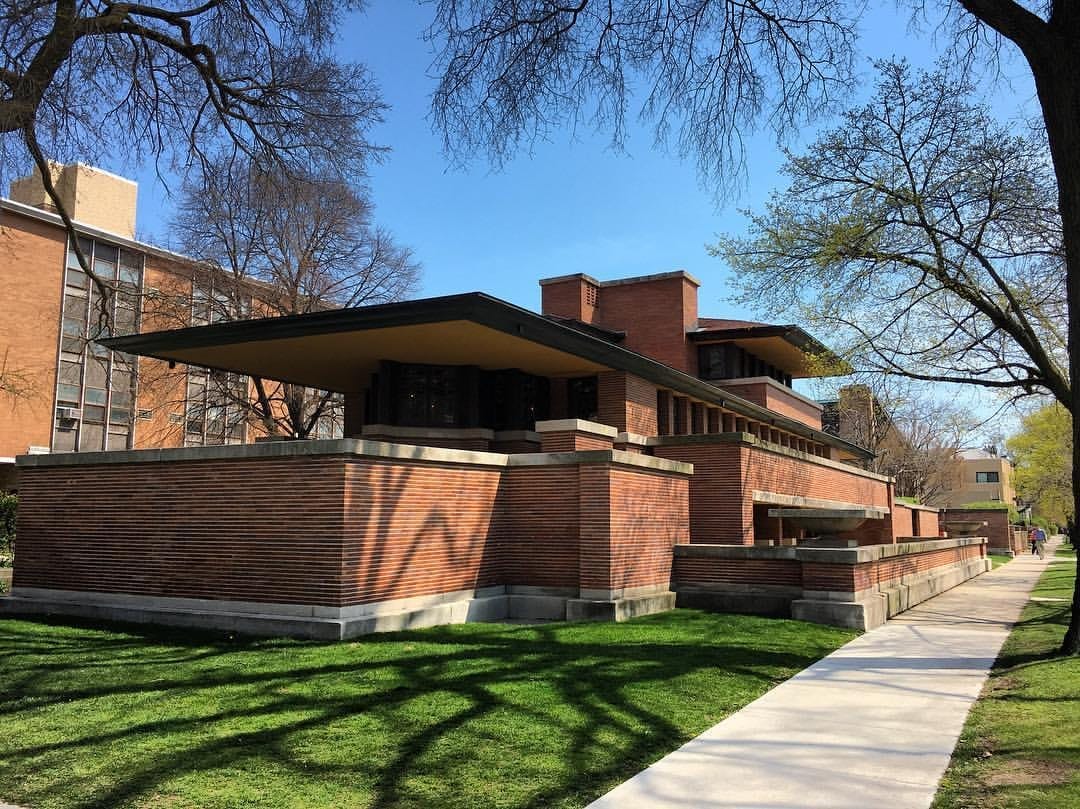
The Frederick C. Robie House is not a museum of objects — it is itself the object. Designed by Frank Lloyd Wright between 1908 and 1910 for businessman Frederick C. Robie, this three-story red-brick residence on the University of Chicago campus represents the fullest realization of Wright's Prairie Style: a philosophy of architecture that rejected Victorian verticality in favor of horizontal planes, open interiors, and a deep visual connection between a building and the flat Midwestern landscape it inhabits.
The house was designated a National Historic Landmark in 1963 and is listed on the National Register of Historic Places. In 2019, it was inscribed as a UNESCO World Heritage Site as part of the collective designation 'The 20th-Century Architecture of Frank Lloyd Wright.' That last credential matters: Robie House shares World Heritage status with eight other Wright buildings across the United States, but many scholars consider it the clearest single argument for Wright's genius.
ℹ️ Good to know
Tours are operated by the Frank Lloyd Wright Trust and run Thursday through Monday, generally between 10:00 a.m. and 3:00 p.m. The house is closed on Thanksgiving, Christmas Eve, Christmas Day, New Year's Eve, and New Year's Day. Timed entry is required — book tickets in advance at franklloydwright.org to avoid disappointment, particularly on weekends.
The Architecture: What You Are Actually Looking At
Stand on Woodlawn Avenue and the house announces itself before you've processed what you're seeing. The rooflines extend dramatically beyond the exterior walls — some overhangs reach several feet — creating deep horizontal shadows that change hour by hour. The brick is Roman brick, longer and thinner than standard, which emphasizes the horizontal lines further. There are almost no vertical decorative elements. The overall silhouette is low, wide, and anchored to the ground in a way that most homes of 1910 simply were not.
The windows are the second thing you notice. Wright designed over 170 art-glass windows and doors for the house, using amber, gold, and earthy tones in geometric patterns. They are not ornamental additions — they are structural to Wright's idea of light as a building material. In morning light, the leaded art glass throws warm amber tones across the interior floors. By mid-afternoon, the deep overhangs shade the windows enough that the interior feels sheltered and cave-like, exactly as Wright intended.
Inside, the floor plan is equally radical for its era. Wright eliminated the traditional compartmentalized rooms and created a flowing interior where the living and dining spaces bleed into one another, separated only by a central fireplace. Ceiling heights vary deliberately — low in transitional spaces, higher in gathering areas — to create a sense of compression and release as you move through the house. It is architecture designed to be experienced in motion, not static observation.
💡 Local tip
Photograph the exterior from the south-facing corner on 58th Street in the late morning, when the sun is high enough to illuminate the full sweep of the roofline without harsh shadows on the brick facade. The amber art-glass windows photograph best from the interior during a morning tour.
Tickets & tours
Hand-picked options from our booking partner. Prices are indicative; availability and final rates are confirmed when you complete your booking.
Go City | Chicago All-Inclusive Pass
From 127 €Instant confirmationFree cancellationiFLY Chicago Lincoln Park indoor skydiving experience
From 126 €Instant confirmationFree cancellationiFLY Chicago Rosemont indoor skydiving tickets
From 117 €Instant confirmationFree cancellationChicago lakefront neighbourhood bike tour
From 18 €Instant confirmationFree cancellation
The Guided Tour: What Happens and What to Expect
Entry to Robie House’s interior is by guided tour only, though a separate self-guided outdoor audio tour of the exterior is available. Tours are led by Frank Lloyd Wright Trust staff and typically last around an hour, covering the exterior, the main living floors, and selected interior spaces including the living room, dining room, and the famous art-glass details. Groups are kept relatively small, which allows guides to take questions and linger on specific architectural details.
The tour begins outside, which is worth noting if you visit in winter. Hyde Park winters are genuinely cold — temperatures routinely fall below freezing from December through February — so dress accordingly. The exterior portion of the tour is not long, but standing on Woodlawn Avenue in January wind while a guide explains cantilevered rooflines is a different experience from doing the same in May. That said, winter visits have a visual advantage: without the canopy of leafy trees along Woodlawn, the full roofline profile is unobstructed.
Inside, the house is furnished with period reproductions that approximate the original Robie commissions, though not all original pieces survive. The guide will explain the furniture, which Wright designed as part of the total composition — the chairs are famously uncomfortable if you sit in them (and you will not be invited to), because Wright prioritized their visual proportion over ergonomics. That detail alone says a great deal about what kind of architect he was.
⚠️ What to skip
Robie House has limited accessibility information publicly available. Visitors with mobility concerns, or those who need step-free access, should contact the Frank Lloyd Wright Trust directly before booking, as the building's historic fabric includes multiple floor levels and original stair configurations.
The Hyde Park Context: Why the Location Matters
Robie House sits on the edge of the University of Chicago campus, which is itself an architectural achievement — a Gothic Revival complex designed to look centuries older than it is. Walking from the campus's stone quadrangles to Robie House is a genuine architectural contrast: one tradition reaching backward for authority, the other insisting on a new American visual language. If you have time before or after your tour, the surrounding streets reward a slow walk. The Hyde Park neighborhood has a density of serious architecture that few Chicago neighborhoods can match.
Hyde Park is also home to several other major institutions worth combining with a Robie House visit. The Museum of Science and Industry is a short walk east toward the lakefront. The Institute for the Study of Ancient Cultures is on the University of Chicago campus itself, just a few blocks from Robie House, and its collection of ancient Near Eastern artifacts is genuinely world-class. Planning both institutions into the same day is a reasonable and rewarding combination.
The neighborhood around the house is quiet on weekday mornings — foot traffic is mostly students moving between university buildings, with occasional groups gathering at the Robie House entry. Weekend afternoons bring more visitors and can feel more crowded at the exterior, though the timed tour system inside keeps groups manageable.
Historical Context: The Robies, Wright, and What Happened Next
Frederick Robie was 27 years old when he commissioned the house, a bicycle and automobile parts manufacturer who wanted a modern home and gave Wright almost complete creative control. The resulting building was completed around 1910, and Robie occupied it for less than two years before financial difficulties forced him to sell. The house passed through several owners and uses over the following decades, including a stint as a dormitory annex for the Chicago Theological Seminary.
By the 1950s, the house was threatened with demolition — a moment that galvanized preservation advocates and helped establish the argument for protecting architecturally significant private buildings. The University of Chicago eventually acquired the property, and the Frank Lloyd Wright Preservation Trust (now the Frank Lloyd Wright Trust) took over stewardship and restoration. The ongoing work of restoring original finishes, furniture, and art glass is visible in the quality of the interior today, though the effort is continuous.
For visitors interested in the broader arc of Wright's work in Chicago, Robie House fits into a productive itinerary. His earlier residential work can be seen at the Frank Lloyd Wright Home and Studio in Oak Park, about 40 minutes west of downtown. Seeing both in the same trip makes the evolution of his Prairie Style clear in a way that photographs alone cannot.
Practical Details for Planning Your Visit
The house is at 5757 S. Woodlawn Avenue, at the corner of 58th Street and Woodlawn. By public transit from downtown Chicago, the Metra Electric Line from Millennium Station to the 57th Street or 59th Street stop puts you within a few minutes' walk of the house. CTA bus routes also serve the University of Chicago area from the Red Line at Garfield — check the CTA trip planner for current routing, as bus network details change. By rideshare, the trip from the Loop takes roughly 20–30 minutes depending on traffic.
Tours run Thursday through Monday, generally between 10:00 a.m. and 3:00 p.m., The house is closed Tuesday and Wednesday, and on major holidays including Thanksgiving, Christmas Eve, Christmas Day, New Year's Eve, and New Year's Day. Ticket prices are set by the Frank Lloyd Wright Trust and should be confirmed on their official website before your visit, as they are subject to change. Timed-entry tickets sell out on peak days, particularly spring and fall weekends, so booking ahead is the practical choice rather than an optional convenience.
If you are building a broader Chicago architecture itinerary, the Chicago architecture guide covers the full range from the Loop skyline to residential landmarks like Robie House. The Chicago Architecture Foundation River Cruise is a strong complement for understanding the city's downtown commercial architecture, even if it covers entirely different ground from what Robie House represents.
💡 Local tip
The gift shop at Robie House carries books and reproductions related to Frank Lloyd Wright's work — including titles specific to the Prairie Style period — that are harder to find elsewhere. If you are seriously interested in Wright, budget a few minutes there after the tour.
Insider Tips
- Book your timed-entry ticket at least a week ahead for any weekend visit between April and October. Spring and fall are peak seasons for architecture tourism in Chicago, and Robie House tours regularly sell out.
- The best exterior light for photography is late morning on the south and east facades, when the sun catches the horizontal brickwork and throws the overhanging rooflines into relief. Overcast days actually work well too, as they eliminate harsh shadows and reveal the true color of the Roman brick.
- Combine the Robie House tour with a visit to the Institute for the Study of Ancient Cultures on the same day — it is a four-minute walk away, free to enter, and one of the genuinely underappreciated institutions in Chicago. The contrast between ancient Mesopotamian objects and Wright's 1910 modernism makes for an unusual but coherent day.
- Ask your tour guide specifically about the built-in furniture and cabinetry — these are sometimes passed over quickly, but Wright's integration of furniture into the architecture is one of the features that distinguishes Robie House from merely having nice rooms.
- If you are visiting in winter, the leafless trees along Woodlawn Avenue actually improve the exterior view. The full horizontal profile of the house is clearest from November through March, before the street-level canopy fills in.
Who Is Robie House For?
- Architecture enthusiasts and students of American design history
- Travelers building a Frank Lloyd Wright itinerary across Chicago and Oak Park
- Anyone with a serious interest in how domestic space was reimagined in the early 20th century
- Visitors to Hyde Park combining the tour with ISAC or Museum of Science and Industry
- Photographers interested in modernist architecture and the challenge of capturing interior natural light
Nearby Attractions
Other things to see while in Hyde Park:
- DuSable Black History Museum and Education Center
Founded in 1961, the DuSable Black History Museum and Education Center is the nation's oldest independent African American museum. Set inside Washington Park on Chicago's South Side, it holds more than 15,000 works spanning art, history, and cultural memory — and rewards anyone willing to spend a full afternoon.
- Wooded Island & Jackson Park
Jackson Park is a 551-acre lakefront park on Chicago's South Side, designed by Frederick Law Olmsted and transformed into the grounds of the 1893 World's Columbian Exposition. Today it holds Wooded Island, the Osaka Garden, the Museum of Science and Industry, and one of the city's best birding spots — all free to enter.
- Museum of Science and Industry
The Griffin Museum of Science and Industry occupies one of only two surviving buildings from the 1893 World's Columbian Exposition, sitting at the edge of Jackson Park in Hyde Park. With hundreds of interactive exhibits across floors of Beaux-Arts grandeur, it rewards a full day and suits visitors of almost every age.
- Institute for the Study of Ancient Cultures
The Institute for the Study of Ancient Cultures Museum (ISAC) on the University of Chicago campus in Hyde Park houses one of North America's most significant collections of ancient Near Eastern and North African artifacts. With more than 350,000 objects spanning Egypt, Mesopotamia, Persia, and beyond, this is a serious museum for curious travelers who want depth over spectacle.