Numismatic Museum of Athens: Ancient Coins in Schliemann's Mansion
The Numismatic Museum of Athens houses roughly 500,000–600,000 coins, medals, gems, and weights spanning three millennia of monetary history, all inside the spectacular neoclassical Iliou Melathron mansion built for archaeologist Heinrich Schliemann. It sits on Panepistimiou Street, a short walk from Syntagma Square, and rewards visitors who appreciate both Greek history and 19th-century architectural grandeur.
Quick Facts
- Location
- Panepistimiou 12, Syntagma, Athens
- Getting There
- Metro: Syntagma (Lines 2 & 3) or Panepistimio (Line 2); Trolleybus lines 2, 3, 4, 11, 13
- Time Needed
- 1–2 hours
- Cost
- From €10 for adults in the current season; verify current prices at nummus.gr
- Best for
- History lovers, architecture enthusiasts, coin collectors, quiet museum days
- Official website
- www.nummus.gr/en
A Museum That Earns Your Attention Twice Over
Most visitors to central Athens walk past the Numismatic Museum of Athens without a second glance. The iron gate on Panepistimiou Street, flanked by stone columns and a classical frieze, looks like the entrance to a government ministry rather than a museum. That misconception is exactly why the people who do step inside are so often surprised.
The building itself is the first revelation. The Iliou Melathron, completed around 1878–1880, was designed by architect Ernst Ziller as the private residence of Heinrich Schliemann, the German archaeologist who excavated Troy and Mycenae. Schliemann named it after the Greek words for "Palace of Ilion" (Troy), and he decorated the interior with friezes, mosaics, painted ceilings, and mythological motifs that still cover every surface. The state purchased the mansion after Schliemann's death, and the Numismatic Museum has occupied it since 1998.
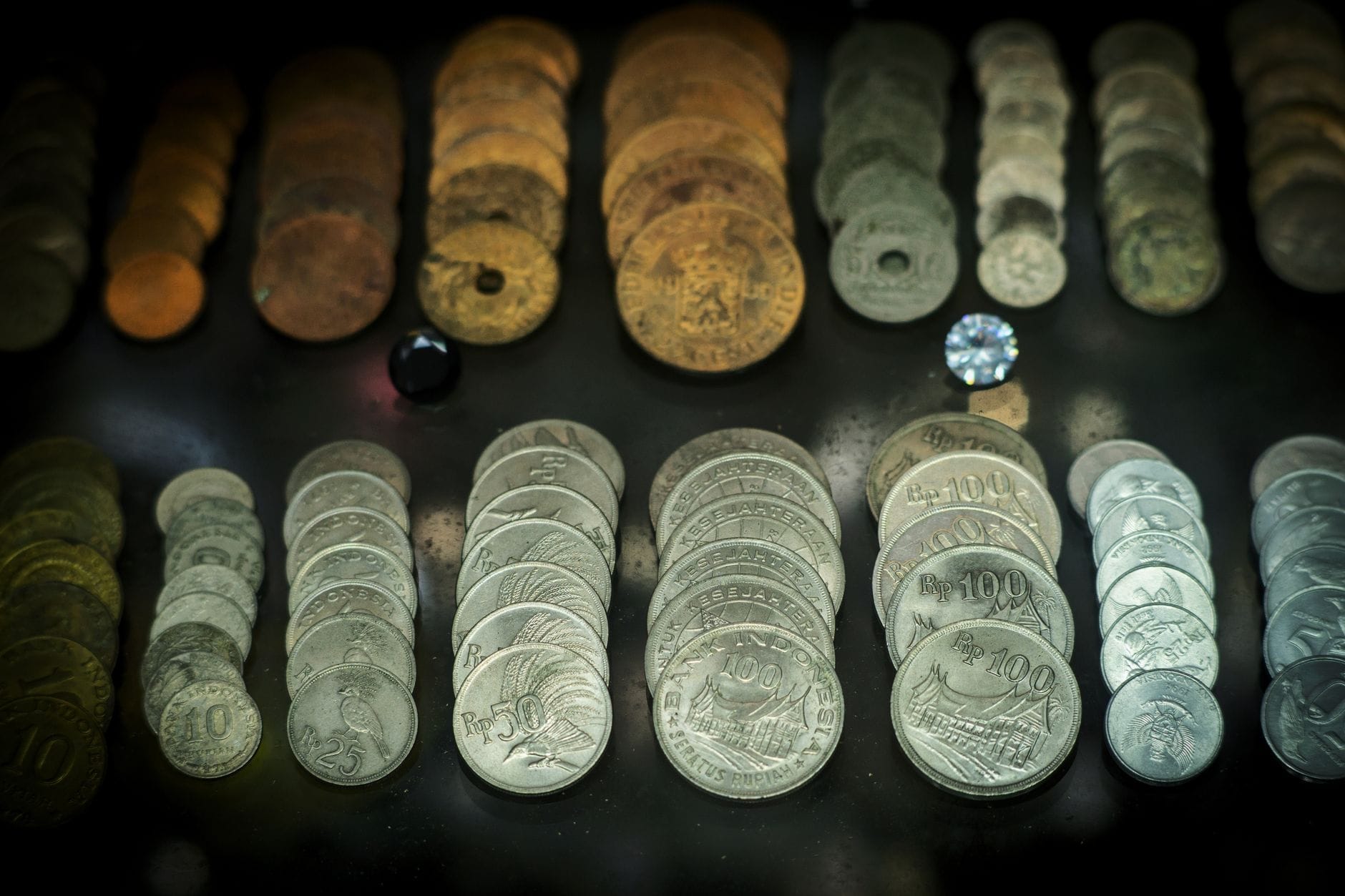
The second revelation is the collection itself: more than 500,000 objects, making this one of the largest coin collections in the world. The range is staggering, from pre-monetary exchange objects and ancient Greek silver coins to Byzantine gold nomismata, medieval European currency, Ottoman-era pieces, and coinage from the modern Greek state. If you have any interest in how economies and empires rise and fall, this is three millennia of that story in miniature.
💡 Local tip
Opening hours are Wednesday through Monday, approximately 08:30–15:30, with Tuesday closed. Hours can vary seasonally, so check the official site at nummus.gr before you go. Arriving by 09:00 means you'll have the ground-floor rooms almost entirely to yourself.
The Building: Schliemann's Stage Set in Stone
Even for visitors who have no particular interest in coins, the Iliou Melathron justifies the entrance fee on architectural grounds alone. Ernst Ziller was one of the most prolific architects of 19th-century Athens, responsible for dozens of neoclassical buildings across the city, and this mansion was among his most personal commissions. Schliemann's own obsession with ancient Greece shaped every design decision: the exterior is ringed with a painted Pompeian frieze, the entrance hall rises to a colonnade of marble columns, and the floor-to-ceiling decoration gives rooms the quality of elaborate stage sets.
The main staircase is worth pausing at. Light filters down through an atrium skylight and catches the polished stone in a way that changes completely depending on the time of day. Morning visits, when the low light enters at an angle, make the painted surfaces glow amber and ochre. By midday the skylight overhead flattens the tone, and the detail in the carved capitals becomes easier to study without squinting.
Schliemann's connection to the ancient world also gives the building an extra layer of historical interest for anyone following Mycenae or the archaeology of the Trojan War. He excavated the site that changed understanding of Bronze Age Greece, and this house was his Athenian trophy, built at the height of his fame.
Tickets & tours
Hand-picked options from our booking partner. Prices are indicative; availability and final rates are confirmed when you complete your booking.
Guided tour of the Acropolis, Parthenon and Museum in Athens
From 50 €Instant confirmationFree cancellationAthens: Temple of Olympian Zeus E-ticket with audio tour on your phone
From 10 €Instant confirmationAthens full-day tour with Acropolis and Cape Sounion
From 92 €Instant confirmationFree cancellationAthens National Archaeological Museum e-ticket and audio tour
From 22 €Instant confirmation
The Collection: Three Millennia of Money
The Numismatic Museum was founded in 1834, the same year as the National Archaeological Museum, making it one of the oldest state museums in Greece. The collection has grown to include roughly 500,000–600,000 objects: coins, lead seals, weights, medals, and engraved gems. The permanent galleries are organized chronologically and by civilization, and the labeling is clear enough that you do not need specialist knowledge to follow the progression.
The ancient Greek section is the strongest part of the collection. Early coins from the 7th century BC, when coinage was first developing across the Aegean, sit alongside the famous silver tetradrachms of Athens with their owl reverse. These coins circulated as a kind of international reserve currency across the ancient Mediterranean world, and seeing the originals is qualitatively different from photographs: the detail in the owl's feathers, the olive sprig, the incuse square on the reverse, all of it has a sharpness that reproduction dulls.
Byzantine gold coins, Ottoman silver, and the early coinage of the modern Greek state all get dedicated gallery space. The breadth is a genuine strength. Coins are small, dense carriers of historical information: they record who held power, what iconography was politically acceptable, how trade routes shifted, and when economies collapsed. The museum's arrangement makes those connections navigable.
ℹ️ Good to know
Photography is generally permitted in the permanent collection without flash, but confirm at the entrance desk, as restrictions sometimes apply to specific galleries or temporary exhibitions.
How the Experience Changes Through the Day
The museum draws a modest but steady flow of visitors: mostly history enthusiasts, school groups on weekday mornings, and the occasional coin collector who has come specifically to study a particular era or mint. It is not a crowded institution. Even at peak times, the galleries feel quieter than almost anywhere else in central Athens, and the mansion's thick stone walls mean the temperature inside stays noticeably cooler than the street.
Mornings from opening until around 11:00 are the calmest. The courtyard garden at the back of the building, visible from several ground-floor windows, catches early light in a way that invites you to slow down rather than rush through rooms. School groups tend to arrive mid-morning and move through quickly, so if you time your visit for 09:00 or wait until after 13:00, the more intimate galleries upstairs feel genuinely private.
The museum closes in the early afternoon, so this is not a place to save for the end of a long sightseeing day. Plan for a morning visit and budget at least 90 minutes if you want to read the labels rather than skim.
Getting There and Practical Details
The museum sits on Panepistimiou Street (also called Eleftheriou Venizelou), the wide central boulevard connecting Syntagma Square to Omonia. The nearest Metro stations are Syntagma (Lines 2 and 3), about a 5-minute walk east, and Panepistimio (Line 2), which is slightly closer and almost directly on the route. Trolleybus lines 2, 3, 4, 11, and 13 run along Panepistimiou and stop nearby. If you are already exploring the Syntagma area, the museum is an easy addition to the same half-day.
Admission pricing currently starts from €10 for adults, with reduced tickets at €5, and prices may vary by season. Concessions are typically available for students, seniors, and EU citizens under 18. Current pricing and any free-entry days should be confirmed on the official website before visiting, as these details change.
The building is a historic 19th-century mansion with multiple floors and original architecture. The entrance level is accessible from the street, and there is an elevator providing access for visitors with mobility problems, although detailed information about which galleries are fully accessible is limited in public sources. Visitors with specific accessibility needs should contact the museum directly via the official website before planning their visit.
⚠️ What to skip
The museum closes on Tuesdays. It also closes in the early afternoon on most open days, typically by 15:30, though in summer some days have extended hours. Do not arrive after 14:00 expecting a full visit.
Honest Assessment: Who Will Love This, Who Will Not
The Numismatic Museum of Athens rewards visitors who come with curiosity and a little patience. If you are interested in Greek history beyond the Acropolis and the Parthenon, this is the kind of place that fills in real detail. If you have already visited the National Archaeological Museum and want to go deeper on economic and monetary history, this is a natural complement.
For visitors with young children or for those who find coin collecting dry, the collection may not hold attention for long. The exhibits are detailed and text-heavy; the objects are small; and the interactive elements are limited. The building is the experience that transcends specialist interest, and if the architecture alone is enough to justify 30 minutes, then the collection is a bonus.
If you are planning a broader day around the city center, the museum pairs naturally with the Benaki Museum a few blocks further toward Kolonaki, or with a walk along Panepistimiou to the neoclassical trilogy of the University, Academy, and Library buildings. For a structured approach to how the museum fits into a wider Athens itinerary, see the Athens ancient sites guide.
Photography Tips
The interior of the Iliou Melathron is one of the most photogenic spaces in Athens that most visitors never see. The painted ceilings, Pompeian-style friezes, and the light well above the main staircase all reward a wide-angle lens or a phone camera set to the widest available frame. Details in the carved capitals and floor mosaics are worth close-up shots if you move slowly through the ground-floor rooms.
Coin photography through display glass is difficult without a flash, which is not permitted. The best results come from positioning yourself to eliminate reflections: angle your camera slightly off-center to the case glass rather than shooting straight on. Morning light from the courtyard-facing windows helps in the ground-floor galleries.
Insider Tips
- The courtyard garden at the rear of the Iliou Melathron is sometimes accessible and provides a quiet spot that almost no one else stops at. Ask at the entrance desk whether it is open during your visit.
- If you are visiting multiple Athens museums, check whether any combined ticket or discount applies. The Numismatic Museum is not always included in standard combined passes, so verify at the entrance.
- The museum shop carries specialized numismatic publications not available in general Athens bookshops. If you are interested in ancient Greek coinage as a research subject, browse it before you leave.
- For the best architectural light on the main staircase and upper landing, visit within an hour of opening. Midday light through the skylight is flatter and less dramatic.
- Panepistimiou Street itself is worth walking in both directions from the museum. The three neoclassical buildings of the University of Athens, the Academy of Athens, and the National Library (the so-called Athenian Trilogy) are within a short walk and form one of the most coherent sequences of 19th-century civic architecture in Greece.
Who Is Numismatic Museum of Athens For?
- History enthusiasts who want to understand Greek economic and political history through primary objects
- Architecture lovers drawn to 19th-century neoclassical interiors and the work of Ernst Ziller
- Travelers who have covered the major sites and are looking for a quieter, more specialist museum experience
- Anyone with a specific interest in ancient Greek, Byzantine, or modern Greek coinage and monetary history
- Visitors seeking air-conditioned refuge and calm on a hot Athens afternoon
Nearby Attractions
Other things to see while in Syntagma & the Historic Centre:
- Athenian Trilogy (Academy, University, Library)
Three neoclassical monuments designed by the Hansen brothers line central Athens' Panepistimiou Street, forming one of the most coherent 19th-century architectural ensembles in Europe. The Academy, University, and National Library are free to view from outside and take less than an hour to walk, yet they reward careful attention from anyone interested in architecture, modern Greek history, or the idea of what a newly independent nation chose to build first.
- Hellenic Parliament & Tomb of the Unknown Soldier
Standing at the head of Syntagma Square, the Hellenic Parliament occupies the Old Royal Palace, a neoclassical landmark built between 1836 and 1840. In front of it, the Tomb of the Unknown Soldier is guarded around the clock by Evzones in ceremonial uniform, offering one of the most visually striking public rituals in Greece. Free guided tours of the building are offered on specific days and months and require advance booking, but even without booking, the square-level spectacle rewards any visit.
- National Garden of Athens
The National Garden of Athens is a 15.6-hectare historic public park in the heart of the city, free to enter and open every day from sunrise to sunset. Originally the private gardens of the Royal Palace, it now offers shaded paths, a small zoo, ancient fragments, and a duck pond within walking distance of Syntagma Square.
- Temple of Olympian Zeus
The Temple of Olympian Zeus took nearly 700 years to complete and was once the largest temple in Greece. Today, 15 of its original 104 Corinthian columns still rise above central Athens (with a 16th lying fallen on the ground), offering one of the most atmospheric ancient sites in the city. Here is everything you need to visit it well.