Nikko Toshogu Shrine: The Ultimate Day Trip from Tokyo
Nikkō Tōshō-gū is Japan's most ornate Shinto shrine complex, set deep in cedar forests north of Tokyo and dedicated to the founder of the Edo shogunate, Tokugawa Ieyasu. A full day from Tokyo delivers ancient stone lanterns, intricate lacquered gates, and mountain air that feels completely removed from the capital. This guide covers everything you need to plan the trip without wasting a single hour.
Quick Facts
- Location
- 2301 Sannai, Nikko-shi, Tochigi Prefecture, Japan
- Getting There
- Tobu Nikko Line from Asakusa (Tobu Nikko Station, ~2 hrs); or JR Tohoku Shinkansen to Utsunomiya, then JR Nikko Line to JR Nikko Station (~50 min more)
- Time Needed
- Full day (6–8 hours including travel); minimum 2–3 hrs at the shrine complex
- Cost
- Adults ¥1,600 / Children ¥550; plus transport from Tokyo (~¥3,000–¥6,000 depending on route)
- Best for
- History enthusiasts, architecture lovers, autumn foliage seekers, cultural day-trippers
- Official website
- www.toshogu.jp
What Nikko Actually Is
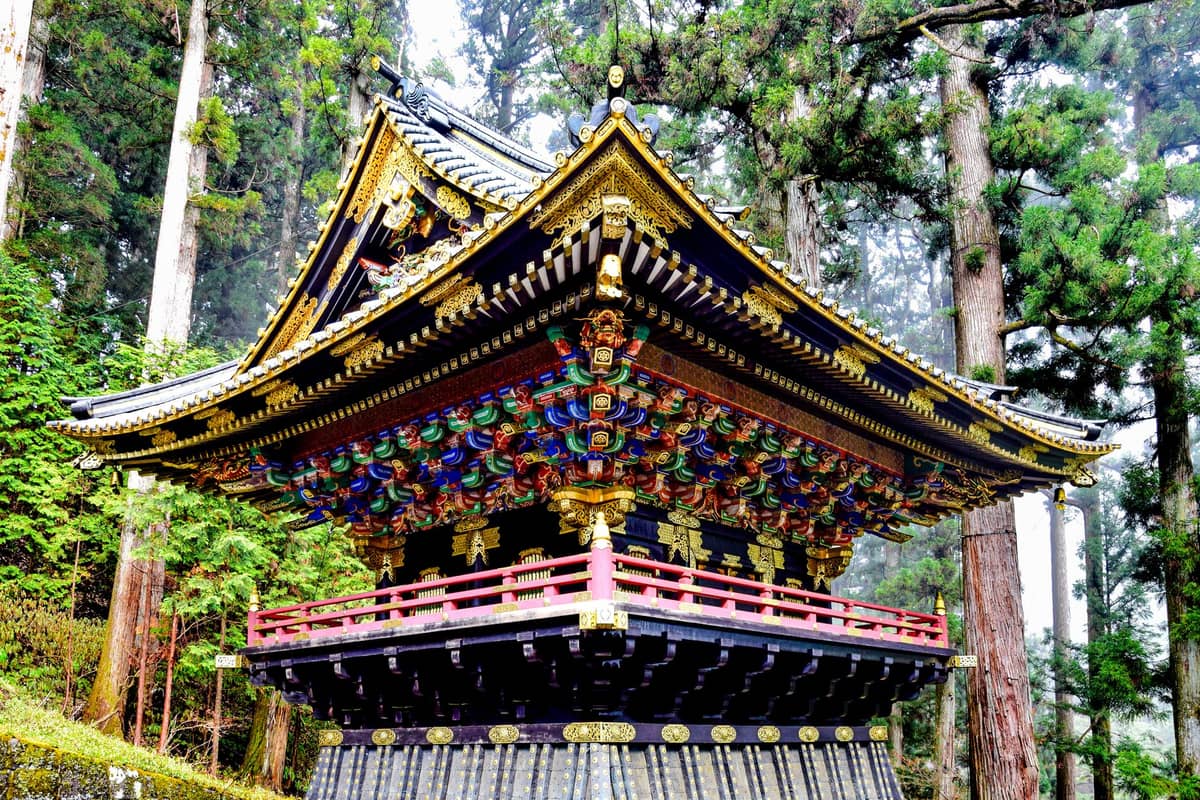
Nikkō Tōshō-gū is a Shinto shrine complex in the mountain town of Nikko, roughly 130 kilometers north of central Tokyo in Tochigi Prefecture. It was built to enshrine Tokugawa Ieyasu, the warlord who unified Japan in the early 17th century and established the Tokugawa shogunate that would govern the country for over 260 years. The complex was expanded by his grandson Tokugawa Iemitsu into the elaborately decorated ensemble that stands today, completed in 1636.
The broader Nikko area holds multiple UNESCO World Heritage Sites under the collective designation 'Shrines and Temples of Nikko,' recognized in 1999. This includes Toshogu itself, the nearby Futarasan Shrine, and Rinnoji Temple. Most day-trippers focus on Toshogu, which is the centerpiece, but the adjacent sites are worth the extra steps.
Nikko is frequently listed as one of the top day trips from Tokyo, and that reputation is earned. The combination of UNESCO-listed architecture, mountain scenery, and genuine historical weight is hard to match within a single day's reach of the capital.
The Shrine Complex: What You'll Actually See
The approach to Toshogu follows a broad stone-paved path lined with 200-year-old cedar trees, many of them donated by regional lords during the Edo period. The air here carries the faint resinous smell of cedar even in summer, and the canopy blocks enough light to keep the path noticeably cool compared to the town below. Stone lanterns donated by feudal lords flank both sides of the route, many of them mossy and slightly tilted from centuries of mountain weather.
The first major structure you encounter is the Omotemon (front gate), a two-story niomon gate guarded by muscular wooden Ni-o figures. From here the path climbs stone staircases through successive courtyards, each gate more elaborately decorated than the last. The famous Yomeimon Gate, sometimes called the 'Gate of Sundown' because a person could stare at it until dusk without seeing everything, is covered in more than 500 painted and gilded carvings: dragons, phoenixes, flowers, mythical animals, and human figures drawn from Chinese and Japanese folklore.
Look closely at one of the columns of the Yomeimon: it was deliberately built with one of its carved patterns inverted, a purposeful imperfection based on the belief that perfection invites destruction. This kind of intentional asymmetry appears at other points in the complex as well, once you know to look for it.
The famous Sleeping Cat (Nemuri-neko) carving sits above a small doorway near the inner sanctuary. It is a compact carving, smaller than most visitors expect, often requiring you to look up at an angle through a crowd. The carving is attributed to sculptor Hidari Jingoro. Behind the doorway, a long stone staircase climbs through dense forest to the mausoleum of Ieyasu himself, a comparatively plain bronze urn, which makes a striking contrast to the extravagance below.
💡 Local tip
The mausoleum staircase behind the Sleeping Cat is a steep climb but rarely crowded, and the view back down through the forest from the top justifies the effort. Budget 20 minutes for the round trip.
Tickets & tours
Hand-picked options from our booking partner. Prices are indicative; availability and final rates are confirmed when you complete your booking.
Nikko UNESCO Shrine and Nature View 1-Day Tour from Tokyo
From 78 €Instant confirmationFree cancellationNikko full-day tour from Tokyo with private driver and local guide
From 683 €Instant confirmationFree cancellationNikko Toshogu Shrine and Kegon Waterfall Tour from Tokyo
From 98 €Instant confirmationFree cancellationNikko, Kegon Waterfall and Chuzenji Lake Full-Day Guided Tour
From 85 €Instant confirmationFree cancellation
How the Experience Changes by Time of Day
Arriving early, ideally at or just after 9:00 opening, makes a meaningful difference. Tour buses from Tokyo typically arrive from 10:30 onward, and the Yomeimon Gate area becomes congested by late morning. In the first hour of opening, the stone courtyards are quiet enough that you can hear the wind moving through the cedar canopy above. The light in early morning falls at a low angle that catches the gold lacquering on the gates and brings out the red and blue paint on carved surfaces more vividly than midday overhead light does.
By early afternoon, particularly on weekends and national holidays, the central areas around the Yomeimon and Omotemon can feel genuinely crowded, with queues forming to photograph the most famous carvings. The outer areas, including the Rinnoji Temple complex just downhill and the approach to Futarasan Shrine, tend to stay quieter throughout the day.
Late afternoon, in the hour before closing, the crowds thin again and the light shifts warmer. If you have the flexibility to stay into late afternoon, the atmosphere in the cedar approaches becomes more atmospheric as shadows lengthen. Note the seasonal closing time difference: from November through March the shrine closes at 16:00, and last entry is 30 minutes before closing.
Getting There from Tokyo
The Tobu Nikko Line is the most straightforward option for most visitors. Tobu Asakusa Station, adjacent to Asakusa Station on the Tokyo Metro Ginza and Asakusa lines, runs limited express services (Spacia and Revaty trains) directly to Tobu Nikko Station. Journey time on the limited express is approximately 1 hour 50 minutes, with reserved seats. The Tobu All Nikko Pass covers this journey plus unlimited use of local buses in Nikko and is worth calculating against your individual ticket costs.
The JR alternative runs the Tohoku Shinkansen from Tokyo Station to Utsunomiya (approximately 50 minutes), then the JR Nikko Line to JR Nikko Station (approximately 45–50 minutes more). If you hold a JR Pass, this route is covered. From Asakusa, the Tobu route is generally simpler and faster door-to-door.
From either Nikko station (Tobu Nikko and JR Nikko are a short walk apart), local buses run up to the shrine area. The walk from the stations to the shrine takes roughly 30 minutes through the town center if you prefer to go on foot, and many visitors do this as a gentle warm-up with views of the Daiya River and the red Shinkyo Bridge along the way.
⚠️ What to skip
Tobu limited express services require seat reservations and sell out on weekends and during autumn foliage season (late October to mid-November). Book in advance through the Tobu railway app or at the station.
Autumn Foliage and Seasonal Considerations
Nikko is one of the most visited autumn foliage spots in the Kanto region. Peak color typically falls from mid-October into early November, when the cedar-and-deciduous forest mix around the shrine turns red and gold. This is genuinely spectacular, particularly along the Irohazaka switchback road above the town toward Lake Chuzenji, but it comes with significant crowds and accommodation prices to match. If autumn foliage is your primary goal, planning your Tokyo autumn trip well ahead and booking trains at least two weeks in advance is essential.
Spring, from late April into May, is a quieter but equally rewarding time to visit. New cedar growth is a vivid pale green, azaleas bloom around the lower shrine precinct, and temperatures in the mountain town sit several degrees cooler than Tokyo, making the walk through the complex comfortable. Winter visits are possible and the snow-dusted rooflines against the red lacquered gates can be striking, but reduced hours and the need for warm layers should factor into planning.
Summer (July and August) offers the advantage of long daylight hours but comes with humidity and heat. The mountain elevation gives Nikko a few degrees of relief compared to Tokyo, and the forest cover over the shrine approaches helps, but it is still warm. Rainy season in June brings mist that can make the cedar avenues feel genuinely atmospheric, though major rain can obscure architectural details.
Practical Details and What to Bring
The shrine opens daily from 9:00 to 17:00 between April and October, and 9:00 to 16:00 from November through March. Last entry is 30 minutes before closing. Admission for adults is ¥1,600 and ¥550 for children. A disability discount is available with presentation of a Japanese disability certificate, and wheelchair access is provided at the site.
Wear shoes you can walk on uneven stone paving for two to three hours comfortably. The staircase to the mausoleum is steep enough that sandals with no heel support are genuinely awkward. Layers are worth carrying even in summer: the forest shade and mountain elevation can make shaded areas noticeably cooler than the town below.
Photography inside certain inner sanctuary buildings is restricted. The main external structures, courtyards, and gates are generally photographable. A 50mm equivalent focal length is useful for detail shots of carvings; wider angles suit the scale of the gate complexes. Early morning light from the east illuminates the Yomeimon frontally from roughly 9:00 to 11:00.
ℹ️ Good to know
Cash is accepted at the ticket gate. Card acceptance at food stalls and smaller shops in the area can be inconsistent, so carry yen for the day. There are ATMs at Japan Post offices near Nikko Station.
For a fuller picture of planning temple and shrine visits in the Tokyo region, the guide to Tokyo's best temples and shrines provides useful context for comparing Nikko against closer options like Senso-ji and Meiji Jingu.
Who Might Want to Skip Nikko
Nikko is not for travelers with limited time who feel obligated to tick it off a list but have no genuine interest in historical architecture or Edo-period history. The round trip from Tokyo consumes at minimum four hours of travel time. If your priorities lie in contemporary Tokyo, food culture, or urban neighborhoods, that time is almost certainly better spent in the city itself.
Visitors with significant mobility limitations should note that while the lower complex is accessible, the mausoleum staircase is steep and long, meaning a significant portion of the site is not easily reached without good mobility. The site offers wheelchair access, but verify current conditions with the shrine before the visit.
Travelers whose Tokyo itinerary is already packed with cultural visits might find Nikko is a step too far. Comparing it against shorter day trips like Kamakura or Kawagoe is worthwhile if you have one day trip slot and varying interests.
Insider Tips
- Buy your Tobu limited express tickets from outside Japan before you arrive: Tobu offers foreign visitor discount passes for Nikko that reduce overall transport costs, but you still need to pay the separate limited express seat surcharge.
- The Rinnoji Temple, just below the Toshogu entrance, is often overlooked by day-trippers rushing uphill. Its Sanbutsudo hall houses three large gilded Buddhist statues and is covered by a separate ticket. It adds 30 minutes and is worth it.
- The stone lantern-lined approach to Toshogu from the main road (Omote-sando) is more atmospheric than the bus-stop entry point higher up the hill. Start from the bottom and walk the full approach even if buses can take you partway.
- On weekday mornings outside peak season, you can sometimes have the cedar approach almost entirely to yourself for 20 to 30 minutes after opening. This is the version of Nikko most worth pursuing.
- Pack lunch or buy it in Nikko town before heading up. The food options immediately around the shrine complex are limited and tourist-priced. Nikko's main street, a 10-minute walk from the shrine, has better options including yuba (tofu skin) dishes, a regional specialty.
Who Is Nikko For?
- History and architecture enthusiasts wanting depth beyond Tokyo's urban sites
- Autumn foliage seekers looking for mountain color within a day trip
- Photographers focused on ornate religious architecture and forest landscapes
- First-time Japan visitors with at least five days in the region who want historical contrast to the modern city
- Travelers combining Nikko with Lake Chuzenji and the Kegon Falls for a longer mountain day
Nearby Attractions
Combine your visit with:
- Akasaka Palace (State Guest House)
The State Guest House, Akasaka Palace is Japan's principal diplomatic residence and one of the few Western-style palaces in Asia open to the public. Built in neo-baroque style for the Crown Prince in the early 20th century, it now receives heads of state and, on select days, ordinary visitors. The combination of ornate gilded interiors, formal French gardens, and a Japanese-style annex makes it one of the most architecturally unusual stops in Tokyo.
- Edo-Tokyo Open Air Architectural Museum
Spread across the grounds of Koganei Park, the Edo-Tokyo Open-Air Architectural Museum rescues and reassembles more than 30 historic structures spanning the Edo period through the early 20th century. From a dismantled farmhouse to a reconstruction of a Showa-era Tokyo streetscape, it is one of the most thoughtful and undervisited cultural sites in the metropolitan area.
- Enoshima
A small island off the Shonan coast of Kanagawa Prefecture, Enoshima packs a surprising amount into a short walk: a three-part Shinto shrine, ancient sea caves, a hilltop botanical garden, a lighthouse observation tower, and seafood stalls lining a stone-paved shopping street. It works as a half-day excursion or a full day if you combine it with nearby Kamakura.
- Gotokuji Temple
Gotokuji Temple in Setagaya is a working Soto Zen Buddhist temple that happens to be one of the claimed birthplaces of the maneki-neko, Japan's iconic beckoning cat. Hundreds of white ceramic cats line the shelves of a dedicated shrine, creating one of Tokyo's most quietly striking visual spectacles. Entry is free, crowds are manageable, and the surrounding grounds offer genuine calm.