Kawagoe (Little Edo): The Edo-Period Town a Short Train Ride from Tokyo
Kawagoe, nicknamed Koedo or 'Little Edo,' is a castle town in Saitama Prefecture that preserved its Edo-period merchant district while the rest of Japan modernized. About 30 minutes from central Tokyo, it offers free-to-walk warehouse streets, a famous bell tower, multiple small museums, and one of the country's best sweet-potato snack cultures.
Quick Facts
- Location
- Kawagoe City, Saitama Prefecture (approx. 35–40 km northwest of central Tokyo)
- Getting There
- Kawagoe Station (JR Kawagoe Line / Tobu Tojo Line) or Hon-Kawagoe Station (Seibu Shinjuku Line) — both within 15–20 min walk or short bus ride to Kurazukuri Street
- Time Needed
- Half day (3–4 hours) to full day if including temples, museums, and Candy Lane
- Cost
- Free to walk the main district; individual museums and attractions typically ¥200–¥500 each
- Best for
- History lovers, architecture enthusiasts, day-trippers from Tokyo, food explorers
- Official website
- www.koedo.or.jp/en
What Kawagoe Actually Is
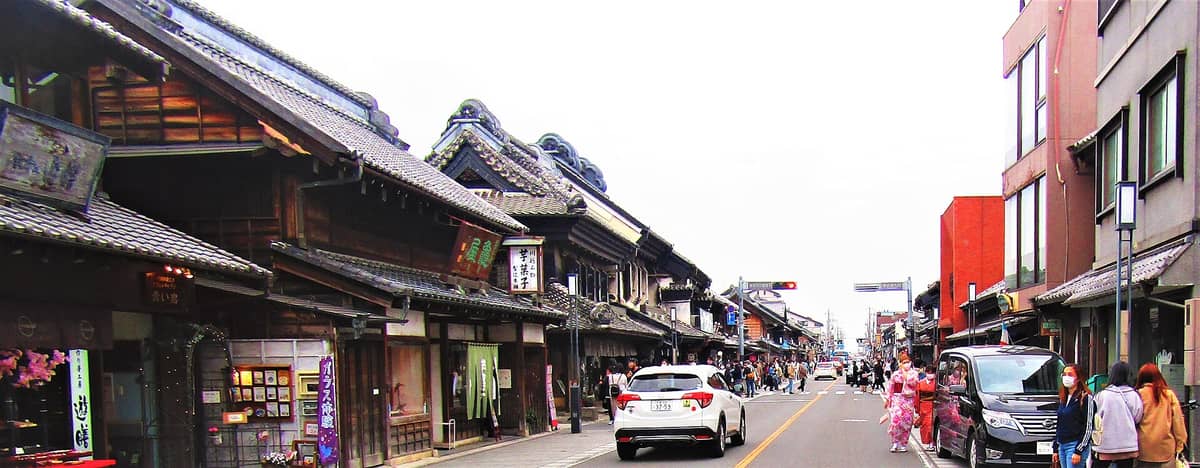
Kawagoe earned its 'Little Edo' nickname honestly. While most Japanese cities replaced their pre-modern merchant quarters with concrete and glass during the postwar building boom, Kawagoe's Kurazukuri ('warehouse construction') district survived largely intact. The result is a 400-meter stretch of thick-walled kura storehouses, their dark mud-plaster facades and curved ridge tiles giving the street a weight and texture that modern reconstructions never quite replicate.
The district isn't a theme park or an open-air museum. These are actual streets in a working city of around 355,000 people, and the warehouses that once stored rice, miso, and silk now sell sweet-potato snacks, lacquerware, and seasonal wagashi. That dual reality, preserved architecture housing contemporary commerce, is what makes Kawagoe genuinely interesting rather than merely photogenic.
Officially known as Koedo Kawagoe (小江戸川越), the area sits in Saitama Prefecture about 30 minutes from central Tokyo by express train. It pairs naturally with a wider look at day trips from Tokyo, and for architecture enthusiasts, it complements the Edo-Tokyo Open Air Architectural Museum as a study in how different preservation approaches feel on the ground.
The Kurazukuri District: Reading the Architecture
The kura warehouses that define Kawagoe's skyline were built primarily after a devastating fire in 1893. Merchants rebuilt deliberately in this thick-walled, fireproof style, using layers of plaster over mud and bamboo to create structures that could withstand future blazes. Walking the main street, you notice the walls have a slight roughness under the dark plaster coat, and the heavy wooden shutters on each storefront are designed to be closed and sealed quickly if fire approached.
The buildings are mostly two stories, their rooflines punctuated by decorative ridge ornaments called shachihoko, which resemble fish with tiger heads, a motif borrowed from Nagoya Castle architecture and carried into merchant culture as a protective symbol. Look up at the eave undersides: the exposed timber shows real age, with darkening that no artificial aging treatment achieves convincingly.
Toki no Kane, the Bell Tower, stands at the northern end of the district and has become Kawagoe's defining image. The current wooden tower dates to the late 1800s and still rings four times daily at 6:00am, noon, 3:00pm, and 6:00pm. Hearing it in person, the sound is lower and more resonant than photographs suggest, the kind of tone that carries through the surrounding streets and gives the district an audio identity as distinct as its visual one.
💡 Local tip
Photography tip: The Bell Tower is best photographed from the small alley directly south, where you get the full tower framed by warehouse rooflines. Early morning gives clean light and no crowds blocking the foreground. By 10am, tour groups position themselves directly in front.
Tickets & tours
Hand-picked options from our booking partner. Prices are indicative; availability and final rates are confirmed when you complete your booking.
Tsukiji Fish Market Walking Food Tour
From 40 €Instant confirmationFree cancellationMt.Fuji,Owakudani, Hakone Cruise & Ropeway, Oshino Hakkai 1-Day Trip
From 54 €Instant confirmationFree cancellationTour to Mt. Fuji Area, Oshino Hakkai and Kawaguchi Lake from Tokyo
From 57 €Instant confirmationFree cancellationNikko UNESCO Shrine and Nature View 1-Day Tour from Tokyo
From 78 €Instant confirmationFree cancellation
How the District Changes Through the Day
Arriving before 9am means having the main street almost entirely to yourself. The shops don't open until around 10:00–10:30, so this hour belongs to locals walking dogs, shopkeepers arranging window displays, and the occasional delivery truck threading carefully through the narrow lanes. The plaster facades look different in morning light than they do at midday, the texture more pronounced, the dark pigment picking up warmth from the low sun.
Between 10am and 2pm the district is at its most active. Shops are open, street-food vendors are selling, and if it's a weekend or Japanese public holiday, the main street fills quickly. This is when Kawagoe is at its most energetic but also its most crowded: some sections of Kurazukuri Street narrow to the point where two groups walking in opposite directions require patience. Weekdays are noticeably quieter.
By 4pm, shops begin closing and the tourist wave recedes. The late-afternoon light turns the dark walls a warmer brown, and the street takes on a calmer atmosphere. Most individual museums close by 16:30–17:00, so plan museum visits for mid-morning or early afternoon. After 6pm, the district is nearly empty, which suits visitors who want architectural photographs without figures, though almost nothing is open at this point.
⚠️ What to skip
Weekend afternoons in cherry blossom season (late March to mid-April) and during the Kawagoe Festival in October draw very large crowds. If you visit during these periods, arrive by 9am or accept that the experience will be significantly more congested.
What to Do Beyond Kurazukuri Street
菓子屋横丁 (Kashiya Yokocho), known in English as Candy Lane or Sweets Lane, runs off the main district and is lined with small shops selling traditional Japanese confectionery, particularly sweet-potato-based products. Sweet potato has been central to Kawagoe's food identity since the Edo period, when the city's fertile soil made it a major producer for the capital. You'll find sweet-potato chips, sweet-potato ice cream, sweet-potato yokan (a firm jelly sweet), and sweet-potato sake within a few minutes of each other. The quality varies between shops, so graze as you walk.
Kitain Temple, about a 10-minute walk from the warehouse district, houses the only surviving structures from the original Edo Castle that were relocated here in the 17th century. Its collection of 540 stone disciples, each with a slightly different facial expression, is one of the more quietly striking things in the wider Kawagoe area. Admission to the main hall interiors is charged separately, and the garden around the stone figures is a peaceful contrast to the commercial energy of Kurazukuri Street.
The Kawagoe Festival Museum (open daily, admission approximately ¥300 for adults as a standard fee) displays the enormous festival floats used in the annual October Kawagoe Matsuri. Even outside festival season, the floats are substantial structures, up to 8 meters tall, with lacquered wood panels and fabric hangings that reward close inspection. The museum explains how the floats are assembled and the musical traditions that accompany the festival procession.
Kawagoe fits well within a broader exploration of historic and culturally significant sites around Tokyo. It pairs particularly effectively with Senso-ji Temple in Asakusa, which shows a different facet of preserved Edo-era culture within the city itself. For travelers interested in the full picture of Tokyo's historical layers, the guide to temples and shrines in Tokyo provides useful additional context.
Getting There: The Practical Details
The most straightforward route from central Tokyo is the Tobu Tojo Line from Ikebukuro Station to Kawagoe Station. Express services cover the distance in about 25–30 minutes; local trains take closer to 45–50 minutes. Kawagoe Station is on the western side of the city, and from there the Kurazukuri district is about a 20-minute walk northeast or a short local bus ride. The Tobu Line is IC-card compatible (Suica and Pasmo work fine).
The Seibu Shinjuku Line connects Seibu-Shinjuku Station to Hon-Kawagoe Station in roughly 45–50 minutes on express services. Hon-Kawagoe Station sits closer to the central commercial area of the city but still requires a 15-minute walk to reach Kurazukuri Street. The JR Kawagoe Line from Shinjuku (via Omiya or direct) is another option, though it tends to be slower and requires platform changes.
ℹ️ Good to know
A dedicated tourist loop bus called the 'Little Edo Meguri' runs between the major stops in Kawagoe including the station, Kurazukuri, Kitain Temple, and Candy Lane. For visitors who prefer not to navigate on foot, this is a practical option. Verify current routes and fares with the tourism association before visiting, as schedules can change.
Wear comfortable shoes. The main street is flat and paved, but the surrounding lanes and temple grounds involve stone paths, steps, and uneven surfaces. Some of the older storefront interiors have a raised wooden threshold requiring you to step up, and wheelchair or stroller access inside individual shops and museums is not reliably available due to the historic construction of the buildings. The main street itself is accessible.
Seasonal Considerations and When to Visit
Kawagoe rewards visits across most seasons, but each comes with trade-offs. Spring brings cherry blossoms to the grounds of Kitain Temple and the streets around the district, making late March and early April visually strong. The same period brings large crowds, particularly on weekends. Autumn is similarly popular for foliage and for the Kawagoe Festival, which typically takes place in mid-October. This is the peak event of the city's calendar, drawing large crowds to watch the elaborate float procession, but accommodation books out quickly.
Summer in Kawagoe is hot and humid, as it is throughout the Tokyo region. The covered arcades of Candy Lane provide some shade, but walking the main district from 11am to 3pm in August is genuinely uncomfortable. Early morning or late afternoon visits work better in summer. Winter is quieter and brings clear skies that make the dark facades photograph well. The crowds thin significantly from late November through February, and the absence of foliage actually sharpens the architectural detail visible along the rooflines.
For a broader view of how seasonal timing affects sightseeing across the Tokyo region, the guide on the best time to visit Tokyo covers spring and autumn in detail, including the trade-offs between peak crowds and peak scenery.
Who Should Skip Kawagoe
Kawagoe is often described as essential for any Tokyo visit, which overstates it. If your Tokyo itinerary is already packed with temple visits and historic neighborhoods like Asakusa or Yanaka, Kawagoe will feel repetitive rather than revelatory. The warehouse district is genuinely distinctive, but 400 meters of historic streetscape is a half-morning excursion, not a full destination in its own right for everyone.
Visitors primarily interested in contemporary Tokyo, modern architecture, food markets, or nightlife will find the city's energy largely absent here. Kawagoe is a daytime, weekday experience. It has no particular appeal after 5pm and almost no nightlife infrastructure. Families with very young children can manage the main street easily, but the individual museums and temple interiors require patience from small visitors who won't connect with the historical context.
Insider Tips
- The Kurazukuri district's main street is free and public at all hours, but the real texture of the place appears in the side lanes running parallel to it. Step off Kurazukuri Street into the narrow alleys to the east to find older, less-restored structures with moss on the walls and small residential gardens visible through gates.
- If you're buying sweet-potato snacks, compare at least two or three shops before committing to a large purchase. Quality and freshness vary considerably. Shops that make their chips or cakes fresh on-site typically have visible production equipment and a short queue.
- The Kawagoe Festival Museum is least crowded on weekday mornings, when you can spend real time with the festival floats and read the interpretive panels without competing for space. The floats' lacquered detail is far more impressive up close than in photographs.
- Kitain Temple's stone disciples (Gohyaku Rakan) are an undervisited part of the Kawagoe experience. Arriving at the temple shortly after it opens gives you the garden largely to yourself. Each of the 540 figures has distinct facial features; spotting expressive or unusual ones becomes a slow, enjoyable exercise.
- For lunch, move one block away from Kurazukuri Street in any direction. The restaurants directly on the tourist strip charge a visible premium. A five-minute walk into the surrounding streets reveals the more local-oriented options at better prices.
Who Is Kawagoe (Little Edo) For?
- Architecture enthusiasts interested in Edo-period merchant construction and fireproof warehouse design
- Day-trippers from Tokyo seeking historical depth without a long journey
- Food travelers drawn to traditional Japanese confectionery, particularly sweet-potato-based snacks
- History and heritage travelers exploring how pre-modern Japan looked and functioned
- Photographers wanting historic urban streetscapes with minimal modern intrusion
Nearby Attractions
Combine your visit with:
- Akasaka Palace (State Guest House)
The State Guest House, Akasaka Palace is Japan's principal diplomatic residence and one of the few Western-style palaces in Asia open to the public. Built in neo-baroque style for the Crown Prince in the early 20th century, it now receives heads of state and, on select days, ordinary visitors. The combination of ornate gilded interiors, formal French gardens, and a Japanese-style annex makes it one of the most architecturally unusual stops in Tokyo.
- Edo-Tokyo Open Air Architectural Museum
Spread across the grounds of Koganei Park, the Edo-Tokyo Open-Air Architectural Museum rescues and reassembles more than 30 historic structures spanning the Edo period through the early 20th century. From a dismantled farmhouse to a reconstruction of a Showa-era Tokyo streetscape, it is one of the most thoughtful and undervisited cultural sites in the metropolitan area.
- Enoshima
A small island off the Shonan coast of Kanagawa Prefecture, Enoshima packs a surprising amount into a short walk: a three-part Shinto shrine, ancient sea caves, a hilltop botanical garden, a lighthouse observation tower, and seafood stalls lining a stone-paved shopping street. It works as a half-day excursion or a full day if you combine it with nearby Kamakura.
- Gotokuji Temple
Gotokuji Temple in Setagaya is a working Soto Zen Buddhist temple that happens to be one of the claimed birthplaces of the maneki-neko, Japan's iconic beckoning cat. Hundreds of white ceramic cats line the shelves of a dedicated shrine, creating one of Tokyo's most quietly striking visual spectacles. Entry is free, crowds are manageable, and the surrounding grounds offer genuine calm.