National Art Gallery Kuala Lumpur: What to Expect Before You Go
The National Art Gallery (Balai Seni Negara) is Malaysia's premier public art museum, housing the country's most significant collection of modern and contemporary Malaysian art. Spread across a striking brutalist-influenced building in the heart of Kuala Lumpur, it offers a rare chance to understand the country's visual culture — often overlooked by visitors rushing between towers and temples.
Quick Facts
- Location
- 2, Jalan Temerloh, off Jalan Tun Razak, Kuala Lumpur
- Getting There
- Putra Heights LRT – Ampang Park station (approx. 15-min walk) or Monorail – Titiwangsa station (approx. 10-min walk)
- Time Needed
- 1.5 to 2.5 hours
- Cost
- Free general admission; some temporary exhibitions may charge a small fee
- Best for
- Art lovers, culture seekers, travellers wanting to escape the heat mid-day
- Official website
- www.artgallery.gov.my
What Is the National Art Gallery?
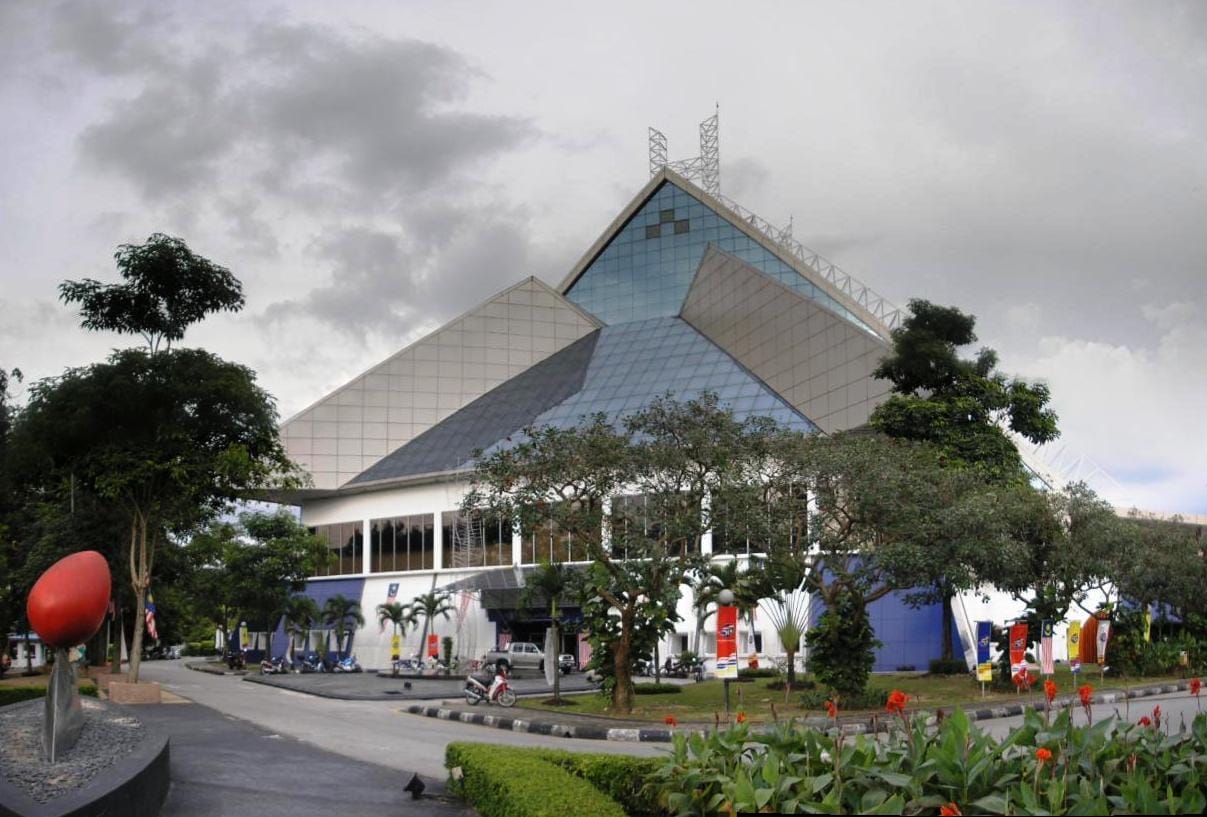
Balai Seni Negara, the National Art Gallery of Malaysia, is the country's largest dedicated art institution and the official custodian of the national art collection. Founded in 1958 and relocated to its current purpose-built home on 13 November 1998, it holds thousands of works spanning painting, sculpture, print, photography, and installation art. The collection focuses overwhelmingly on Malaysian and Southeast Asian artists, making it an essential stop for anyone wanting to understand the country's artistic identity beyond its tourist-facing surface.
The building itself signals ambition. The architecture blends Islamic geometric motifs with a modernist concrete frame, giving the facade a bold, patterned texture that photographs well even before you step inside. The interior is open and gallery-lined, organized across multiple floors with natural light filtering in where the design allows. It does not feel like a dusty archive — the curation is active, with temporary exhibitions rotating regularly alongside the permanent collection.
💡 Local tip
Check the gallery's official website before visiting. Temporary exhibitions sometimes require separate ticketing and rotate every few months. Arriving without checking can mean missing a headline show that's the reason many visitors come.
The Permanent Collection: What You'll Actually See
The permanent collection is the backbone of the gallery and the reason art-focused visitors make a point of coming. It traces the arc of Malaysian art from pre-independence figurative traditions through the national awakening of the 1950s and 60s, into the experimentation of the 80s and 90s, and up to contemporary practice. Artists like Latiff Mohidin, Ibrahim Hussein, and Syed Ahmad Jamal appear in the collection — names that may be unfamiliar to international visitors but represent some of Southeast Asia's most significant artistic output of the 20th century.
Latiff Mohidin's abstract canvases, for instance, carry a restless energy that sits somewhere between abstract expressionism and something distinctly rooted in the Malay world. Seeing these works in situ — in their home institution rather than in a foreign gallery — adds a layer of meaning that reproduction cannot replicate. The scale of some pieces also only makes sense standing in front of them.
Sculptures are displayed both indoors and in the surrounding landscaped grounds. The outdoor pieces are worth a slow circuit, especially in the cooler morning hours when the garden areas are pleasant to walk through rather than something to be endured in the heat.
Tickets & tours
Hand-picked options from our booking partner. Prices are indicative; availability and final rates are confirmed when you complete your booking.
Petronas Twin Towers and Kuala Lumpur Tower observation deck tickets
From 34 €Private Taman Negara day trip from Kuala Lumpur with lunch
From 85 €Instant confirmationFree cancellationKuala Lumpur city and Batu Caves tour
From 41 €Instant confirmationFree cancellationKuala Lumpur city exploration private half-day tour
From 42 €Instant confirmationFree cancellation
Temporary and Travelling Exhibitions
Alongside the permanent holdings, the National Art Gallery hosts a regular programme of temporary exhibitions — both Malaysian touring shows and, less frequently, international presentations. These occupy dedicated gallery spaces on the upper floors and tend to be more thematically focused. Topics have ranged from batik as contemporary art form to retrospectives of individual artists and group shows exploring identity, urbanisation, and the environment.
The quality of temporary shows is variable, as it is at most public galleries. Some are exceptional; others feel more like institutional obligations. The permanent collection is the more reliable draw, but checking what's on during your visit adds the possibility of a genuine surprise.
ℹ️ Good to know
The gallery also operates a dedicated children's art space and runs educational programmes. If you are travelling with young children, it is worth checking whether any family workshops coincide with your visit.
How the Experience Changes by Time of Day
Morning visits, particularly on weekdays, offer the gallery at its quietest. Arriving when doors open means you have the permanent collection largely to yourself. The light inside is softer at this hour, and the absence of crowds makes it easier to spend time in front of works that deserve it. The outdoor sculpture garden is genuinely pleasant before 10am, before the Kuala Lumpur humidity becomes oppressive.
Midday draws school groups and organised tours, which can make certain gallery rooms feel crowded and noisy. This is actually the best time to visit if you enjoy watching how Malaysians engage with their own cultural heritage — students debating in front of abstract paintings, teachers explaining symbolism to restless teenagers. It adds life to what could otherwise feel like a very quiet institution.
Late afternoon, around 3pm to 4pm, is the secondary quiet window. The school groups have left and the evening crowd has not yet arrived. Gallery staff are also more likely to be approachable for questions at this hour, and in the author's observation, docents sometimes offer informal commentary near the permanent collection highlights if you linger near a significant work.
Getting There and Navigating the Area
The gallery sits on Jalan Temerloh, off Jalan Tun Razak, in a neighbourhood that is institutional rather than tourist-oriented. It is close to the Titiwangsa Park and within reasonable distance of the city centre, but it is not on the standard tourist circuit between KLCC and Bukit Bintang. This is actually part of its appeal — the area is calm, not commercially pressured, and the walk from Titiwangsa Monorail station passes through a genuinely local residential and commercial stretch.
Taxis and ride-hailing apps (Grab is the dominant platform in KL) are the most practical option if you are not comfortable with the walk from the nearest stations. The drop-off point at the gallery entrance is clear and accessible. On-site parking is available for those arriving by car.
If you are combining the gallery with other cultural stops, the Islamic Arts Museum Malaysia is another serious museum worth pairing on a culture-focused day, though it sits across the city near the Perdana Botanical Gardens and requires travel time to reach.
⚠️ What to skip
The walk from Ampang Park LRT station is approximately 15 minutes in direct sun along a road without consistent shade. In KL's heat and humidity, this is more taxing than it sounds. Grab is the more comfortable option, especially between 10am and 4pm.
Practical Details: What to Know Before You Arrive
General admission to the permanent collection is free. Some temporary exhibitions carry a separate entry charge, typically modest. The gallery is open daily, though hours and closure days vary — confirm current opening times on the official website before planning your itinerary around a visit. Public holidays sometimes affect access.
The interior is fully air-conditioned, which makes the National Art Gallery one of the more comfortable mid-afternoon stops in Kuala Lumpur. Dress modestly, as you would for any cultural institution. Photography is generally permitted in the permanent collection without flash, but temporary exhibition rooms sometimes restrict photography — signage at each room entrance will indicate the policy.
There is a small cafe on-site for refreshments. The museum shop carries art books, prints, and design-focused products, some of which make for more thoughtful souvenirs than what you will find in the tourist districts. English-language labelling is standard throughout the gallery.
For context on how the gallery fits into KL's broader cultural landscape, the National Museum Malaysia covers history and anthropology rather than art, offering a complementary rather than overlapping experience. Together, these two institutions form a solid foundation for understanding the country.
Who Should Skip This
The National Art Gallery will not appeal to everyone, and it is worth being honest about that. If your primary interest in Kuala Lumpur is its food, shopping, or skyline, this institution is unlikely to compete for your limited time. The collection is focused, the pace is slow, and the context is specifically Malaysian — which is exactly its strength for the right visitor, but a reason to manage expectations if modern and contemporary Asian art is not something that genuinely interests you.
Travellers with children below the age of ten may also find the permanent collection difficult to navigate with patience intact. The KL Bird Park or Aquaria KLCC will hold younger attention more reliably.
Insider Tips
- The outdoor sculpture garden wraps around the main building and is easy to miss if you go straight inside. Walk the perimeter first to see what is displayed before deciding how much time to allocate outdoors versus indoors.
- The museum shop stocks hard-to-find monographs on major Malaysian artists. If you develop an interest in any artist from the permanent collection, ask at the shop — they may have material unavailable elsewhere in the city.
- Weekday mornings during school term time occasionally bring in student groups with assigned docents. Positioning yourself near one of these tours is an informal way to get guided commentary on key works without paying for a formal tour.
- The gallery's upper floors house less-trafficked galleries that often contain more experimental work. Most casual visitors spend time on the ground floor and leave — the upper levels reward those who take the stairs.
- Grab a gallery map at the entrance desk. The floor plan is not always intuitive, and without it you can easily miss entire wings of the permanent collection.
Who Is National Art Gallery For?
- Art enthusiasts wanting a serious engagement with Malaysian and Southeast Asian modern art
- Travellers who prefer cultural depth over tourist-circuit efficiency
- Anyone needing a cool, uncrowded mid-day retreat from KL's heat
- Photographers interested in the building's architectural detailing and outdoor sculpture
- Students or academics researching Southeast Asian visual culture
Nearby Attractions
Combine your visit with:
- Batu Caves
Batu Caves is a series of ancient limestone caverns set inside a 400-million-year-old hill, crowned by a 43-metre golden statue of Lord Murugan and reached by 272 rainbow-coloured steps. It is the most significant Hindu shrine outside India and one of Southeast Asia's most photographed natural landmarks. Whether you come for the temple rituals, the cave ecology, or simply the spectacle, the site rewards visitors who time their arrival carefully.
- Istana Budaya
Istana Budaya is Malaysia's premier performing arts venue, staging everything from grand theatrical productions to classical concerts and traditional dance. Beyond the performances, the building itself is a striking piece of contemporary Malaysian architecture worth seeing up close.
- Kepong Metropolitan Park
Kepong Metropolitan Park is one of Kuala Lumpur's largest and least-touristed green spaces, built around a large lake with forest-edged trails, cycling paths, and open lawns. It draws locals for morning jogs and weekend picnics rather than international visitors, which makes it genuinely worth exploring.
- Little India (Brickfields)
Brickfields is Kuala Lumpur's officially designated Little India, a compact neighbourhood packed with Tamil temples, textile traders, flower-garland sellers, and some of the city's best South Indian vegetarian cooking. It rewards slow walking and curious noses more than any checklist approach.