Namba Yasaka Shrine: The Giant Lion That Swallows Evil in the Heart of Namba
Namba Yasaka Shrine is a traditional Shinto shrine in central Osaka, instantly recognizable for its colossal lion-head stage structure standing 12 meters tall. Admission is free, the grounds are open from early morning, and the shrine sits just a short walk from the chaos of Dotonbori, making it one of the most rewarding and unexpected stops in the Namba area.
Quick Facts
- Location
- 2-9-19 Motomachi, Naniwa-ku, Osaka-shi, Osaka 556-0016
- Getting There
- Namba Station (Osaka Metro) – 6–7 min walk; Daikokucho Station – about 7 min walk
- Time Needed
- 30–45 minutes
- Cost
- Free entry; amulets and goshuin seals available for purchase (office open approx. 09:00–16:50)
- Best for
- Photography, culture seekers, travelers wanting a quiet contrast to Dotonbori
- Official website
- nambayasaka.jp
What Makes This Shrine Worth Stopping For
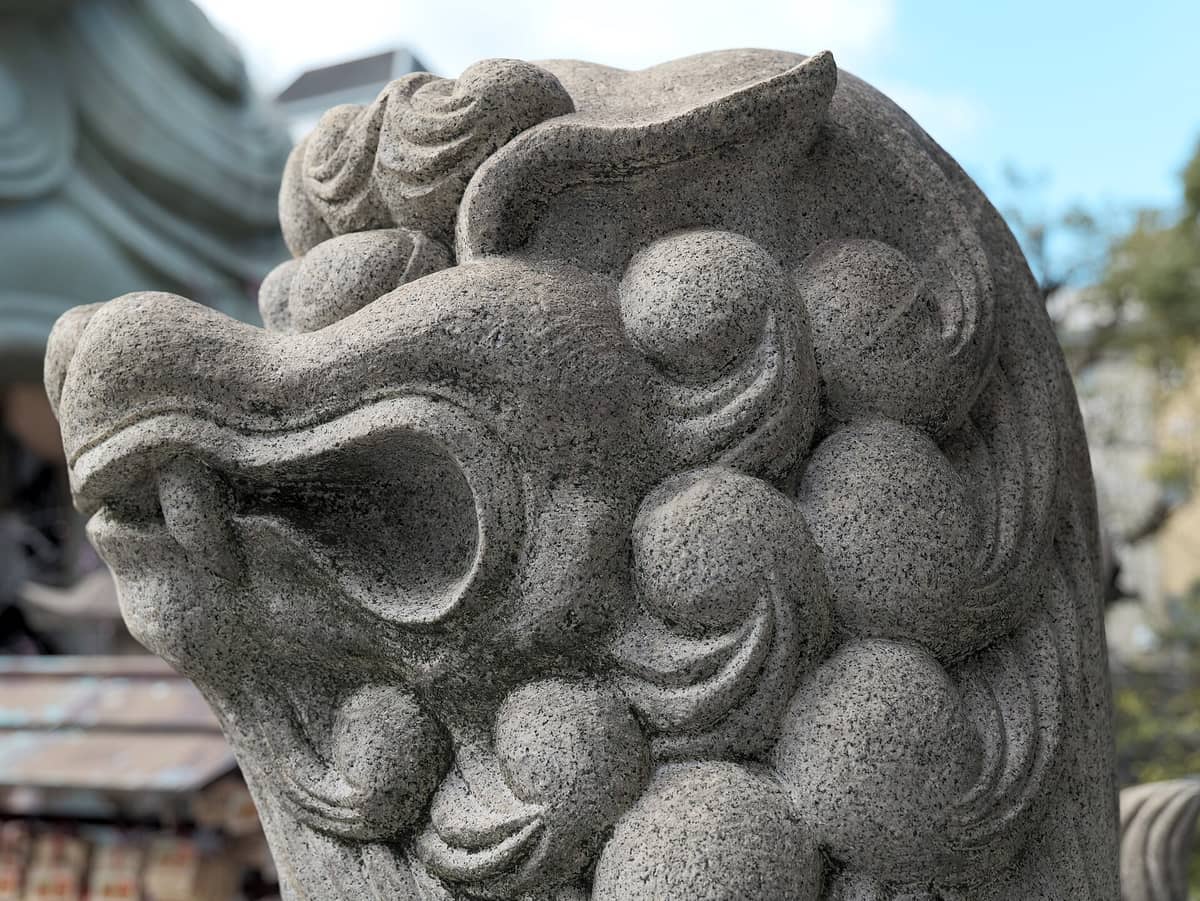
Namba Yasaka Shrine (難波八阪神社) occupies a quiet residential pocket just south of the Namba entertainment district, and nothing about the approach prepares you for what waits inside the gate. Turn off the main street into the narrow lane leading to the precincts, and suddenly the head of an enormous lion fills your entire field of vision. It stares back from across the courtyard with open jaws wide enough to hold a performance stage inside them. The shishi, or lion-head structure, is approximately 12 meters high, 11 meters wide, and 10 meters deep, and it functions not just as decoration but as an actual ritual stage where festival performances are held.
This is not a major pilgrimage site or a nationally famous complex. The grounds are compact. But for travelers spending time in Namba, it offers something genuinely rare: a fully functioning Shinto shrine in the middle of one of Osaka's most commercial neighborhoods, free to enter, uncrowded for most of the day, and visually unlike almost anything else in the city.
💡 Local tip
Arrive before 09:00 for the best photography. The lion-head stage faces roughly east, so early morning light falls directly on it. By midday, the courtyard is shaded and the contrast is flatter. Tripods are generally not restricted on open shrine grounds in Japan, but remain mindful of other visitors during ritual hours.
The Lion-Head Stage: Architecture with a Purpose
The structure formally known as the shishi-butai (lion stage) is the defining feature of Namba Yasaka Shrine, and it rewards a slow look. The mouth is the stage opening, flanked by two cylindrical white eyes and a broad forehead painted in traditional colors. Below the lower jaw, stone steps lead up into the interior. The nose alone stands at roughly human height. Standing directly in front of it, with the open mouth framing the sky above, gives a strong sense of the symbolic intent: the lion is understood to devour evil spirits and misfortune, and to bring good fortune and victory to those who pass through or perform before it.
The structure is not ancient. It was built in the Showa period, reflecting a tradition of large-scale festival architecture rather than medieval temple construction. What gives it authority is its connection to the shrine's annual calendar: the lion-head stage is the focal point of events including New Year celebrations and the main summer festival, when ritual performances, music, and dance take place on the stage itself. Outside of festival periods, the stage stands empty and accessible to view from the courtyard, which gives it an almost theatrical quality, a set waiting for its performers.
Tickets & tours
Hand-picked options from our booking partner. Prices are indicative; availability and final rates are confirmed when you complete your booking.
Shiga Day Trip with Miho Museum, Lake Biwa and Waterbird Shrine
From 70 €Instant confirmationFree cancellationNight at Dining Darts Bar Bee Bee Namba in Osaka
From 8 €Instant confirmationFree cancellationNamba Osaka Dining Experience at an Izakaya with Sashimi and King Crab
From 35 €Instant confirmationFree cancellationNamba Nankai Street Osaka Dining Experience at an Izakaya Restaurant
From 35 €Instant confirmationFree cancellation
How the Shrine Changes by Time of Day
The grounds open at 06:00 (some sources note 06:30), and the first hour is the calmest. Local residents visit to pray before work, and the sound at this hour is almost entirely birdsong and the distant rumble of the city warming up. The stone paving of the courtyard is often damp with dew. The main hall, or honden, is accessible for prayers, and a few small subsidiary shrines dot the perimeter.
Between about 09:00 and 12:00, a trickle of tourists begins arriving, mostly those who have done their research and specifically sought the shrine out. This is also when the amulet and goshuin office opens. The goshuin (red ink seal with calligraphy) is a stamp collected by shrine visitors as a form of spiritual souvenir, and the one available here features the distinctive lion motif. Lines for the stamp rarely exceed a few minutes outside of major holidays.
Midday and early afternoon bring the largest crowds, but even at peak tourist season this shrine never reaches the density of Sumiyoshi Taisha or the major temple complexes. By late afternoon, the light shifts to the west and the lion structure loses its best photographic angle. The grounds close at 17:00, though the outer gate area remains accessible.
ℹ️ Good to know
The amulet and goshuin office is open approximately 09:00–16:50. If collecting a goshuin seal is a priority, don't leave it until the last minutes of your visit. Staff will not accept new requests after closing time.
Getting There from Namba
The shrine is about a 6–7 minute walk south from Namba Station, which is served by the Osaka Metro Midosuji, Yotsubashi, and Sennichimae lines, as well as Nankai and Kintetsu lines. From Daikokucho Station on the Midosuji and Yotsubashi lines, the walk is approximately 7 minutes. Both routes pass through ordinary residential and commercial streets rather than tourist corridors, so a map or navigation app is useful on the first visit. The shrine is also straightforward to combine with a visit to Hozenji Yokocho or the Dotonbori canal as part of a broader Namba walk.
Because the address is in Naniwa Ward rather than the heart of the entertainment district, some visitors find it slightly harder to locate than expected. Look for a small torii gate at street level, followed by a short path leading into the courtyard. There are no large signs in English on the approach streets.
Cultural Context: Shinto in an Urban Setting
Shinto shrines in Japanese cities often exist in surprising adjacency to commercial and residential life. Namba Yasaka Shrine is a textbook example: surrounded on all sides by apartment blocks and small shops, it functions as a genuine neighborhood religious site while also attracting visitors from across Osaka and beyond. The shrine is dedicated to Susanoo-no-Mikoto, a major deity in the Shinto tradition associated with storms, the sea, and also protection. This dedication connects it to a broader network of Yasaka shrines found across Japan, the most famous of which is Yasaka Shrine in Gion, Kyoto. For travelers who are interested in Osaka's shrine and temple circuit, this one offers a genuinely distinctive character rather than a repetition of what you might see elsewhere.
The lion iconography found at Namba Yasaka reflects a tradition of shishi (lion-dog) figures used at shrine entrances across Japan to ward off malevolent spirits. What makes this shrine unusual is the scale of the interpretation: rather than the standard pair of stone guardian figures flanking a path, the entire stage is built in the form of the lion's head. It is a bold architectural choice, and it gives the shrine an identity that distinguishes it clearly from the dozens of other shrines in Osaka's urban fabric.
Practical Notes and What to Bring
Entry to the shrine grounds is free of charge. No reservation is required. The grounds are paved and the main courtyard is flat, though some subsidiary shrines and the stage steps involve small elevation changes. Detailed wheelchair accessibility information is not listed in official sources as of 2026, so visitors with specific mobility requirements should contact the shrine directly before visiting.
If you plan to visit during a festival period, particularly around New Year or the main summer festival, expect significantly larger crowds and a very different atmosphere. The lion-head stage becomes the center of organized events, and the courtyard fills with worshippers and spectators. For those visiting Osaka in autumn or spring, the shrine grounds offer a calm contrast to the seasonal crowds at Osaka Castle Park and other larger sites.
⚠️ What to skip
Opening hours may vary slightly by season and for special events. Check the official shrine website at nambayasaka.jp (Japanese language) or a current travel resource before visiting, particularly if you are planning around the goshuin office hours.
For travelers trying to see as much as possible across the Kansai region, this shrine fits naturally into a 3-day Osaka itinerary without consuming much time. It is not a half-day destination. It is a 30-to-45-minute stop that pays disproportionate visual and cultural returns for the effort involved.
Insider Tips
- The best single photograph of the lion-head structure is taken from the far end of the courtyard, close to the main gate, using a wide-angle lens or the widest setting on a phone camera. Getting closer distorts the proportions. Step back further than feels natural.
- Visit on a weekday morning between 07:00 and 09:00 if you want the courtyard essentially to yourself. The surrounding neighborhood is quiet at this hour and the walk from Namba Station is a pleasant way to see an ordinary Osaka residential street.
- If you collect goshuin stamps, the one at Namba Yasaka features a distinctive lion design that is not replicated at other Osaka shrines, making it a worthwhile addition to a goshuin book even for selective collectors.
- The lion-head stage is occasionally used for small ceremonial events that are not widely publicized. If you arrive and find the stage area roped off, a brief ritual may be in progress. Wait a few minutes and it typically concludes quickly.
- There is no vending machine or refreshment stand on the shrine grounds. The nearest convenience stores and cafes are on the commercial streets leading back toward Namba Station, roughly three to four minutes on foot.
Who Is Namba Yasaka Shrine For?
- Photographers looking for an architecturally distinctive shrine shot not found in standard Osaka photo collections
- Culture-focused travelers wanting a genuine working Shinto shrine without major crowds
- Visitors with limited time who want a meaningful cultural stop close to Namba's main sightseeing corridor
- Goshuin stamp collectors, for the lion-motif seal unique to this shrine
- Travelers visiting during New Year or summer festival periods, when the lion-head stage is used for ritual performances
Nearby Attractions
Other things to see while in Namba:
- Den Den Town (Nipponbashi)
Den Den Town, officially known as Nipponbashi Denden Town, is Osaka's answer to Tokyo's Akihabara: a dense stretch of electronics retailers, anime merchandise shops, retro game stores, and maid cafes running along Sakaisuji Avenue in Naniwa-ku. Entry is free, the district rewards slow exploration, and it reads completely differently depending on what time of day you arrive.
- Kuromon Ichiba Market
Kuromon Ichiba Market is a long-running covered food arcade in Osaka's Namba district, packed with fresh seafood, grilled skewers, and produce stalls. Free to enter and open from morning, it draws both professional chefs and curious travelers looking to eat their way through one of Japan's great food cities.
- National Bunraku Theatre
The National Bunraku Theatre in Osaka's Namba district is the dedicated home of bunraku, Japan's 400-year-old puppet theatre tradition and a UNESCO Intangible Cultural Heritage. Whether you come for a full performance or a free visit to the exhibition room, this is one of Osaka's most culturally significant and underappreciated attractions.
- Sennichimae Doguyasuji Shopping Street
Sennichimae Doguyasuji is a covered shopping arcade in Namba lined with hundreds of shops selling professional cookware, tableware, and restaurant supplies. Free to enter and a short walk from Namba Station, it offers a rare look at the trade infrastructure behind Osaka's celebrated food culture.