National Bunraku Theatre: Osaka's Home of UNESCO Puppet Theatre
The National Bunraku Theatre in Osaka's Namba district is the dedicated home of bunraku, Japan's 400-year-old puppet theatre tradition and a UNESCO Intangible Cultural Heritage. Whether you come for a full performance or a free visit to the exhibition room, this is one of Osaka's most culturally significant and underappreciated attractions.
Quick Facts
- Location
- 1-12-10 Nipponbashi, Chuo-ku, Osaka 542-0073 (Namba area)
- Getting There
- Nippombashi Station (Osaka Metro Sakaisuji / Sennichimae Line; Kintetsu Nara Line) — 1 min walk from Exit 7. Use Exit 10 for elevator access.
- Time Needed
- 2–3 hours for a performance; 30–45 min for the free exhibition room only
- Cost
- Performance tickets typically range from around ¥2,400 (second class) to around ¥6,000 (first class); exhibition room is free. Verify current prices before visiting.
- Best for
- Culture seekers, performing arts fans, travellers wanting something beyond temples and food markets
- Official website
- www.ntj.jac.go.jp/en/theatre/bunraku
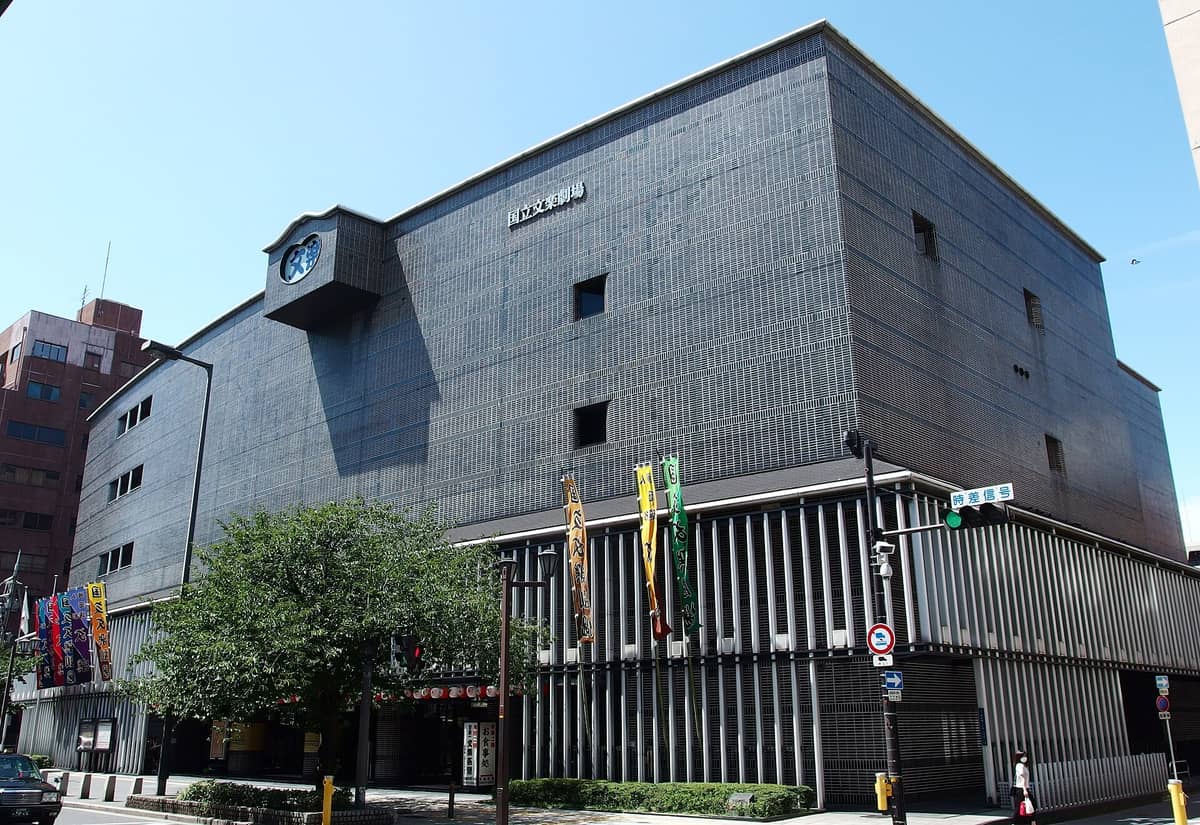
What Is the National Bunraku Theatre?
The National Bunraku Theatre (国立文楽劇場) is the only venue in the world purpose-built for bunraku, the classical Japanese puppet theatre that UNESCO first proclaimed a Masterpiece of the Oral and Intangible Heritage of Humanity in 2003 and later inscribed on its Representative List of the Intangible Cultural Heritage of Humanity in 2008. Opened in 1984 under the Japan Arts Council, the theatre sits in the Nipponbashi area, just a short walk from the canal-side noise of Dotonbori but operating in a completely different register: quiet, deliberate, and deeply formal.
Bunraku itself dates to late 16th-century Osaka, where chanted narrative (joruri), shamisen music, and puppet manipulation evolved into a unified theatrical form. At its technical peak, a single puppet requires three operators working in coordinated silence: the principal puppeteer (omozukai) controls the head and right arm, a second manipulates the left arm, and a third operates the feet. The result, at close range, is uncanny. The puppets are roughly two-thirds human scale, their faces capable of nuanced expression through interchangeable carved features, and their silk costumes often more elaborate than anything a human actor might wear.
ℹ️ Good to know
The exhibition room on the ground floor is free to enter during ticket office hours (10:00–18:00) and offers a useful introduction to bunraku craft — including display puppets and explanatory panels in English — even when no performance is scheduled.
The Theatre Building and Its Atmosphere
The building itself is a deliberate blend of traditional Japanese architectural cues and functional modern design. The facade uses wooden lattice elements and sloped rooflines that gesture toward Edo-period aesthetics without mimicking them literally. Inside, the lobby is calm and unshowy: light wood paneling, low ambient sound, and a gift shop offering bunraku-related books, prints, and small puppet accessories. The scale is more intimate than you might expect from a national theatre, which works in the audience's favour.
The main hall holds a few hundred seats and is configured so that the hashigakari (the long walkway stage extension used in traditional theatre) and the main performance platform are both clearly visible from most seating areas. First-class seats place you closer to the stage and to the chanter-shamisen duo who sit on a dais to the right, performing in full view of the audience rather than from the wings. Second-class seats are further back but still offer a decent sightline.
On performance days, the lobby fills with an audience that skews older and predominantly Japanese. Many regulars arrive in kimono, particularly for opening-day performances of a new program. The atmosphere has the focused social energy of people who know exactly why they are there. For first-time foreign visitors, this can feel slightly intimidating, but the theatre's staff are accustomed to international guests and the front desk can often arrange English-language earphone guides (earphone rental is typically available for an additional fee; confirm availability when booking).
Tickets & tours
Hand-picked options from our booking partner. Prices are indicative; availability and final rates are confirmed when you complete your booking.
Kobe: Mt. Rokko Night View, Kitano Ijinkan, Arima Onsen Full Day Tour
From 47 €Instant confirmationFree cancellationOsaka local food tour in Dotonbori and Shinsekai
From 51 €Instant confirmationFree cancellationGuided day tour from Osaka to Nara Park, Arashiyama and Fushimi Inari
From 59 €Instant confirmationFree cancellationShiga Day Trip with Miho Museum, Lake Biwa and Waterbird Shrine
From 70 €Instant confirmationFree cancellation
Attending a Performance: What to Expect
The National Bunraku Theatre hosts several performance seasons each year, typically in January, April, June, July-August, and November, though scheduling changes annually and must be checked via the official Japan Arts Council website before planning a visit. Each season runs for roughly two to three weeks, presenting a changing program of classic plays. The repertoire draws heavily on the works of Chikamatsu Monzaemon, often described as Japan's Shakespeare, whose domestic tragedies and historical epics form the backbone of the bunraku canon.
Programs are usually divided into day and evening sessions, each running two to four hours with intermissions. This length surprises some visitors who arrive expecting something like a 90-minute stage show. The pace of bunraku is measured rather than driven, and the chanted narration (tayu) carries enormous emotional weight even if you cannot follow the Japanese. If Japanese language comprehension is limited, the English earphone guide becomes practically essential for following plot and character motivation.
💡 Local tip
Book tickets in advance through the Japan Arts Council website or by phone, especially for the first and last weekends of each season. Sold-out performances are not uncommon for popular programs, and walk-up tickets may not be available. Confirm whether English earphone guides are on offer for your specific performance date.
During intermissions, most of the audience heads to the lobby or the in-house cafe, which serves simple refreshments and bento-style meals. This is also the best time to observe the audience, examine the lobby display cases showing puppet heads and costume details, and collect a program booklet if you did not pick one up on entry. Program booklets are printed in Japanese but often include photographs that help identify characters and scenes.
Visiting Without a Performance Ticket
Even outside performance seasons, the National Bunraku Theatre is worth a brief detour for the free exhibition room on the ground floor. The permanent display includes full-size puppet figures in performance costume, close-up photography of puppet mechanism and head construction, and explanatory text in both Japanese and English. It is one of the clearest explanations of how bunraku actually works that you will find without attending a full performance.
The exhibition room tends to be quiet on weekday mornings, when you can spend time studying the puppets without competition from tour groups. If you are pairing this with other nearby attractions, the Sennichimae Doguyasuji kitchen supply street is a short walk away, as is the atmospheric stone-paved lane of Hozenji Yokocho and the compact Hozenji Temple. The combination makes for a half-day loop that mixes traditional Osaka culture with the area's more commercial character.
Getting There and Practical Logistics
The theatre is accessed most easily from Nippombashi Station on the Osaka Metro Sakaisuji Line and Sennichimae Line, or via the Kintetsu Nara Line. Exit 7 deposits you roughly one minute from the main entrance on foot. If you are travelling with a wheelchair or require step-free access, use Exit 10, which has elevator access.
From the heart of Namba, Nippombashi Station is one stop south on the Sennichimae Line, making this an easy addition to any Namba-centred itinerary. The ticket office is open from 10:00 to 18:00; on performance days, it may stay open until just before curtain or until sold out. Performance start times vary by program, so check the schedule on the official site before planning your day.
There is no strict dress code for attending a performance, but the atmosphere leans formal. Smart casual is appropriate for most sessions. Visitors in very casual clothing are not turned away, but a performance at the National Bunraku Theatre is a different social occasion from an afternoon at a theme park. Japanese attendees often dress up, and matching that tone adds to the experience.
💡 Local tip
Photography is generally not permitted during performances. The exhibition room may allow photography of the displays without flash; check signage at the entrance. Leave large backpacks at the cloakroom to avoid disturbing other audience members in the compact seating rows.
Historical and Cultural Context
Osaka has a specific claim on bunraku that distinguishes it from Tokyo's own national theatre. The art form crystallised here during the Edo period (1603–1868), when the merchant city's appetite for popular entertainment drove the development of both kabuki and bunraku. While kabuki relied on living actors, bunraku offered something stranger and arguably more demanding: the complete transfer of emotional weight onto inanimate figures through the combined skill of puppeteers, chanter, and musician. Osaka's Dotombori district was the original commercial centre for both forms, and the city has maintained its identity as the home of bunraku ever since.
The construction of the dedicated National Bunraku Theatre in 1984 was partly a preservation effort, as the tradition had declined sharply during the 20th century. Today the theatre remains the primary institutional support for training new puppeteers and chanters, a process that takes decades of apprenticeship. Attendance has fluctuated over the years, but interest from international visitors has grown since UNESCO recognition. If you are interested in the broader context of Osaka's cultural landmarks, the guide to Osaka's best temples and shrines provides useful background on the city's layered heritage, and the best museums in Osaka guide covers other institutions that document the region's history and arts.
Who Should Skip This Attraction
The National Bunraku Theatre is not the right choice for every traveller. Children under ten are unlikely to engage with a four-hour classical performance in Japanese, and the formal atmosphere makes it a difficult environment for restless younger visitors. Travellers whose time in Osaka is limited to a single day may find that committing an afternoon to a performance crowds out other priorities.
For those not attending a performance, the free exhibition room is worth 30 minutes at most. It is informative rather than immersive, and visitors expecting a dramatic or interactive experience will find it understated. The theatre is also closed between performance seasons, so visiting without checking the schedule in advance risks finding the building partially or fully shut. Always confirm the current program on the official Japan Arts Council site before making the trip a primary goal of your day.
If you are calibrating how to use limited time in Osaka, the 3-day Osaka itinerary offers a structured framework that balances cultural depth with the city's more accessible attractions.
Insider Tips
- Request an English earphone guide at the ticket counter before you find your seat. They are not always prominently advertised and can sell out for popular sessions, so ask as early as possible.
- First-class seats are worth the premium for first-time attendees. The proximity to the chanter-shamisen dais means you hear the vocal performance with full dynamic range, which is where much of the emotional power of bunraku resides.
- The program booklets sold at the entrance often include photographs of the puppet characters in full costume. Even if you cannot read Japanese, flicking through one during intermission helps you track characters across scenes.
- Performance seasons are announced several months in advance on the Japan Arts Council website. If bunraku is a priority, build your Osaka travel dates around an active season rather than hoping for a walk-in option.
- Arrive at least 20 minutes before the session begins. The lobby exhibition cases and the gift shop are worth browsing, and finding your seat without rushing gives you time to read the printed cast list and orient yourself to the stage layout.
Who Is National Bunraku Theatre For?
- Travellers with a genuine interest in traditional Japanese performing arts who want more than a surface-level cultural tick
- Culture-focused visitors spending three or more days in Osaka who can afford to give an afternoon to a single experience
- Solo travellers comfortable with unfamiliar arts contexts and willing to sit with ambiguity when language is a barrier
- Couples looking for a formal, memorable evening that departs from Osaka's usual food-and-nightlife circuit
- Researchers, students, and educators interested in UNESCO Intangible Cultural Heritage and Japanese theatrical history
Nearby Attractions
Other things to see while in Namba:
- Den Den Town (Nipponbashi)
Den Den Town, officially known as Nipponbashi Denden Town, is Osaka's answer to Tokyo's Akihabara: a dense stretch of electronics retailers, anime merchandise shops, retro game stores, and maid cafes running along Sakaisuji Avenue in Naniwa-ku. Entry is free, the district rewards slow exploration, and it reads completely differently depending on what time of day you arrive.
- Kuromon Ichiba Market
Kuromon Ichiba Market is a long-running covered food arcade in Osaka's Namba district, packed with fresh seafood, grilled skewers, and produce stalls. Free to enter and open from morning, it draws both professional chefs and curious travelers looking to eat their way through one of Japan's great food cities.
- Namba Yasaka Shrine
Namba Yasaka Shrine is a traditional Shinto shrine in central Osaka, instantly recognizable for its colossal lion-head stage structure standing 12 meters tall. Admission is free, the grounds are open from early morning, and the shrine sits just a short walk from the chaos of Dotonbori, making it one of the most rewarding and unexpected stops in the Namba area.
- Sennichimae Doguyasuji Shopping Street
Sennichimae Doguyasuji is a covered shopping arcade in Namba lined with hundreds of shops selling professional cookware, tableware, and restaurant supplies. Free to enter and a short walk from Namba Station, it offers a rare look at the trade infrastructure behind Osaka's celebrated food culture.