Museum of Jewish Heritage: What to Know Before You Visit
The Museum of Jewish Heritage – A Living Memorial to the Holocaust sits at the southern tip of Manhattan with views of the harbor. It's one of the most thoughtfully designed memorial museums in the United States, and the surrounding location makes it easy to combine with other Lower Manhattan landmarks.
Quick Facts
- Location
- 36 Battery Place (Edmond J. Safra Plaza), Battery Park City, Lower Manhattan, NY 10280
- Getting There
- 4/5 to Bowling Green; 1 to Rector St; R/W to Whitehall St; M20 bus stops directly in front
- Time Needed
- 2 to 3 hours for the core collection; longer if special exhibitions are on
- Cost
- Admission fees vary; check the museum's ticketing page before visiting as prices change
- Best for
- History learners, multigenerational families, travelers combining with the 9/11 Memorial
- Official website
- mjhnyc.org
What the Museum of Jewish Heritage Actually Is
The Museum of Jewish Heritage – A Living Memorial to the Holocaust opened in 1997 as, in the institution's own words, New York's contribution to the global responsibility to never forget. Unlike the United States Holocaust Memorial Museum in Washington D.C., which has a singular institutional identity, this museum takes a broader lens: it traces Jewish life and culture before, during, and after the Holocaust, framing the genocide within the full context of modern Jewish experience rather than as an isolated event.
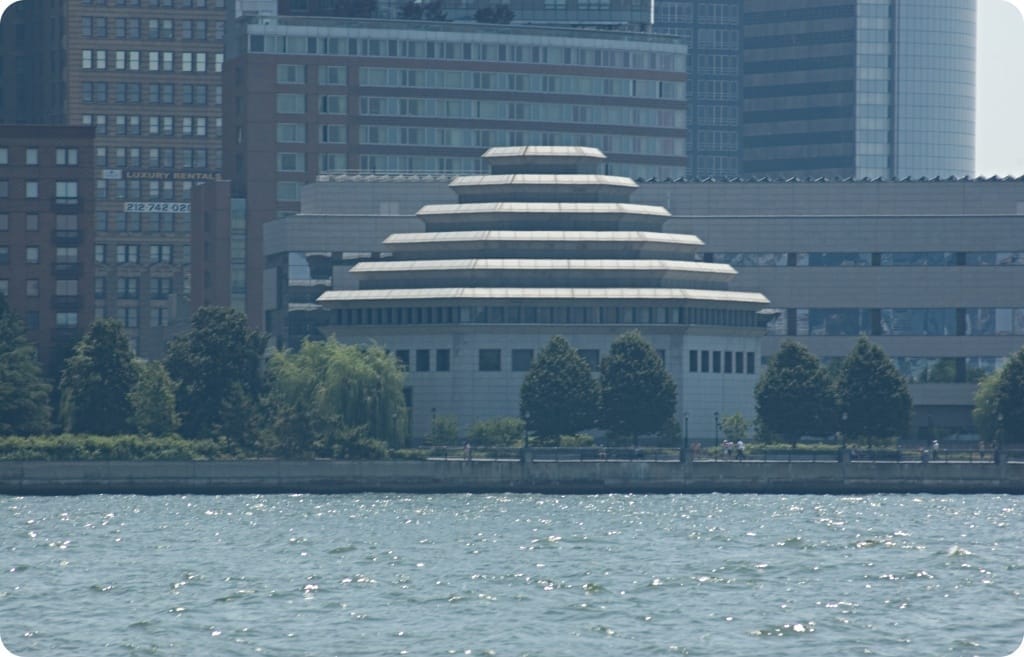
The building itself signals its purpose. The six-sided form references the Star of David and the six million Jews killed during the Holocaust. The tiered granite structure sits on Edmond J. Safra Plaza at the edge of Battery Park City, with direct sightlines across the Hudson River toward the Statue of Liberty. On a clear day, standing outside the museum, you can see Ellis Island, through which millions of Jewish immigrants passed in the early twentieth century. That geographic alignment is not accidental.
💡 Local tip
Check the museum's ticketing page for current hours and admission prices before your visit. Hours vary by season and the museum sometimes closes early for private events or special programming.
The Collection: Three Floors, One Continuous Narrative
The permanent collection is organized chronologically across three floors. The first floor, formerly titled Jewish Life a Century Ago, covers the traditions, rituals, and communities of Jews in Europe and beyond in the late nineteenth and early twentieth century. Artifacts here include Shabbat candlesticks, Torah mantles, family photographs, and everyday objects that establish the richness of the lives that were later destroyed. This floor does important work: it refuses to begin the story with catastrophe.
The second floor, formerly titled The War Against the Jews, covers the Holocaust with directness and care. Personal testimonies, documents, photographs, and objects from concentration camps and ghettos are presented in an environment that is sobering but not exploitative. The scale of evidence is extensive, but the curatorial decisions keep individuals visible throughout, avoiding the numbing abstraction that large-scale tragedy can produce in museum settings.
The third floor, formerly titled Jewish Renewal, documented the rebuilding of Jewish communities globally after 1945, including the founding of Israel, the recovery of diaspora communities, and contemporary Jewish cultural life. Many visitors find this floor unexpectedly moving precisely because it comes after the second: it functions as evidence that continuation was possible. The museum's choice to end here rather than with the death toll is a deliberate and meaningful one.
Tickets & tours
Hand-picked options from our booking partner. Prices are indicative; availability and final rates are confirmed when you complete your booking.
Statue of Liberty, Ellis Island, and Brooklyn Bridge Happy Hour Cruise
From 49 €Instant confirmationFree cancellationSpirit of New York Dinner Cruise
From 161 €Instant confirmationFree cancellationNew York City Highlights bike tour
From 70 €Instant confirmationFree cancellationNew York Statue of Liberty and Ellis Island tour by ferry
From 55 €Instant confirmation
How the Experience Changes by Time of Day
Morning visits, particularly on weekdays, are the quietest. The galleries on the second floor in particular benefit from lower foot traffic: the material demands slow attention, and crowded rooms disrupt the concentration the content deserves. By late morning, school groups begin arriving, which changes the atmosphere on the first floor considerably but often leaves the upper floors less affected.
Midday and early afternoon see the most consistent visitor flow. The museum's cafe is on the ground level and offers a place to pause between floors, which most visitors find useful given the emotional weight of the second floor. The light in the building shifts noticeably in the afternoon, with the harbor-facing windows casting long angles across the galleries. The outdoor memorial garden on the west side of the building, which faces the water, is most pleasant in the late afternoon when the sun is behind the building.
ℹ️ Good to know
The outdoor Garden of Stones by artist Andy Goldsworthy is one of the most quietly distinctive elements of the museum. It consists of eighteen glacial boulders with dwarf oak trees planted in their hollowed cores. It is easy to overlook if you enter and exit through the main plaza without walking around the building.
Getting There and Getting Around
Battery Park City is a straightforward destination from most of Manhattan, though it sits at the end of a peninsula and requires a short walk from any subway station. The most direct routes are the 4 or 5 train to Bowling Green, then a walk west along Battery Place, or the 1 train to Rector Street, then south on Greenwich Street. The R or W to Whitehall Street also works. None of these walks take more than seven to ten minutes at a normal pace.
The M20 bus stops directly in front of the museum on Battery Place, which is useful if you are coming from further uptown on the West Side. The free Downtown Connection bus, which runs between Battery Park City and the South Street Seaport area roughly every ten minutes, also stops in front of the museum and is worth knowing about if you plan to continue east after your visit.
If you are combining the museum with the 9/11 Memorial or the Battery Park waterfront, the walk between them is under ten minutes. The Statue of Liberty ferry terminal at Battery Park is about five minutes on foot, making it possible to combine a morning museum visit with an afternoon harbor excursion in the same day.
Drivers can reach the museum via the West Side Highway (Route 9A) or the FDR Drive on the east side. Discounted parking is available at GGMC Parking at 8 Morris Street with validation from the museum's welcome desk, though parking in Lower Manhattan is expensive by most standards and transit is almost always the faster option.
Accessibility and Practical Details
The M20 bus stops immediately in front of the building, and taxis can pick up and drop off on Battery Place, both of which allow step-free arrival close to the entrance. The museum has elevators between floors. Visitors with specific accessibility needs, including wheelchair access, hearing loops, or other accommodations, should contact the museum in advance through the general contact channels on its website to confirm current arrangements.
Photography policies inside the galleries vary by exhibition. The permanent collection generally permits photography without flash, but special exhibitions sometimes restrict it. Check at the welcome desk on arrival. The museum's cafe and public spaces are photography-friendly.
⚠️ What to skip
The museum occasionally closes early or has modified hours for private events, Jewish holidays, and special programming. Always verify current hours on the museum's official website before traveling to the site, especially on Friday afternoons and around major Jewish observances.
Who This Museum is For, and Who Should Think Twice
The Museum of Jewish Heritage is well-suited to adults and older teenagers with an interest in history, memory, and culture. The second floor in particular is not appropriate for young children: the material is presented with honesty, and parents should assess their child's maturity and preparedness before bringing them into those galleries. The first and third floors are more accessible to younger visitors.
Travelers looking for a quick walk-through experience will likely feel the museum requires more time and attention than they expected. This is not a place where speed enhances the experience. If your available time is under ninety minutes, consider focusing on one floor rather than rushing all three.
For visitors interested in the broader Jewish cultural and historical experience in New York City, the museum pairs well with a visit to the Tenement Museum on the Lower East Side, which covers immigrant life in New York more broadly, or with a walk through the neighborhoods covered in the NYC first-time visitor guide.
If you want to explore Lower Manhattan's full historical and architectural depth, the New York City architecture guide covers the district's range of significant buildings, from the Battery Park City waterfront to the financial district's early twentieth-century skyscrapers.
Insider Tips
- Walk around the building before entering to see the Garden of Stones by Andy Goldsworthy. Most visitors enter directly from the plaza and miss it entirely. The boulders with oaks growing from their cores are one of the more unusual outdoor artworks in Manhattan.
- If you are visiting on a weekday, arrive when the museum opens. The second floor is significantly more manageable with fewer people in the space, and the morning light through the harbor-facing windows is distinctive.
- Ask at the welcome desk about any current special exhibitions. The museum regularly hosts temporary shows that go beyond the permanent collection, and these are sometimes the strongest programming the museum offers at any given time.
- The free Downtown Connection bus stops directly in front. If you plan to continue to the South Street Seaport or return through the financial district, it saves both the walk and the subway fare.
- Validate your parking ticket at the welcome desk if you drove. The discount at GGMC Parking (8 Morris Street) is meaningful by Lower Manhattan standards, but you need to get the validation stamp before you leave the building.
Who Is Museum of Jewish Heritage For?
- Adults and older teens with a serious interest in Holocaust history, Jewish culture, or modern European history
- Multigenerational family groups where grandparents or older relatives want to share historical context with younger family members
- Travelers combining Lower Manhattan's major memorial and historical sites into a half-day or full-day itinerary
- Visitors to New York with personal or family connections to Jewish history or the Holocaust
- Anyone interested in how memorial museums balance documentation, grief, and the imperative to look forward
Nearby Attractions
Other things to see while in Lower Manhattan:
- National September 11 Memorial
The National September 11 Memorial occupies the original footprints of the Twin Towers in Lower Manhattan. The outdoor reflecting pools are free and open daily from 8:00 a.m. to 8:00 p.m. This page covers the memorial plaza; for the underground museum, see our separate museum guide.
- National September 11 Museum
The National September 11 Museum sits beneath the World Trade Center memorial plaza in Lower Manhattan. The 110,000-square-foot underground museum documents the attacks of September 11, 2001, and February 26, 1993, and is one of the most emotionally significant museum experiences in the United States. The outdoor memorial pools are free; museum admission requires a timed ticket.
- Battery Park
Perched at the southernmost tip of Manhattan, The Battery is a free waterfront park offering sweeping views of New York Harbor, access to the Statue of Liberty and Ellis Island ferries, and nearly four centuries of layered history. It works well at any hour, but rewards those who arrive early.
- Ellis Island National Museum of Immigration
Ellis Island National Museum of Immigration sits in New York Harbor on ground that shaped American history more than almost any other. Reached only by ferry, it offers a deeply affecting look at the 12 million immigrants who passed through between 1892 and 1954, housed in a landmark Beaux-Arts building that has been meticulously restored.