Museum of Cycladic Art: Athens' Most Quietly Brilliant Museum
Housed in an elegant Kolonaki building, the Museum of Cycladic Art holds one of the world's finest collections of prehistoric Aegean art, spanning 5,000 years from the early Bronze Age to antiquity. Small enough to absorb in a half-day, precise enough to reward careful attention.
Quick Facts
- Location
- 4 Neophytou Douka St., Kolonaki, Athens 106 74
- Getting There
- Evangelismos (Line 3) or Syntagma (Lines 2 & 3)
- Time Needed
- 1.5 to 3 hours
- Cost
- €12 general admission; €9 reduced/group. Free for visitors with disabilities and companion.
- Best for
- Art lovers, history enthusiasts, anyone curious about the roots of modernist sculpture
- Official website
- cycladic.gr/en
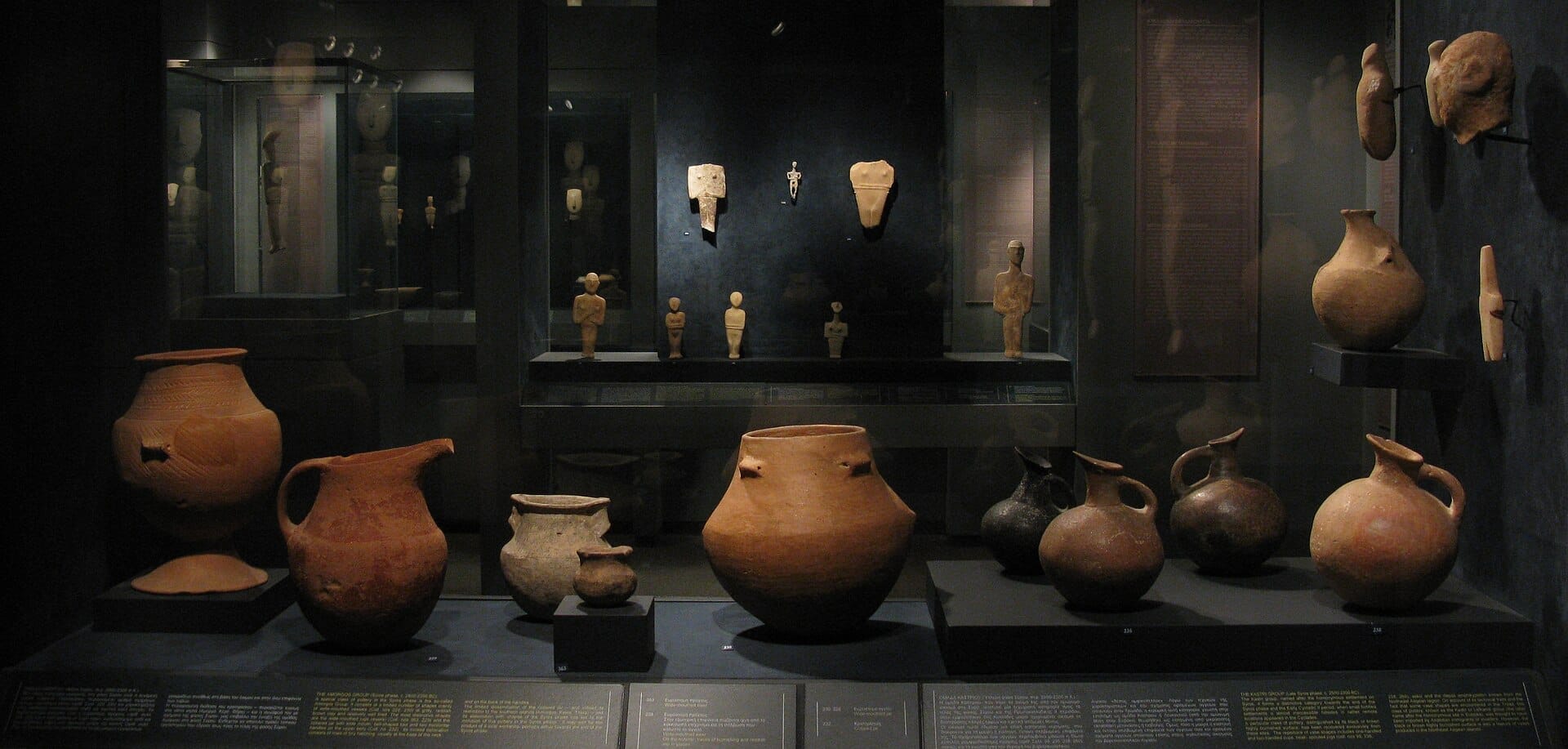
What the Museum of Cycladic Art Actually Is
The Museum of Cycladic Art The Museum of Cycladic Art opened in 1986 as a private, non-profit institution dedicated to the art of the Cyclades islands and related Aegean civilizations.
The collection was assembled largely by Nicholas and Dolly Goulandris, a Greek shipping family with a serious eye for prehistoric art, The collection was assembled largely by Nicholas and Dolly Goulandris, a Greek shipping family with a serious eye for prehistoric art. Today the museum occupies two interconnected buildings in Kolonaki: the modern main wing on Neophytou Douka Street and the late 19th-century Stathatos Mansion on the corner of Vasilissis Sofias Avenue and Irodotou Street, which hosts temporary exhibitions. Today the museum occupies two interconnected buildings in Kolonaki: the modern main wing on Neophytou Douka Street and the late 19th-century Stathatos Mansion on the corner of Vasilissis Sofias Avenue and Irodotou Street, which hosts temporary exhibitions.
💡 Local tip
Thursday is the one day the museum stays open until 20:00, making it the best option for visitors who want to combine it with an evening meal in Kolonaki without feeling rushed. All other days close at 17:00 (Sundays at 17:00, opening at 11:00).
The Collection: What You Will Actually See
The ground floor introduces Cycladic marble figurines in a cool, low-lit gallery that encourages slow looking. The figurines range in size from palm-sized objects to life-scale standing forms. Most are white marble, polished smooth, with the characteristic crossed-arm posture that has come to define the aesthetic of the Cycladic period. Traces of paint have been identified on some figurines under laboratory analysis, suggesting they were originally decorated with patterns now invisible to the naked eye. Standing in front of the larger figures, the absence of facial features beyond a ridge for the nose produces an uncanny effect: they feel ancient and modern simultaneously.
The upper floors expand the chronological range considerably. The ancient Greek art collection includes pottery, bronze objects, and glass from the Geometric through the Hellenistic periods, giving context to what came after the Cycladic era. A separate Cypriot antiquities section covers Bronze Age and Iron Age material from Cyprus, reflecting trade and cultural exchange across the eastern Mediterranean. The connections between island cultures become visible here in ways that a single-era collection cannot achieve.
If ancient Greek artifacts are your main interest, the National Archaeological Museum offers greater breadth and scale. The Museum of Cycladic Art is more tightly focused and, frankly, more manageable: the curation is thoughtful and the signage is clear in both Greek and English, which is not always the case at larger state institutions.
Tickets & tours
Hand-picked options from our booking partner. Prices are indicative; availability and final rates are confirmed when you complete your booking.
Guided tour of the Acropolis, Parthenon and Museum in Athens
From 50 €Instant confirmationFree cancellationGuided tour of the Acropolis and Parthenon in Athens
From 34 €Instant confirmationFree cancellationSmartphone audio tour for the Acropolis Museum
From 12 €Instant confirmationFree cancellationAthens original street art small group guided walking tour
From 49 €Instant confirmationFree cancellation
Visiting by Time of Day
Morning visits, particularly between 10:00 and 11:30, tend to be calm. School groups occasionally arrive mid-morning on weekdays, but the museum is spacious enough that they rarely crowd the main galleries. The natural light in the Stathatos Mansion is best in the morning hours when exhibitions are on, so if a temporary show is running, arriving early gives you that building at its best.
Afternoons from 14:00 onward draw a lighter crowd, particularly on weekdays in spring and autumn. Summer afternoons can be quiet too, as many tourists concentrate on open-air sites during the morning and retreat indoors later. The air-conditioned galleries make the museum a genuinely comfortable refuge on a hot Athens afternoon, especially in July and August when outdoor temperature regularly exceeds 35°C.
On Thursdays, the extended hours until 20:00 mean you can visit after 17:00 when other museums have closed. The museum takes on a different quality in the early evening: fewer visitors, quieter rooms, and an almost contemplative atmosphere in the Cycladic figurine galleries. If your schedule is tight, this is worth planning around.
Getting There and the Neighborhood Around It
The museum sits in Kolonaki, Athens' most polished central neighborhood, on the lower slopes of Lycabettus Hill. From Evangelismos metro station (Line 3), the walk to the museum takes about five to seven minutes along Vasilissis Sofias Avenue. From Syntagma station (Lines 2 and 3), allow ten to twelve minutes on foot heading northeast along the same avenue.
Kolonaki is a pleasant district to walk through before or after your visit. The streets around the museum are lined with galleries, independent bookshops, and cafe terraces. Compared to the tourist-dense streets of Plaka or Monastiraki, the pace here is calmer and the street noise lower, which suits the museum's character well.
If you want a longer day that combines multiple sites, the museum pairs naturally with Benaki Museum, which is a short walk away on Vasilissis Sofias. The two institutions have complementary collections: Cycladic Art covers prehistoric and ancient material; the Benaki spans Greek culture from antiquity to the 20th century. Allow a full day if you plan to do both seriously.
The Stathatos Mansion and Temporary Exhibitions
The Stathatos Mansion, the museum's second building connected to the main wing by an interior passage, The Stathatos Mansion, the museum's second building connected to the main wing by an interior passage, is an architectural landmark in its own right. Its neoclassical facade, high-ceilinged reception rooms, and ornate interior detailing make it a worthwhile space to walk through even when the temporary exhibition does not strongly interest you. The mansion hosts the museum's program of rotating shows, which have historically covered Cycladic culture, ancient Mediterranean trade, and thematic exhibitions linking prehistoric and contemporary art. is an architectural landmark in its own right. Its neoclassical facade, high-ceilinged reception rooms, and ornate interior detailing make it a worthwhile space to walk through even when the temporary exhibition does not strongly interest you. The mansion hosts the museum's program of rotating shows, which have historically covered Cycladic culture, ancient Mediterranean trade, and thematic exhibitions linking prehistoric and contemporary art.
Temporary exhibition content changes, so check the museum's official website before visiting if the Stathatos Mansion program is part of your reason for going. The permanent collection in the main building is stable and fully justifies the ticket price on its own.
Practical Details Worth Knowing
Tickets cost €12 for general admission and €9 for reduced or group visits. Entry is free for visitors with disabilities and their companion, as well as for other qualifying categories listed on the museum website. The Cycladic Shop and the Cycladic Cafe can both be accessed without a ticket, which matters if you want to browse the bookshop or have a coffee without committing to the full visit.
The museum is closed on Tuesdays throughout the year, and also on a set list of Greek national holidays including January 1, Clean Monday, March 25, The museum is closed on Tuesdays throughout the year, and also on a set list of Greek national holidays including January 1, Clean Monday, March 25, Easter Sunday, Easter Monday, May 1, Holy Spirit Monday, August 15, December 25, and December 26. If your visit falls near any of these dates, verify the schedule on the official website before going., May 1, Holy Spirit Monday, August 15, December 25, and December 26. If your visit falls near any of these dates, verify the schedule on the official website before going.
⚠️ What to skip
The museum is closed every Tuesday. This catches visitors off guard more often than any other planning error. Double-check before building your itinerary around a Tuesday visit.
Photography is permitted in the permanent collection without flash. The galleries are well-lit for photography and the figurines photograph cleanly against the neutral backgrounds. Bag storage lockers are available near the entrance. The building is accessible for visitors with mobility limitations, and the cafe courtyard is a pleasant spot to sit after the galleries.
For context on how to fit this museum into a broader Athens itinerary, the best museums in Athens guide ranks and contextualizes the city's main collections. If time is genuinely short, the Athens 1-day itinerary offers a realistic framework for prioritizing what to see.
Who Might Want to Skip It
Visitors primarily interested in classical Greece, meaning the 5th and 4th centuries BC, the age of the Parthenon and Socrates, will find the Museum of Cycladic Art covers a very different and older period. The collection is strongest in prehistoric material, and while the ancient Greek floors are solid, they are not the main event here. Those visitors might spend their museum time more satisfyingly at the Acropolis Museum or the National Archaeological Museum.
Families with young children should know the museum is quiet and the exhibits are small objects in cases, without interactive displays or hands-on elements. Children who engage with art and history will do fine; those who need more sensory variety might find the atmosphere too static. The Athens with kids guide offers alternatives more suited to younger visitors.
Insider Tips
- The museum shop carries genuinely good art books, including scholarly catalogs of Cycladic collections that are hard to find elsewhere. Even if you do not buy, it is worth ten minutes browsing after the galleries.
- The courtyard cafe between the main building and the Stathatos Mansion is one of the calmer outdoor sitting spots in central Kolonaki, and you do not need a museum ticket to use it. It works well as a meeting point or a midday break.
- The figurines on the ground floor reward close inspection from the side, not just the front. Viewed in profile, the extreme flatness and the subtle forward tilt of the head become much more apparent and explain why these objects influenced 20th-century sculptors so directly.
- If you visit in summer, the museum is reliably air-conditioned throughout, including the Stathatos Mansion. Plan the hottest part of the afternoon (roughly 13:00 to 16:00) for indoor sites like this one and save outdoor walking for morning or evening.
- For a combined art afternoon, the Benaki Museum is a seven-minute walk along Vasilissis Sofias. Both institutions are private and well-funded, and the quality of curation and labeling at each is noticeably higher than at many state museums.
Who Is Museum of Cycladic Art For?
- Art enthusiasts curious about the prehistoric roots of modernist sculpture and abstraction
- Travelers who want a serious museum experience without the scale and crowds of the National Archaeological Museum
- Visitors looking for indoor refuge from Athens summer heat in a high-quality cultural setting
- Architecture-interested visitors who want to see the restored Stathatos Mansion alongside its collection
- Anyone building a focused Kolonaki half-day combining the museum with gallery browsing and good dining
Nearby Attractions
Other things to see while in Kolonaki:
- Benaki Museum
Housed in a neoclassical mansion in Kolonaki, the Benaki Museum traces Greek civilization from prehistoric times through the 20th century. With an extraordinary permanent collection, rooftop cafe, and late Thursday opening until midnight at its Museum of Greek Culture building, it rewards both first-time visitors and repeat ones.
- Byzantine and Christian Museum
The Byzantine and Christian Museum in Athens holds one of the world's most significant collections of Byzantine art, spanning the 3rd to 20th centuries. Housed in the elegant 19th-century Villa Ilissia on Vassilissis Sofias Avenue, it offers an unhurried alternative to the city's blockbuster ancient sites, with approximately 30,000 artifacts spanning from the 3rd century to the 21st.
- Mount Lycabettus
At 277 meters, Mount Lycabettus is the tallest hill in central Athens, rising sharply above the upscale Kolonaki neighborhood. Reach the summit by cable car or on foot, and you'll find one of the most complete panoramas in the city, stretching from the Acropolis to the Saronic Gulf on clear days.
- National Gallery – Alexandros Soutsos Museum
The National Gallery – Alexandros Soutsos Museum is Greece's most important fine art institution, housing over 20,000 works spanning Greek art from the post-Byzantine period to the present. Reopened in its fully renovated Kolonaki building in 2021, it offers a rare chance to trace the arc of Greek artistic identity from Byzantine tradition to contemporary expression.