Byzantine and Christian Museum: Athens' Overlooked Masterpiece of Sacred Art
The Byzantine and Christian Museum in Athens holds one of the world's most significant collections of Byzantine art, spanning the 3rd to 20th centuries. Housed in the elegant 19th-century Villa Ilissia on Vassilissis Sofias Avenue, it offers an unhurried alternative to the city's blockbuster ancient sites, with approximately 30,000 artifacts spanning from the 3rd century to the 21st.
Quick Facts
- Location
- Leoforos Vasilissis Sofias 22, Kolonaki, Athens 106 75
- Getting There
- Evangelismos Metro Station (Line 3, Blue Line) – approx. 4-minute walk
- Time Needed
- 1.5 to 3 hours depending on depth of interest
- Cost
- €8 adults; reduced and free admission categories follow current Greek Ministry of Culture policy (e.g. EU youths, certain professionals, and designated free-entry days). Verify current prices and eligibility before visiting.
- Best for
- History enthusiasts, art lovers, travelers seeking a calm, crowd-free museum experience
- Official website
- www.ebyzantinemuseum.gr/?i=bxm.en.bxm
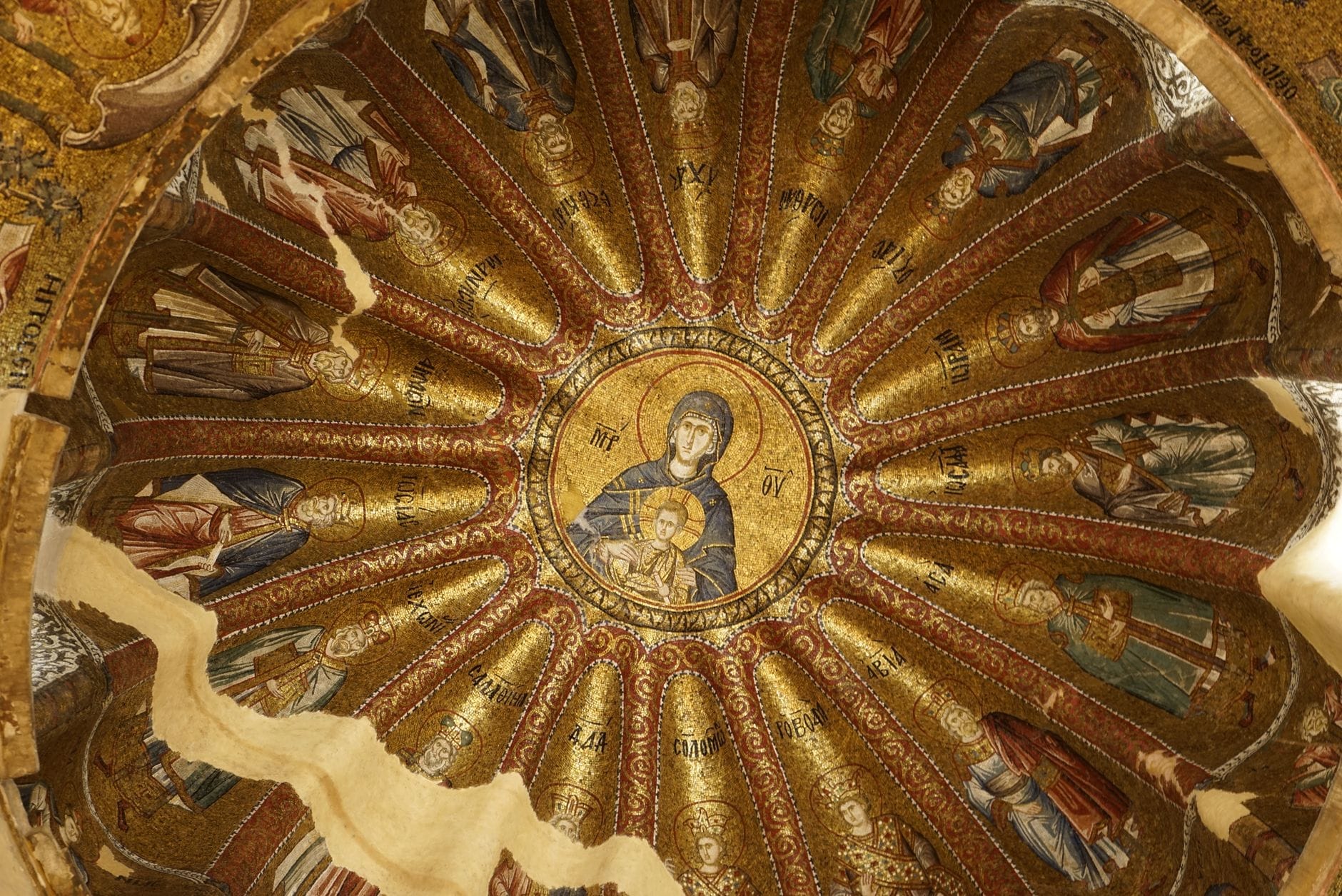
What the Byzantine and Christian Museum Actually Is
The Byzantine and Christian Museum (Βυζαντινό και Χριστιανικό Μουσείο) is one of the most important institutions of its kind anywhere in the world, yet it consistently flies under the radar of travelers focused on ancient Greece. That imbalance is entirely the visitor's loss. Founded in 1914, the museum dedicates itself to the long arc of Byzantine and post-Byzantine culture, tracing the development of Christian art and civilization across seventeen centuries, from the 3rd century AD right through to the 21st.
The collection numbers approximately 30,000 artifacts: portable icons, frescoes, mosaic fragments, illuminated manuscripts, liturgical textiles, ceramics, coins, jewelry, and entire reconstructed ecclesiastical interiors. If your understanding of Greek history ends with the fall of classical Athens, this museum will reframe everything. Byzantine Greece was not a footnote — it was a civilization that shaped Orthodox Christianity, preserved classical learning through the medieval period, and produced art of extraordinary formal power.
💡 Local tip
The museum's underground galleries are a genuine surprise — they extend far beneath the neoclassical villa and feel almost cathedral-like in scale. Don't rush past the entrance courtyard assuming the main building is the whole experience.
The Building Itself: Villa Ilissia and Its Setting
The museum occupies Villa Ilissia, a neoclassical structure completed in 1848 for Sophie de Barbois, the Duchesse de Plaisance — a French-born philhellene who settled in Athens after the Greek War of Independence and became one of the more eccentric figures in the early capital's social life. The villa's Florentine Renaissance styling, with its colonnaded courtyard and low-slung arcades, creates an atmosphere quite different from the grand state museums of central Europe. It feels more intimate, almost residential.
The villa sits on Vassilissis Sofias Avenue, the wide, tree-lined boulevard that connects Syntagma Square with the Hilton area and forms the spine of upper Kolonaki. The Athens War Museum stands immediately adjacent. From the street, the museum's entrance is easy to miss — there is no imposing staircase or monumental facade, just a modest gate that opens into a shaded courtyard where ancient stonework is displayed in the open air.
The surrounding neighborhood of Kolonaki is one of the more affluent and walkable parts of central Athens, characterized by neoclassical apartment blocks, independent galleries, and upscale cafes. The museum fits naturally into this context: culturally serious, low on spectacle, high on substance.
Tickets & tours
Hand-picked options from our booking partner. Prices are indicative; availability and final rates are confirmed when you complete your booking.
Guided tour of the Acropolis, Parthenon and Museum in Athens
From 50 €Instant confirmationFree cancellationAthens: Temple of Olympian Zeus E-ticket with audio tour on your phone
From 10 €Instant confirmationAthens full-day tour with Acropolis and Cape Sounion
From 92 €Instant confirmationFree cancellationAthens National Archaeological Museum e-ticket and audio tour
From 22 €Instant confirmation
What You'll See Inside: The Collection
The permanent galleries are organized thematically and chronologically across two main spaces: the historic villa above ground and a large underground exhibition wing that was added during a major renovation project. The subterranean galleries in particular are worth noting — they are climate-controlled, thoughtfully lit, and feel contemporary despite housing objects that are, in some cases, nearly seventeen centuries old.
Early Christian artifacts dominate the first rooms, including funerary sculptures and architectural fragments that show the transitional moment when classical Greco-Roman artistic vocabulary was being adapted to serve a new religious context. You can trace the evolution of the human figure in sacred art: from the naturalistic forms of antiquity, toward the increasingly stylized, frontal, hierarchical compositions that would define Byzantine iconography.
The icon collection is exceptional. Icons here are not the tourist-shop gold-leaf reproductions familiar from airport gift shops — they are objects that functioned as spiritual presences in churches and domestic settings for centuries. Some show visible wear from centuries of veneration: darkened surfaces, worn gilding, cracks repaired by earlier restorers. Looking at them closely, you get a sense of continuous use across generations that no reproduction can convey.
Equally striking are the reconstructed church interiors, where architectural elements — carved marble iconostases, mosaic floor sections, carved wooden screens — are reassembled to give visitors a coherent sense of how Byzantine sacred space was organized. The textile collection, featuring embroidered vestments and liturgical fabrics, is among the finest in the country, though it requires slow looking to appreciate the density of technique involved.
ℹ️ Good to know
The museum labels most exhibits in both Greek and English, though coverage varies by gallery. The underground section tends to have more detailed English-language interpretation. An audio guide is worth considering for visitors unfamiliar with Byzantine art history.
When to Visit and What to Expect at Different Times
The Byzantine and Christian Museum attracts far fewer visitors than the Acropolis or the National Archaeological Museum, which makes it one of the more relaxed museum experiences in the city. Even on summer weekdays, the galleries rarely feel crowded. You can stand in front of a 12th-century icon for as long as you like without being nudged aside.
Morning visits benefit from the quietest conditions and the most attentive staff presence. By mid-afternoon in summer, the heat on Vassilissis Sofias makes the walk from Evangelismos metro station uncomfortable, but the air-conditioned underground galleries are a genuine relief. On weekends, slightly higher foot traffic arrives around midday, though the museum never approaches the density of the major ancient sites.
Spring and autumn are the most comfortable seasons for a visit, particularly April through June and September through October, when outdoor temperatures are moderate and the courtyard garden is pleasant to linger in. For broader seasonal context, the best time to visit Athens guide covers climate patterns across the year in detail.
In summer, the museum's underground galleries become an unexpected refuge from the heat — cool, quiet, and uncrowded at most hours. If you find yourself overwhelmed by the intensity of Athens in July or August, two hours inside here can genuinely restore your capacity to enjoy the rest of the day.
⚠️ What to skip
Opening hours and temporary closure periods have been reported to change. Always verify current hours directly on the official website or by calling ahead before making a dedicated trip. Verify before visiting.
Getting There and Getting Around the Museum
The most convenient approach is via Evangelismos metro station on Line 3 (the Blue Line), which leaves you roughly a 4–5-minute walk from the museum entrance on Vassilissis Sofias. Exit toward the avenue and walk east; the museum gate appears on your left before you reach the War Museum. Syntagma station, served by both Lines 2 and 3, is a reasonable ten-minute walk if you want to combine the museum with the area around Syntagma Square.
Several bus routes run along Vassilissis Sofias, making it easy to combine the museum with stops further east on the avenue or a walk back through Kolonaki's shopping streets. Taxis and ride-hailing apps (Beat is widely used in Athens) drop off directly on the avenue.
Inside the museum, the layout is straightforward but the underground extension can feel disorienting on a first visit. Grab a floor plan from the entrance desk — the staff are generally helpful in orienting visitors to the main thematic sections. The courtyard between the villa and the underground entrance contains open-air stone sculptures and inscriptions, and functions as a natural pause point between the two main exhibition areas.
Cultural Context: Why Byzantine Art Matters in Athens
Most visitors arrive in Athens with the classical period firmly in mind: the Parthenon, the ancient Agora, the theatre of Dionysus. The Byzantine millennium — roughly from the 4th century through the fall of Constantinople in 1453 — is often treated as an interval between antiquity and modernity rather than a civilization of its own. The Byzantine and Christian Museum makes a compelling case against that framing. You can visit the Acropolis and the Acropolis Museum for the ancient story, and then come here the following morning to understand what happened to Greek culture over the next fifteen hundred years.
Byzantine art is often misread as static or repetitive because its goals were different from classical naturalism. The frontal pose, the gold background, the elongated figures — these were not failures of technique but deliberate choices to represent the sacred as distinct from the earthly. The museum's interpretive approach helps visitors understand this visual logic rather than simply cataloging objects. That interpretive quality is rarer than it sounds in Greek museums.
For travelers building a broader picture of Athens' cultural institutions, the best museums in Athens guide places the Byzantine and Christian Museum in context alongside the National Archaeological Museum, the Benaki, and the Museum of Cycladic Art.
Photography, Accessibility, and Practical Notes
Photography for personal use is generally permitted in the permanent galleries without flash — check for any posted restrictions in specific rooms, particularly where manuscripts or textiles are displayed under low light. The underground galleries offer some of the more photographically interesting spaces in any Athens museum, with dramatic lighting that catches the texture of carved marble and the surface of icons in ways a phone camera can handle well.
On accessibility: the underground galleries are reached via stairs and ramps, but specific details on lift availability, tactile guidance, and wheelchair access are not comprehensively documented in public sources. Visitors with specific accessibility requirements should contact the museum directly or check the official website before their visit.
The museum has a small shop near the entrance selling quality reproductions, academic catalogues, and postcards — substantially better than the average Greek museum shop. There is limited on-site café service, so many visitors still plan for more substantial refreshments in the surrounding Kolonaki neighborhood before or after their visit.
Insider Tips
- The courtyard between the villa and the underground entrance displays ancient stonework, column fragments, and carved marble pieces that rarely get attention from visitors walking straight through. Spend five minutes here before heading underground.
- EU citizens under 25 years old are entitled to free or reduced entry under current Greek Ministry of Culture rules on presentation of a valid ID or passport — worth knowing if you're traveling with younger companions who might otherwise be skeptical about a Byzantine art museum.
- Reduced admission for seniors follows national Greek Ministry of Culture regulations rather than a museum-specific 1 October–31 May window, so if you're visiting in summer and qualify, check whether a reduction applies. Verify current pricing and eligibility on the official site before arriving.
- Pairing this museum with the Benaki Museum, a short walk west along Vassilissis Sofias, makes for a coherent half-day cultural itinerary covering Greek history from antiquity to the modern era. The Benaki's cafe is also one of the better lunch options in the immediate area.
- The underground galleries stay noticeably cooler than street level in summer — if you're doing Athens in July or August and need a mid-afternoon refuge from the heat, this is one of the more pleasant options available.
Who Is Byzantine and Christian Museum For?
- Travelers who want to understand Greece beyond the classical period and explore the Byzantine and Orthodox heritage that defines modern Greek identity
- Art historians, theology students, and anyone with a serious interest in medieval Christian iconography and sacred art
- Museum-goers looking for a genuinely unhurried experience without the crowds of the major ancient sites
- Visitors spending multiple days in Athens who have covered the Acropolis and National Archaeological Museum and want intellectual depth rather than more ruins
- Travelers seeking air-conditioned refuge during the Athens summer heat, combined with substantive cultural content
Nearby Attractions
Other things to see while in Kolonaki:
- Benaki Museum
Housed in a neoclassical mansion in Kolonaki, the Benaki Museum traces Greek civilization from prehistoric times through the 20th century. With an extraordinary permanent collection, rooftop cafe, and late Thursday opening until midnight at its Museum of Greek Culture building, it rewards both first-time visitors and repeat ones.
- Mount Lycabettus
At 277 meters, Mount Lycabettus is the tallest hill in central Athens, rising sharply above the upscale Kolonaki neighborhood. Reach the summit by cable car or on foot, and you'll find one of the most complete panoramas in the city, stretching from the Acropolis to the Saronic Gulf on clear days.
- Museum of Cycladic Art
Housed in an elegant Kolonaki building, the Museum of Cycladic Art holds one of the world's finest collections of prehistoric Aegean art, spanning 5,000 years from the early Bronze Age to antiquity. Small enough to absorb in a half-day, precise enough to reward careful attention.
- National Gallery – Alexandros Soutsos Museum
The National Gallery – Alexandros Soutsos Museum is Greece's most important fine art institution, housing over 20,000 works spanning Greek art from the post-Byzantine period to the present. Reopened in its fully renovated Kolonaki building in 2021, it offers a rare chance to trace the arc of Greek artistic identity from Byzantine tradition to contemporary expression.