Museum of Childhood Edinburgh: A World First on the Royal Mile
Opened in 1955 as the world's first museum dedicated to the history of childhood, the Museum of Childhood sits on Edinburgh's Royal Mile and admits visitors free of charge. It draws families, nostalgic adults, and cultural tourists with five floors of toys, games, and memorabilia spanning centuries.
Quick Facts
- Location
- 42 High Street, Royal Mile, Old Town, Edinburgh EH1 1TG
- Getting There
- Bus route 35 stops nearby on the Royal Mile, within a short walk of the Museum of Childhood
- Time Needed
- 45 minutes to 1.5 hours
- Cost
- Free (donations welcome)
- Best for
- Families with children, adults with nostalgia for vintage toys, rainy-day visits
- Official website
- cultureedinburgh.com/our-venues/museum-of-childhood
What the Museum of Childhood Actually Is
The Museum of Childhood opened in 1955, making it the first museum in the world specifically dedicated to the history of childhood. That is not marketing language; it is a documented historical fact. The museum occupies two joined 18th-century buildings straddling South Gray's Close on the Royal Mile, and it has been free to enter since the day it opened. Admission remains free today, with donations welcome at the door.
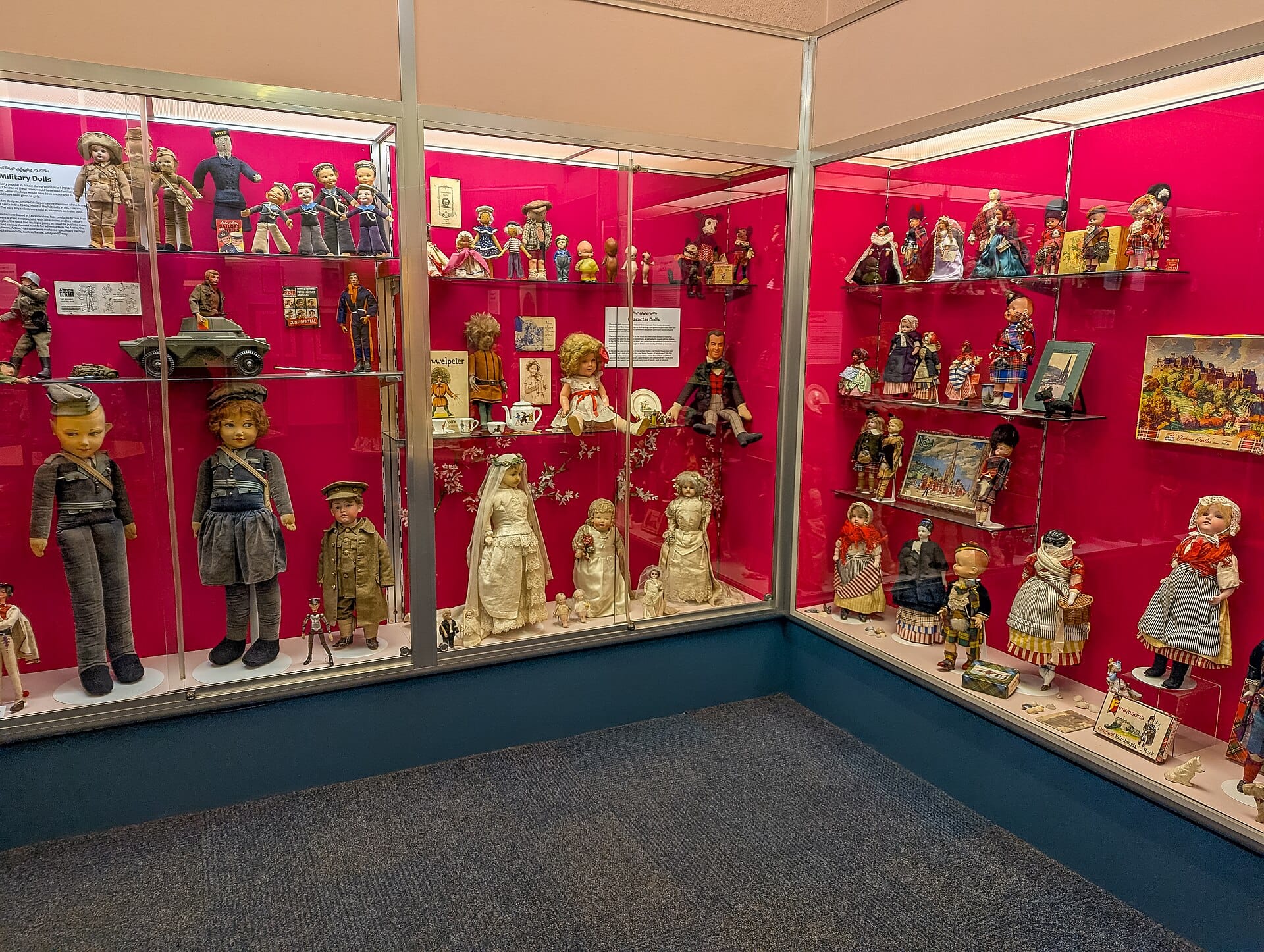
The collection spans centuries of toys, games, books, clothing, prams, school equipment, and domestic objects connected to children's lives. Teddy bears and tin soldiers share space with Victorian dolls' houses, early 20th-century board games, and postwar plastic toys that many visitors over 40 will recognise instantly. The permanent collection is dense and detailed; this is a proper research-backed museum, not a theme-park experience dressed up as one.
ℹ️ Good to know
Opening hours: currently daily 10:00–17:00, last entry 16:30. Hours can change for maintenance or events; check the Culture Edinburgh website before your visit.
The Experience: What You See and Hear Inside
Walking in from the Royal Mile, the building feels compact from the outside. Inside, it opens upward across multiple levels connected by staircases and a lift. The ground floor tends to be where children head first, drawn by the larger interactive displays. Upper floors hold the more historically significant objects: elaborately dressed dolls from the 18th century, hand-crafted wooden toys that predate mass manufacturing, and glass cases of lead soldiers arranged in full battlefield formations.
The acoustics are distinctly different depending on what time of day you visit. On a weekday morning, especially outside school holidays, the museum is quiet enough that you can hear the ticking of a mechanical toy somewhere across the room. On a Saturday afternoon in summer, the ground floor fills with children's noise and the occasional parent reading display text aloud. Neither experience is wrong, but they are genuinely different visits.
The smell is that of old paper, wood polish, and the particular dryness of a climate-controlled collection room. It is not unpleasant. The lighting is deliberately subdued in sections to protect older textiles and painted surfaces, which means some cases require leaning in close. Bring reading glasses if you use them; the label text in older sections is small.
Tickets & tours
Live prices and dates from our booking partner. If you book, we may earn a commission at no extra cost to you.
West Highland Lochs, mountains and castles tour from Edinburgh
From 61 €Instant confirmationFree cancellationLoch Ness, Glen Coe and the Highlands tour from Edinburgh
From 66 €Instant confirmationFree cancellationDay Trip to Holy Island, Alnwick Castle and Northumbria from Edinburgh
From 60 €Instant confirmationFree cancellationLoch Ness Explorer Day Trip from Edinburgh
From 60 €Instant confirmationFree cancellation
Historical and Cultural Context
The museum was founded by Edinburgh City Councillor Patrick Murray, who was, by his own account, not particularly fond of children. He saw the collection as a record of social history rather than a sentimental tribute to childhood. That framing shapes how the museum presents its objects even today. The displays are interested in what childhood meant across different eras and class positions, not just in celebrating the prettiest toys.
This historical seriousness sets the Museum of Childhood apart from similar attractions in other cities. Displays cover the working conditions of child labour, the role of school discipline, and how children's clothing reflected the social expectations placed on young people. If you are visiting the National Museum of Scotland nearby on Chambers Street, you will notice that the Museum of Childhood goes deeper on this specific subject than the national collection can within its broader remit.
The building itself, a pair of 18th-century stone structures on the Royal Mile, gives the collection a genuine Old Town character. The floors creak slightly. The windows are small and deep-set. That physical context adds something to the older objects that a purpose-built modern museum facility could not replicate.
Best Time to Visit and How to Get There
Weekday mornings between 10:00 and noon are the quietest period. School groups tend to arrive mid-morning during term time, so arriving at opening gives you the best chance of unhurried access to the ground floor displays. During the Edinburgh Festival in August, the Royal Mile outside gets extremely crowded with performers and tourists, but the museum itself does not draw the same peak queues that paid attractions do. It remains a useful retreat when the street becomes overwhelming.
💡 Local tip
If you are visiting with young children, arrive as close to 10:00 as possible. The museum is small enough that a single school group can make the ground floor feel very full very quickly.
Bus route 35 stops directly outside, with a stop named "Museum of Childhood" on the Royal Mile. The museum sits near John Knox House, which is next door, and is a short walk from the top of the Canongate. If you are arriving on foot from Edinburgh Castle, walk downhill along the Royal Mile for about 10 to 12 minutes.
The museum has lifts and ramps providing wheelchair access to most areas, and a museum shop on the ground floor. Pushchairs can be managed inside, though the upper floors via staircase require some planning; use the lift if needed. Toilets are available on site.
Photography and Practical Walkthrough
Photography is generally permitted for personal use. The glass display cases present the main challenge: reflections from overhead lighting are unavoidable with a phone camera. Shooting at an angle rather than straight-on reduces glare significantly. The larger open displays, including the dolls' houses and the ride-on vehicles, photograph more easily.
A thorough visit covering all floors takes between 45 minutes and 90 minutes for most adults. Children often move faster through the historical sections and slow down around interactive or tactile displays. If you are building a half-day itinerary in the Old Town, pairing this with The Real Mary King's Close nearby gives a strong contrast: one is free and reflective, the other is a paid guided underground experience. Both sit within a few minutes' walk of each other on the Royal Mile.
Honest Assessment: Who Will Love This and Who Might Not
Adults who grew up in the UK in the 1960s through 1990s often describe this museum as an unexpectedly emotional experience. Objects they had not thought about for decades appear in glass cases with explanatory labels, which changes how you relate to your own memory. That reaction is real and common. It is not guaranteed for international visitors whose childhood toys were not British-made, though the older sections on Victorian and Edwardian childhood have broader appeal.
Visitors expecting a large, heavily interactive children's attraction may find the museum smaller and quieter than expected. It is not a science centre or a play space. If you are travelling with children who need sustained physical engagement, the museum works best as part of a broader Old Town afternoon rather than a standalone destination. The Dynamic Earth visitor centre, a short walk away at Holyrood, offers a more kinetic experience for younger visitors.
The collection's British and European focus is worth noting. The history of childhood presented here is largely filtered through Scottish and broader British social experience. There is less material on childhood in other parts of the world, which may be a limitation depending on what you are looking for.
For travellers interested in Edinburgh's free cultural offering more broadly, the museum sits comfortably alongside the Scottish National Portrait Gallery and the National Museum of Scotland as part of a city-wide network of free admission sites. A full day can be built around these without spending anything on entry fees.
Insider Tips
- The museum shop stocks a curated selection of traditional toys and reproduction tin toys. It is one of the few places in Edinburgh's Old Town where you can buy a genuinely old-fashioned wooden toy without paying tourist-trap prices.
- The top floors are less visited and more peaceful. If the ground floor feels crowded, head upstairs first and work your way back down as the crowd thins.
- The museum does not have a cafe, so plan your visit around a nearby stop. There are several independent cafes on the Canongate end of the Royal Mile within a five-minute walk.
- Labels and display text throughout the museum are detailed and worth reading slowly. This is not a museum that works well if you rush it; the curatorial commentary is much of the value.
- Check the Culture Edinburgh events calendar before visiting. The museum occasionally hosts temporary exhibitions and family workshops that change the experience significantly, and they are always free.
Who Is Museum of Childhood For?
- Families with children aged 4 to 12 looking for a calm, free indoor stop on the Royal Mile
- Adults seeking a genuinely historical museum experience rather than an interactive attraction
- Visitors from the UK who want to encounter objects from their own childhood in a curatorial context
- Travellers building a full day of free cultural attractions in Edinburgh's Old Town
- Anyone caught in Edinburgh's unpredictable rain needing a worthwhile, no-cost indoor option
Nearby Attractions
Other things to see while in Old Town:
- Camera Obscura & World of Illusions
Perched at the top of the Royal Mile beside Edinburgh Castle, Camera Obscura & World of Illusions combines a Victorian optical instrument with five floors of hands-on illusions and a rooftop view over the Old Town. It is one of Edinburgh's most distinctive indoor attractions, best suited to curious minds of all ages.
- Edinburgh Castle
Edinburgh Castle dominates the Old Town skyline from its perch atop a 135-metre volcanic crag. From the city's oldest building to the Scottish Crown Jewels, here is everything you need to decide whether it deserves a half-day of your trip.
- The Edinburgh Dungeon
The Edinburgh Dungeon is a live-actor walk-through experience covering 1,000 years of Scotland's darkest history, staged beneath the Old Town streets. Theatrical, loud, and deliberately unsettling, it suits thrill-seekers and older children more than museum-goers expecting quiet reflection.
- Edinburgh Farmers' Market
Every Saturday morning, Castle Terrace fills with around 40 to 60 stalls selling Scottish produce directly from the people who grow, rear, and make it. Edinburgh Farmers' Market has been running since around 2000 and is widely regarded as one of the largest weekly farmers' markets in Scotland by stall count. Entry is free, and the market wraps up by 2pm sharp.
Planning a trip? Discover personalized activities with the Nomado app.