Museo de la Ciudad de Guadalajara: History Inside a Colonial Convent
Housed in a late 17th-century former Capuchin convent in the Centro Histórico, the Museo de la Ciudad de Guadalajara traces the city's story from the Spanish conquest to modern times across 10 exhibition rooms. With free general admission, it ranks among the best-value cultural stops in downtown Guadalajara.
Quick Facts
- Location
- Independencia 684, Colonia Centro, Guadalajara, Jalisco
- Getting There
- Centro Histórico stop on SITEUR light rail lines; multiple Mi Transporte bus routes along Independencia
- Time Needed
- 1 to 2 hours
- Cost
- Free general admission. Verify before visiting, as municipal museum policies can change with little online notice.
- Best for
- History enthusiasts, architecture lovers, budget travelers, families with curious kids
What Is the Museo de la Ciudad de Guadalajara?
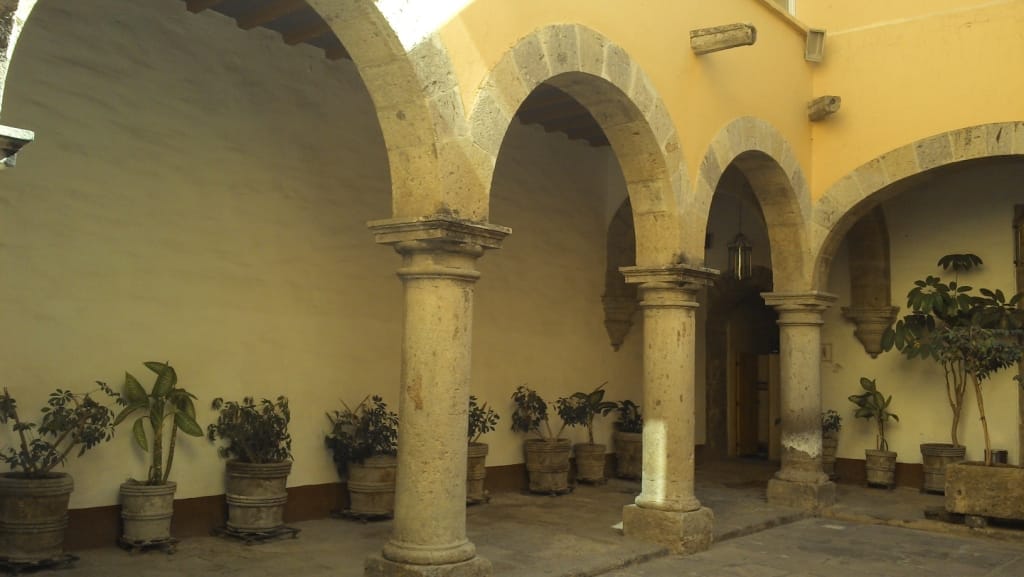
The Museo de la Ciudad de Guadalajara occupies one of the oldest surviving religious structures in the city center: a late 17th-century building that was originally part of the Convento de Monjas Capuchinas. That origin matters. The thick stone walls, interior courtyard, and arched corridors are not merely decorative context; they are themselves historical objects. INAH, Mexico's federal heritage authority, classifies the property as a monumento histórico, placing it in the same protected category as the city's most significant colonial-era landmarks.
The museum opened on 14 February 1992, created under the Secretaría de Cultura de Guadalajara to give the city a dedicated space for documenting its own identity. It is not a grand national institution with blockbuster international loans. Its focus is deliberate and local: ten rooms covering Guadalajara's evolution from the conquest through the colonial period, independence, the Porfiriato, and into the 20th century, with four of those rooms on the upper level reserved for rotating temporary exhibitions.
💡 Local tip
Visit on a Sunday for free entry. Arrive before 11:00 if you want the courtyard to yourself; it fills with families by midday.
The Building Itself: What You Notice Before You Enter a Single Room
Approaching from Calle Independencia, the museum facade reads differently from the baroque excess of churches a few blocks away. The stonework is austere in the way Capuchin convents tend to be, the order having valued simplicity over ornamentation. The entry portal is restrained, framed in carved stone that shows the patina of three centuries. It is easy to walk past if you are not looking for it, particularly on busy weekday mornings when the sidewalk carries commuter foot traffic and the occasional vendor.
Once through the entrance, the noise of Independencia drops away noticeably. The interior courtyard is a stone-paved rectangle with a central fountain and corridors running along each side under low vaulted ceilings. Light enters from above in a way that makes the space feel calm and slightly formal at the same time. The temperature drops a few degrees inside the thick-walled structure, which is a genuine relief during Guadalajara's warm pre-rain months of April and May, when afternoon highs can reach 30 to 32 degrees Celsius.
Tickets & tours
Hand-picked options from our booking partner. Prices are indicative; availability and final rates are confirmed when you complete your booking.
Lake Chapala and Ajijic guided tour from Guadalajara
From 68 €Instant confirmationFree cancellationGuadalajara and Tlaquepaque guided tour
From 73 €Instant confirmationFree cancellation
What the Permanent Collection Covers
The six permanent ground-floor rooms move roughly chronologically through Guadalajara's history, touching on pre-Hispanic context, the Spanish founding of the city (which took place not on the current site but elsewhere in Jalisco before being permanently established in the Atemajac Valley in 1542), colonial urban development, religious and civil life, and the transformations of the 19th and early 20th centuries. Displays combine maps, objects, documents, photographs, and interpretive panels in Spanish.
The ethnographic content is worth slowing down for. Panels on indigenous communities of Jalisco, including Wixarika (Huichol) peoples, provide context that the city's central plazas and cathedral squares do not. This material tends to be under-discussed in the broader tourist circuit, which concentrates heavily on colonial and mestizo heritage.
For visitors who want to understand how the city's physical fabric evolved, this museum pairs naturally with a walk through the Centro Histórico afterwards. What you see on the street will carry more meaning after reading the urban history displays, which trace how the grid of streets, plazas, and civic buildings around the cathedral was planned and rebuilt over several centuries.
ℹ️ Good to know
All permanent exhibition text is in Spanish. No official audio guide or English-language materials were confirmed at the time of writing. Non-Spanish speakers may want to read a brief overview of Guadalajara's history before visiting.
Temporary Exhibitions and Cultural Programming
The four upper-level rooms cycle through temporary exhibitions that often cover local art, urban photography, design, and community history. The quality and thematic focus vary significantly depending on when you visit. It is worth checking the museum's official Instagram account (@museodelaciudadgdl) or Facebook page before your visit to see what is currently installed, as the temporary shows occasionally feature work by Jalisco-based artists that is not widely publicized elsewhere.
The museum also runs educational workshops and has programming designed to include children with disabilities, reflecting an institutional commitment to accessible cultural participation. Parents with children who have sensory or learning differences may want to contact the museum directly to ask about specific workshop schedules.
Practical Visit Information
The museum is open Tuesday through Saturday from 10:00 to 17:30, and Sunday from 10:00 to 14:30; hours have also been listed in official sources as Tuesday to Saturday from 10:00 to 15:00, so check current schedules before planning a late-afternoon visit. General admission is currently free. These prices were reported in 2024 local media and should be verified before your visit, as municipal museum fees in Mexico can change with little online notice.
Getting here from the historic core is straightforward on foot. The address at Independencia 684 places it within a few minutes' walk of the Guadalajara Cathedral and the cluster of central plazas. SITEUR light rail lines serve the downtown area, and multiple Mi Transporte bus routes run along Calzada Independencia. If you are using Uber or DiDi, the trip from the Glorieta Minerva area typically takes 10 to 15 minutes in moderate traffic.
Photography inside the permanent collection appears to be permitted without flash for personal use, though the subdued lighting in some rooms means a smartphone with a good low-light camera will produce better results than an entry-level point-and-shoot. The courtyard, with its diffused overhead light, photographs well at almost any time of day.
⚠️ What to skip
No confirmed information was found on step-free access, elevators, or accessible restrooms. Visitors with specific mobility needs should contact the museum directly before visiting, as the colonial building presents potential challenges.
Honest Assessment: Who Gets the Most From This Museum
The Museo de la Ciudad de Guadalajara rewards visitors who arrive with some curiosity about urban history and an ability to read Spanish, or at least to move slowly through material and pick out key concepts. It is not a visually spectacular institution in the way that the Hospicio Cabañas is, with Orozco's murals commanding the space overhead. The exhibits here are quieter, more archival in character, and more dependent on text.
That said, the building itself is consistently impressive regardless of what is currently on display, and the admission price is low enough that the architectural experience alone justifies a visit. Travelers spending two or more days in the city who are following a walking tour of Guadalajara's historic center will find this museum a logical and rewarding stop.
Visitors looking purely for visual spectacle, or those who have only an hour total for the historic center, would be better served heading directly to the Hospicio Cabañas or the Palacio de Gobierno, both of which offer more immediately striking mural art. The city history museum is a complement to those experiences, not a replacement.
Fitting It Into a Broader Centro Histórico Visit
The museum sits close enough to the cathedral precinct that it fits naturally into a half-day loop through the historic core. A reasonable sequence is to start at the Plaza de la Liberación, move through the cathedral and the adjacent plazas, visit the Palacio de Gobierno for the Orozco murals on the staircase, then walk to the Museo de la Ciudad before its early Sunday closing time catches you off guard.
The surrounding streets also warrant attention. The Centro Histórico is dense with 18th and 19th-century buildings, religious architecture, and market activity. If you want to understand the commercial and sensory character of the neighborhood, the Mercado Corona is within easy walking distance and offers a sharp contrast to the museum's contemplative pace.
Insider Tips
- Sunday free admission draws local families, which creates a livelier atmosphere but also means the courtyard fills up by 11:30. If you want quiet time with the permanent collection, arrive at opening on a Tuesday or Wednesday.
- The temporary exhibition rooms on the upper level are worth checking specifically for photography-based shows. Local documentary photographers occasionally exhibit work here that covers Guadalajara's working-class neighborhoods and social history in ways that complement the permanent collection.
- The interior courtyard is one of the better places in the Centro Histórico to sit quietly without being approached by vendors. Bring a notebook or just take five minutes in the stone corridors before or after the exhibits.
- Check @museodelaciudadgdl on Instagram the week before your visit. The museum posts updates on workshop schedules, temporary exhibition openings, and any closures for special events, which are not always reflected on third-party sites.
- If you are visiting Guadalajara during the rainy season (June through September), the museum makes an excellent shelter stop during the afternoon downpours that typically hit between 15:00 and 17:00. The early Sunday closing around mid-afternoon makes it less useful for this purpose on that day.
Who Is Museo de la Ciudad de Guadalajara For?
- History travelers who want context for Guadalajara's colonial and 19th-century urban development
- Architecture enthusiasts interested in surviving 17th-century religious building fabric
- Budget travelers: with free general admission, one of the lowest-cost cultural experiences in the city center
- Families with school-age children, particularly those interested in the educational workshop programming
- Visitors spending multiple days in the Centro Histórico who want to go beyond the cathedral and main plazas
Nearby Attractions
Other things to see while in Centro Histórico:
- Calandrias (Horse-Drawn Carriage Rides)
Calandrias are Guadalajara's traditional horse-drawn carriages, operating through the colonial streets of the Centro Histórico since the early 20th century. A slow, unhurried circuit past cathedral facades, plazas, and pedestrian corridors, they offer a different pace from the city's foot traffic. This guide covers what to expect, when to go, and whether it's worth your time.
- Guadalajara Cathedral (Catedral de Guadalajara)
The Catedral Basílica de la Asunción de María Santísima anchors Guadalajara's historic center, surrounded by four plazas and centuries of layered history. Its twin neo-Gothic spires are the city's most recognized silhouette, and entry is free. Here is everything you need to know before you go.
- Instituto Cultural Cabañas (Hospicio Cabañas)
A UNESCO World Heritage Site at the heart of Guadalajara's Centro Histórico, Hospicio Cabañas houses José Clemente Orozco's most celebrated murals inside a neoclassical complex of staggering scale. This is the single most significant cultural site in western Mexico, and one of the most important in all of Latin America.
- Lienzo Charro de Jalisco
The Lienzo Charro Charros de Jalisco, on Av. R. Michel near Parque Agua Azul, is one of Mexico's most storied charro arenas. Home to one of Mexico's oldest charro associations, this is where Jalisco's equestrian traditions are kept alive through competitive charreadas, pageantry, and music.