Museo Nacional de Arte Decorativo: A Gilded Palace Open to Everyone
Housed inside the former Palacio Errázuriz Alvear, the Museo Nacional de Arte Decorativo is one of Buenos Aires's most undervisited cultural treasures. Six centuries of European and Oriental decorative arts fill the grand salons of a Beaux-Arts palace in Recoleta, all for free.
Quick Facts
- Location
- Av. del Libertador 1902, Recoleta, Buenos Aires
- Getting There
- Multiple bus lines along Av. del Libertador; taxi or ride-hailing recommended from other neighborhoods
- Time Needed
- 1.5 to 2.5 hours
- Cost
- Free entry (verify before visiting)
- Best for
- Architecture lovers, European art enthusiasts, quiet museum afternoons
- Official website
- museoartedecorativo.cultura.gob.ar
What the Museo Nacional de Arte Decorativo Actually Is
The Museo Nacional de Arte Decorativo, known in English as the National Museum of Decorative Art, sits at Av. del Libertador 1902 in Recoleta, one of the city's most architecturally dense stretches. The building alone would justify a visit: the former Palacio Errázuriz Alvear was commissioned in 1904 by Chilean ambassador Matías Errázuriz and his wife Josefina de Alvear, designed in the following decade and ranks among the finest examples of French Beaux-Arts residential architecture in South America. When the Argentine state acquired the palace and its contents in 1937, it converted both into a museum without stripping the building of its original character. The result is unusual: the art and the architecture are inseparable, and you experience both simultaneously.
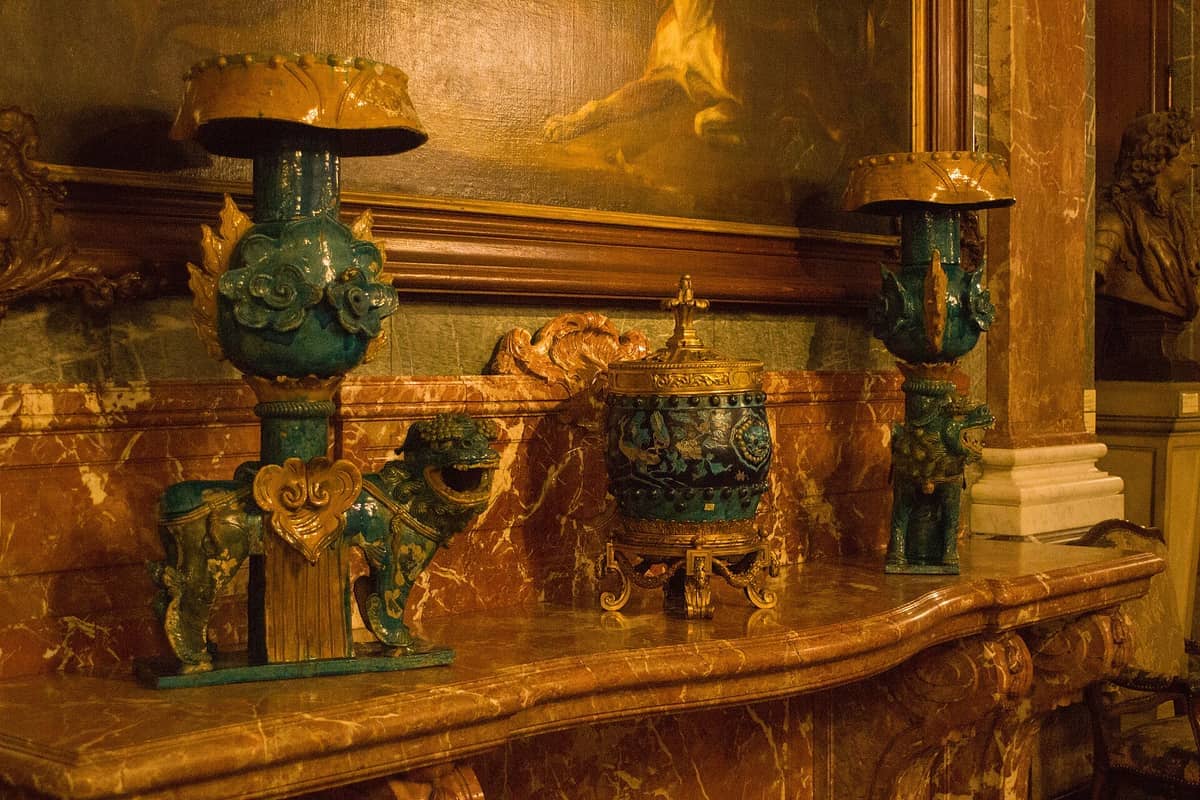
The collection spans European and Oriental decorative arts from the 14th to the 20th century, covering furniture, sculpture, porcelain, glasswork, tapestries, and paintings. These are not objects displayed in white-cube minimalism. They sit inside the same gilded salons, carved fireplaces, and inlaid parquet floors they were designed to complement. Walking through the museum means understanding how an ultra-wealthy household of the early 20th century actually looked and functioned, which is a different kind of education than most art museums offer.
ℹ️ Good to know
Opening hours: Wednesday to Sunday, 13:00–19:00. Closed Monday and Tuesday. Entry is free of charge. Verify current hours before visiting, as museum schedules in Buenos Aires can change without prominent notice.
The Building: Why the Palace Matters as Much as the Art
The Palacio Errázuriz Alvear was designed by the French architect René Sergent, who never set foot in Buenos Aires but sent detailed plans across the Atlantic. The exterior is stone-faced and restrained in the Beaux-Arts tradition, with a recessed entrance, tall windows, and a roofline that blends into the tree-lined boulevard without calling attention to itself. Only when you walk through the main entrance does the scale become apparent.
Inside, the main hall rises two stories with a central staircase of white marble. The salon de fêtes, used for formal receptions, has ceiling height and decorative plasterwork that makes contemporary event spaces look thin by comparison. The ballroom is proportioned for a different era of social life, when an ambassador's residence doubled as a political theater. Light comes in from tall windows facing the garden, and on a clear afternoon the rooms fill with a warm, diffuse glow that makes the gilding on the furniture look less ostentatious than it would under artificial light.
For those already exploring Buenos Aires's architectural heritage, this museum fits naturally alongside the Palacio Barolo and the Palacio de Aguas Corrientes as a building that justifies attention independently of what it contains. The broader context is covered well in the Buenos Aires architecture guide.
Tickets & tours
Live prices and dates from our booking partner. If you book, we may earn a commission at no extra cost to you.
Boca Juniors Museum skip-the-line tickets
From 17 €Instant confirmationFree cancellationTour to La Boca Jrs and River Plates Stadiums and museums
From 99 €Instant confirmationFree cancellationRiver Stadium and Museum Official Guided Tour
From 33 €Instant confirmationFree cancellationParque de la Costa amusement park tickets with transfer
From 79 €Instant confirmationFree cancellation
What You Will See: The Permanent Collection
The collection is organized through the palace's original rooms rather than by period or medium, so your route through the museum follows the logic of a house rather than an art history timeline. You move from reception rooms to private salons, from formal dining spaces to smaller, more intimate chambers, and the objects shift accordingly.
Highlights include Flemish tapestries from the 16th and 17th centuries, examples of Sèvres and Meissen porcelain, Spanish colonial silverwork, French Empire furniture, and a notable group of paintings that includes works from the Spanish Golden Age. The Oriental collection occupies a separate section and covers lacquerwork, bronzes, and ceramics primarily from China and Japan. None of these pieces are presented with interpretive excess. Labels are concise and the curatorial approach trusts the objects to speak with the architecture behind them.
Temporary exhibitions rotate through dedicated spaces and have covered everything from individual artists associated with Argentine decorative traditions to thematic surveys of specific materials or periods. Check the official site before your visit to see what is currently on show.
Visiting in Practice: Times, Crowds, and What to Expect
The museum opens at 13:00, and the first hour tends to be the quietest. Mid-afternoon on a weekday, you can move through the principal salons with almost no one else present. Weekends draw more visitors, particularly in the late afternoon around 17:00, though even then this museum does not reach the density of the nearby Recoleta Cemetery or the Museo de Arte Latinoamericano. For photography without other people in frame, arriving at opening on a Wednesday or Thursday is the most reliable approach.
The visit takes between 90 minutes and 2.5 hours depending on your pace and whether there is a temporary exhibition. The building has multiple levels connected by the central staircase, with some secondary spaces accessible via narrower passages. The layout is not perfectly linear, so it is worth asking at the entrance for a floor plan if one is available.
⚠️ What to skip
Accessibility note: The Palacio Errázuriz is a heritage building with original staircases and architectural features that limit elevator access to some areas. Visitors with reduced mobility should contact the museum in advance to understand which rooms are accessible.
The museum is on Av. del Libertador, one of Buenos Aires's major arteries, served by multiple bus lines. There is no Subte station within easy walking distance of this specific address, so a taxi, ride-hailing app, or bus along the avenue is the practical approach from most neighborhoods. Parking exists along side streets but is not guaranteed during peak hours.
The Recoleta Context: What Is Around It
The museum sits in a part of Recoleta where major cultural institutions cluster within a few blocks of each other. The Museo Nacional de Bellas Artes is directly across Av. del Libertador. The Facultad de Derecho, the Museo de Arte Hispanoamericano Isaac Fernández Blanco, and the Recoleta Cemetery are all within reasonable walking distance. A single afternoon in this pocket of the city can cover more cultural ground per kilometer than almost anywhere else in Buenos Aires.
If you are spending more time in Recoleta, the Recoleta Cemetery is the most-visited attraction in the neighborhood and sits about ten minutes on foot from the museum. The Museo Nacional de Bellas Artes across the avenue is free and carries Argentine and European fine art across a much larger floor plan. For a broader view of the neighborhood, see the Recoleta neighborhood guide.
The stretch of Av. del Libertador in front of the museum has a calm, residential quality in the morning before the museum opens. Coffee and breakfast options exist on nearby cross streets, though Recoleta is not a neighborhood with the concentrated cafe density of San Telmo or Palermo. Plan accordingly if you are arriving close to the 13:00 opening.
Assessment: Who Gets the Most from This Museum
This museum rewards visitors who bring some prior interest in decorative arts, architectural history, or the social world of early 20th-century Buenos Aires. If you can read a piece of Louis XVI furniture or recognize the difference between Meissen and Delft porcelain, the collection will feel rich and specific. If decorative arts as a category leave you cold, the palace interior alone may hold your attention for 45 minutes but not much longer.
It is not an ideal destination for families with young children. The rooms are small relative to the objects inside them, there is nothing interactive, and the atmosphere is quiet and formal in a way that does not translate well for restless visitors. Those looking for contemporary Argentine art should instead go to the Museo de Arte Moderno or the MALBA. The Decorative Arts Museum is a specific kind of experience: slow, material, and architectural.
💡 Local tip
Photography tip: The rooms facing the garden receive the best natural light in the early afternoon. Bring a camera that handles moderate indoor light well; flash photography inside heritage buildings like this can be restricted and is generally unwelcome.
Insider Tips
- The garden on the side of the palace is easy to miss because the main entrance draws you straight inside. Before or after your visit, walk around to see the exterior in full and the relationship between the building and the avenue.
- Arrive at 13:00 on a weekday to have the main salons largely to yourself. The lack of crowds means you can stand in the center of the ballroom and actually absorb the proportions of the space, which is impossible when other visitors are present.
- The museum's temporary exhibitions are less publicized than those at larger institutions and tend to be genuinely interesting. Check the official website a few days before visiting rather than assuming the building is only about the permanent collection.
- If you are combining this visit with the Museo Nacional de Bellas Artes across the street, do the Decorative Arts Museum first when your attention is freshest. The MNBA is significantly larger and can run long if you are not selective.
- The museum does not have a substantial cafe or restaurant on site. Eat beforehand or identify a nearby option, because Recoleta's dining options thin out noticeably between the tourist cluster near the cemetery and the avenue.
Who Is Museo Nacional de Arte Decorativo For?
- Travelers with an interest in European decorative arts, furniture, or applied design
- Architecture enthusiasts who want to see a Beaux-Arts palace interior in its intended domestic context
- Visitors who have already covered the major contemporary and fine art museums and want something distinct
- Anyone who prefers quiet, low-crowd museum experiences over crowded landmark attractions
- Those combining a half-day cultural route through Recoleta alongside the MNBA and the cemetery
Nearby Attractions
Other things to see while in Recoleta:
- Basílica Nuestra Señora del Pilar
Standing directly beside the Recoleta Cemetery, the Basílica Nuestra Señora del Pilar is one of the oldest churches in Buenos Aires. Built in the 18th century as part of a Franciscan convent complex, it offers free entry, a small cloister museum, and a rare moment of quiet in one of the city's most visited corners.
- Biblioteca Nacional Mariano Moreno
The Biblioteca Nacional Mariano Moreno is Argentina's main national library, a striking Brutalist landmark in Recoleta that has safeguarded the country's literary and documentary heritage since its founding in 1810. Entry is free, the building is architecturally significant, and the reading rooms offer a rare window into Buenos Aires intellectual life.
- Cementerio de la Recoleta
The Cementerio de la Recoleta is a 13-hectare open-air monument to Argentina's political elite, military heroes, and cultural icons, mapped out in streets of carved marble, wrought iron, and crumbling Art Deco grandeur. It is where Eva Perón is buried, but the cemetery rewards those who wander beyond her tomb. Few attractions in Buenos Aires deliver this much history, beauty, and quiet drama in a single visit.
- Centro Cultural Recoleta
The Centro Cultural Recoleta is a large public cultural center in Recoleta, Buenos Aires, offering rotating contemporary art exhibitions, film screenings, and live performances across 27 rooms and additional dedicated spaces. Entry is free for Argentine residents and low-cost for international visitors, making it one of the most accessible cultural institutions in the city.
Planning a trip? Discover personalized activities with the Nomado app.