Museo del Banditismo di Aggius: Sardinia's Compelling Museum of Outlaws and Justice
Tucked inside a former courthouse in the granite village of Aggius, the Museo del Banditismo documents three centuries of Gallurese banditry through trial records, weapons, period costumes, and judicial dossiers. It is one of the most culturally specific museums in northern Sardinia, offering real insight into a chapter of island history that shaped communities, laws, and identities across Gallura.
Quick Facts
- Location
- Via Pretura, 1, 07020 Aggius (SS), Gallura, northern Sardinia
- Getting There
- By car from Tempio Pausania (approx. 10 km) or Olbia (approx. 60 km); no direct public bus service to Aggius — a car is recommended
- Time Needed
- 45–90 minutes for the museum; allow extra time to explore Aggius village
- Cost
- Full price €4.00 / Reduced €3.00; combined tickets with other Aggius museums may be available (verify current rates before visiting)
- Best for
- History enthusiasts, travelers interested in Sardinian culture, visitors combining with a drive through Gallura
- Official website
- http://www.museodiaggius.it
What Is the Museo del Banditismo di Aggius?
The Museo del Banditismo di Aggius (Banditry Museum of Aggius) is a small but sharply focused museum dedicated to the long history of brigandage in the Gallura region of northern Sardinia. It occupies the former Pretura, the old courthouse of Aggius, a solid stone building in the oldest part of a village that was, for roughly three centuries, the epicenter of banditry in Gallura and one of the key centers of outlaw activity on the island. The choice of location is deliberate: this is where fugitives were tried and sentenced, where the legal machinery of the state confronted a culture that often operated by entirely different codes.
Spread across four rooms, the collection spans approximately from the mid-1500s to the mid-1800s, the period in which Aggius was the epicenter of Gallurese banditry. You move through judicial dossiers, original trial documents, descriptions of famous local fugitives, period weapons used by law enforcement and bandits alike, and the heavy cloth costumes worn across these centuries. For a museum of this size, it covers considerable thematic ground without feeling padded or repetitive.
ℹ️ Good to know
Opening hours are currently listed as Tuesday and Wednesday 10:00–13:00 and 15:00–17:00; Thursday 10:00–13:00; Saturday and Sunday 10:00–13:00 and 15:00–17:00; closed Monday and Friday. Hours may vary seasonally — confirm at museodiaggius.it or by emailing info@museodiaggius.it before making a special trip.
The Building: A Courthouse That Judged Its Own Community
The former Pretura is built from the local grey granite that defines Aggius architecturally. Walking into it, the walls carry the particular weight of old civic authority: thick stone, high ceilings in the main hall, narrow windows that let in strips of cool light even on bright summer mornings. There is no artificial drama added to the space. The architecture does the work.
The building's previous identity as a courthouse is not just background detail — it is central to the experience. Documents on display here were filed in rooms like the ones you are standing in. The spatial connection between the records, the trials, and the location gives the museum a coherence that a generic exhibition hall could not replicate. The stone floors absorb sound, and in quiet moments between other visitors, there is a particular stillness that suits the subject matter.
Tickets & tours
Hand-picked options from our booking partner. Prices are indicative; availability and final rates are confirmed when you complete your booking.
Cagliari's historic centre tour with National Archaeological Museum
From 66 €Instant confirmationFree cancellationBread Workshop and Visit to the Bread Museum in Orgosolo
From 84 €Instant confirmationFree cancellationAlghero Porto Conte Park Eco-Museum Tickets
From 15 €Instant confirmationFree cancellationBerchidda Wine Museum entrance ticket with wine tasting
From 24 €Instant confirmationFree cancellation
What You Will See in the Four Rooms
The museum's layout follows a broadly chronological and thematic progression. The first rooms introduce the context of Gallurese banditry as a social and economic phenomenon, not simply as individual criminality. Panel texts explain how remoteness, land disputes, livestock theft, and the limits of central authority shaped conditions in which banditry became embedded in community life across northern Sardinia.
Judicial dossiers and trial transcripts are among the most striking exhibits. These are not facsimiles displayed behind glass for atmosphere — many are original documents, and the handwriting, ink degradation, and physical condition of the paper carry real historical weight. Descriptions of named fugitives appear alongside accounts of their crimes and eventual fates. Some became legendary figures in Gallurese oral tradition; the museum treats them carefully, neither romanticizing nor simply criminalizing.
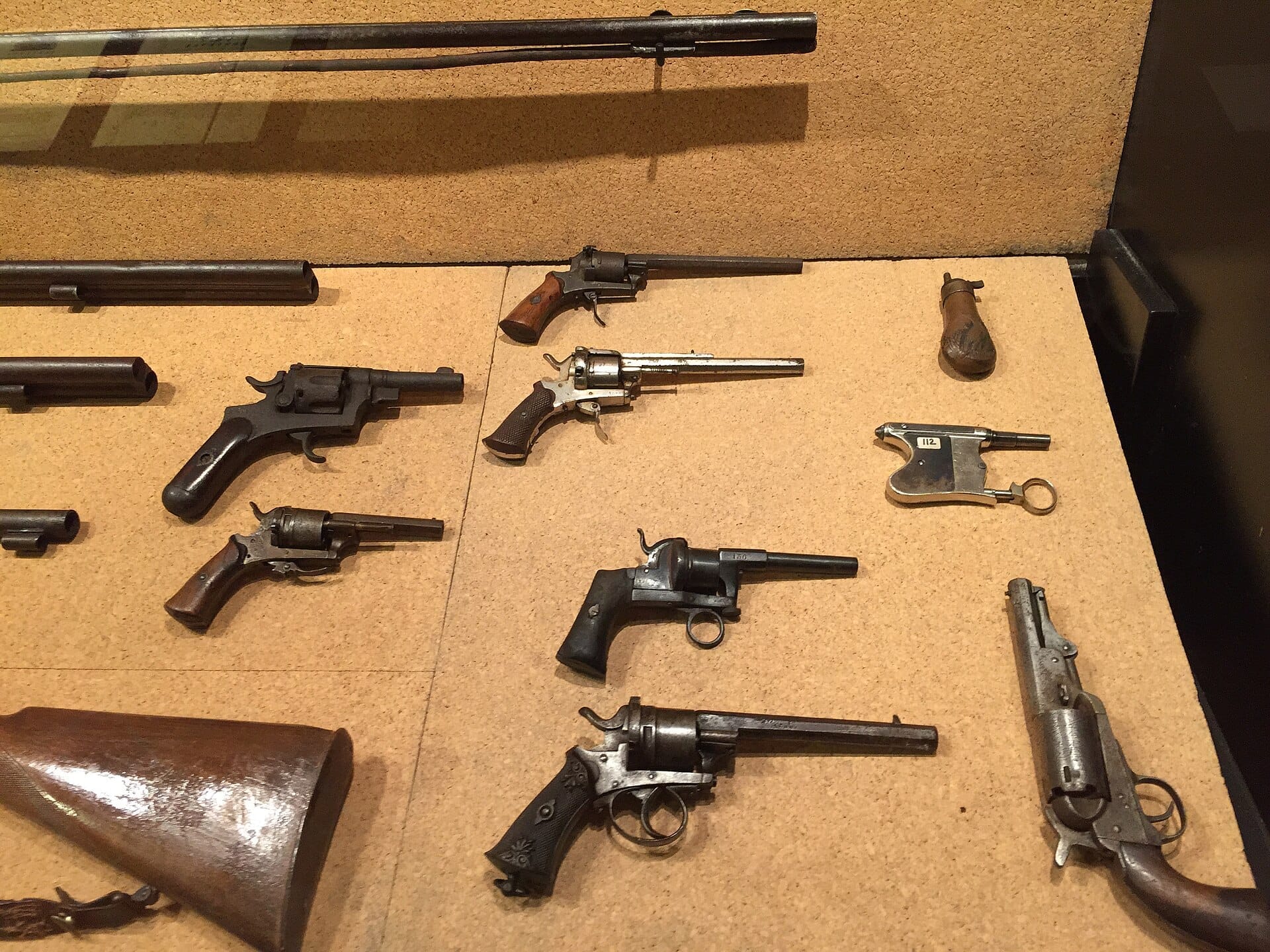
The weapons collection occupies its own distinct section. Firearms, knives, and other implements from the enforcement side of this history sit alongside material associated with the bandits themselves. Period costumes from the same era round out the material culture on display, giving a sense of how people dressed, moved, and carried themselves in a world where the threat of violence was a practical daily consideration, not a dramatic abstraction.
💡 Local tip
Some of the panel texts and document labels are primarily in Italian. If you read little Italian, bring a translation app with a photo function — it makes a real difference for the document displays and the longer contextual panels.
The Village of Aggius: Context You Should Not Miss
The museum makes most sense when visited as part of an afternoon in Aggius itself. The village sits at roughly 500 meters above sea level in the granite highlands of Gallura, surrounded by the Valle della Luna formation — a surreal landscape of eroded rock formations that turns extraordinary colors in late afternoon light. Spending an hour in the granite Valle della Luna before or after the museum is not a detour. It is essential framing for understanding why this territory produced the conditions the museum documents.
The village center itself is compact and quiet outside summer weekends. The streets are narrow and paved in the same local granite as the buildings, making everything feel continuous and unified. The museum sits in the oldest part of this center, easy to locate once you are on foot in the village. There is no need for navigation apps once you arrive — Aggius is small enough to read instinctively.
Aggius is reachable from Gallura via the road from Tempio Pausania, which takes around ten minutes by car and is straightforward. Coming from Olbia, the drive takes roughly an hour (about 60 km) and passes through pleasant Gallurese countryside. There is no reliable public bus connection to Aggius, which makes a car effectively essential for most visitors.
Best Time to Visit and How the Experience Changes
The museum is small and the opening windows are tight, so timing matters more here than at a large city museum. Arriving in the first thirty minutes of the morning session (10:00–10:30) usually means you have the rooms largely to yourself. By late morning in summer, tour groups occasionally pass through, though Aggius attracts fewer mass-tourism visitors than coastal destinations, so crowding is rarely severe.
Afternoon visits, from 15:00 onward on days when the afternoon session is open, have a different character. The light entering the old courthouse in late afternoon is warmer and lower, catching the surface of the stone floors and the glass display cases differently. If you are interested in photography, the afternoon session on summer days produces better conditions inside the building. Outside, the granite of the village and surrounding landscape also photographs better in the two hours before sunset.
The museum is worth combining with the broader landscape of the Gallura region. May and September are particularly comfortable months for driving through this area and spending time outdoors in the village and surrounding hills without the full intensity of the August heat. The September window in Sardinia is especially good for combining cultural visits with the still-warm landscapes.
Cultural Significance: Why Banditry in Sardinia Is Not a Simple Story
The museum operates on the understanding that banditry in Gallura was not purely a law enforcement problem. It was a social structure embedded in the economics of pastoral life, land tenure disputes, blood feuds, and the long historical reality that central state authority barely reached these highland communities for most of the period the museum covers. The Gallurese bandits documented here were not random criminals in the modern sense. They operated within systems of obligation, loyalty, and conflict that the wider Italian state found difficult to understand and harder to suppress.
This context connects to broader currents in Sardinian cultural identity. The island's resistance to outside authority, its distinct linguistic traditions including Gallurese (a Romance variety distinct from standard Sardinian), and its long history of relative isolation all feed into what the museum documents. Visitors with a background interest in Sardinia's deeper cultural layers will find the museum adds a meaningful historical dimension to the island beyond the standard archaeological narrative.
The museum does not glorify the bandits. It also does not reduce them to simple villains. The documentary approach — prioritizing original judicial records and physical evidence over dramatic reconstruction — keeps the interpretation grounded. This restraint is one of the museum's real strengths.
Practical Notes and Final Take
At €4 for a full ticket, the Museo del Banditismo di Aggius is not expensive, but it is also not a major attraction in the way that a large archaeological museum or a landmark site would be. If you are passing through northern Sardinia and have some appetite for local cultural history, this museum rewards a ninety-minute stop comfortably. If you are making a special trip of more than an hour's driving just for this museum without combining it with other reasons to be in the area, you might find the scale underwhelming relative to the journey.
The museum is housed in a historic stone building in an old town, which implies architectural constraints. Step-free access cannot be confirmed from available information. Visitors with mobility requirements are strongly advised to contact the museum directly before visiting, either by email at info@museodiaggius.it or via the contact details on the official website.
English-language interpretation is limited. The museum is primarily designed for Italian-speaking visitors, and most panel texts and document explanations are in Italian. This does not make the material inaccessible — the physical objects and the spatial experience of the old courthouse carry meaning regardless — but it does mean the full depth of the collection is easier to access with some Italian reading ability or a translation tool. Visitors planning a wider cultural exploration of northern Sardinia might consider the lesser-known cultural sites across the island that pair well with a stop in Aggius.
⚠️ What to skip
The museum is currently closed on Mondays and Fridays. If your Sardinia itinerary brings you through Gallura on those days, the museum will not be accessible. Plan the day accordingly, and verify hours for the specific dates of your visit before arrival.
Insider Tips
- The afternoon session (15:00–17:00) on a weekday is typically the quietest time to visit. You will often have the four rooms almost entirely to yourself, which makes spending time with the document displays much easier.
- Combine the museum visit with a walk through the granite streets of Aggius and, if time allows, the short drive to the Valle della Luna rock formations nearby. The landscape outside gives concrete physical meaning to the isolation that shaped the banditry history inside.
- The museum's official site (museodiaggius.it) and the Sardegna Cultura portal both list contact details. A quick email to info@museodiaggius.it before visiting can confirm current hours, especially outside peak summer season when schedules sometimes shift.
- Photography inside the museum is worth attempting in the afternoon sessions when warmer light enters the old courthouse windows. The document cases and stone walls photograph well without flash in these conditions.
- If you read Italian, ask at the front desk whether any additional printed materials or catalogues are available. Small regional museums in Sardinia often have locally printed booklets that do not appear online and provide considerably more detail than the wall panels alone.
Who Is Museo del Banditismo (Aggius) For?
- History travelers interested in Sardinian social and legal history beyond the standard archaeological circuit
- Road trippers moving through Gallura who want cultural depth alongside the scenic drive
- Visitors with Italian reading ability who can fully access the original document displays
- Travelers combining the museum with the village of Aggius and the surrounding granite landscape
- Anyone who wants an honest, non-romanticized account of a complex chapter in Sardinian life
Nearby Attractions
Other things to see while in Gallura:
- Basilica di San Simplicio (Olbia)
The Basilica di San Simplicio is the oldest surviving building in Olbia and one of the finest Romanesque churches in Sardinia. Built between the late 11th and mid-12th centuries on a site with origins in a Roman necropolis and a Palaeo-Christian church, it offers a rare, unhurried encounter with pre-medieval Gallura — around ten minutes' walk from the ferry port crowds.
- Capo Testa
Capo Testa is a rugged granite promontory jutting into the Strait of Bonifacio near Santa Teresa Gallura, in Sardinia's far north. The headland is free to visit and rewards exploration with wind-sculpted rock formations, secluded sea pools, and the eerily beautiful Valle della Luna. It is one of northern Sardinia's most distinctive natural landscapes.
- Coddu Vecchiu Giants' Tomb (Arzachena)
The Giants' Tomb of Coddu Vecchiu is one of Sardinia's best-preserved Nuragic funerary monuments, featuring a roughly 4-metre granite entrance stele that has stood in the Gallura countryside for roughly 4,000 years. Located about 10 km from the Gulf of Arzachena, it offers a absorbing encounter with the island's prehistoric past in under an hour.
- Costa Paradiso
Costa Paradiso is a striking stretch of northern Sardinian coastline where ancient red and orange granite cliffs drop into transparent turquoise water. Largely a seasonal holiday settlement with under 200 year-round residents, it offers raw scenery, natural rock pools, and sheltered coves without the infrastructure of larger resorts.