Mont-Tremblant National Park: The Laurentians at Their Best
About 150 kilometres north of Montreal, Mont-Tremblant National Park is Quebec's first national park and one of the Laurentians' most rewarding natural destinations. Covering more than 1,500 square kilometres of boreal forest, lakes, and river valleys, it draws hikers, paddlers, and fall-foliage seekers from across eastern Canada.
Quick Facts
- Location
- Laurentians region, Quebec — roughly 150 km north of Montreal
- Getting There
- Car recommended; no direct public transit from Montreal to the park. Drive via Autoroute 15 North then Route 117 North.
- Time Needed
- Full day minimum; overnight stays available at Sépaq campsites and yurts
- Cost
- C$10.10/adult (18+); free for ages 17 and under. Annual single-park pass C$50.50/adult. Prices as of 2026 — verify at Sépaq.
- Best for
- Hikers, paddlers, photographers, families, fall foliage seekers
- Official website
- www.sepaq.com/pq/mot/index.dot?language_id=1
What Mont-Tremblant National Park Actually Is
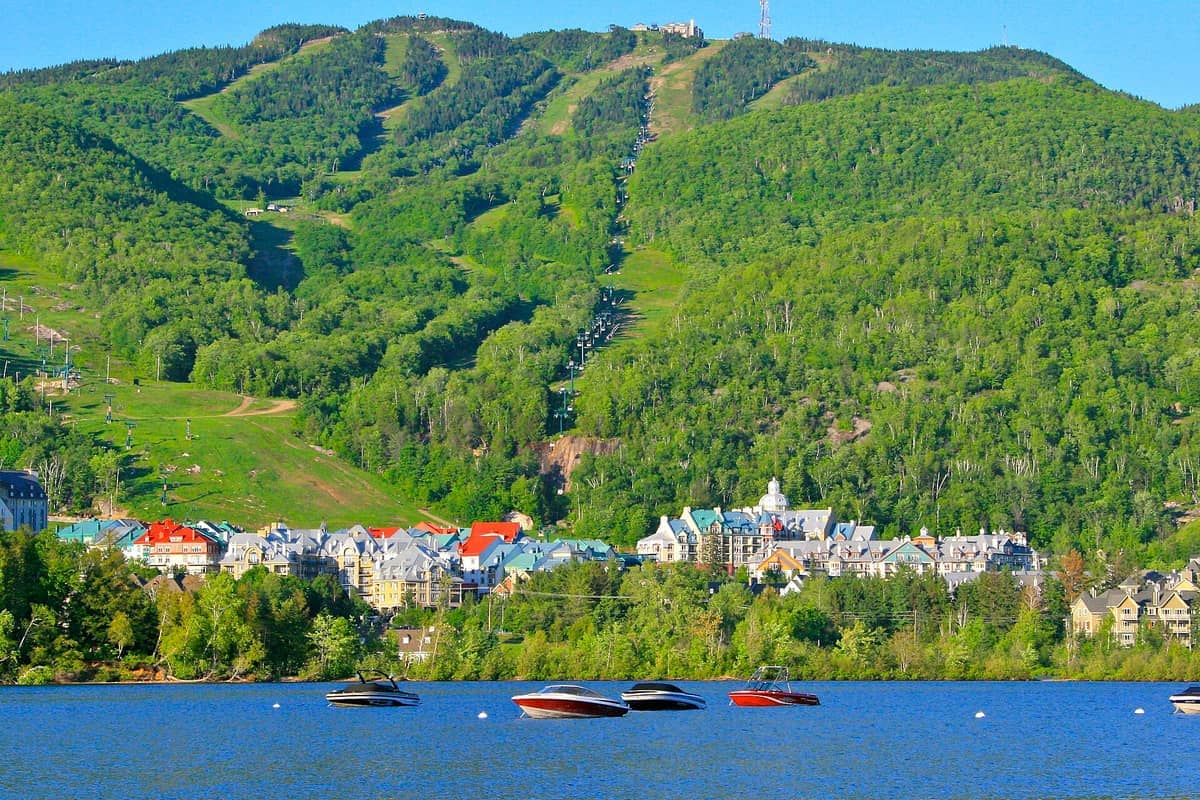
Mont-Tremblant National Park (Parc national du Mont-Tremblant in French) is managed by Sépaq, the Quebec national parks network, and holds the distinction of being Quebec's first national park, created in 1895. It covers over 1,500 square kilometres of the Laurentian Shield: ancient granite hills blanketed in mixed boreal forest, cut through by rivers, and dotted with dozens of lakes. The park's summit, Mont-Tremblant itself, rises to 968 metres above sea level.
It is worth being clear about geography before you plan. The park is not the same as the well-known Mont-Tremblant ski resort, which sits on the park's southern edge and is a separate commercial operation. The resort village has hotels, restaurants, and gondola rides. The national park is a wilderness area with trail networks, canoe routes, and campgrounds. Both attract visitors, but the experiences are completely different. This guide covers the national park.
ℹ️ Good to know
The park has multiple access sectors. Depending on your planned activity, you will enter via La Diable, Pimbina–Saint-Donat, or L'Assomption. Check Sépaq's website and choose your sector before you leave Montreal, otherwise you may drive to the wrong entrance.
Getting There from Montreal
A private car is effectively the only practical way to reach the park from Montreal. The standard route follows Autoroute 15 North, then Route 117 North through Saint-Jérôme and the Laurentians, before branching toward the park sector you are visiting. Depending on traffic leaving the island and your specific destination within the park, expect between 90 minutes and 2.5 hours of driving. Summer weekends and October weekends during peak foliage season can push that higher, especially on Route 117, which narrows through smaller towns.
There is no direct bus or train service from Montreal to the park boundaries. Some visitors combine a car rental with a trip to the Laurentians; others join organized day tours from the city. If you are not comfortable driving in Quebec or do not have a vehicle, this is an attraction that genuinely requires planning. For context on how to move around the broader Montreal region, see the getting around Montreal guide.
⚠️ What to skip
Parking areas and entire park sectors can reach capacity on busy weekends, particularly in July, August, and October. Sépaq strongly recommends purchasing access online in advance. Arriving without a reservation on a peak Saturday in October may mean being turned away at the registration centre.
Tickets & tours
Hand-picked options from our booking partner. Prices are indicative; availability and final rates are confirmed when you complete your booking.
1 day trip to Mont Tremblant and the small village in Laurentians
From 72 €Instant confirmationFree cancellationMontreal evening cruise on the St. Lawrence River
From 54 €Instant confirmationFree cancellation3-hour e-bike guided tour in Montreal
From 68 €Instant confirmationFree cancellationWalking tour of Old Montreal
From 20 €Instant confirmationFree cancellation
What the Park Looks and Feels Like
The Laurentian Shield is old geology. The rounded hills have been worn smooth by glaciation, and the park's lakes fill basins carved into bedrock. In summer, the forest is dense and green, and the lakes reflect colours that skew deeply blue under clear skies. The air carries the faint resinous smell of balsam fir and, near water, the mineral coolness of a lake that rarely warms fully even in August. Bird noise is constant in the early morning: white-throated sparrows, hermit thrushes, and the distant yodelling of loons on the larger lakes.
In autumn, typically from late September through mid-October, the park undergoes a colour shift that is the main reason most Montreal visitors make the trip. Maples turn first, burning orange and red against the remaining green of conifers. Sugar maples dominate the lower slopes and are particularly vivid at this latitude. Peak timing shifts from year to year by a week or so, and Sépaq usually publishes foliage updates; local nature groups in Quebec also track conditions in real time.
Winter brings snowshoeing, cross-country skiing, and ice fishing. The park stays open year-round, but the experience changes significantly. Temperatures regularly drop below minus 20°C on cold nights, and some facilities close or reduce hours. If you are visiting between December and March, pack accordingly and confirm which sectors and services are operational before you go.
Hiking and Activities
The park has roughly 400 kilometres of maintained trails spread across its sectors. Difficulty ranges from flat lakeside loops accessible to families with young children, to longer ridge trails with significant elevation gain. The La Corniche trail is often cited for its views over the Diable River valley. Les Chutes Croches, a series of cascades on the Diable River, requires less effort and rewards visitors with a photogenic payoff that suits most fitness levels.
Paddling is one of the park's core offerings. Canoes, kayaks, and paddleboards are available to rent from Sépaq at several lake access points, and multi-day canoe-camping routes let experienced paddlers string together lakes and portages across the park's interior. For visitors combining this with a broader Montreal trip, the day trips from Montreal guide provides useful context on planning excursions into the surrounding region.
Fishing for brook trout and lake trout requires a provincial fishing licence, available through the Government of Quebec. Wildlife is present throughout the park: moose, white-tailed deer, black bears, and beavers are all established here, though sightings are not guaranteed. Dawn and dusk on quieter trails near wetlands give the best chances.
Best Time to Visit and How the Experience Changes
Late June through mid-August is the peak summer window. Trails are dry, all facilities are open, and rentals are fully stocked. The trade-off is that this is also the busiest period. Campsite and activity reservations fill weeks in advance. If you want a quieter experience in summer, aim for a Tuesday through Thursday visit, arriving at the registration centre soon after it opens.
Late September to mid-October is the other peak, driven by foliage. Crowds can rival July on the best weekends. However, the park feels different in autumn: cooler temperatures, fewer insects, and the sensory contrast of colour against grey granite makes hiking genuinely memorable. This is the window most worth planning around if you are visiting Montreal in autumn.
Spring (May to early June) is quieter and underrated. Snow lingers on north-facing slopes into May, trails can be muddy, and blackflies peak in late May, but the forest is coming alive and the park population is low. For travel timing relative to Montreal's own calendar, the best time to visit Montreal guide covers seasonal considerations for the city and its surroundings.
Practical Details: Admission, Facilities, and Accessibility
Daily park access costs C$10.10 per adult (18 and over), taxes included, effective May 1, 2025. Children 17 and under enter free. If you plan multiple visits, an annual single-park card is C$50.50 per adult, and an annual Quebec national parks card covering all Sépaq parks is C$91 per adult. These prices should be confirmed with Sépaq before your visit, as they can change.
The Discovery Centre serves as the main interpretive hub for the park and includes exhibits on the park's ecology and history. Registration centres at Pimbina–Saint-Donat and L'Assomption handle access for their respective sectors. Both registration centres and the Discovery Centre have telephones and defibrillators available in their 24-hour sections, which matters for visitors arriving early or camping in the park.
Accessibility varies significantly across the park. Some lakeside facilities and interpretive areas are accessible to visitors with mobility considerations, but many trails involve rough terrain, roots, and uneven surfaces. Visitors requiring specific accessible trails, adapted equipment, or accessible washroom facilities should contact Sépaq directly before arrival to confirm current conditions in their chosen sector.
💡 Local tip
Cell phone coverage is unreliable or absent in many parts of the park. Download offline maps, Sépaq's trail information, and driving directions to your specific sector entrance before you leave the city. A printed Sépaq visitor guide is available as a PDF on their website.
Who Should Think Twice
Mont-Tremblant National Park rewards visitors who have come specifically for outdoor activity. If you are looking for a scenic viewpoint or a quick nature fix within the city, Mount Royal Park delivers without the 150-kilometre drive. Similarly, if you want a structured nature experience closer to Montreal, the Montreal Botanical Garden and Biodome are accessible by metro and suit visitors with limited time or mobility.
The park also requires a car, which excludes visitors who do not drive or prefer not to rent a vehicle. And it requires a full day at minimum; anyone expecting to combine this with a morning in Old Montreal and an evening in the Plateau is setting themselves up for a punishing itinerary.
Insider Tips
- Book your park access and any rental equipment (canoes, kayaks, bikes) online through Sépaq well before your visit date, not just a day or two ahead. October weekends sell out in the summer months.
- The Diable River sector, accessed via the L'Assomption side, tends to draw fewer crowds than the areas closest to the ski resort. If you want quieter trails, this is where to go.
- For foliage timing, check the foliage maps published by Quebec's ministry of forests, which track colour change region by region. The Laurentians typically peak 10 to 14 days before Montreal's urban trees turn.
- Pack food. The park has picnic areas but limited food services inside the boundaries. Bring more water than you think you need, especially on ridge trails where shade is sparse.
- If you are staying overnight, yurts and ready-to-camp cabins (oTENTiks) can be reserved through Sépaq and are far more comfortable than tenting in marginal weather, particularly in shoulder seasons.
Who Is Mont-Tremblant For?
- Hikers and trail runners who want real elevation and distance without a multi-day backcountry commitment
- Paddlers looking for lake canoe routes within day-trip range of Montreal
- Families with children comfortable on moderate trails and near water
- Photographers and foliage seekers visiting in late September or early October
- Campers and overnight visitors wanting a proper wilderness experience close to a major city
Nearby Attractions
Combine your visit with:
- Eastern Townships
The Eastern Townships (Cantons-de-l'Est) stretch across the rolling hills south of Montreal, reaching the U.S. border. With lavender fields, gorge walks, vineyards, and covered bridges, this is one of the most rewarding escapes from the city, especially in autumn when the hills turn amber and rust.
- Îles-de-Boucherville National Park
Parc national des Îles-de-Boucherville is a five-island nature reserve in the St. Lawrence River, reachable from Montreal in under an hour. Cyclists, kayakers, birdwatchers, and families find quiet trails, shoreline views, and genuine wilderness just minutes from the city's eastern suburbs.
- Maison Saint-Gabriel
Maison Saint-Gabriel is one of the oldest intact structures on the Island of Montreal. Originally a working farm connected to Marguerite Bourgeoys and the Filles du roi, it is now a museum and National Historic Site where guided tours walk visitors through three centuries of Quebec's colonial and religious history.
- Marché Maisonneuve
Marché Maisonneuve is one of Montreal's official public markets and one of its least crowded. Free to enter, open seven days a week, and genuinely rooted in its neighborhood, it rewards travelers who venture beyond the tourist circuit.