Torre de los Perdigones: Seville's Industrial Watchtower with a Camera Obscura
Standing 45 metres above the La Macarena district, the Torre de los Perdigones is a 19th-century lead-shot factory chimney transformed into one of Seville's most unusual viewpoints. Combine a panoramic rooftop view with a live camera obscura projection for under €5, and you have one of the most distinctive experiences in the city.
Quick Facts
- Location
- Calle Resolana, s/n, 41009 Seville (La Macarena district)
- Getting There
- TUSSAM buses 2, 6, 13, 14, C1, C3, C4 stop nearby; 15-min walk from the Basilica de la Macarena
- Time Needed
- 45–75 minutes including the camera obscura session
- Cost
- General approx. €4–5; reduced approx. €2.50; viewpoint-only approx. €1.50. Verify prices before visiting.
- Best for
- Photography, history enthusiasts, travelers seeking views away from the main tourist circuit
- Official website
- http://www.torredelosperdigones.com
What Is the Torre de los Perdigones?
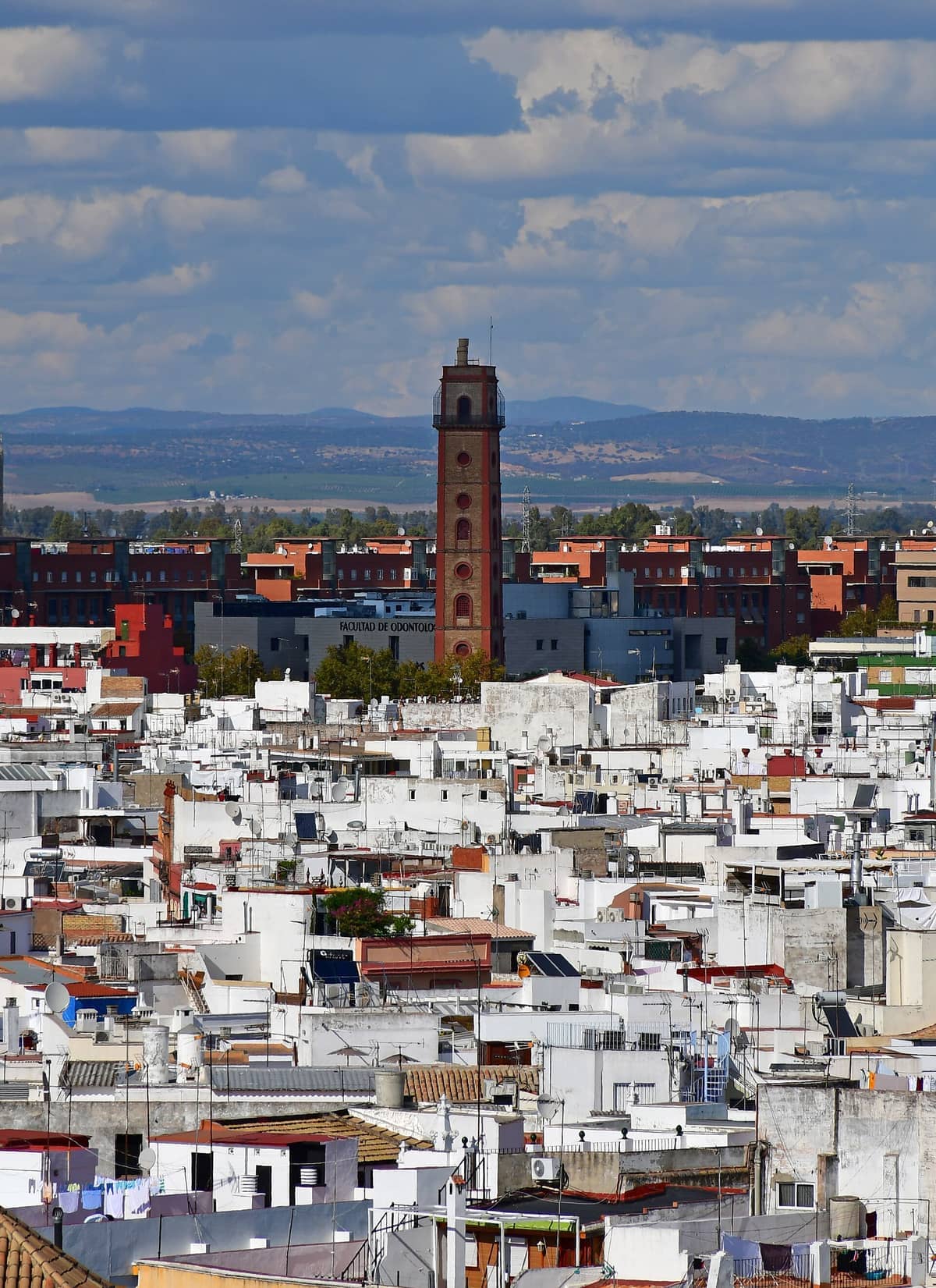
The Torre de los Perdigones, also known as the Cámara Oscura Torre de los Perdigones, is a 45-metre industrial chimney tower that is the sole surviving structure of the old San Francisco de Paula lead-shot foundry, built in 1885 in the La Macarena district of Seville. For over a century it sat derelict at the northern edge of the city, then quietly reopened as a public attraction after careful restoration by the city council. Today it houses a camera obscura at the top and an open viewpoint platform, making it a genuine optical curiosity with a strong industrial heritage story attached.
The attraction sits close to the Puente de la Barqueta and a short walk from the Basilica de la Macarena, which means most visitors combine it with a broader exploration of the La Macarena neighborhood. The entire visit rarely exceeds 75 minutes, and prices are modest enough that it fits comfortably into a budget Seville itinerary.
💡 Local tip
Visits run on a fixed schedule every 30 minutes, Wednesday to Sunday, 10:00–14:00. Groups are small and slots fill up, especially on weekends. Arrive early or check current booking options before traveling across the city.
The History Behind the Tower
The factory that once surrounded this tower was built to manufacture lead shot, the small spherical pellets used in firearms and ammunition. The industrial process required height: molten lead was dropped from the top of the tower, and the falling droplets would cool and form spherical pellets as they descended, landing in a water basin at the base. The chimney-like tower was therefore functional, not decorative, and its unusual proportions for the 1885 cityscape of Seville reflect that engineering logic.
The factory, formally called the Fábrica de Perdigones, operated under the name San Francisco de Paula. By the late 20th century the complex had been abandoned, and the surrounding industrial structures were demolished. The tower survived, and in 2023 the Seville city council completed a major restoration project, reopening it as a cultural and heritage attraction. The mayor described the reopening as an example of recovering Seville's industrial past and opening new visitor itineraries outside the historic core.
Architecturally, the tower is constructed in brick and reaches approximately 45 metres. For context, that is roughly half the height of the Giralda, Seville's famous bell tower. From the top, the city's roofscape spreads out at an angle that feels different from any other viewpoint in Seville, partly because you are north of the old walls rather than looking up at them from the river.
Tickets & tours
Live prices and dates from our booking partner. If you book, we may earn a commission at no extra cost to you.
Seville Archive of Indies, Torre del Oro and Salvador Church tour
From 16 €Instant confirmationFree cancellationAlcazar of Cordoba skip-the-line tickets and guided tour
From 19 €Instant confirmationFree cancellationAlcazar of the Christian Monarchs guided tour in Cordoba
From 19 €Instant confirmationFree cancellationCultural Cordoba
From 10 €Instant confirmationFree cancellation
The Camera Obscura: What to Expect
The main attraction at the top of the tower is the camera obscura, a device that uses a mirror and lens system to project a live, moving image of the surrounding city onto a large concave dish inside a darkened room. The result is a crisp, real-time panorama of Seville in miniature, covering roughly a 360-degree sweep as the operator rotates the lens assembly. You can see pedestrians walking, clouds moving, and the Guadalquivir river glinting in the distance, all projected in silence onto a white surface about the size of a dining table.
For visitors who have never encountered a camera obscura, it is a genuinely surprising experience. The image has unusual clarity and depth, and seeing a familiar city rendered in this pre-photographic technology puts scale and geography into sharp perspective. Sessions are guided and last around 20–30 minutes. The room is dark, cool, and intimate, fitting only a small group at a time.
ℹ️ Good to know
Camera obscura devices depend on natural light. Overcast or rainy days reduce the brightness and contrast of the projected image noticeably. Clear mornings between October and May tend to produce the sharpest results.
The Viewpoint: What You Can See
Separate from the camera obscura session, visitors can access the open viewpoint at the top of the tower. At 45 metres, this is not the highest vantage point in Seville, but it provides an uncommonly unobstructed 360-degree view from a position well north of the cathedral cluster. The Giralda is clearly visible to the south, along with the Metropol Parasol (the Setas), the dome of the Basilica de la Macarena, and on clear days the ring of hills framing the Guadalquivir plain.
Looking north and west, you get a view of the La Macarena district's rooftop geometry: a patchwork of terracotta tiles, rooftop terraces, and narrow streets that the standard tourist circuit rarely shows. The view reinforces just how compact and walkable the old city is when seen from above, with the modern city spreading out in all directions beyond the line of the old walls.
For visitors who enjoy collecting Seville's rooftop perspectives, the tower pairs naturally with the Metropol Parasol viewpoint and the rooftop of the Seville Cathedral. Each offers a different angle on the same city, and comparing them is a worthwhile exercise for anyone interested in urban geography or photography.
How to Visit: Practical Walkthrough
The tower is located at Calle Resolana, s/n, in the northern part of the old city, near the corner with Avenida Concejal Alberto Jiménez Becerril. The surrounding Jardines Torre de los Perdigones is a small public park that provides a pleasant approach from the street. Several TUSSAM urban bus lines serve the area, including lines 2, 6, 13, 14, C1, C3, and C4. From the historic centre it is a manageable walk of around 15–20 minutes.
On arrival, the check-in area is at ground level. The tower is equipped with a lift (elevator), so climbing the full height via stairs is not required. This makes the viewpoint and camera obscura accessible to visitors who cannot manage steep staircases. That said, visits are conducted in small groups on a fixed half-hourly schedule, which means you are working to a timetable from arrival.
Opening hours as of the last verified update are Wednesday to Sunday, 10:00–14:00, with the attraction closed on Monday and Tuesday. Seasonal or extended hours, including separate evening viewpoint sessions, may operate at certain times of year. Verify current schedules directly with the attraction before planning a visit, as these details are subject to change.
⚠️ What to skip
The attraction is closed Monday and Tuesday. It also operates on a small-group, timed-entry basis, so arriving without checking the schedule may mean a wait or a missed slot. Check current times at torredelosperdigones.com before you go.
Time of Day, Weather, and Photography
The tower opens only in the morning (10:00–14:00 at standard hours), which means the camera obscura and viewpoint are always experienced in morning to midday light. In Seville's summer months (June to August), even morning temperatures can reach the low 30s Celsius by midday. The tower's upper level is exposed, so bring water and consider a hat. In spring and autumn, the same hours deliver far more comfortable conditions, and the light quality for the camera obscura projection is generally better in those seasons.
Photographers will find the viewpoint most rewarding on days with good atmospheric clarity. Seville's spring mornings in March and April often combine sharp light with mild air, making those the preferred months for rooftop shooting. In summer the haze and glare from 35-degree heat reduce the visual range considerably. The camera obscura itself cannot be photographed effectively in most light conditions because of the low ambient light inside the viewing room, but the panoramic views from the open platform above respond well to a wide-angle lens.
For a broader picture of when to visit Seville for the best outdoor experience overall, the best time to visit Seville guide covers climate and crowd patterns across all seasons.
Is It Worth It? An Honest Assessment
The Torre de los Perdigones is a genuine rarity: a well-restored industrial monument with a functioning scientific instrument inside it, priced accessibly and located away from the overcrowded historic core. The camera obscura is not a gimmick. It is a working optical device with a long history, and the experience of seeing Seville projected live onto a dish in a darkened room is quietly memorable. The combination of industrial history, optical curiosity, and a decent panoramic view makes this one of the more rewarding minor attractions in the city.
That said, be realistic about what it is not. It is not a landmark on the scale of the Alcázar or the Cathedral, and the viewpoint, while good, does not surpass the sheer drama of climbing the Giralda. If you are in Seville for two days and focused on the major sites, this may not make your short list. But for visitors with three or more days, or anyone with an interest in industrial heritage, optical devices, or views from outside the tourist triangle, it is worth the time and the low entry cost.
Travelers who tend to feel disappointed by anything that requires effort for a modest payoff should probably skip it. The morning-only schedule and timed-entry format require a little planning, and the camera obscura session is an intellectual pleasure rather than a spectacular visual thrill. If you want a straightforward panoramic view, the Metropol Parasol is more central and operates longer hours.
Insider Tips
- Book or arrive early on Saturday mornings: this is when the timed slots sell out fastest, particularly in spring when visitor numbers in Seville are high across the board.
- The ticket price structure distinguishes between a full visit (camera obscura plus viewpoint) and a viewpoint-only ticket at a lower rate, approximately €1.50 based on recent listings. If you have already seen a camera obscura elsewhere, the viewpoint-only option is worth considering.
- Combine the visit with a walk along Calle Feria, a ten-minute stroll to the south, to catch Seville's most authentic street market atmosphere on a Thursday morning.
- The park surrounding the tower (Jardines Torre de los Perdigones) is a pleasant spot to wait before your timed entry, with shade trees and benches. Arriving 15 minutes early lets you orient yourself and check in calmly.
- On clear winter mornings between November and February, the camera obscura image can be exceptionally sharp due to the low-angle light and clean, rain-washed air that follows Atlantic fronts.
Who Is Torre de los Perdigones (Mirador) For?
- History and architecture travelers who appreciate industrial heritage beyond the obvious monuments
- Photographers looking for rooftop angles of Seville that most visitors never see
- Families with curious older children interested in optical science and pre-digital technology
- Visitors on a second or third trip to Seville who have already covered the main sites
- Budget-conscious travelers looking for a low-cost, high-quality morning experience
Nearby Attractions
Other things to see while in La Macarena:
- Alameda de Hércules
Dating to 1574, the Alameda de Hércules is a long tree-lined promenade in Seville's historic centre, anchored by two ancient Roman columns topped with statues of Hercules and Julius Caesar. Free to enter as a public square, it functions as a family park by day and a lively social hub by night.
- Basílica de la Macarena
The Basílica de la Macarena is Seville's most emotionally charged religious site, home to the beloved image of Nuestra Señora de la Esperanza Macarena. Entry to the basilica is free, the attached museum costs €5, and the experience is unlike anything else in Andalusia's religious calendar.
- Calle Feria & El Jueves Market
Every Thursday morning, Calle Feria in the La Macarena district transforms into one of Seville's oldest and most atmospheric street markets. Known locally as El Jueves, it's a free, open-air bazaar of antiques, second-hand curiosities, and neighbourhood life that draws both locals and curious visitors.
- Convento de Santa Paula
One of Seville's most atmospheric religious sites, the Convento de Santa Paula is a Hieronymite convent founded in the late 15th century that still houses an active community of nuns. Its small museum preserves an unexpectedly rich collection of religious art, tucked inside a quarter of La Macarena that rewards slow exploration.
Planning a trip? Discover personalized activities with the Nomado app.