Millesgården: Carl Milles' Extraordinary Hilltop Sculpture Garden
Perched on a terraced hillside on Lidingö island just outside Stockholm, Millesgården is the former home, studio, and garden of Sweden's most celebrated sculptor, Carl Milles. Donated to the Swedish people in 1936, it combines an art museum, an outdoor sculpture park with sweeping water views, and the intimate atmosphere of a working artist's estate.
Quick Facts
- Location
- Herserudsvägen 32, Lidingö island (around 20 min from central Stockholm)
- Getting There
- Metro to Ropsten, then bus 201/202/204/205/206/211/212 (and occasionally 221) to Torsviks Torg, then about a 7-minute signed walk. Or Lidingöbanan tram (line 21) from Ropsten to Torsvik or Baggeby stops.
- Time Needed
- 2–3 hours for a thorough visit
- Cost
- Adults 170 SEK, students 140 SEK, under-18 free, seniors on Fridays 85 SEK (2026 prices)
- Best for
- Art lovers, architecture admirers, families with children, and anyone wanting a calm outdoor escape close to the city
- Official website
- http://www.millesgarden.se
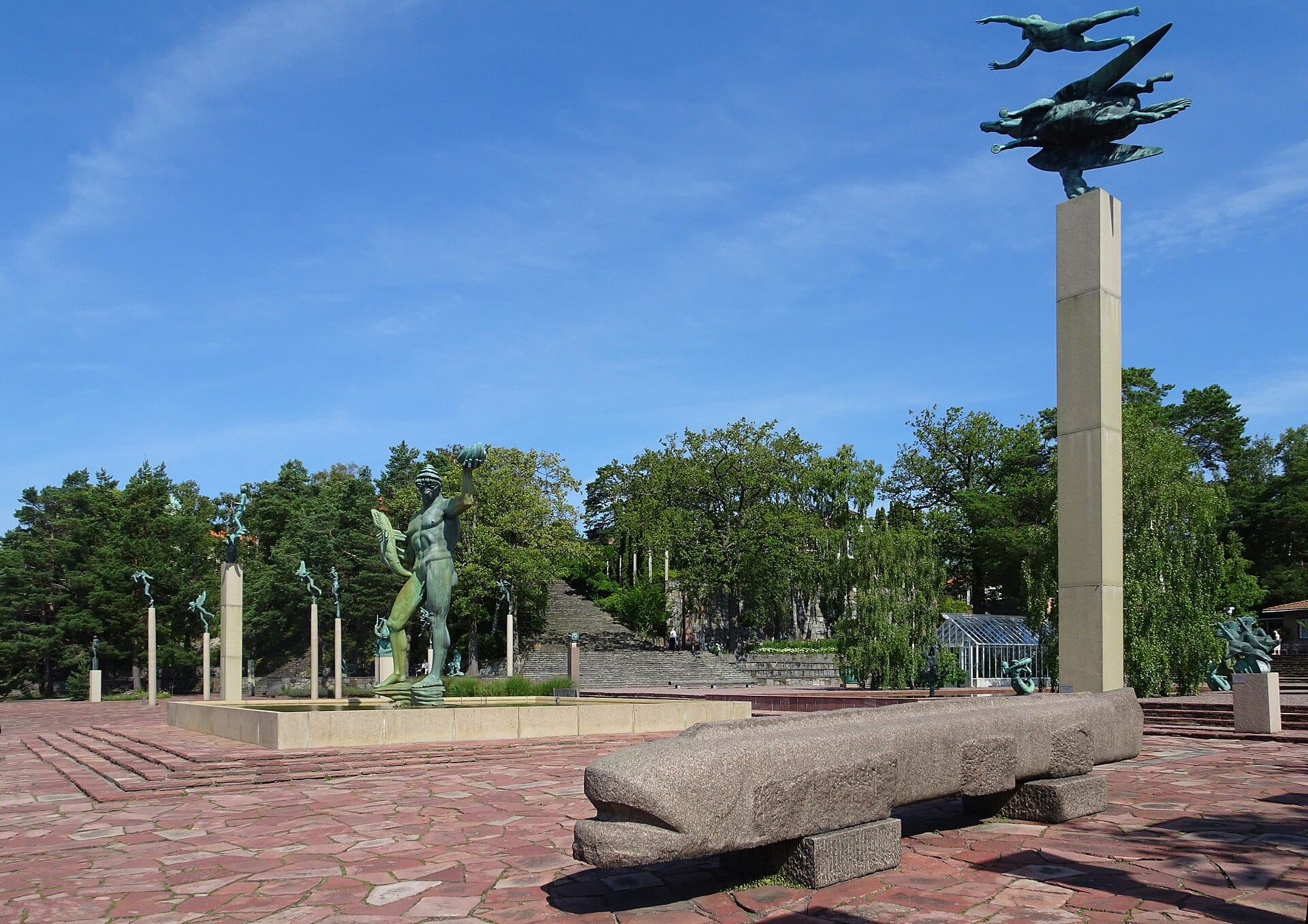
What Millesgården Actually Is
Millesgården is the former home and studio of Carl Milles (1875–1955), the Swedish sculptor who became one of the most widely collected artists of the early twentieth century. From 1908 until 1931, Milles and his wife Olga, a painter, lived and worked on this steep hillside on Lidingö, turning the property into an ever-expanding personal world of terraces, fountains, columns, and bronze figures. In 1936 they gave the entire estate to the Swedish people. What you visit today is the direct result of that extraordinary gesture: a place where the boundary between art and life was deliberately blurred for more than two decades.
The property functions simultaneously as an outdoor sculpture park, an art museum with indoor galleries, and a preserved historic residence. It is one of the few places in Stockholm where you can spend a full afternoon in a genuinely curated outdoor environment, where the arrangement of sculptures, the choice of stone terraces, and the sight lines toward the water all reflect an artist's intentions rather than a landscape architect's committee decisions.
💡 Local tip
Children under 18 enter free, and the outdoor terraces give them room to move. This makes Millesgården a more relaxed family outing than many of Stockholm's indoor museums.
The Sculptures: What You Will See
The garden is arranged across several descending terraces, each anchored by different sculptural groups. The figures Milles favored tend toward the monumental and mythological: muscular gods, elongated angels, and human forms caught mid-leap, as if defying gravity. Many are mounted on tall columns or pedestals, positioning them against sky and water rather than against a wall, which amplifies their sense of movement. Poseidon, the Hand of God, and various works from Milles' American period (he taught at Cranbrook Academy of Art in Michigan from 1931 to 1951) are represented here, often as replicas or original casts.
Beyond the bronzes, the terraces themselves are worth attention. The garden incorporates fragments of classical architecture, Roman column capitals, and other antique elements that Milles collected during his travels. The overall effect is something between an Italian villa garden and a northern European artist's retreat: orderly enough to navigate, idiosyncratic enough to surprise.
Indoor galleries on the property display works by Olga Milles alongside Carl's smaller pieces, preparatory models, and rotating temporary exhibitions. The indoor spaces are modest in scale but provide important context for understanding how the outdoor sculptures developed.
Tickets & tours
Live prices and dates from our booking partner. If you book, we may earn a commission at no extra cost to you.
2-hour archipelago tour on a RIB speedboat
From 122 €Instant confirmationFree cancellationHaunted Stockholm exploration game and tour
From 12 €Instant confirmationFree cancellationFotografiska Stockholm entrance tickets
From 0 €Instant confirmationFree cancellationStockholm: Nature Reserve Hiking Tour with Campfire Lunch
From 102 €Instant confirmationFree cancellation
The View and the Setting
The hillside location is not incidental. From the upper terraces you look out over the inlet separating Lidingö from the Stockholm mainland, with the water catching light differently in the morning than in the afternoon. On clear days, the view extends toward the city skyline and the archipelago beyond. This is one of the factors that makes Millesgården feel genuinely different from visiting an urban gallery: the sculptures exist in relationship to landscape and sky, not to white walls and track lighting.
In summer, particularly on long June and July evenings, the garden takes on a particular quality as the light becomes horizontal and the bronze figures cast long shadows across the stone terraces. Early afternoon visits in summer can feel warm and slightly crowded at peak season. Morning visits on weekdays, when the museum opens at 11:00, tend to be quieter.
In autumn, the garden is surrounded by changing foliage, which frames the sculptures in amber and copper tones. Winter visits are possible (the museum is open year-round, Tuesday through Sunday), and there is something stark and striking about seeing the figures in snow or against bare branches, though some visitors find the outdoor experience less rewarding in cold or wet weather.
⚠️ What to skip
The site is built on a hillside with terraced levels connected by stairs and slopes. It is not fully accessible for visitors with limited mobility. Contact the museum directly before visiting if this is a concern.
Getting There: The Journey Is Part of It
Millesgården is on Lidingö, a residential island to the east of central Stockholm. It is not on the tourist circuit that runs through Gamla Stan, Djurgården, and Södermalm, which is part of its appeal. Getting there requires a deliberate trip, and that small effort filters out casual foot traffic.
The most straightforward route from central Stockholm is the metro (Tunnelbana) to Ropsten, which is the eastern terminus of the red line. From Ropsten, several SL buses (routes 201, 202, 204, 206, 211, 212, and 221) serve Torsviks Torg, from where it is a signed walk of approximately 300 meters to the museum entrance. Alternatively, the Lidingöbanan, a local tram line running from Ropsten, stops at Torsvik and Baggeby, both within walking distance of the museum. The SL transit network covers all of these connections with a standard SL ticket.
Free parking is available directly outside the main entrance on Herserudsvägen 32, which makes driving a reasonable option if you are traveling with children or coming from outside the city center. The address is straightforward to enter into a navigation app.
Practical Information for Your Visit
Millesgården is open Tuesday through Sunday, 11:00 to 17:00. It is closed on Mondays throughout the year, and also closed on certain public holidays including New Year's Day, Midsummer Eve, Christmas Eve, Christmas Day, and New Year's Eve; Boxing Day (Annandag jul) is open. Easter Monday is an exception: the museum opens on that day from 11:00 to 17:00. Check the official website for current holiday schedules before traveling.
Admission in 2026 is 170 SEK for adults and 140 SEK for students. Children and young people up to 18 years old enter free. On Fridays, a senior rate of 85 SEK applies. Groups of ten or more pay 150 SEK per person. An annual pass costs 320 SEK (200 SEK for students), which makes sense if you plan to return or if you want to combine multiple visits across a longer stay.
Millesgården is worth considering alongside other Stockholm art institutions, though it occupies a distinct niche. For comparison, the Moderna Museet on Skeppsholmen focuses on twentieth-century and contemporary art indoors, while Prins Eugens Waldemarsudde on Djurgården offers another historic artist's estate with gardens, though with a very different aesthetic and atmosphere.
ℹ️ Good to know
The museum has a cafe on site. Bringing a jacket is sensible even in summer, as the hilltop terraces can be breezy regardless of the temperature in the city center.
Who Should Reconsider This Visit
Millesgården is not the right stop for visitors focused primarily on Swedish history, Viking heritage, or contemporary design. The connection to broader Swedish culture is real but indirect: Carl Milles was international in his references and spent much of his career in America, so the work here reflects a cosmopolitan early-twentieth-century sensibility rather than specifically Scandinavian themes. Visitors who want concentrated Swedish cultural context should prioritize other institutions first.
The outdoor nature of the main attraction also means that a rainy or cold day significantly changes the experience. Unlike Nationalmuseum or the Vasa Museum, Millesgården cannot be fully experienced from inside. If you are visiting Stockholm in winter and have limited days, this may be a trip worth saving for a return visit in better weather, or specifically planning for a dry, clear day.
Visitors with significant mobility challenges will find the terraced site difficult. The stairs and sloped paths between levels are integral to the experience and cannot be easily bypassed. This is an honest limitation of the site's architecture, which was designed as a private garden long before accessibility standards existed.
Insider Tips
- Weekday mornings, particularly Tuesday and Wednesday, see the fewest visitors. The garden at 11:00 on a quiet morning, with the water visible through the sculpture columns, is a genuinely different experience from a Saturday afternoon in July.
- The annual pass at 320 SEK costs less than two adult admissions. If you are spending more than a few days in Stockholm and enjoy outdoor art spaces, it pays for itself immediately and covers the entire year.
- If you take the Lidingöbanan tram rather than the bus from Ropsten, the tram ride itself gives you a view of residential Lidingö that few tourists see. It adds a few minutes but provides a different sense of the island.
- The indoor galleries displaying Olga Milles' paintings are frequently overlooked by visitors focused on the outdoor sculptures. They are worth slowing down for, particularly her portraits, which show a different artistic sensibility operating in the same household.
- Bring a wide-angle lens or use your phone's ultrawide mode. Many of Milles' figures are mounted on tall columns and need vertical framing to capture them properly against the sky. Shooting from below looking upward works especially well in the late afternoon when the light comes from the west.
Who Is Millesgården For?
- Art lovers who want to see sculpture in landscape rather than in a white-cube gallery setting
- Families with children under 18, who enter free and have outdoor space to explore between sculptures
- Visitors returning to Stockholm who have already covered the major museums and want something more personal in scale
- Photographers looking for sculptural subjects with sky and water backgrounds
- Anyone who appreciates early-twentieth-century figurative art and wants context for understanding Carl Milles' international reputation
Nearby Attractions
Combine your visit with:
- Birka Viking Town
Founded around AD 750 on a remote island in Lake Mälaren, Birka was one of Scandinavia's earliest true urban trading centers. Today it survives as part of the UNESCO World Heritage Site Birka and Hovgården, reached only by seasonal boat from Stockholm, where around 2,000 Viking-age graves still dot the surrounding landscape. It is one of the most historically significant half-day excursions available from the Swedish capital.
- Drottningholm Palace
Drottningholm Palace is Sweden's most complete royal domain, a UNESCO World Heritage Site on Lovön island just about 10 km west of Stockholm. The baroque complex includes the palace, a working 18th-century theatre, a Chinese Pavilion, and formal gardens that shift in character across every season.
- Royal National City Park (Ekoparken)
The Royal National City Park, known locally as Ekoparken, is the world's first national urban park and one of Stockholm's most remarkable features. Stretching around 27 km² from Djurgården in the south to Ulriksdal in the north, it wraps around the city in a continuous arc of ancient oak forests, royal palaces, museum islands, and open waterways. Entry is free and the park never closes.
- Hagaparken
Hagaparken is a 144-hectare English landscape park just north of central Stockholm, laid out for King Gustav III in the late 18th century. Free to enter year-round, it offers a rare combination of royal history, open meadows, and waterside walking paths within easy reach of the city. Individual attractions inside the park, including the Butterfly House and royal pavilions, charge their own fees.
Planning a trip? Discover personalized activities with the Nomado app.