Dubrovnik Maritime Museum: A Seafaring City's Story in Stone and Rope
The Dubrovnik Maritime Museum (Pomorski Muzej) occupies the upper floors of Fort St. John at the entrance to the Old Port. It houses over 5,000 objects documenting Dubrovnik's rise as one of the Mediterranean's great seafaring republics, from ancient trade routes to 20th-century navigation. The setting alone, inside a 14th-century fortress overlooking working boats and Adriatic water, makes the visit feel earned.
Quick Facts
- Location
- Fort St. John (Tvrđava Svetog Ivana), Ul. kneza Damjana Jude 12, Old Town, Dubrovnik
- Getting There
- 8-10 min walk from Pile Gate or Ploče Gate through the Old Town; follow signs to the Old Port
- Time Needed
- 60-90 minutes for a thorough visit
- Cost
- Adults 15€, children (7-18) ~8€, under 7 free; combo e-tickets available via dumus.hr
- Best for
- History enthusiasts, architecture lovers, families with older children, rainy-day visits
- Official website
- www.dumus.hr/en/maritime-museum
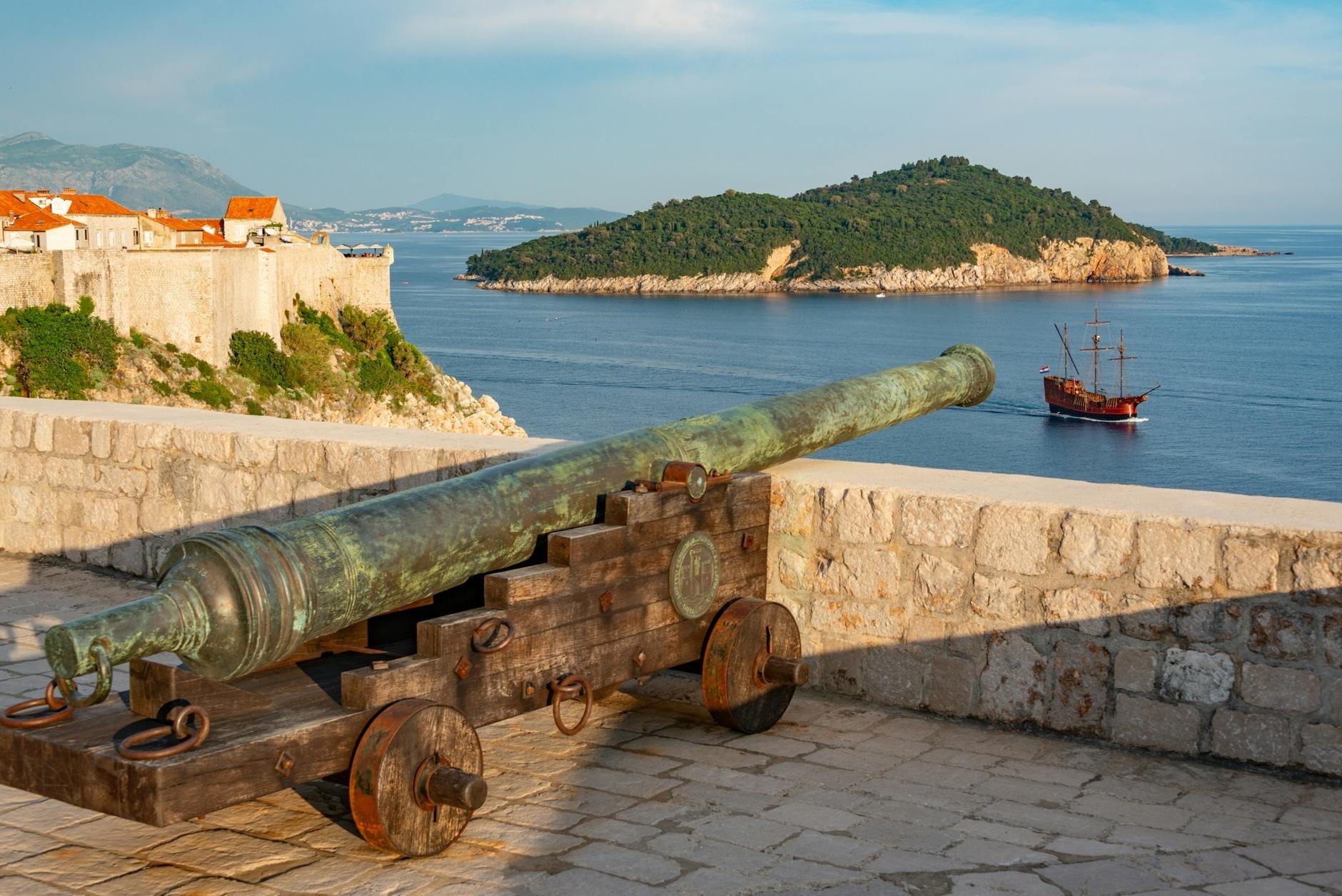
What Is the Maritime Museum and Why Does It Deserve Your Time?
The Dubrovnik Maritime Museum (Croatian: Pomorski Muzej) is one of the most contextually placed museums in Croatia. It sits on the first and second floors of Fort St. John, the broad, sea-facing fortress that anchors the southern end of the Old Port. You walk in off the harbor, glance out through stone-framed windows at fishing boats and tour dinghies, and immediately understand what you are looking at on the walls and in the cases. That physical relationship between exhibit and reality is the museum's greatest asset.
Founded in 1949 by the Croatian Academy of Sciences and Arts and incorporated into the Dubrovnik Museums network in 1987, the collection spans more than 2,000 years of seafaring, organized across 15 thematic collections. The roughly 5,000 objects include ship models, navigational instruments, charts, logbooks, cannons, figureheads, and archival documents. The scope is serious, and the curation is dense. This is not a breezy afternoon attraction. For anyone with a genuine interest in Mediterranean history, it rewards close attention.
💡 Local tip
The museum is closed Wednesdays. It also closes on Christmas Day, New Year's Day, and February 3 (St. Blaise's Day). On December 24 and 31 it opens only from 09:00 to 12:00. Check the official website before planning your visit.
The Setting: Fort St. John and the Old Port
Fort St. John (Tvrđava Svetog Ivana) is not a decorative building. Construction began in 1346 and continued through the late 16th century as the Republic of Ragusa expanded and refined its harbor defenses. The fortress was built to protect the entrance to the Old Port from naval attack, and its thick limestone walls, designed to absorb cannon fire, are still visibly imposing from the water. The Aquarium occupies the ground floor; the Maritime Museum takes the two floors above.
Arriving from the Stradun, you approach through the narrow lanes of the Old Town before emerging at the port's edge. The transition is abrupt in the best way: the tightly packed medieval streets suddenly open to the Adriatic. The fort's exterior is weathered honey-coloured stone, and the entrance staircase is steep enough to remind you that this building was never designed for visitor comfort. Wear shoes with grip, particularly if the stone is damp.
The Old Port setting connects the museum to the living city. The Dubrovnik City Walls run directly above and behind the fort, and the views from the upper museum windows take in both the walled harbour and the open sea beyond Lokrum Island. If you are planning to combine the museum with a walk on the walls, morning entry to the museum first means you approach the walls from the port side, which gives you the better light on the water.
Tickets & tours
Live prices and dates from our booking partner. If you book, we may earn a commission at no extra cost to you.
Mostar and Kravice Waterfalls excursion from Dubrovnik
From 120 €Instant confirmationFree cancellationDubrovnik Old Town Tour ith Cable Car Ride
From 56 €Instant confirmationFree cancellationMostar and Kravice Waterfalls full-day tour with pickup from Dubrovnik
From 66 €Instant confirmationFree cancellationSea kayaking experience in Dubrovnik
From 46 €Instant confirmationFree cancellation
Inside the Collection: What You Will Actually See
The ground-floor aquarium occupies its own entry; the museum begins on the first floor with collections covering the ancient period through the early modern Republic of Ragusa. The Republic's commercial fleet was, at its height in the 16th century, one of the largest in the world. Dubrovnik's merchants traded from Alexandria to London, and the exhibits document this reach through original logbooks, trade ledgers, and beautifully detailed ship models. The models are the visual anchor of the museum. Several are large enough to study the rigging and deck layouts of period vessels, and the craftsmanship in the older examples is itself an artifact of maritime culture.
Navigational instruments occupy a dedicated section: compasses, astrolabes, sextants, and early charts on vellum. The cartography displays are particularly instructive, showing how Adriatic coastal knowledge was formalized into documents that Ragusan captains carried across the Mediterranean. The smell in this section, a faint hint of old paper and wood, is genuinely distinctive in a museum that otherwise smells of cool stone.
The upper floor moves into the 19th and 20th centuries, covering the period when Dubrovnik's seafaring tradition continued under Austro-Hungarian administration and into the Yugoslav era. There are photographs, uniforms, and personal effects of notable captains. The tone shifts from grand commercial history to something more personal and, at times, elegiac. This section tends to be quieter, both in visitor numbers and in the objects themselves.
ℹ️ Good to know
The museum is cashless on-site, so bring a card. Tickets can also be purchased in advance via the Dubrovnik Museums official webshop at dumus.hr, which is useful during the peak summer months when queues can form at the fort entrance.
Visiting by Time of Day: How the Experience Changes
The museum opens at 09:00, and the first hour is consistently the quietest. The Old Port below is just beginning its day, and the light through the sea-facing windows is low and directional, making the navigational instrument displays particularly photogenic. If you care about photography, this is your window.
By mid-morning, especially between June and September, the Old Town fills with cruise passengers who have disembarked at the port at Gruž and made their way in by bus. The museum sees a portion of this traffic, and the first-floor rooms can feel crowded between roughly 10:30 and 13:00. The upper floor remains significantly calmer at all hours. If you arrive during peak time, head directly upstairs and work your way down.
Afternoon visits in summer carry the benefit of reduced crowds after 15:00, when many group tours have cycled through. The low afternoon sun over the Adriatic, visible from the upper-floor windows, is genuinely striking. In winter, when the museum closes at 16:00, a late morning arrival gives you the full session without the light dropping on you mid-visit.
⚠️ What to skip
Summer afternoons inside the fort can be warm. The thick limestone walls keep the interior cooler than outside, but upper-floor rooms receive sun through west-facing windows from mid-afternoon. A water bottle is worth carrying.
Historical Depth: Ragusa, the Sea, and Why This Story Matters
Dubrovnik was known as Ragusa until the early 19th century, and the Republic of Ragusa was a serious diplomatic and commercial power for several centuries. Its ability to maintain independence from Venice, the Ottoman Empire, and the Habsburgs simultaneously rested partly on trade wealth generated by its maritime fleet. The Maritime Museum makes this argument in concrete objects rather than abstract claims. For anyone who has walked Sponza Palace or Rector's Palace and wondered how a city this small generated that level of civic investment, the museum answers the question directly: ships.
The Republic abolished the slave trade in 1416, centuries before most European powers, and was among the first states to recognize the United States in 1783. Neither of these facts is incidental. They reflect a trading republic whose commercial interests gave it both the resources and the incentive to maintain relationships with anyone, across political and religious lines. The museum's documentation of trade routes, diplomatic correspondence related to sea commerce, and the sheer geographic reach of Ragusan captains gives these historical footnotes some flesh.
Practical Information for Your Visit
The museum is open April 1 through October 31 from 09:00 to 18:00, and November 1 through March 31 from 09:00 to 16:00. It is closed every Wednesday, on Christmas Day, New Year's Day, and February 3 (St. Blaise's Day, a public holiday in Dubrovnik). On Christmas Eve and New Year's Eve it opens only from 09:00 to 12:00.
To reach the museum from Pile Gate, walk east along the Stradun and follow the lane that curves down toward the Old Port; the fort is at the port's southern edge and is signposted. The walk takes around 8 to 10 minutes on flat, then slightly descending, stone pavement. From Ploče Gate on the eastern side of the Old Town, the walk is similarly short. There is no vehicle access to this part of the Old Town.
Visitors holding the Dubrovnik City Pass should verify current inclusions before visiting, as museum access terms can vary by pass type and season. The on-site payment is cashless, so a physical card or digital wallet is required if you have not pre-purchased online.
Accessibility within the fort is limited. The entrance staircase and internal stairs between floors are steep and lack lifts. The stone floors are uneven in sections. Visitors with mobility limitations should be aware that the building's historic structure means these conditions cannot be fully remediated. The Dubrovnik Aquarium on the ground floor of the same fort is accessible at a different level.
Who Should Skip This Museum
If your visit to Dubrovnik is primarily about scenery, beaches, and the Game of Thrones filming locations, this museum will feel slow. The exhibits are text-heavy in places, and the collection rewards patience rather than a quick walk-through. Children under ten, unless they have a strong interest in ships or history, are likely to find it frustrating after the first room. The fort's staircases and uneven floors also make stroller navigation impractical.
Visitors on a very short itinerary, say a single day in the city, might reasonably prioritize the city walls walk over the museum. The walls take two to three hours and cover the same historical territory in a more visceral, open-air way. The Maritime Museum is the better choice for those with at least two days in Dubrovnik, or for anyone who has already done the walls.
Insider Tips
- Buy your ticket online through the Dubrovnik Museums webshop (dumus.hr) before arriving. In July and August, the fort entrance queue can add 20 minutes to your visit, and online tickets allow faster entry.
- The upper floor is significantly less crowded than the first floor at all times of day. Start at the top and work downward, especially if you arrive between 10:30 and 13:00.
- The west-facing windows on the upper floor offer a framed view of the Adriatic and Lokrum Island. Bring a wide-angle lens or use portrait mode sparingly — the stone surrounds create a natural vignette that works well for architecture photography.
- The museum shop carries a small selection of scholarly publications on Adriatic maritime history that are not easily found elsewhere. If you are interested in the Republic of Ragusa beyond the standard tourist narrative, it is worth a few minutes browsing.
- Combine the museum visit with the Dubrovnik Aquarium on the ground floor of the same fort. A combo ticket is typically available and makes the fort stop feel more complete, particularly for families with mixed interests.
Who Is Maritime Museum For?
- History and culture travellers who want to understand how Dubrovnik actually built its wealth and independence
- Architecture enthusiasts interested in 14th to 16th century Adriatic fortress design
- Travellers on rainy or very hot days who need quality indoor time in the Old Town
- Anyone who has already done the city walls and wants a deeper layer of historical context
- Older children and teenagers with an interest in navigation, exploration, or Mediterranean history
Nearby Attractions
Other things to see while in Old Town (Stari Grad):
- Banje Beach
Banje Beach is Dubrovnik's closest and most photographed beach, sitting just east of the Old Town walls with direct views of the medieval fortifications and Lokrum Island. It's a pebbly, organized beach with free public access, paid lounger rentals, and a restaurant-bar that runs well into the night. Convenient, yes. Quiet, no.
- Buža Bar
Buža Bar is a no-frills open-air bar carved into a gap in Dubrovnik's ancient city walls, perched directly above the Adriatic Sea. Reached through a low iron-gated hole in the stonework, it offers cold drinks, cliff-jumping, and some of the most dramatic coastal views in the Mediterranean. There is no admission charge, no kitchen, and no pretense.
- Cathedral of the Assumption of the Virgin Mary
Rising from the rubble of a 1667 earthquake, the Cathedral of the Assumption of the Virgin Mary anchors the heart of Dubrovnik's Old Town with its commanding Baroque dome and a treasury that holds relics spanning a millennium. It's quieter than the city walls and more revealing than most visitors expect.
- Dominican Monastery & Museum
Built from 1225 and shaped through the 15th century, the Dominican Monastery in Dubrovnik's eastern Old Town holds one of Dalmatia's finest collections of medieval and Renaissance art. The Gothic-Renaissance cloister, a Titian altarpiece from 1554, and works by the Dubrovnik School of painters make this one of the most intellectually rewarding stops in the city.
Planning a trip? Discover personalized activities with the Nomado app.