Long Hunter State Park: Nashville's Best Escape Into Nature
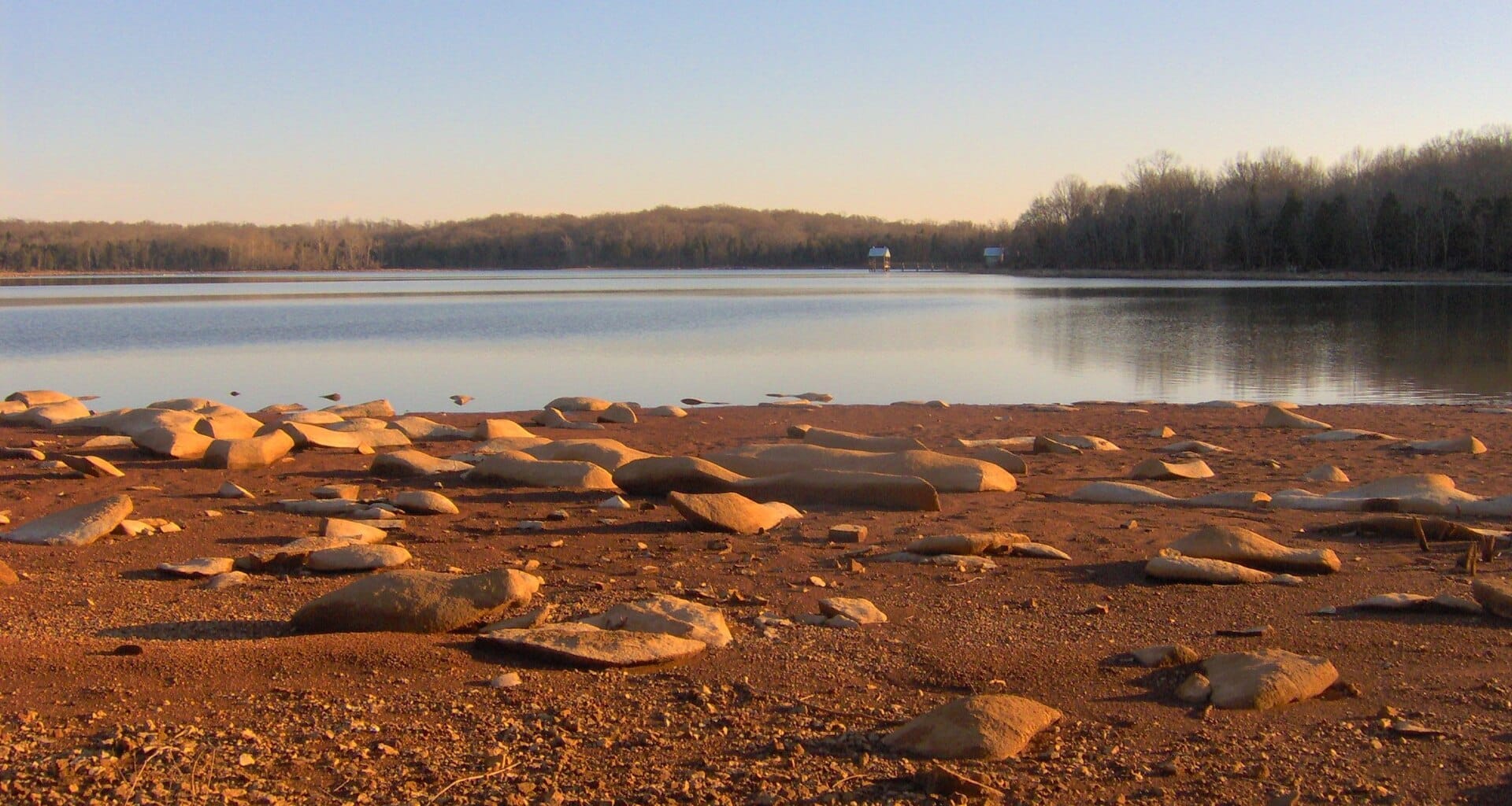
Long Hunter State Park stretches across approximately 2,600 acres along J. Percy Priest Lake, about 15–20 miles east of downtown Nashville. With free admission, a paved accessible loop, backcountry trails, and miles of undeveloped shoreline, it offers a genuine outdoor escape without leaving the metro area.
Quick Facts
- Location
- 2910 Hobson Pike, Hermitage, TN 37076 (Davidson & Rutherford Counties)
- Getting There
- Car recommended; approx. 15–20 miles east of downtown Nashville via I-40 E to TN-171 (Mount Juliet Rd/Hobson Pike)
- Time Needed
- 2–5 hours depending on trails chosen; full-day option for swimmers and picnickers
- Cost
- Free entry; camping and some activities have separate fees
- Best for
- Hikers, families, birdwatchers, anyone wanting lake access near Nashville
- Official website
- tnstateparks.com/parks/long-hunter
What Long Hunter State Park Actually Is
Long Hunter State Park is a free Tennessee state park covering approximately 2,600 acres along the eastern shore of J. Percy Priest Lake, about 15–20 miles east of downtown Nashville in Hermitage, Tennessee. It is one of the closest genuine wilderness-adjacent spaces to the city center, and on any clear Saturday morning the parking areas fill well before 9 AM. The park sits within both Davidson and Rutherford counties, and its miles of shoreline give it a scale that surprises first-time visitors who assume it is just a neighborhood greenway.
The park is commonly described as having three main lake sections—Couchville, Baker's Grove, and Bryant Grove—with the separate Sellars Farm State Archaeological Area also associated with Long Hunter. Each has its own character. Couchville is the most visited, anchored by Couchville Lake (a smaller lake within the park, separate from J. Percy Priest Lake itself) and the paved accessible loop. Bryant Grove and Baker's Grove offer direct lake access with boat launches and picnic areas. Sellars Farm preserves an older agricultural landscape and connects to longer backcountry hiking. Knowing which section fits your plans before you arrive saves real time.
💡 Local tip
Park day-use hours generally run from sunrise to sunset, with some areas such as Bryant Grove and the Volunteer Trail closing earlier during standard time; visitors should confirm current hours on the official park page before visiting. Arrive early on spring and summer weekends: parking at Couchville fills by mid-morning, and the lake swim area has limited capacity.
The Trails: What to Expect on the Ground
The 2-mile paved loop around Couchville Lake is the park's most accessible trail and the one most families gravitate toward. The surface is smooth enough for strollers and wheelchair users, the elevation change is minimal, and the lake sits close enough to the path that you get unobstructed water views for much of the circuit. In the early morning the lake surface is glassy and reflects the tree line; by midday it picks up wind chop and the light gets harsh. The loop takes 35 to 50 minutes at a relaxed pace. Turtles sunning on logs, great blue herons wading the shallows, and the occasional kingfisher rattling overhead are common sights.
For hikers wanting more length and terrain variation, the Volunteer Trail is the park's primary backcountry route. It runs closer to the J. Percy Priest Lake shoreline, through cedar glades, mixed hardwood forest, and patches of open meadow. The footing is uneven in places, and the trail has enough undulation to feel like a real hike rather than a stroll. Trail conditions vary significantly by season: after heavy rain the low-lying sections near the lake can be muddy and slow. Waterproof footwear or trail shoes are a practical choice from November through April.
If you are planning to extend your time in Nashville's green spaces, Long Hunter pairs well with a morning visit to Percy Priest Lake itself, or with a stop at Shelby Bottoms Greenway closer to downtown, which offers a flatter, paved alternative along the Cumberland River.
Tickets & tours
Live prices and dates from our booking partner. If you book, we may earn a commission at no extra cost to you.
Old Town trolley tour of Nashville
From 54 €Instant confirmationFree cancellationHatch Show Print guided tour
From 21 €Instant confirmationFree cancellationDowntown walking tour of Nashville
From 21 €Instant confirmationFree cancellationNashville Downtown Underground Donut Tour
From 46 €Instant confirmationFree cancellation
The Lake and Water Access
J. Percy Priest Lake is the park's defining geographic feature, and direct shoreline access is what draws many Nashville-area visitors who want swimming or fishing within a reasonable drive. The lake was created by the U.S. Army Corps of Engineers in 1968 when the Corps completed the J. Percy Priest Dam on Stones River. At full pool, it covers roughly 14,200 acres and has about 213 miles of shoreline across multiple access points in the Nashville metro. Long Hunter's section offers one of the most unspoiled stretches, with no commercial development on the park side of the water.
Swimming is permitted in designated areas; the water is typically clearest in late spring before summer algae growth, and warmest from July through early September. Fishing is popular year-round: bass, crappie, catfish, and bream are commonly caught along the coves. A valid Tennessee fishing license is required for anyone 13 years of age or older. Kayak and canoe launching is available at Baker's Grove, and the calm inlets near the park's shoreline are appropriate for beginner paddlers, though open-water sections of the lake get significant motorboat wake on summer weekends.
⚠️ What to skip
No lifeguards are on duty at Long Hunter State Park. Swim only in designated areas and supervise children closely. Water quality can be affected by rainfall runoff; check Tennessee Department of Environment and Conservation advisories before visiting during or after heavy rain events.
History, Name, and Context
The park's name references the long hunters: 18th-century European-American frontiersmen who ventured deep into the Cumberland River basin and what is now Middle Tennessee on extended hunting expeditions that could last months or years. They operated in this region from roughly the 1760s through the 1780s, well before permanent European-American settlement of Nashville began in earnest. The name was chosen to reflect that pre-settlement history of the land. The park itself was established as a Tennessee state park in 1974, while the associated Sellars Farm State Archaeological Area near Watertown was listed on the National Register of Historic Places in 1972 in recognition of its archaeological significance.
For visitors interested in the deeper history of Middle Tennessee during this period, the broader context of Nashville's founding and its complicated past is covered in the Nashville Civil War History Guide, and The Hermitage, Andrew Jackson's former plantation, is located nearby in the same Hermitage suburb and makes a natural pairing for a full day in the east Nashville area.
How the Experience Changes by Time of Day and Season
Arrive at or just after 5:00 AM in spring and fall and you are almost guaranteed solitude. The trail through the cedar glades smells of juniper and damp earth, the birdsong volume is at its peak, and the lake surface holds the copper light of early sunrise longer than you'd expect. This is when birdwatchers find the most reward: warblers pass through in significant numbers during spring migration (late April through mid-May), and the lake edges attract waterfowl from late October through February.
By 10:00 AM on a weekend from May through September the dynamic shifts sharply. Families with coolers, dogs on leashes, and small children arrive in volume. The Couchville Loop becomes a social space as much as a trail. The parking lot at the main Couchville section sometimes reaches capacity by 11:00 AM on peak summer days. If you prefer quiet, weekday mornings from September through November hit the sweet spot: mild temperatures, turning foliage, and thin crowds.
Summer heat is a genuine consideration. Nashville's humid subtropical climate means July and August temperatures regularly reach the upper 80s to low 90s Fahrenheit with significant humidity. Shade is available on the forested trail sections but the Couchville Lake loop has long exposed stretches. Bring more water than you think you need, apply sunscreen before you reach the trailhead, and consider timing any summer visit for before 9:00 AM or after 5:00 PM.
For a broader overview of how Nashville's seasons affect outdoor activities, the best time to visit Nashville guide covers temperature norms, peak crowd windows, and festival scheduling that can affect parking and access at parks like Long Hunter.
Practical Walkthrough: Getting There and Getting Around
Long Hunter State Park is not served by public transit. Access is almost entirely by private vehicle. From downtown Nashville, a common route is I-40 East to the Mount Juliet Road/TN-171 exit, then south as TN-171 (Mount Juliet Road/Hobson Pike) to the park entrance at 2910 Hobson Pike, Hermitage, TN 37076. The drive takes approximately 25 to 35 minutes from downtown depending on traffic, and Nashville's eastern corridor commuter traffic can be heavy on weekday afternoons. Rideshare services (Uber and Lyft both operate in Nashville) can drop you at the main entrance, but return pickups in this suburban-rural area can involve a wait.
Inside the park, the sections are not all connected by a single continuous road. Couchville and Baker's Grove are the most accessible from the main entrance. Bryant Grove requires a separate turn-off and closes earlier during standard time. If your goal is the paved accessible loop, head straight for the Couchville day use area. If you want boat launch access or a picnic area directly on J. Percy Priest Lake, Baker's Grove is the better choice. Dogs are welcome on leash throughout the park.
Restroom facilities are available at the main day use areas but not at every trailhead. Cell coverage inside the forested trail sections can be inconsistent depending on your carrier, so downloading a trail map before entry is a sensible precaution. The Tennessee State Parks app and AllTrails both carry trail data for Long Hunter.
Photography and Wildlife Notes
The cedar glade habitat found at Long Hunter is relatively rare in the eastern United States and visually distinctive: shallow limestone outcroppings, sparse scrubby cedars, and open patches of rock and grass create a textured, almost austere landscape that photographs well in flat overcast light. The Couchville Lake loop offers straightforward reflection shots in calm morning conditions. For wildlife photography, a telephoto lens of at least 300mm is useful for the herons, kingfishers, and shorebirds that work the lake margins.
Visitors who want to combine outdoor time with more structured nature education can check out the Radnor Lake State Park on Nashville's southwest side, which has a naturalist program and tends to be particularly strong for waterfowl and deer sightings in a different habitat type.
Insider Tips
- The Couchville Lake loop is genuinely accessible for most mobility levels, but the southern section of the loop has a short stretch where tree roots have pushed through the pavement edge. Wheelchair users and stroller parents should be aware of this and approach slowly.
- If the Couchville parking lot is full on a summer weekend, try the Baker's Grove section instead. It fills more slowly because it attracts a different crowd (boaters and anglers) and the entry road is less obvious from Hobson Pike.
- Spring warbler migration peaks in late April and early May. The forested sections between the Couchville Lake loop and Volunteer Trail junction are the most productive spots; arrive before 7:00 AM and walk slowly.
- Primitive backcountry camping is available at Long Hunter and requires advance reservation through the Tennessee State Parks reservation system. Sites near the lake book out weeks ahead for summer weekends. Weeknight bookings in spring and fall are much easier to secure last-minute.
- The Sellars Farm State Archaeological Area associated with Long Hunter is one of the least trafficked sites and offers the most solitude. The landscape is open meadow and old field habitat, which attracts different wildlife than the wooded trail sections and provides unobstructed long views across the lake.
Who Is Long Hunter State Park For?
- Day-hikers based in Nashville who want real trail terrain without a long drive
- Families with children looking for a free, safe outdoor space with accessible paths and lake views
- Birdwatchers, especially during spring warbler migration and winter waterfowl season
- Kayakers and anglers wanting uncrowded water access close to the city
- Nashville visitors combining a nature morning with a nearby historical stop at The Hermitage
Nearby Attractions
Combine your visit with:
- Arrington Vineyards
Arrington Vineyards is a working winery set on 95 acres of rolling Tennessee countryside about 25 miles south of Nashville. With 16 acres of estate vines, five tasting rooms, and a calendar full of live music events, it offers a genuinely relaxed alternative to the city's usual attractions.
- Carnton
Built in 1826 and thrust into Civil War history on a single November night in 1864, Carnton in Franklin, Tennessee stands as one of the most significant and sobering historic sites near Nashville. The mansion served as the principal Confederate field hospital after the Battle of Franklin, and four Confederate generals killed in action were laid on its back porch. Today it operates as a museum alongside the McGavock Confederate Cemetery, one of the largest privately owned Confederate cemeteries in the United States.
- Downtown Franklin Historic District
About 21 miles south of Nashville, the Downtown Franklin Historic District packs genuine 19th-century architecture, Civil War history, and an independently owned Main Street into a walkable few blocks. Entry is free, the streets are open all day, and it rewards slower travelers who actually stop to look up.
- GEODIS Park
Opened in May 2022, GEODIS Park is one of the largest soccer-specific stadiums in the United States, seating over 30,000 fans. Home to Nashville SC and a growing concert calendar, it brings serious sports infrastructure to a city better known for music.
Planning a trip? Discover personalized activities with the Nomado app.