J. Percy Priest Lake: Nashville's Backyard Reservoir
J. Percy Priest Lake stretches 42 miles east of Nashville, offering 14,200 acres of U.S. Army Corps of Engineers reservoir for boating, fishing, swimming, and lakeside trails. There's no general admission fee, access is straightforward from I-40, and the experience shifts dramatically depending on the season and time of day.
Quick Facts
- Location
- Approx. 10 miles east of downtown Nashville, Davidson/Rutherford/Wilson counties, Tennessee
- Getting There
- Take I-40 east to Stewarts Ferry Pike exit, then right on Stewarts Ferry Pike and left on Bell Rd. No direct public transit; car or rideshare recommended.
- Time Needed
- 2 hours for a quick swim or fishing stop; full day for boating or hiking
- Cost
- No general admission fee; 15 public boat access sites are free. Some campgrounds and marina services charge fees.
- Best for
- Boating, fishing, swimming, trail walking, family day trips from Nashville
- Official website
- www.recreation.gov/gateways/387
What J. Percy Priest Lake Actually Is
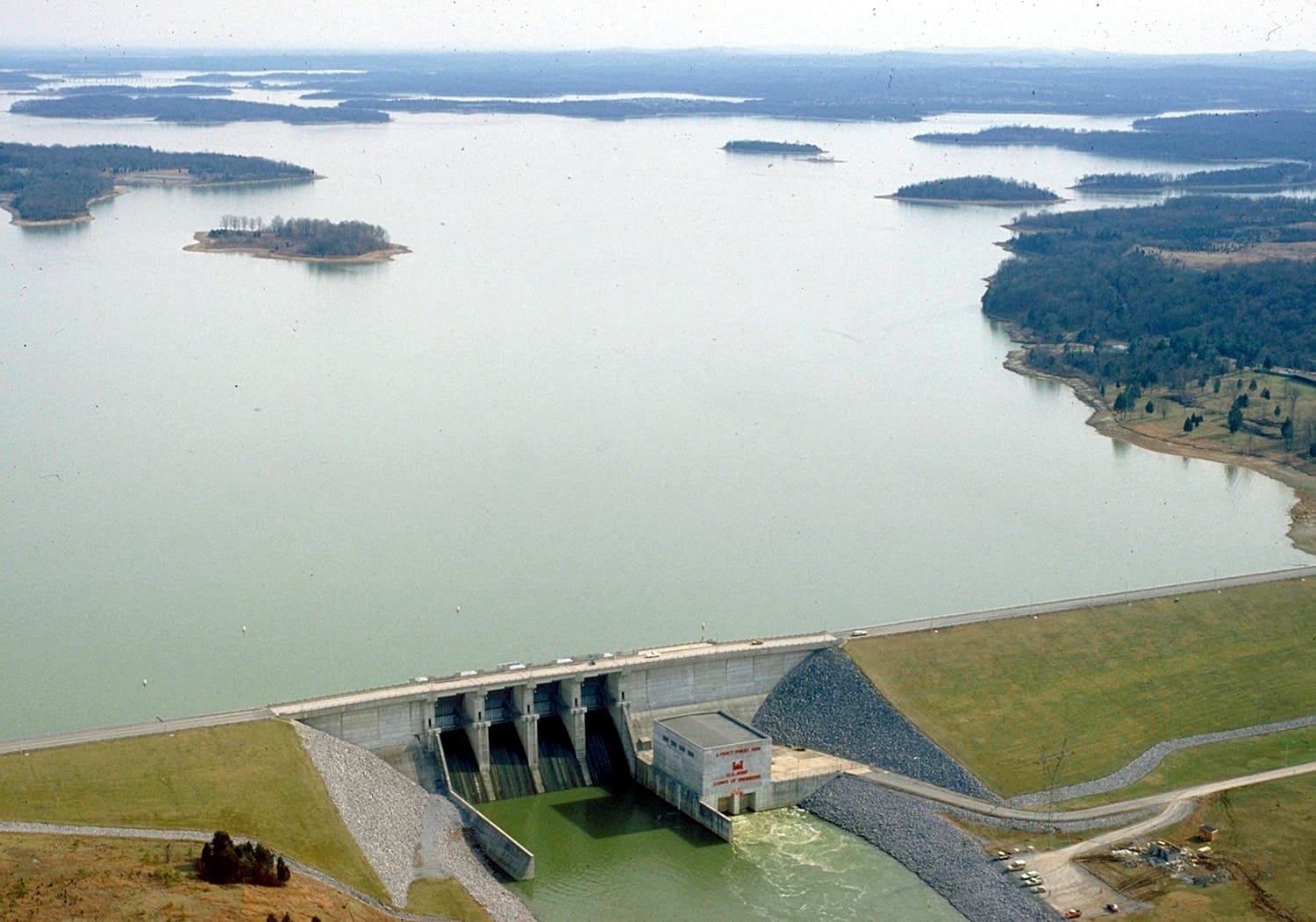
J. Percy Priest Lake is a U.S. Army Corps of Engineers reservoir created by damming Stones River, about 10 miles east of downtown Nashville. At summer pool elevation of 490 feet above mean sea level, it covers 14,200 acres and stretches roughly 42 miles in length, with a heavily indented shoreline that creates dozens of coves, inlets, and quiet arms of water. This is not a decorative city park lake. It is a full-scale reservoir managed for flood control, water supply, and recreation, and it draws a wide cross-section of Nashville residents year-round.
Congress first authorized the project in 1946 under the name Stewarts Ferry Reservoir. It was renamed in 1958 to honor Congressman James Percy Priest of Tennessee, and construction was completed in 1969. The transformation of the Stones River valley into what is now one of Middle Tennessee's most-used outdoor recreation areas took place during Nashville's postwar suburban expansion, and the lake has been woven into the city's recreational identity ever since.
ℹ️ Good to know
No general admission fee is charged at J. Percy Priest Lake. The Tennessee Wildlife Resources Agency (TWRA) notes that 15 public boat access sites are available for use with no fees. Fishing requires a valid Tennessee fishing license, available through TWRA.
On the Water: Boating and Fishing
Boating is the dominant activity, and the lake has the infrastructure to support it at scale. Five marinas operate on the lake, offering boat rentals, fuel, and seasonal services. On summer weekend mornings, the main channels fill with ski boats and pontoons by 9 a.m., so if you are planning a calm paddle or fishing session, arriving before 8 a.m. on a Saturday makes a significant difference. The coves off the main channel stay comparatively quiet even when the rest of the lake is trafficked.
Fishing is serious business here. The TWRA reports that Percy Priest holds largemouth bass, smallmouth bass, stripe bass (hybrid and pure), crappie, catfish, and bluegill. Two enhanced bank fishing sites provide accessible shoreline access without a boat, including a site at Vivrette Creek. Early morning and late afternoon are reliably the most productive hours, and the rocky points where coves meet the main lake channel are worth knowing. A Tennessee fishing license is required and is available online through TWRA or at local retailers.
If fishing is your main focus, cross-reference conditions and current regulations at the outdoor recreation resources for Nashville before you go.
Tickets & tours
Live prices and dates from our booking partner. If you book, we may earn a commission at no extra cost to you.
Old Town trolley tour of Nashville
From 54 €Instant confirmationFree cancellationHatch Show Print guided tour
From 21 €Instant confirmationFree cancellationDowntown walking tour of Nashville
From 21 €Instant confirmationFree cancellationNashville Downtown Underground Donut Tour
From 46 €Instant confirmationFree cancellation
Swimming and Beach Access
Several designated swimming areas exist around the lake, typically at day-use areas managed by the Corps of Engineers. The water clarity varies by season: spring runoff after heavy rain can reduce visibility and occasionally prompts temporary beach closures, while mid-to-late summer often brings the best conditions. Water temperature reaches comfortable swimming levels from late May through September.
On a hot July afternoon, the beach areas at popular day-use sites can get genuinely crowded, with families staking out shade and grills occupied by noon. Arrive by 10 a.m. on weekends to secure parking and a decent shoreline position. Weekday visits in summer are considerably more relaxed. The smell of sunscreen and lake water, the sound of children and pontoon motors, and the occasional great blue heron cruising low over the shallows are all part of what a busy summer day at Percy Priest looks like.
⚠️ What to skip
During periods of heavy rainfall, bacteria levels and water clarity can change rapidly. Check current conditions with the Corps of Engineers before visiting for swimming, particularly in spring.
Trails and Shoreline Walking
The lake is not primarily a hiking destination, but trail options do exist along sections of the shoreline. The terrain around Percy Priest is characteristic of the Central Basin of Tennessee: gently rolling cedar glades and hardwood forest, with limestone outcroppings near the water. In spring, the tree line reflects in the glassy water of the coves in a way that is easy to photograph in the soft morning light before wind picks up.
For more demanding trail experiences near Nashville, Long Hunter State Park directly borders the southeastern shoreline of Percy Priest and offers the most developed trail network in the area, including lakeside paths and interior forest loops. It is the single best complement to a Percy Priest visit for anyone who wants to combine water and trail time in one outing.
The rocky shoreline sections away from the developed day-use areas reward explorers willing to walk a bit. Limestone ledges drop directly into the water in some spots, creating natural perches for watching the lake in the early evening when boat traffic dies down and the surface settles.
How the Experience Changes by Season
Spring (March through May) is the lake's most photogenic season. Dogwood and redbud trees bloom along the shoreline, the water level is typically high, and the bass fishing peaks as water temperatures rise. Temperatures in the upper 60s to mid-70s Fahrenheit make outdoor activity genuinely comfortable, and weekends see steady but manageable crowds.
Summer turns the lake into Nashville's primary outdoor escape from the heat, which means heavy weekend traffic from June through August. The water is warm enough for swimming, boat rentals stay booked, and the parking areas at major access points fill by late morning on Saturdays. If you visit in summer, early morning or a weekday afternoon gives you a meaningfully different, quieter version of the same lake.
Fall is arguably the best time for a low-key visit. October brings color to the tree line, crowds thin sharply after Labor Day, and the air is cool enough for hiking without being cold. The fishing remains productive well into November. Winter use drops off significantly but the lake does not close; the shoreline in winter has a stripped-down quality, with bare trees and still water, that some visitors find worth the colder temperatures.
For context on Nashville's seasonal rhythms and how they affect outdoor plans, the best time to visit Nashville guide covers the full picture across weather, events, and crowd patterns.
Getting There and Practical Logistics
The most direct route from downtown Nashville is I-40 east to the Stewarts Ferry Pike exit, then right on Stewarts Ferry Pike and left on Bell Road. This puts you in the central access zone for several day-use areas and boat launches. Different recreational areas around the lake have their own access roads, so it is worth identifying the specific facility you want before driving out, as the lake's irregular shape means some areas that look close on a map require a longer drive around.
There is no meaningful public transit connection. A car or rideshare is the practical reality for getting here. If you are using a rideshare service, confirm the driver can locate the specific access point you want, since generic searches for the lake name may drop a pin in an unhelpful location.
Parking is available at the various day-use areas and boat launches, and the 15 public boat access sites managed by TWRA carry no fee. Camping is available at Corps of Engineers campgrounds around the lake; reservations are strongly recommended for summer weekends and can be made through Recreation.gov.
💡 Local tip
Download the specific site map from the Corps of Engineers or Recreation.gov before arriving. Cell service in some of the more remote cove areas around the lake can be inconsistent, and the access roads are not always well-signed for first-time visitors.
Who May Not Enjoy This
Travelers coming to Nashville primarily for music, food, or urban culture will find Percy Priest interesting as a contrast but probably not worth a half-day unless they specifically want outdoor recreation. The lake is not an attraction in the conventional sense: there is no single viewpoint, no historic structure to photograph, and no guided experience. It rewards people who are comfortable with unstructured outdoor time. If you are not already inclined toward fishing, boating, or lake swimming, the drive out and back may feel like more effort than return.
Visitors with mobility limitations should research specific site accessibility in advance. Some boat launches and bank fishing sites have improved access, but the lake's natural terrain is not uniformly navigable, and the quality of infrastructure varies between facilities.
Insider Tips
- The coves on the western arms of the lake, accessible from Bell Road corridor access points, stay noticeably quieter than the central areas even on crowded summer weekends. If you have a kayak or canoe, this is where to go.
- Bank fishing at the Vivrette Creek enhanced access site is specifically designed for accessibility and is one of the better options for anglers without a boat.
- Sunrise on the lake during weekdays in September and October produces some of the best conditions on the entire reservoir: cool air, still water, fall color starting to appear, and almost no boat traffic.
- If you are camping, book Corps of Engineers sites through Recreation.gov well in advance for any summer weekend. Walk-in availability on summer Fridays is close to zero at popular campgrounds.
- Water levels vary seasonally and the Corps occasionally adjusts pool elevation for operational reasons. If you are planning activities that depend on specific water depth (shallow-water fishing, launching small boats from certain ramps), check current pool levels before the trip.
Who Is J. Percy Priest Lake For?
- Nashville residents and visitors looking for a full outdoor day away from the city
- Anglers targeting bass, crappie, or striped bass in a well-managed Middle Tennessee reservoir
- Families wanting a lake swimming and picnic day within easy reach of downtown
- Boaters seeking a large reservoir with marina infrastructure close to a major city
- Hikers combining a Long Hunter State Park trail visit with lakeside scenery
Nearby Attractions
Combine your visit with:
- Arrington Vineyards
Arrington Vineyards is a working winery set on 95 acres of rolling Tennessee countryside about 25 miles south of Nashville. With 16 acres of estate vines, five tasting rooms, and a calendar full of live music events, it offers a genuinely relaxed alternative to the city's usual attractions.
- Carnton
Built in 1826 and thrust into Civil War history on a single November night in 1864, Carnton in Franklin, Tennessee stands as one of the most significant and sobering historic sites near Nashville. The mansion served as the principal Confederate field hospital after the Battle of Franklin, and four Confederate generals killed in action were laid on its back porch. Today it operates as a museum alongside the McGavock Confederate Cemetery, one of the largest privately owned Confederate cemeteries in the United States.
- Downtown Franklin Historic District
About 21 miles south of Nashville, the Downtown Franklin Historic District packs genuine 19th-century architecture, Civil War history, and an independently owned Main Street into a walkable few blocks. Entry is free, the streets are open all day, and it rewards slower travelers who actually stop to look up.
- GEODIS Park
Opened in May 2022, GEODIS Park is one of the largest soccer-specific stadiums in the United States, seating over 30,000 fans. Home to Nashville SC and a growing concert calendar, it brings serious sports infrastructure to a city better known for music.
Planning a trip? Discover personalized activities with the Nomado app.