Carnton: The Antebellum Mansion at the Heart of the Battle of Franklin
Built in 1826 and thrust into Civil War history on a single November night in 1864, Carnton in Franklin, Tennessee stands as one of the most significant and sobering historic sites near Nashville. The mansion served as the principal Confederate field hospital after the Battle of Franklin, and four Confederate generals killed in action were laid on its back porch. Today it operates as a museum alongside the McGavock Confederate Cemetery, one of the largest privately owned Confederate cemeteries in the United States.
Quick Facts
- Location
- 1345 Eastern Flank Circle, Franklin, TN 37064 — about 20 miles south of downtown Nashville
- Getting There
- Best reached by car or rideshare; no direct public transit from Nashville. Uber and Lyft serve the Franklin area.
- Time Needed
- 1.5 to 2.5 hours for guided house tour and cemetery walk; longer with the Campaign Ticket combo
- Cost
- Ticketed admission; prices vary by tour type and age. A Campaign Ticket covers Carnton, Carter House, and Rippavilla at a combined rate. Check boft.org for current pricing.
- Best for
- Civil War history enthusiasts, fans of Charles Frazier's novel Cold Mountain, architecture and antebellum house tours
- Official website
- boft.org/carnton
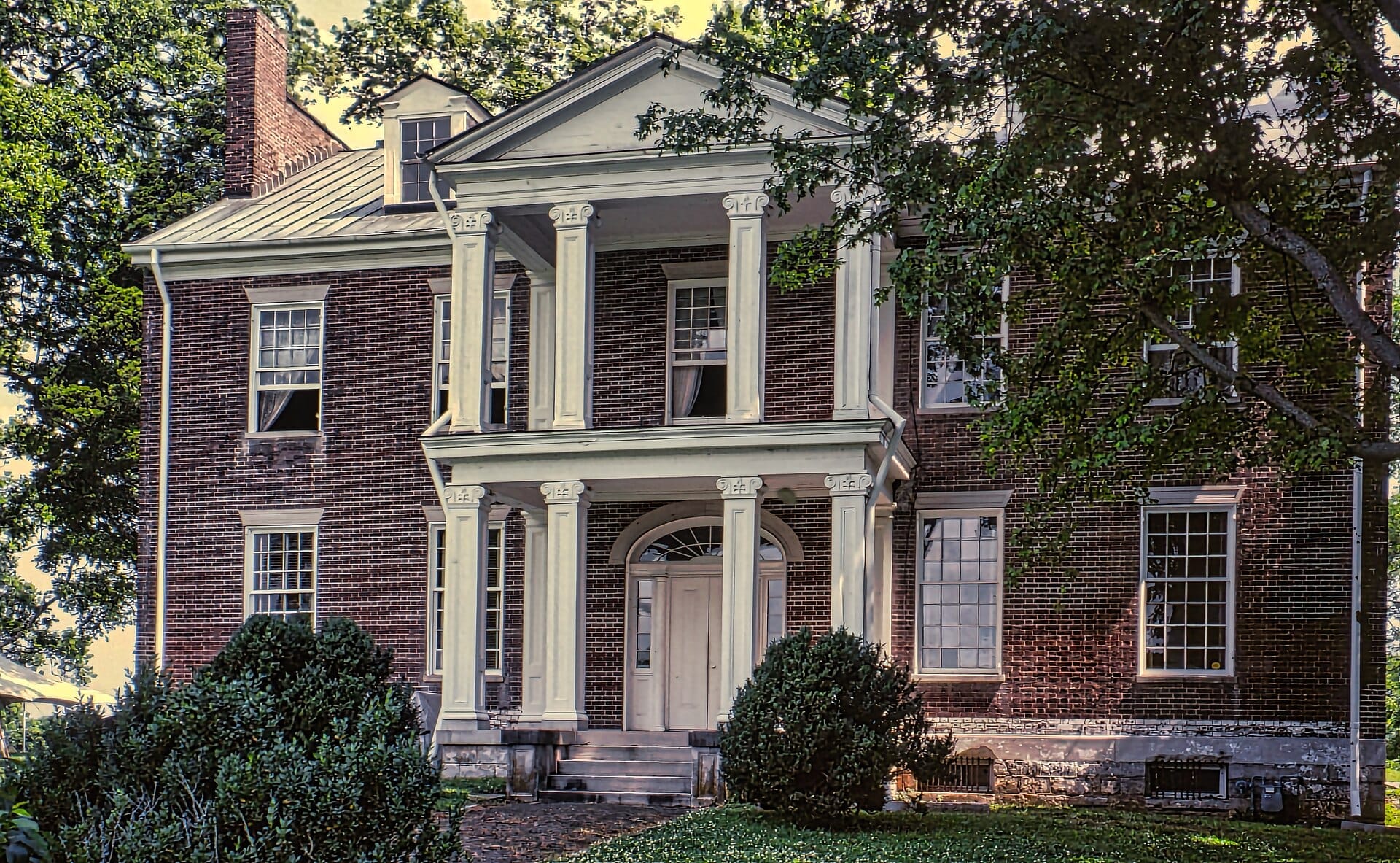
What Carnton Actually Is
Carnton is a Federal-style antebellum mansion built in 1826 by Randal McGavock, a former mayor of Nashville, on what was originally a 1,420-acre plantation farm in Williamson County, Tennessee. The house passed to his son John McGavock and daughter-in-law Carrie, and it is their story, along with the catastrophic events of November 30, 1864, that transformed this Tennessee farmstead into a place of lasting national significance.
On that date, the Battle of Franklin, one of the bloodiest engagements of the entire Civil War, was fought across the fields surrounding the property. In a matter of hours, the Confederate Army of Tennessee suffered staggering casualties, including six generals killed, wounded, or captured. Carnton was commandeered as the principal Confederate field hospital, its rooms filling with hundreds of wounded and dying soldiers. The following morning, the bodies of four Confederate generals, Patrick Cleburne, John Adams, Hiram Granbury, and Otho Strahl, were laid on the mansion's wide back porch. Bloodstains on the original heart-pine floors remain visible today.
ℹ️ Good to know
Carnton is managed by The Battle of Franklin Trust, which also oversees the Carter House, another key site from the same battle. A Campaign Ticket covering both properties (plus Rippavilla) is the most cost-effective option if you plan to spend a full day with this history.
The Grounds and the Cemetery
Before or after the house tour, the McGavock Confederate Cemetery demands time on its own terms. Located behind the mansion, it holds the remains of nearly 1,500 Confederate soldiers who died at Franklin, making it one of the largest privately owned Confederate cemeteries in the United States. John and Carrie McGavock dedicated a portion of their land to these burials in 1866, and Carrie spent decades meticulously maintaining records of the dead, earning her the informal title "The Widow of the South." That nickname became the title of Robert Hicks's 2005 novel, which brought Carnton to a much wider audience.
Walking the cemetery rows in the morning, before tour groups arrive, is a different kind of experience from most historic sites. The markers are modest, many listing only a state abbreviation and a number. Tennessee, Mississippi, Arkansas, Texas. Some are simply unknown. The scale of loss becomes concrete in a way that battlefield maps and museum panels rarely achieve. The grounds are level and generally walkable, though the cemetery's grass paths may be uneven after rain.
The surrounding Eastern Flank Battlefield area gives some spatial sense of where the fighting actually occurred. Visitors with deeper interest in the tactical history can combine Carnton with a broader Civil War battlefield visit or explore the region's military history further through the Nashville Civil War history guide.
Tickets & tours
Live prices and dates from our booking partner. If you book, we may earn a commission at no extra cost to you.
Old Town trolley tour of Nashville
From 54 €Instant confirmationFree cancellationHatch Show Print guided tour
From 21 €Instant confirmationFree cancellationDowntown walking tour of Nashville
From 21 €Instant confirmationFree cancellationNashville Downtown Underground Donut Tour
From 46 €Instant confirmationFree cancellation
The House Tour: What to Expect Inside
Carnton offers guided tours of the mansion interior. Guides lead small groups through the principal rooms, covering the McGavock family's daily life before the war, the events of November 30, 1864 in close and unflinching detail, and the long aftermath that Carrie McGavock navigated for decades after John's death. The guides draw on primary sources, including Carrie's correspondence and the meticulous burial records she kept, so the narrative stays specific and grounded.
The house itself is well-preserved but not over-restored. The scale is modest for a plantation house of its era, and the furnishings are period-appropriate without feeling like a stage set. The back porch, where the generals' bodies were laid, is shown on the tour. Standing there, looking out toward the cemetery and the fields beyond, is the moment most visitors describe as the emotional weight of the place becoming fully real. The visible blood staining on the floor inside is not highlighted theatrically; guides present it matter-of-factly, which is more affecting.
💡 Local tip
Tours run throughout the day; aim for the first available slot after opening (typically 9:00 am Monday through Saturday and 11:00 am Sunday, though hours can vary seasonally) to get the smallest group size and the most focused guide interaction. By mid-afternoon, school and tour groups can significantly increase crowd density.
Historical and Cultural Context
The Battle of Franklin is sometimes called the Gettysburg of the West in terms of its concentration of loss, though that comparison flattens its specific strategic tragedy. Confederate General John Bell Hood ordered a frontal assault on well-fortified Union positions late in the afternoon of November 30, 1864, part of a desperate campaign to cut off Union forces under General John Schofield. The assault briefly pierced the Union line at a point known as the Carter House, but the breach was sealed. The Confederates suffered roughly 7,000 casualties in a few hours. Hood's army limped northward toward Nashville, where it would be decisively destroyed two weeks later.
Carnton sits at the southeast corner of the original battlefield. Its role as a hospital was not unusual for large houses near Civil War engagements, but its subsequent history as a site of Confederate memory, carefully tended by Carrie McGavock and later by preservation organizations, gives it unusual historical continuity. The Battle of Franklin Trust has spent years working to reclaim and preserve the battlefield land itself from commercial development, much of which had been lost by the mid-20th century.
For visitors building a fuller picture of Nashville's layered history, the Tennessee State Museum in downtown Nashville provides strong context on the Civil War in Tennessee, while Fort Negley tells the Union side of Nashville's wartime story.
Getting There and Timing Your Visit
Carnton is located in Franklin, Tennessee, approximately 20 miles south of downtown Nashville via I-65 South. The drive typically takes 25 to 35 minutes without traffic, though the stretch of I-65 between Brentwood and Franklin can slow considerably during morning and evening commute hours. Parking on site is free.
There is no practical public transit connection from Nashville to Carnton. Uber and Lyft both operate in the Franklin area, and a rideshare from downtown Nashville runs roughly 30 minutes each way, though you should confirm pickup availability at the site before relying solely on rideshare for your return. Carnton is most naturally combined with a visit to the Carter House, located less than two miles away in Franklin's town center, and potentially a walk through the Franklin historic district.
Franklin itself has a compact, walkable historic downtown worth an hour of exploration. For a structured approach to combining Carnton with Franklin's other attractions, the Franklin Historic Downtown page covers the town square, restaurants, and the preserved streetscape. It makes for a natural full-day trip from Nashville.
Weather matters here. The cemetery and grounds tour portion is entirely outdoors. Summer visits in July and August can be genuinely hot and humid, with temperatures regularly reaching 88 to 90 degrees Fahrenheit. Bring water, wear sun protection, and consider scheduling your visit for spring (April to May) or fall (September to October) when temperatures are more comfortable. The grounds are less atmospheric but also less crowded on weekday mornings outside of summer.
⚠️ What to skip
Carnton is closed on New Year's Day, Easter, Thanksgiving, Christmas Eve, and Christmas Day. If you are visiting Nashville during a holiday period, check the current schedule at boft.org before making the drive to Franklin.
Who Will Get the Most from Carnton, and Who Might Not
Visitors with a serious interest in the Civil War, Southern history, or the human cost of 19th-century conflict will find Carnton unusually substantive. The guides go beyond surface-level narrative, and the physical evidence of what happened here, the floors, the cemetery, the scale of the house itself, makes the history feel immediate rather than abstract. Readers of Cold Mountain by Charles Frazier, or Robert Hicks's The Widow of the South, will recognize the world the novels drew from.
Families with children can visit, but this is not an attraction calibrated for young children. The content is frank about death and suffering, and the house tour requires attentive listening for 45 to 60 minutes. Children who are genuinely curious about history can handle it, but those expecting interactive exhibits or outdoor play space will find the experience limited. Similarly, visitors primarily interested in Nashville's music culture will find little overlap here; Carnton is a history site in a separate town, and the 50- to 70-minute one-way drive is only worthwhile if the Civil War history is the point.
Accessibility at Carnton is limited by the nature of a 19th-century structure. The Battle of Franklin Trust advises contacting the site directly regarding mobility and wheelchair access before your visit, as conditions vary by building area and tour type.
If you are planning a full day trip from Nashville that balances history with scenery, the day trips from Nashville guide covers Franklin alongside other options within a comfortable drive.
Insider Tips
- Book your house tour ticket online in advance, especially on weekends and during October, when the site draws larger crowds around the anniversary of the battle (November 30). Walk-ins are often accommodated, but timed entry slots can fill.
- The Campaign Ticket combining Carnton, Carter House, and Rippavilla is the best value if you have a full day. Carter House is about 1.5 miles away and can be visited the same morning before Carnton opens, since it opens at 9:00 am Monday through Saturday.
- Early morning light hits the back of the mansion and the cemetery from the east, making the first hour after opening the best time for photography. By midday the cemetery is in direct overhead sun with no shade.
- The gift shop carries a solid selection of Civil War scholarship specifically focused on the Franklin campaign and the Army of Tennessee. If you want to go deeper than the tour covers, the staff can point you to specific titles.
- Carnton occasionally hosts evening and specialty tours, including candlelight and ghost tours, particularly around Halloween. Check the Battle of Franklin Trust website for the current event calendar, as these sell out quickly.
Who Is Carnton For?
- Civil War history enthusiasts and battlefield travelers
- Readers of The Widow of the South by Robert Hicks or Cold Mountain by Charles Frazier
- Antebellum architecture and historic house museum visitors
- Travelers on day trips from Nashville looking for substantive history beyond the city
- History teachers and students seeking primary-source-connected sites
Nearby Attractions
Combine your visit with:
- Arrington Vineyards
Arrington Vineyards is a working winery set on 95 acres of rolling Tennessee countryside about 25 miles south of Nashville. With 16 acres of estate vines, five tasting rooms, and a calendar full of live music events, it offers a genuinely relaxed alternative to the city's usual attractions.
- Downtown Franklin Historic District
About 21 miles south of Nashville, the Downtown Franklin Historic District packs genuine 19th-century architecture, Civil War history, and an independently owned Main Street into a walkable few blocks. Entry is free, the streets are open all day, and it rewards slower travelers who actually stop to look up.
- GEODIS Park
Opened in May 2022, GEODIS Park is one of the largest soccer-specific stadiums in the United States, seating over 30,000 fans. Home to Nashville SC and a growing concert calendar, it brings serious sports infrastructure to a city better known for music.
- Harpeth River State Park
Stretching roughly 40 river miles along the lower Harpeth River, this free Tennessee State Park packs archaeological wonders, a 200-year-old hand-dug tunnel, and calm paddling water into a series of non-contiguous sites just west of Nashville. It rewards those who come prepared and take their time.
Planning a trip? Discover personalized activities with the Nomado app.