Gerrard India Bazaar: Toronto's Little India Explored
Gerrard India Bazaar, also known as Little India, is a living, walkable stretch of Gerrard Street East that has anchored Toronto's South Asian community for over five decades. Free to explore at any hour, it rewards visitors with saree shops, spice merchants, sweet counters, and some of the city's most flavourful and affordable restaurant meals.
Quick Facts
- Location
- Gerrard Street East between Coxwell Avenue and Glenside Avenue, Toronto
- Getting There
- TTC 22 Coxwell bus south from Coxwell station (Line 2), or 506 Carlton/506C streetcar eastbound
- Time Needed
- 1.5 to 3 hours for a full walk with stops
- Cost
- Free to enter; budget CAD $15–$30 per person for a meal and snacks
- Best for
- Food lovers, cultural explorers, shoppers seeking South Asian goods, budget travellers
- Official website
- gerrardindiabazaar.com
What Is Gerrard India Bazaar?
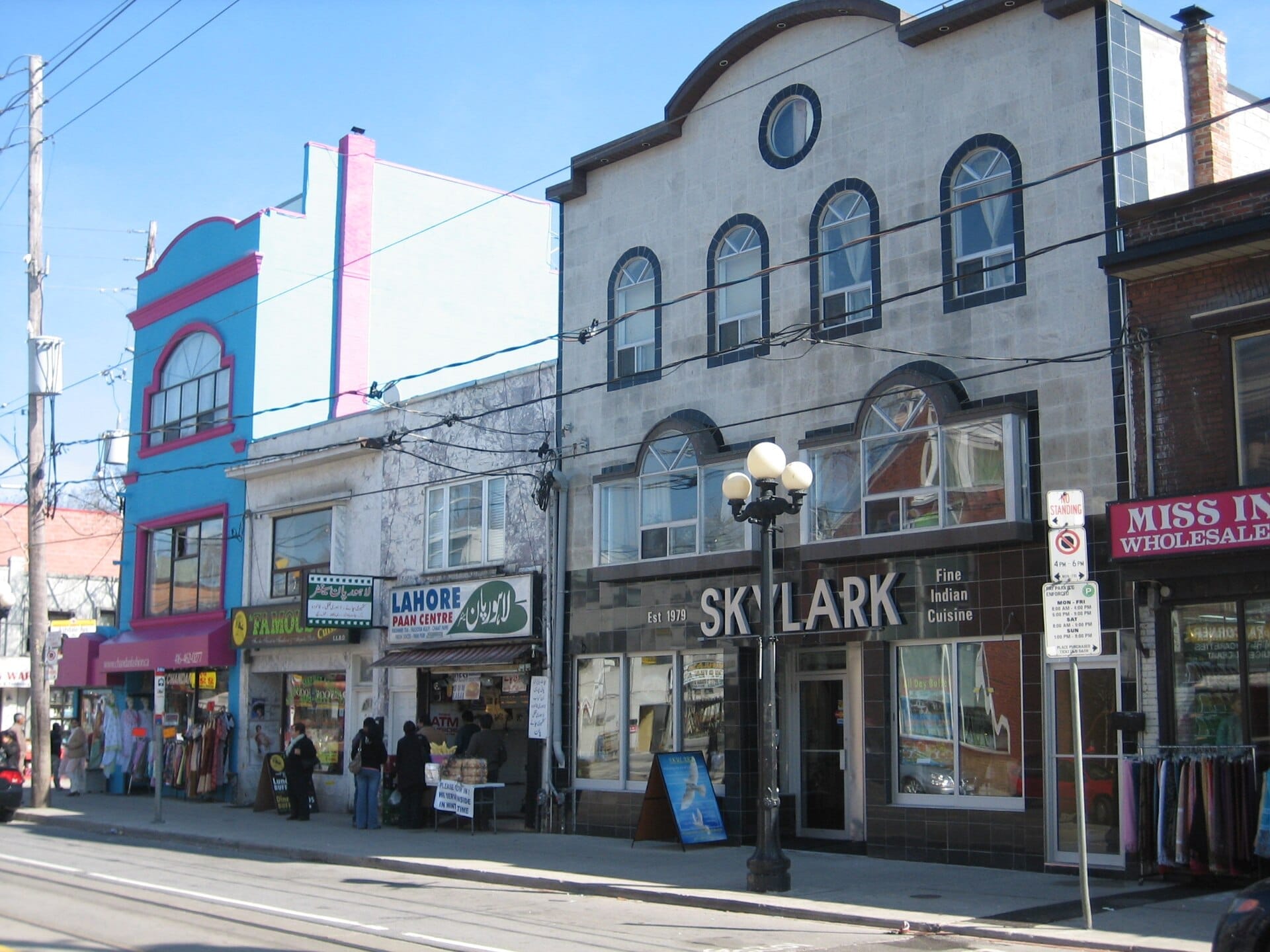
The Gerrard India Bazaar is the official name for the commercial strip along Gerrard Street East that most Torontonians simply call Little India. Stretching roughly from Coxwell Avenue to Glenside Avenue in the city's east end, this corridor has been a focal point for Toronto's South Asian community for over four decades. It became an official Business Improvement Area in 1982, one of the earliest BIAs in Toronto, and the BIA itself describes the strip as North America's largest South Asian market.
Unlike a ticketed attraction or a contained market hall, this is a working commercial neighbourhood. The street is publicly accessible at any hour, though the real activity is concentrated during daytime and early evening when shops are open and the sidewalks fill. Visiting requires no planning beyond getting yourself there, and spending money is entirely optional. That low barrier to entry is part of what makes it worth knowing about.
ℹ️ Good to know
There is no admission fee to walk Gerrard India Bazaar. Individual shops and restaurants set their own hours, so if you are targeting a specific business, check ahead. The BIA office is at 1426 Gerrard Street East, Toronto, ON M4L 1Z6, Canada.
Getting There and Getting Around
The most direct TTC route is the 22 Coxwell bus, which runs south from Coxwell station on Line 2 (Bloor-Danforth) to the intersection of Coxwell and Gerrard, putting you at the western end of the bazaar. Alternatively, the 506 Carlton streetcar runs along Gerrard Street East and drops you directly on the strip. If you are navigating Toronto by transit for the first time, the Coxwell bus connection is the simpler of the two options since it involves a single transfer from the subway.
Street parking exists along Gerrard Street East but can be limited on weekends and during events. If you are driving from elsewhere in the city, arriving before noon on a weekend gives you the best chance of finding a spot on a side street.
The strip itself is entirely walkable. The sidewalks are standard city pavement with curb cuts at intersections, so the terrain is manageable for strollers and most mobility aids. That said, individual shops vary considerably in their interior accessibility. Narrow storefronts with a single step up from street level are common, and not every business has a ramp or step-free entry. If specific access matters to you, it is worth calling ahead.
Tickets & tours
Live prices and dates from our booking partner. If you book, we may earn a commission at no extra cost to you.
Toronto 'Little Canada' entrance tickets
From 27 €Instant confirmationFree cancellationToronto Old Town: Dark Side Exploration Game and Tour
From 12 €Instant confirmationFree cancellationLEGOLAND Discovery Centre Toronto tickets
From 16 €Instant confirmationFree cancellationNiagara Falls evening tour with boat, dinner and Illumination Tower
From 77 €Instant confirmationFree cancellation
What You Will Actually See and Smell
The sensory profile of Gerrard India Bazaar is distinct enough that you know you have arrived before you check your map. The smell hits first: a combination of fresh curry leaves from spice shops, sweet fried dough from mithai counters, and incense that drifts from a few of the gift stores. On warmer days, if a restaurant has its kitchen exhaust facing the street, you will catch waves of cardamom and cumin from half a block away.
Visually, the strip is layered. Saree shops display silk and georgette fabrics in the window in colours that are genuinely hard to describe in neutral terms: deep magenta, electric turquoise, gold brocade on royal blue. Jewellery stores with 22-karat gold pieces sit next to South Asian grocery shops whose shelves extend floor to ceiling with lentils in bulk bags, tamarind blocks, jaggery, and tins of ghee. There are Bollywood DVD vendors, phone repair shops, and at least one devotional goods store where you can buy brass puja lamps and framed prints of deities.
The strip is relatively compact, which means you will pass most of it in one slow walk. It rewards the unhurried. Stop to read the hand-lettered signs in shop windows, where lunch specials are chalked up in Canadian dollars and menu items are often listed in both English and Tamil or Hindi.
How the Bazaar Changes Through the Day
Weekend mornings, roughly from 10 a.m. onward, are when the strip starts to animate. This is a community space before it is a tourist destination, and early visitors are largely local: families doing weekly grocery runs at the South Asian supermarkets, older residents heading to sweet shops for chai and jalebi. The pace is measured, conversations are long, and the sidewalks are manageable.
By early afternoon on Saturdays, the street is at its most lively. Restaurants fill up for lunch, and the sidewalks outside popular sweet shops develop short queues. This is the best time to come if you want maximum atmosphere and the full range of shops open, though it is also when you are most likely to wait for a table. The energy is social rather than frantic.
Weekday mornings offer a quieter version of the same street. Some smaller shops open closer to midday, and a few close on Mondays or Tuesdays. If your primary goal is food rather than shopping, a weekday lunch visit lets you move more freely. Evenings, particularly on weekends, keep the restaurants busy until around 9 or 10 p.m., but many retail shops close by 7 p.m.
💡 Local tip
Come hungry on a weekend between noon and 2 p.m. for the fullest experience. Restaurants and sweet shops are all operating, the street is lively without being overwhelming, and most shops have their full inventory on display.
The Food: What to Eat and Where to Focus
Food is the main draw for most visitors who are not South Asian themselves, and the range is broader than people expect. The strip represents several regional cuisines under the umbrella of South Asian cooking: you will find South Indian dosa restaurants alongside North Indian curry houses, Sri Lankan-influenced Tamil spots, Indo-Chinese fusion, and Indo-Caribbean options reflecting the diversity of South Asian immigration to Toronto.
Mithai, the South Asian sweets, deserve particular attention. Shops sell barfi, ladoo, gulab jamun, halwa, and seasonal specialties by weight. Prices are low, and the quality at the long-established counters is notably high. If you are doing a broader exploration of Toronto's food culture, Gerrard India Bazaar offers a density of South Asian flavour that you will not find matched anywhere else in the city.
For a full meal, lunch thalis at several restaurants on the strip offer generous set meals at prices well below what you would pay for comparable quality elsewhere in Toronto. Vegetarian options are extensive, which is worth noting for travellers who sometimes struggle to find variety.
Cultural and Historical Context
The South Asian presence along Gerrard Street East developed primarily from the 1960s onward, as waves of immigration from India, Pakistan, Sri Lanka, East Africa, and the Caribbean brought South Asian communities to Toronto. The strip's character as a commercial district reflects the working-class and middle-class character of the surrounding east-end neighbourhood, which kept it grounded in everyday commerce rather than developing into a more curated, tourist-facing district.
Heritage Toronto has noted the significance of Gerrard India Bazaar in the context of Toronto's multicultural development. Toronto's identity as a city shaped by immigration is well established, and areas like Little India sit alongside Chinatown, Greektown, and Kensington Market as places where that diversity has taken distinct physical and commercial form. If this dimension of the city interests you, the guide to Toronto's multicultural neighbourhoods provides broader context.
The BIA designation in 1982 helped stabilise the strip and provided collective infrastructure for the merchant community. Today, the Gerrard India Bazaar BIA organises events including seasonal festivals that draw visitors well beyond the regular customer base. The most significant is typically around Diwali in autumn, when the street is decorated with lights and events spill onto the sidewalk.
Photography and Practical Notes
The street photographs well, particularly the fabric and jewellery shop windows and the signage, which mixes scripts and languages in ways that are visually distinctive. Natural light is best in the morning when the sun comes from the east, illuminating the storefronts on the south side of the street. By mid-afternoon in summer, the light is harsh and flat.
Always ask before photographing inside shops or of individual people. Many shopkeepers are welcoming when asked directly, especially if you have made a purchase or shown genuine interest in what they are selling. Photographing busy restaurant kitchens or staff without permission is not appropriate.
⚠️ What to skip
Gerrard India Bazaar is a working neighbourhood, not a staged tourist experience. Treat shops and restaurants as you would anywhere in the city: browse respectfully, ask before you photograph, and do not enter a restaurant purely to take photos without ordering.
Weather affects the visit in practical terms. The strip is entirely outdoors, and there is limited shelter during rain beyond individual shop awnings. A summer visit during a warm, sunny afternoon is ideal. Winter visits are possible but note that some smaller shops reduce hours in colder months, and the foot traffic that creates atmosphere is markedly lower. For a broader look at how Toronto's seasons shape experiences, the guide on the best time to visit Toronto is worth consulting.
Who Should Reconsider This Visit
Travellers looking for a polished, curated, or air-conditioned attraction will find Gerrard India Bazaar underwhelming. The street has not been redeveloped for tourism. Storefronts are workaday, signage is functional rather than decorative, and the strip includes nail salons, travel agencies, and phone repair shops alongside the more photogenic spice merchants and sweet shops.
If you have limited time in Toronto and must choose between this and a major institution, Gerrard India Bazaar works best as a half-afternoon addition to an east-end itinerary rather than a standalone day trip from the city centre. Combined with nearby Greektown on the Danforth or a walk through the surrounding residential streets, it forms part of a satisfying east-end afternoon.
Insider Tips
- Buy your mithai by weight at the dedicated sweet counters rather than pre-packaged. Tell the counter staff what you like — sweet, nutty, milky — and they will guide you. A small box of assorted sweets costs a few dollars and is a better souvenir than most gift shops can offer.
- The South Asian grocery stores on the strip stock pantry items at prices far below what you will pay at a mainstream Toronto supermarket. If you are self-catering or have a kitchen, this is a practical stop for spices, lentils, rice, and fresh curry leaves.
- Diwali season (typically October or November) is the most atmospheric time to visit, when the street is strung with lights and some businesses extend their hours for evening visitors. Check the Gerrard India Bazaar BIA website for event dates, as the schedule shifts year to year.
- If you are taking the 506 Carlton streetcar, ride it all the way to the Coxwell end of the strip and walk back westward. This puts you at the denser, more commercial section of the bazaar first, and you end your walk closer to the streetcar stop you boarded from.
- Several restaurants on the strip do not have liquor licences. If you are planning a dinner with wine or beer, confirm in advance whether the restaurant is licensed or if BYOB is permitted. Some quietly allow it; others do not.
Who Is Little India (Gerrard India Bazaar) For?
- Food travellers who want to eat South Asian cuisine in a neighbourhood context rather than a downtown restaurant setting
- Budget-conscious visitors looking for a full, flavourful meal for under CAD $15
- Shoppers seeking South Asian textiles, jewellery, grocery items, or devotional goods unavailable in mainstream retailers
- Travellers interested in Toronto's multicultural urban history and community-built commercial streets
- Photographers drawn to layered streetscapes, vivid colour, and vernacular signage
Nearby Attractions
Combine your visit with:
- Aga Khan Museum
The Aga Khan Museum in Toronto is one of North America's only institutions dedicated to the arts of Muslim civilizations. Housed in a purpose-built building designed by architect Fumihiko Maki, it holds over 1,200 masterpieces spanning 14 centuries. Whether you spend 90 minutes or a full afternoon, the experience rewards curiosity at every turn.
- The Village at Black Creek (Black Creek Pioneer Village)
The Village at Black Creek is a fully realized open-air living history museum in northwest Toronto, where around 40 restored historic buildings, heritage breed livestock, and costumed interpreters recreate rural Ontario life from the 1800s. Operated by the Toronto and Region Conservation Authority, it offers a rare, tactile experience of pre-industrial Canada that few urban attractions can match.
- Blue Mountain & Collingwood
Perched on the Niagara Escarpment above Georgian Bay, Blue Mountain and Collingwood form Ontario's most accessible four-season resort destination. Whether you come for winter skiing, summer hiking, or a weekend in the pedestrian village, the area rewards visitors who plan around the season.
- Canada's Wonderland
Canada's Wonderland is the country's largest amusement park, located in Vaughan just north of Toronto. With 18 roller coasters, more than 200 attractions, and a 20-acre water park, it's a full-day commitment that rewards planning. Here's how to make the most of it.
Planning a trip? Discover personalized activities with the Nomado app.