Kyu-Furukawa Gardens: Tokyo's Most Underrated Fusion Garden
Kyu-Furukawa Gardens pairs a Meiji-era Western brick mansion and a terraced rose garden with a serene Japanese stroll garden below — all for ¥150. Located in Kita-ku, it draws far smaller crowds than Shinjuku Gyoen or Rikugien, making it one of Tokyo's most rewarding garden visits for those who know where to look.
Quick Facts
- Location
- 1-27-39 Nishigahara, Kita-ku, Tokyo 114-0024
- Getting There
- Nishigahara Station (Tokyo Metro Namboku Line) — 7 min walk
- Time Needed
- 1–1.5 hours
- Cost
- ¥150 adults / ¥70 seniors (65+) / Free for children
- Best for
- Garden lovers, architecture fans, photography, quiet escapes
- Official website
- www.tokyo-park.or.jp/teien/en/kyu-furukawa/index.html
What Kyu-Furukawa Gardens Actually Is
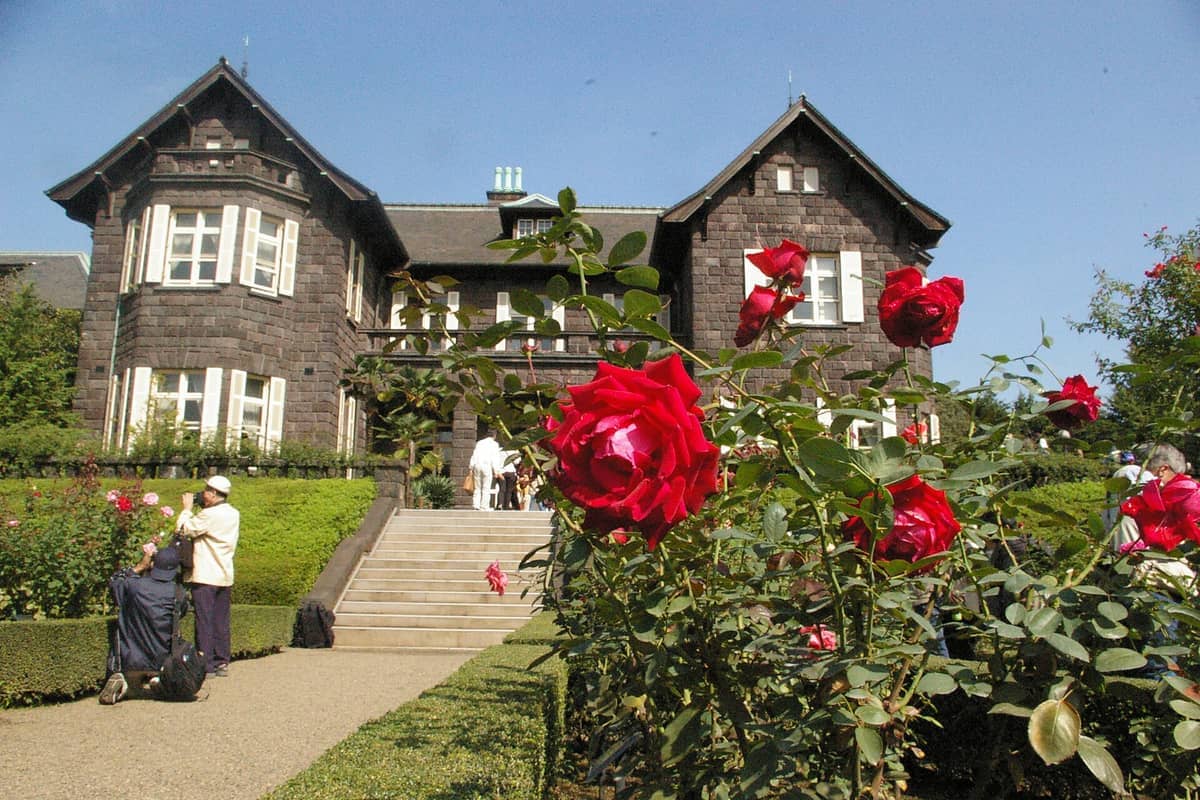
Kyu-Furukawa Gardens is a metropolitan park in Kita City, northern Tokyo, that does something genuinely unusual: it fuses a formal European rose garden and a late-Meiji Western-style brick mansion with a traditional Japanese stroll garden across a single sloping plot. The contrast is not awkward — it reads as deliberate, a physical record of Japan's early-twentieth-century appetite for Western aesthetics layered over centuries of landscape craft.
The garden takes its name from the Furukawa family, the wealthy industrial dynasty associated with the estate. The Western-style mansion visible from the upper terrace was designed by Josiah Conder, the British architect who shaped much of Meiji-era Tokyo and is also credited with the design of Kyu-Iwasaki-tei Garden's mansion in Ueno. His presence here gives Kyu-Furukawa Gardens a concrete architectural anchor that most Tokyo parks lack.
The Japanese lower garden, laid out over the natural slopes of the Musashino Plateau, follows the traditional chisen-kaiyu-shiki style — a pond-centered stroll garden where the route circles a central water feature, revealing different composed views at each turn. If you have already visited Rikugien Garden or Koishikawa Korakuen Garden, you will recognize the form immediately — but Kyu-Furukawa draws a fraction of the visitors.
The Upper Garden: Roses, Brick, and the Western Mansion
From the main entrance, the first thing you reach is the upper terrace — a formal rose garden arranged in geometric beds that step down toward the mansion. The layout is European in spirit: symmetrical paths, trimmed edges, iron-framed trellises. In late spring (mid-May) and again in mid-autumn (mid-October to mid-November), the roses are in full bloom and the scent carries across the entire upper section. The colors shift between deep crimsons, pale pinks, and golden yellows depending on which varieties are at peak. During these windows, the garden fills with photographers and couples, and early morning entry before 10:00 is noticeably quieter.
The Western mansion sits behind the rose garden on a slight rise. Designed by Josiah Conder and completed in 1917, it is built in red brick with Tudor-influenced stone detailing. Interior access may require an additional fee beyond the general garden admission.
ℹ️ Good to know
Rose season runs roughly mid-May (spring) and mid-October to mid-November (autumn). Outside these windows, the upper garden is pleasant but not at its peak. The Japanese lower garden is worthwhile year-round.
Tickets & tours
Hand-picked options from our booking partner. Prices are indicative; availability and final rates are confirmed when you complete your booking.
Tsukiji Fish Market Walking Food Tour
From 40 €Instant confirmationFree cancellationMt.Fuji,Owakudani, Hakone Cruise & Ropeway, Oshino Hakkai 1-Day Trip
From 54 €Instant confirmationFree cancellationTour to Mt. Fuji Area, Oshino Hakkai and Kawaguchi Lake from Tokyo
From 57 €Instant confirmationFree cancellationNikko UNESCO Shrine and Nature View 1-Day Tour from Tokyo
From 78 €Instant confirmationFree cancellation
The Lower Garden: A Traditional Stroll Through Seasonal Layers
Descend the stone steps from the rose terrace and the atmosphere shifts completely. The lower Japanese garden occupies the natural valley of the Musashino Plateau, and the elevation drop is real — the path steepens noticeably and the noise from the upper section disappears behind dense plantings of pine, bamboo, and broad-leafed deciduous trees. The central pond reflects the surrounding foliage; on overcast mornings, the water is almost perfectly still and the stone lanterns along the bank cast long dark shapes into it.
The stroll circuit takes roughly 25–35 minutes at a relaxed pace. Along the way, there are a tea house, stone water basins, and several composed viewing points — spots where the designer clearly intended visitors to pause and look back across the pond toward the opposite bank. In autumn, the maples turn orange and red from late November onward, and the reflection in the pond becomes one of the most quietly beautiful seasonal scenes in northern Tokyo. Spring brings cherry blossoms and fresh green moss along the stone paths.
The garden is built on natural terrain and the slopes are significant. There are stairs throughout both the upper and lower sections, and the official advice is to check wheelchair-accessible routes in advance. Visitors with limited mobility should consult the Tokyo Metropolitan Park Association website before arriving. For broader context on Tokyo's other formal gardens, the Tokyo gardens guide covers the range from small neighborhood parks to expansive historic estates.
How the Experience Changes by Time of Day
The garden opens at 09:00, and the first hour is reliably the quietest. Morning light through the trees in the lower garden is soft and directional, good for photography without harsh shadows. The moss and stone textures read particularly well in diffuse light. By late morning, school groups and organized tour visitors begin to arrive, especially on weekdays.
Midday in summer (July–August) can be uncomfortably warm, particularly on the open upper terrace. The lower garden provides more shade, but the paths are narrow and there is limited seating. Bring water — there is no café inside the garden, and the nearest convenience stores are outside the entrance gate. Autumn afternoons between 13:00 and 15:00 offer warm, angled light that suits both the rose garden and the pond reflections well.
Last entry is at 16:30, closing at 17:00. The final 45 minutes of the day are rarely crowded and the light at this hour in autumn is particularly warm on the red brick of the mansion. Budget enough time to reach this point if you plan to see both the upper and lower sections properly — a rushed visit misses most of what makes the garden interesting.
Getting There and Practical Logistics
The nearest station is Nishigahara on the Tokyo Metro Namboku Line, approximately 7 minutes on foot. The walk is straightforward and mostly flat until you approach the garden entrance. JR Kami-Nakazato Station on the Keihin-Tohoku Line is also about 7 minutes on foot and may be more convenient depending on where you are coming from in the city.
Admission is ¥150 for adults, ¥70 for visitors aged 65 and over. Children of primary school age or younger, and junior high school students residing or attending school in Tokyo, enter free. Groups of 20 or more receive a 20% discount. An annual pass for Kyu-Furukawa Gardens costs ¥600 (general) or ¥280 (senior), which is worth considering if you plan to return for both rose seasons. The garden is closed from December 29 through January 1.
💡 Local tip
The Namboku Line also connects directly to Rikugien Garden area via Komagome Station, two stops south. Combining both gardens in a single day is easy and gives a useful contrast between the two styles of Tokyo garden design.
Kitu-ku sits outside most central Tokyo itineraries, so this garden tends to attract repeat visitors and local residents rather than first-timers. If you are building a dedicated garden day, pairing Kyu-Furukawa with Rikugien nearby makes sense. For wider Tokyo planning, the best time to visit Tokyo guide is useful for aligning your trip with seasonal peaks like the rose blooms or autumn foliage.
Photography Notes and What to Bring
The mansion facade photographs well from the rose garden steps — position yourself mid-terrace for a composition that includes the brick structure, a foreground of rose bushes, and the stone balustrade. A wide-angle lens captures the full sweep; a short telephoto isolates the stonework details around the entrance arch. The lower garden's pond is best shot from the northern bank looking south, where the tree line forms a clean backdrop.
Tripods may be restricted inside the garden for personal photography. The interior of the mansion, if open, has lower light and period furnishings that reward a camera capable of higher ISO without excessive noise. Wear comfortable shoes with grip — the stone paths in the lower garden can be slick after rain.
⚠️ What to skip
There is no food or drink service inside the garden. Pack water and a snack, especially in summer.
Is Kyu-Furukawa Gardens Worth the Trip?
For ¥150, the combination of formal Western garden, a genuine Conder-designed mansion, and a traditional Japanese stroll landscape in a single compact site is difficult to match anywhere in Tokyo. The garden does not overwhelm — it rewards attention rather than spectacle. Visitors expecting a grand statement on the scale of Shinjuku Gyoen or the Imperial Palace East Gardens may find the footprint modest. But that modest scale is precisely what makes it manageable and, outside rose season, consistently uncrowded.
Visitors primarily interested in traditional Japanese gardens rather than the Western-influenced elements may find Rikugien Garden a more immersive choice, as that garden offers a purer classical experience without the dual-garden structure. Kyu-Furukawa is most rewarding for those interested in how Japan negotiated Western and Japanese aesthetics in the Meiji and Taisho periods — the garden is a physical argument about that negotiation, and it makes the case clearly.
Insider Tips
- Visit during the second week of May for peak spring roses combined with fresh green foliage in the lower garden — the two sections are at their best simultaneously, which is rarely true outside this narrow window.
- The stone steps leading from the upper rose terrace to the lower Japanese garden are steep and can be slippery after rain. Descend slowly and wear shoes with a flat sole — sandals and dress shoes are a poor choice on wet stone.
- The Namboku Line connects Nishigahara directly to Komagome (two stops south), where Rikugien Garden is a short walk. Building a garden half-day between the two requires no transfers and minimal walking between transit and gates.
- The mansion interior access is managed separately by the Otani Museum and is not always open to walk-in visitors. Check the Otani Museum website before your visit if seeing inside is a priority, as opening days can be limited.
- Outside rose season, the garden is almost entirely local visitors. Autumn foliage (late November) in the lower Japanese garden is particularly good and far less photographed than the rose season crowds would suggest.
Who Is Kyu-Furukawa Gardens For?
- Garden enthusiasts who want to compare Western formal and Japanese stroll styles in a single visit
- Architecture lovers interested in Josiah Conder's Meiji-era Western mansion design
- Photographers seeking rose-season and autumn foliage compositions without Shinjuku Gyoen-level crowds
- Couples and local visitors looking for a quiet, low-cost afternoon in northern Tokyo
- Repeat Tokyo visitors who have already covered the central garden circuit and want something less familiar
Nearby Attractions
Combine your visit with:
- Akasaka Palace (State Guest House)
The State Guest House, Akasaka Palace is Japan's principal diplomatic residence and one of the few Western-style palaces in Asia open to the public. Built in neo-baroque style for the Crown Prince in the early 20th century, it now receives heads of state and, on select days, ordinary visitors. The combination of ornate gilded interiors, formal French gardens, and a Japanese-style annex makes it one of the most architecturally unusual stops in Tokyo.
- Edo-Tokyo Open Air Architectural Museum
Spread across the grounds of Koganei Park, the Edo-Tokyo Open-Air Architectural Museum rescues and reassembles more than 30 historic structures spanning the Edo period through the early 20th century. From a dismantled farmhouse to a reconstruction of a Showa-era Tokyo streetscape, it is one of the most thoughtful and undervisited cultural sites in the metropolitan area.
- Enoshima
A small island off the Shonan coast of Kanagawa Prefecture, Enoshima packs a surprising amount into a short walk: a three-part Shinto shrine, ancient sea caves, a hilltop botanical garden, a lighthouse observation tower, and seafood stalls lining a stone-paved shopping street. It works as a half-day excursion or a full day if you combine it with nearby Kamakura.
- Gotokuji Temple
Gotokuji Temple in Setagaya is a working Soto Zen Buddhist temple that happens to be one of the claimed birthplaces of the maneki-neko, Japan's iconic beckoning cat. Hundreds of white ceramic cats line the shelves of a dedicated shrine, creating one of Tokyo's most quietly striking visual spectacles. Entry is free, crowds are manageable, and the surrounding grounds offer genuine calm.